
Introduction: why decide with a checklist
Fruit set and filling in avocado is one of the most decisive phases for orchard profitability, because in just a few weeks it is defined how many fruits remain on the tree and with what quality they will reach harvest. Deciding blindly, without a prior checklist, usually leads to late interventions, unnecessary applications or nutritional adjustments that do not correct the real cause of the problem. An orderly approach makes it possible to prioritise resources and reduce risks.
In Hass avocado, a small proportion of the pollinated flowers actually become commercial fruit; that is why managing fruit set does not consist of "saving all the flowers", but of ensuring that those which set find the conditions to grow uniformly. Filling, for its part, depends on the tree's capacity to support the crop load, on water status, on nutrition and on leaf and fruit health. This article proposes a technical checklist, with physiological and agronomic criteria, for deciding with data.
Physiology of fruit set and filling in avocado
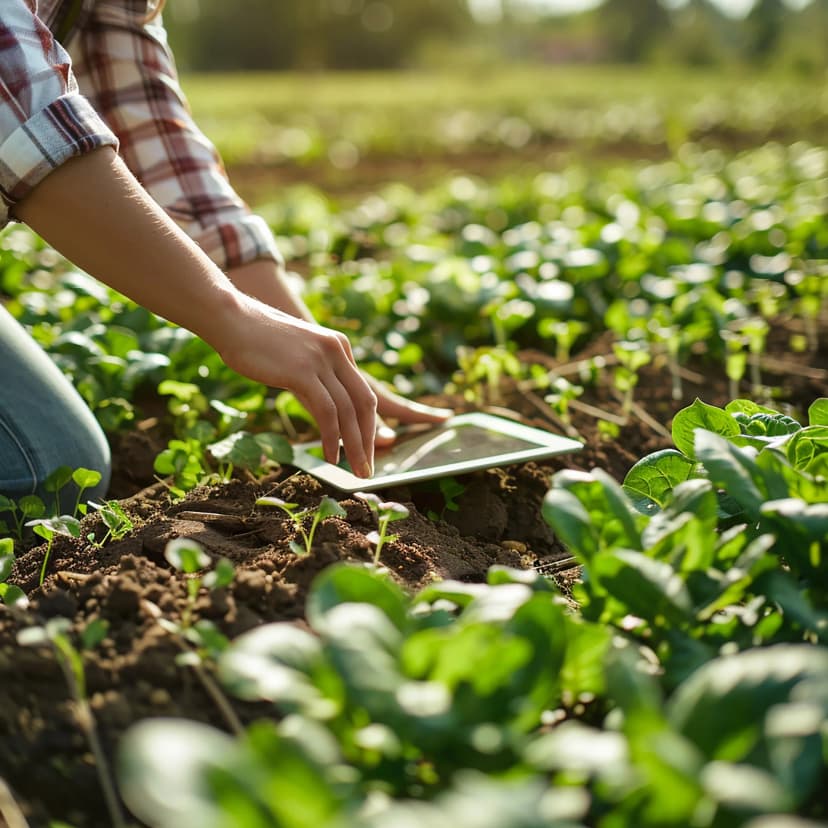
Avocado presents abundant flowering but with limited natural fruit set. The plant produces many flowers, but only a fraction set, and that fraction depends on pollen viability, floral synchrony, the availability of photoassimilates and the environmental conditions during anthesis. Understanding this physiological basis prevents interpreting as a "product failure" what is in reality a biological limit of the crop.
During fruit set, the ovary begins to develop and the plant decides, through hormonal and nutritional signals, which fruits it will support. Indoleacetic acid, cytokinins and available sugars play a central role. If the source-sink relationship is unfavourable — for example, due to defoliation, water stress or excessive load from the previous cycle — the tree aborts small fruits to balance its demand. That is why the checklist must include the state of the foliage and the previous load.
During filling, the fruit becomes a strong sink and demands water, potassium, calcium, boron and photoassimilates. Early cell division defines the number of cells in the fruit, and subsequent expansion defines its final size. Irregular filling is usually associated with water stress, nutritional imbalances or health damage. In varieties such as Hass, the dry matter content increases during ripening on the tree and is used as an indicative reference for harvest.
Signs of acceptable fruit set
Acceptable fruit set is recognised by the presence of small, healthy fruits distributed relatively evenly on the tree, without an abnormal drop exceeding the orchard's usual pattern. It is not a matter of counting fruits at a single moment, but of comparing their evolution over time. If the drop is concentrated over a few days and mainly affects deformed or damaged fruits, it is usually a natural adjustment; if the drop is massive and continuous, it is advisable to review irrigation, nutrition and plant health.
Signs of uniform filling
Uniform filling is observed as even growth between fruits on the same tree and between trees in the same plot. Marked differences in calibre, deformed fruits or arrested growth are indicators that some factor is limiting development. At that point, the checklist should steer the decision towards irrigation, nutrition, plant health or crop load, rather than applying generic measures.
Field checklist before intervening
Before deciding on any application or adjustment, it is worth walking the orchard with a specific list. The aim is to separate observations from assumptions and to prioritise the most likely causes. This checklist can be adapted to different production areas in Latin America, from Michoacán to Peru, Colombia or Chile, taking into account local soil and climate conditions.
- Effective flowering: was there sufficient and synchronised flowering? Were active pollinators observed?
- Fruit set: are there healthy, well-distributed small fruits? Does the drop exceed the orchard's usual pattern?
- Filling: is growth even? Are there deformed or arrested fruits?
- Foliage: does the tree have enough leaves without deficiency symptoms?
- Health: is there presence of thrips, crystalline mite, anthracnose or other diseases?
- Irrigation: does the soil maintain adequate moisture? Are there signs of water stress?
- Nutrition: is there a recent leaf or soil analysis available?
- Traceability: are plot, date, variety and management applied recorded?
- Commercial destination: what are the maximum residue limits (MRLs) required by the target market?
- Post-harvest: is there capacity to process the fruit within less than 24 hours after harvest?
This checklist does not replace technical judgement, but it orders the decision. In the field, experience shows that many problems attributed to fruit set originate in irrigation or in the previous cycle's crop load, and not in the lack of a specific product. Recording each observation allows seasons to be compared and management to be adjusted on the basis of evidence.
Practical field example
In a Hass orchard in a subtropical area, with drip irrigation and loam-clay soil, a drop of small fruits was observed after a period of wind and low relative humidity. The checklist revealed that irrigation had been reduced because of "saving" beliefs and that the leaf analysis showed low boron. The correction was not to apply a miracle product, but to restore irrigation and adjust nutrition in the next window. The following cycle, with the same plant material, the drop was reduced and filling was more uniform. This type of adjustment is what a well-used checklist facilitates.
Nutrition and biostimulation at fruit set and filling
Avocado nutrition at fruit set and filling must be based on the actual state of the tree. Leaf and soil analysis remain the most useful tools for deciding doses and timing. Broadly speaking, potassium is involved in fruit filling and quality, calcium in firmness and tissue stability, boron in fruit set and sugar transport, and zinc and magnesium in photosynthetic function. Applying without diagnosis usually wastes resources and can create imbalances.
Organic agricultural biostimulation can complement nutritional management when the aim is to improve stress tolerance and nutrient use efficiency. Microalgae extracts, fulvic acids and certain bioactive compounds have been studied for their effect on plant physiology, although results depend on the crop, the phenological stage and environmental conditions. In avocado, foliar application at key moments can help maintain photosynthetic activity under stress.
Biostimulant technology based on freshwater microalgae provides compounds that can influence hormonal signalling and the plant's antioxidant response. This is not about replacing fertilisation, but about accompanying it. In an avocado nutrition programme, biostimulation is integrated at times of higher demand or risk, such as fruit set and the start of filling, always with doses and application methods adapted to the orchard.
Organic nutrition for avocado cultivation requires planning. Certified organic fertilisers provide more gradually released nutrients and improve soil organic matter, which in turn favours the microbiota and nutrient availability. In tropical soils, with high leaching pressure, this strategy can reduce losses and improve efficiency. Ecoganic's fertilisation programme for avocado sets out a sequence that can be adjusted according to the analysis and the expected yield.
Indicative doses and timing
The specific doses depend on the analysis and the production system. As a general guide, complementary foliar fertilisation during filling and fattening can supply potassium, calcium and micronutrients in spaced applications, avoiding concentrations that could damage the foliage. Foliar biostimulation is usually applied at pre-flowering, fruit set and filling, at intervals of 10 to 21 days depending on the product and the stress pressure. The root route, through organic fertilisers and amendments, acts on soil fertility and the microbiota, with slower but more sustained effects.
Irrigation, abiotic stress and fruit quality
Water stress and heat stress are two of the factors that most affect avocado fruit set and filling. Avocado is sensitive to root asphyxia and to drought; irrigation management must therefore seek a balance. A water deficit during fruit set can cause small fruits to abort, while an excess can favour root rots and limit nutrient uptake. Scheduling irrigation with sensors or by observing the wet bulb helps make more precise decisions.
Heat stress, especially during heatwaves, reduces photosynthesis and increases transpiration. If the tree cannot replenish water, the fruit competes for resources and filling becomes irregular. In tropical and subtropical areas, the use of cover crops or mulches can moderate soil temperature and reduce evaporation. These practices also favour organic matter and microbial activity, which translates into better soil structure and greater nutrient availability.
Foliar nutrient uptake is a useful route when the root has limitations, but it requires suitable conditions: moderate temperature, sufficient relative humidity and well-formulated products. Applying during hours of maximum radiation or with low humidity reduces efficacy and can cause phytotoxicity. The checklist must therefore include the weather forecast before any foliar application.
Field indicators of stress
Visual indicators of water stress include rolled leaves or leaves with dry edges, loss of turgor during the central hours of the day and halted fruit growth. Under heat stress, leaf scorch and sunburn on exposed fruits may be observed. These signs should be recorded and correlated with irrigation readings and with leaf analysis. Field experience shows that correcting irrigation usually has more impact on filling than any additional application.
Plant health and residues at destination
Health management during fruit set and filling must be preventive and based on monitoring. The key pests and diseases of avocado include thrips, the glassy-winged sharpshooter mite, anthracnose and other rots. Regular monitoring allows the timing of intervention to be decided and avoids unnecessary applications. Rotating active ingredients helps reduce the risk of resistance, and the use of natural bioprotectants can be integrated into sustainable management programmes, provided they are registered for the crop and the destination.
A critical aspect for export is compliance with the maximum residue limits (MRLs) of the target market. Regulation (EC) 396/2005 establishes the MRLs applicable in the European Union, and importers often also require good practice certifications and documentary traceability. In Latin America, national export protocols, such as those of SENASICA for avocado, establish inspection and plant health requirements. Deciding on an application without verifying the product registration and the MRLs of the destination can put the entire lot at risk.
Batch traceability — with harvest date, farm, variety and management applied — is a common requirement in export protocols. Keeping orderly records not only facilitates auditing, but also allows lessons to be learned from each season. In the event of rejection at destination, traceability is the tool for identifying the cause and correcting it.
Control questions before applying
- Is the product registered for avocado and for the destination market?
- Is the pre-harvest interval compatible with the planned harvest date?
- Have the modes of action been rotated to reduce resistance?
- Is protective equipment available and are the application conditions suitable?
- Is the application justified by monitoring and thresholds, not by the calendar?
Dry matter, harvest and post-harvest
The harvest decision in Hass avocado does not depend on the calendar alone. Dry matter content is used as a guideline reference; in Hass, a window of 23–25% dry matter is cited as an indicator of commercial maturity. The fruit can be harvested at commercial maturity, not necessarily eating maturity, and complete ripening at destination. Measuring dry matter in the orchard helps plan the harvest and avoid immature or overripe fruit.
Post-harvest is critical for final quality. The fruit should not wait more than 24 hours in holding before packing; ideally it should be kept in a cool area, with careful washing and disinfection and adequate drying to reduce rots. Mechanical damage during harvest and transport increases rejection at destination, so training the picking crews and using ventilated crates are high-impact measures.
Grading by size, weight and visual quality allows lots to be separated and each one directed to the most suitable market. Uniform filling facilitates this grading and improves commercial yield. That is why the fruit set and filling checklist does not end at the tree: it also includes post-harvest capacity and compliance with the buyer's requirements.
Example of an integrated decision
A Hass grower in an area with a marked rainy season observed fruit with uneven sizes midway through filling. The checklist ruled out health problems and showed that irrigation was irregular due to system faults. Irrigation was corrected, nutrition was adjusted with potassium and boron according to analysis, and the harvest was planned by dry matter. The result was a more homogeneous lot with less rejection. The decision did not depend on a single input, but on the correct sequence of diagnosis and action.
Related articles
Do you need professional help?
At Ecoganic in Spain, Europe, we offer organic Biostimulants and Fertilizers. Call us: +34 623 753 719.
Request your free quote
Common mistakes and practical adjustments
One of the most common mistakes is intervening without a diagnosis, applying products out of habit or on generic advice. Another is neglecting irrigation and attributing fruit drop to nutrition. It is also common not to record observations, which prevents learning from the previous season. Traceability and leaf analysis are relatively low-cost investments that improve decision-making.
When managing crop load, it is advisable to balance the production of the previous cycle with that of the current one. A tree coming off a very heavy harvest may have fewer reserves and set less fruit. In that case, adjusting the load through pruning or thinning can improve filling in the following cycle. These decisions should be taken with technical judgement and a medium-term vision, not just for the season.
The integration of sustainable practices — cover crops, organic matter, biostimulation and bioprotection — contributes to a more resilient system. It is not about abruptly eliminating conventional fertilisation, but about progressively reducing dependence on chemical inputs through more efficient nutrition. Certified organic fertilisation and the management of soil microbiota are pillars of this transition.
Checklist summary before deciding
- Is there uniform fruit set and sufficient crop load per tree?
- Is filling even and free of deformations?
- Are the foliage and fruit free of key pests and diseases?
- Can I demonstrate traceability by lot?
- Do my applications respect the MRLs of the destination market?
- Do I have the certification and protocol required by the buyer or the country?
- Will the fruit reach the target dry matter percentage at harvest?
- Do I have post-harvest capacity so as not to exceed 24 hours before packing?
If the answer to several of these questions is "no" or "I don't know", it is advisable to stop and obtain the information before intervening. A well-applied checklist saves costs and improves quality. At Ecoganic we support growers and advisers with nutrition and biostimulation programmes adapted to avocado. Request your free quote and review with our technical team the most suitable plan for your orchard.
Frequently Asked Questions
How can you tell whether avocado fruit set is sufficient?
It is considered sufficient when there are healthy small fruits, distributed relatively evenly across the tree and without a drop exceeding the orchard's usual pattern. Counting fruits on a single day is not enough: it is advisable to compare how they develop over time. If the drop is massive and continuous, irrigation, nutrition and plant health must be reviewed before applying any product.
Which nutrients are key during avocado fruit filling?
Potassium participates in fruit filling and quality, calcium in firmness and tissue stability, boron in fruit set and sugar transport, and zinc and magnesium in photosynthesis. Doses should be based on leaf and soil analysis, not on generic recipes. Applying without a diagnosis can create imbalances and waste resources.
When should Hass avocados be harvested for export?
Harvesting takes place at commercial maturity, not necessarily eating maturity. Dry matter content is used as an indicative reference; for Hass, a window of 23–25% dry matter is cited. Measuring dry matter in the orchard helps with planning and avoids immature or overripe fruit. In addition, the requirements of the destination market and the applicable export protocols must be met.
How does water stress affect avocado fruit set and filling?
Water deficit during fruit set can cause small fruits to abort, while excess water encourages root rots and limits nutrient uptake. Heat stress reduces photosynthesis and increases transpiration, which competes with the fruit for resources. Scheduled irrigation and the use of cover crops help to moderate these effects and improve the uniformity of filling.
What should be checked before applying a plant protection product to avocado?
Before applying, check that the product is registered for avocado and for the destination market, that the pre-harvest interval is compatible with the harvest date and that the application is justified by monitoring and thresholds. It is also advisable to rotate modes of action to reduce resistance and to have suitable protective equipment. The traceability of each application is part of commercial compliance.