When supply is concentrated into a few weeks
Avocado post-harvest is one of the areas where exporters supplying distant markets, such as the European one, differ most. The fruit travels a long road from the orchard to the consumer and continues ripening during that time: what happens between harvest and sale can determine whether the same lot arrives in a condition to sell well or has to be placed at a discount. That is why avocado post-harvest should not be seen as a logistics cost, but as part of the business that is planned with the same attention as the crop.
The challenge is not only producing more kilos. When a lot of fruit reaches the same market within a few weeks, the advantage usually passes to whoever manages to preserve quality, modulate ripening and adjust supply to demand. In those periods of concentrated supply, lots with uneven maturity, with breaks in the cold chain or with careless handling have less room for manoeuvre: they force a change of destination, acceptance of discounts or accelerated sales at an unfavourable moment.
This article is a general, timeless guide, without figures or specific cases, intended for those who want to organise their way of working. It explains the physiology behind ripening, the most common errors, the checks worth making on each lot before dispatch, how to decide between speeding up or slowing down ripening and what role crop nutrition can play. The exact conditions for each variety, product and market must be confirmed with the post-harvest technician and with the buyer.
What the destination market asks of the fruit
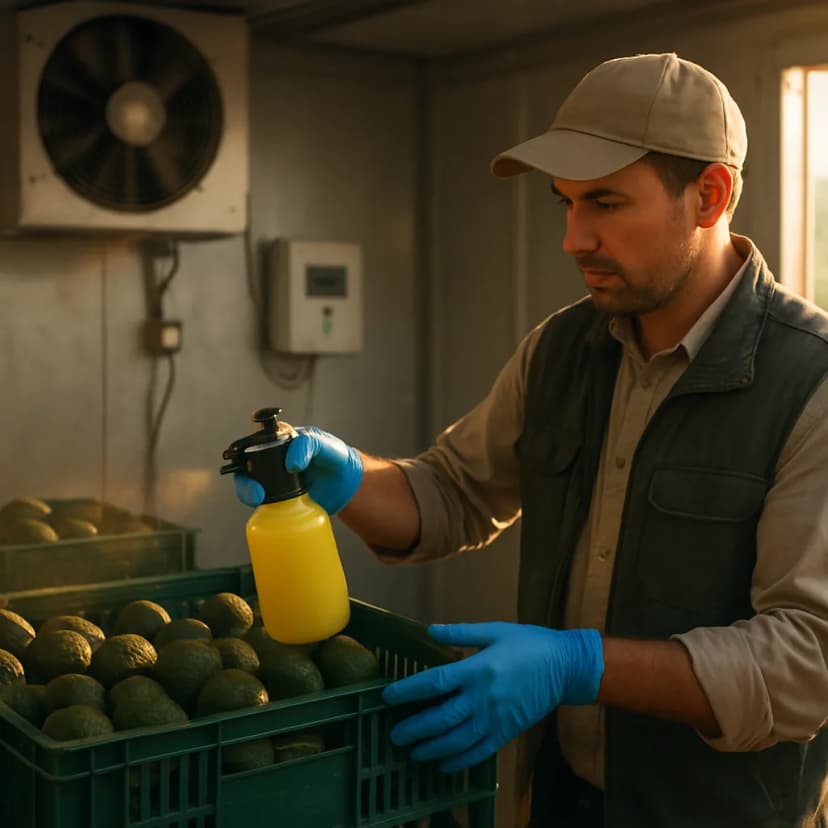
Destination markets value consistency: fruit of uniform size and maturity, with good appearance, consistent flavour and a predictable shelf life for the distributor and for the consumer. A wholesaler or a retail chain needs to know when the fruit will be ready to sell and how long it will last at the point of sale, and that predictability depends to a large extent on how it has been handled at origin and during transport.
Documentary and food safety requirements also count. Buyers usually ask for lot traceability, temperature records and confirmation that the residue limits in force at the destination have been respected. These requirements vary between markets and between customers, and it is worth confirming them before scheduling each shipping cycle, not afterwards. Asking the importer what they require and what tolerances they accept prevents many incidents.
What the buyer usually values
- Adequate firmness on arrival, so that the fruit can complete its ripening without losing quality.
- Uniform maturity within the lot and between lots, so that sales can be scheduled.
- Absence of bruises, compression damage and visible rots.
- Regular calibre and careful presentation.
- Complete documentation, traceability and temperature records.
- Clear communication when something deviates from what was expected.
When several origins coincide in the same market, differentiation by quality, consistency and service carries more weight than price. That is why many exporters plan logistics with the destination's commercial window in mind and not only the orchard's harvest calendar.
Avocado physiology and the challenge of ripening
The avocado is a climacteric fruit: it ripens after harvest and its behaviour depends on ethylene production and on the fruit's sensitivity to this hormone. Avocado post-harvest handling consists, to a large extent, of managing that physiology. The fruit is harvested at physiological maturity, with a dry matter and oil content that determines its flavour potential, but still firm. From that point on, temperature, relative humidity and ethylene concentration determine the rate of ripening.
The role of ethylene and temperature
Ethylene is the main regulator of ripening. In controlled ripening chambers, ethylene concentrations and temperatures are used that depend on the variety, the condition of the lot and the commercial plan, and which must be set by the technician and the equipment documentation. The key lies in uniformity: lots with heterogeneous maturity respond unevenly and generate quality problems at destination. That is why avocado post-harvest handling requires prior classification by dry matter and by firmness.
The cold chain and transport
During transport, the avocado is kept at low, stable temperatures, adjusted to the stage of maturity and the length of the journey according to the customer's and the technician's specifications. Any interruption of the cold chain accelerates ripening and reduces shelf life. In practice, lots that arrive with a stable temperature and a well-managed atmosphere retain firmness and organoleptic quality for longer, which allows the operator to choose the moment of sale instead of accepting the first price.
Sizing and selection
Sizing by size and selection by visual quality are indispensable prior steps. Well-organised avocado post-harvest handling also incorporates non-destructive firmness meters and dry matter analysis that make it possible to classify lots by their expected behaviour. This information is the basis for deciding which fruit is sent first, which is destined for rapid ripening and which can wait.
Typical post-harvest errors and how to avoid them
In avocado post-harvest handling, errors are repeated that, although they may seem minor, have a direct impact on the bottom line. One of the most common is harvesting without measuring dry matter: fruits that have not reached the appropriate level for their variety ripen unevenly and lose flavour. Another is mixing lots from different dates or different orchards on the same pallet, which prevents homogeneous ripening. It is also common to rely on a single temperature reading without recording the container's full history.
Another common error is insufficient pre-cooling. If the fruit enters the container with field heat, the cooling system works at its limit and ripening accelerates. The effect of handling is also underestimated: impacts and compression create points of accelerated ripening and increase the appearance of rots. Avocado post-harvest handling requires written protocols, trained personnel and verifiable records.
Finally, the lack of traceability makes it impossible to identify the origin of a problem when it appears at destination. A lot that does not comply can lose the entire commercial window, especially during periods of saturation. Having a system that links each box to its orchard, its harvest date and its cold conditions is a basic condition for exporting with confidence.
Planning errors
In addition to technical errors there are planning errors. Harvesting in a hurry to meet a commitment, without checking the maturity of the lot, usually takes its toll at destination. Concentrating all shipments on the same dates reduces the ability to choose the moment of sale. And failing to inform the transporter and the buyer in advance of the characteristics of the lot prevents both from preparing the reception. A good coordination routine between harvest, packing, transport and sales avoids many of these problems.
What to check in each lot before dispatch
Before scheduling a dispatch, the avocado post-harvest manager must verify a series of parameters that anticipate the behaviour of the fruit. Dry matter is the first: it indicates the flavour potential and helps to decide whether the lot is at the right point. Firmness, measured with a penetrometer or with non-destructive meters, gives guidance on the expected rate of ripening. Skin colour, although it varies according to the variety, provides complementary information.
It is also necessary to check the pulp temperature at the time of loading, the relative humidity of the store and the ethylene concentration if it has been applied. A record of the container's thermal history makes it possible to detect deviations before the fruit reaches its destination. In higher-risk lots, it is advisable to carry out a small-scale ripening test to adjust the scheduling.
Pre-dispatch checklist
- Dry matter of the lot within the recommended range for the variety.
- Homogeneous firmness in a representative sample of the lot.
- Fruit free of bruises, compression damage and signs of rot.
- Adequate pulp temperature at the time of loading.
- Clean, pre-cooled container with verified refrigeration equipment.
- Correct palletisation, without mixing lots of different ripeness.
- Complete documentation and traceability consistent with the lot.
- Communication to the carrier and the buyer of the characteristics of the shipment.
Exporters who build these checks into their routine tend to reduce claims and improve the consistency of their deliveries. Avocado post-harvest thus becomes a process based on records rather than on intuition.
How to decide between fast or slow ripening
The decision between accelerating or delaying ripening depends on the target market, the expected price and the condition of the lot. If the market is saturated and prices are low, it may be advisable to delay ripening in order to wait for an improvement. If the fruit has already reached an advanced degree of ripeness, fast ripening and immediate sale can prevent greater losses. Avocado post-harvest requires this commercial reading in addition to the technical one.
To delay ripening, use is made of lower temperatures within what the fruit tolerates and of controlled atmospheres that reduce ethylene synthesis. To accelerate it, ethylene is applied in the ripening chamber and the temperature is raised in a controlled manner. In both cases, the uniformity of the lot is decisive: a homogeneous lot responds predictably, whereas a heterogeneous one forces compromise decisions that usually translate into discounts.
Dispatch scheduling is, ultimately, a post-harvest tool. Staggering shipments so that the fruit arrives spread out, instead of being concentrated in a few weeks, makes it possible to choose the moment of sale better and avoids having to liquidate. A concentrated supply puts pressure on prices, whereas a better-distributed supply leaves more room to act.
Questions that help to decide
- How much shelf life does the lot have left at the point of sale?
- What does the buyer tolerate in terms of ripeness on arrival?
- Do the cold store and transport allow homogeneous ripening?
- Is there an alternative destination if the market is saturated?
- What would the cost be of waiting compared with selling immediately?
Managed post-harvest versus conventional practices
The difference between a managed avocado post-harvest and conventional practices does not lie in a single factor, but in the approach. Conventional handling tends to focus on transport and cold, with little attention to the physiology of the fruit and to commercial planning. Managed post-harvest incorporates the measurement of dry matter, classification by firmness, full traceability and dispatch scheduling according to the market.
That same logic applies to the crop. Unbalanced nutrition, whether through excess or deficiency, can affect fruit quality, and the important thing is to adjust the programme with soil, water and leaf analyses. Soil organic matter and its biological activity improve structure and nutrient availability, and are often behind a more stable crop. Avocado post-harvest begins, in fact, in the field.
The comparison does not seek to discredit anyone, but to show that planning, record-keeping and coordination between the orchard and logistics make the difference. Those who work with written protocols and their own data have a greater capacity to correct what is not working and to explain to their customer what has happened with each lot.
The role of biostimulation in post-harvest quality
Fruit quality at post-harvest is built from the crop. Biostimulation with microalgae extracts, fulvic acids and beneficial microorganisms can contribute to more efficient nutrition and better tolerance to abiotic stress, such as water deficit or sudden temperature changes. A well-nourished plant with a healthy root system usually copes better with fruit formation, but this does not automatically translate into better post-harvest behaviour.
Microalgae extracts are described as a source of bioactive compounds that can support plant growth and nutrition, while fulvic acids are associated with improved soil structure and micronutrient availability. In avocado, these inputs can be integrated into a nutrition programme that adjusts fertiliser use and seeks more balanced management of the system. The technical data sheet for each product states the composition, the dose and the timing of application.
Ecoganic develops solutions of organic agricultural biostimulants and certified organic fertilisers that adapt to the needs of each crop. For avocado, the fertilisation programme for avocado includes foliar and root applications at key phenological stages, with the aim of supporting crop nutrition. Before incorporating any product, it is advisable to check in its documentation that it is suitable for the production system and for the grower's certification.
It is advisable to be cautious with expectations. Results depend on the crop, the soil, the water and management as a whole, and there is no promise that is valid for all orchards. The most sensible approach is to check the effect on the farm itself with a control plot, record the harvest and post-harvest behaviour data from both plots and repeat the comparison in another season before drawing conclusions.
Related articles
Do you need professional help?
At Ecoganic in Spain, Europe, we offer Biostimulants, organic Fertilisers. Contact our team through the website.
Request your free quote
Frequently asked questions about avocado post-harvest
What is avocado post-harvest and why is it so important?
Avocado post-harvest is the set of practices applied from harvest until the fruit reaches the consumer, including pre-cooling, sizing, cold storage, controlled ripening and transport. It is important because the avocado is a climacteric fruit that continues to ripen after harvest, and inadequate handling can lead to quality losses, rejections and discounted sales at times of oversupply. Well-managed post-harvest helps preserve the firmness, flavour and commercial value of the fruit.
How does dry matter influence avocado post-harvest?
Dry matter is an indicator of the oil content and flavour potential of the avocado. Harvesting fruit with values below the recommended threshold for each variety usually produces uneven ripening and lower organoleptic quality. In avocado post-harvest, measuring dry matter before harvest makes it possible to schedule lots and avoid mixtures that complicate ripening. It is a simple practice that provides valuable information for decision-making.
What should the temperature be during sea transport of avocados?
The transport temperature depends on the stage of ripeness, the variety and the length of the journey, and is set by the post-harvest technician together with the customer's specifications. The key is to maintain the cold chain without interruptions and to record the thermal history of the container from start to finish. A stable temperature slows the rate of ripening and allows the fruit to arrive at its destination in better condition, and any deviation must be detected in time to adjust commercial scheduling.
How can I prevent the fruit from over-ripening during transport?
To prevent excessive ripening, it is key to harvest at the right time, pre-cool the fruit quickly, maintain a constant temperature and, if necessary, use controlled atmospheres that reduce the presence of ethylene. It is also advisable to avoid mixing lots with different degrees of ripeness and to ensure careful handling that minimises bruising. Planning dispatches and communicating with the carrier are equally important so that the fruit arrives in the expected condition.
What role do biostimulants play in the post-harvest quality of avocados?
Biostimulants, such as microalgae extracts and fulvic acids, can help improve the efficiency of plant nutrition and tolerance to abiotic stress, two factors that influence the quality with which the fruit reaches harvest. They do not guarantee better post-harvest performance, and results depend on the crop, soil, water and management as a whole. They should therefore be considered a support within a well-planned nutrition programme and not a single solution.
How can the risk of rejection due to residues in the destination market be reduced?
To reduce the risk of rejection due to residues, it is essential to comply with the maximum limits in force in the destination market and, when the buyer requests it, to carry out residue analyses before export. A traceability system that makes it possible to identify the origin of any problem and the adoption of integrated crop management practices are key measures. In addition, communication with the buyer and reviewing current requirements with the technician help anticipate possible issues.
What records should be kept for each avocado lot?
It is advisable to record the originating orchard, the harvest date, the dry matter, the firmness, the pulp temperature at loading and the thermal history of the container. These data make it possible to explain any issue at destination and to compare the performance of different lots. Over time, the records also help adjust harvest and dispatch scheduling using one's own criteria rather than intuition.