Critical factors affecting avocado rooting
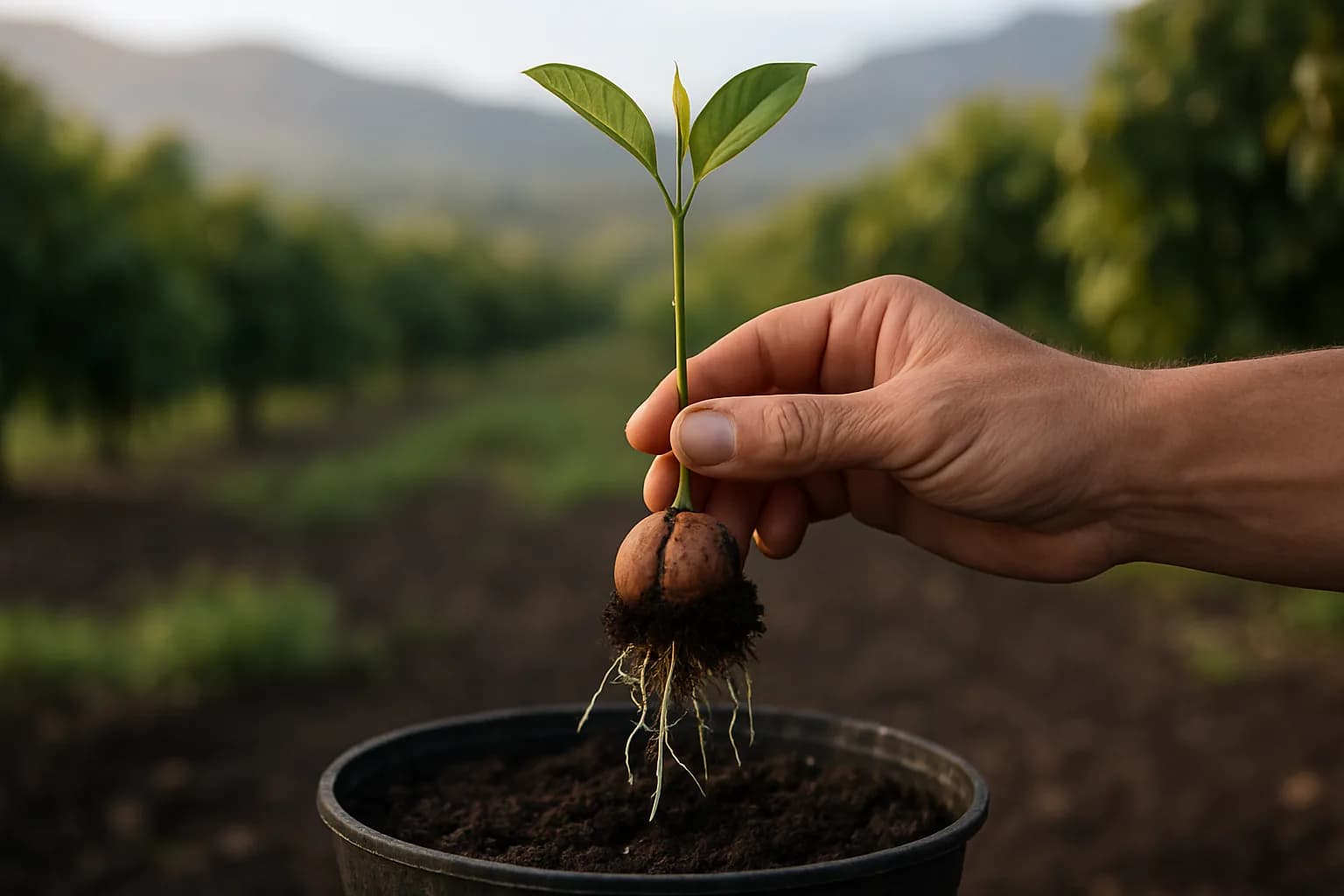
Avocado rooting is a decisive phase in the propagation of this crop, and mistakes made at this stage can compromise the viability of the nursery and the future profitability of the plantation. The avocado (Persea americana) is a species sensitive to the conditions of the root environment, especially to excessive moisture and lack of oxygen. Understanding the factors that influence the formation of adventitious roots is the first step towards avoiding failures and ensuring uniform, vigorous plants. Current commercial demand, both in Europe and in Latin America, requires nurseries that guarantee root health and efficiency in water use, so mastering these techniques becomes a competitive advantage.
Among the critical factors are temperature, relative humidity, light, the type of substrate and the quality of the plant material. The optimum temperature for avocado rooting is usually between 22 and 28 °C; below 18 °C the process slows down, and above 32 °C respiration increases and the reserves of the cutting are depleted. Relative humidity must be kept high, around 80-90 %, to reduce transpiration and prevent dehydration of the leaves. Light should be abundant but indirect during the first weeks, since direct radiation can raise leaf temperature and cause water stress. The substrate must be porous, with good drainage and moisture-retention capacity, but without waterlogging. The quality of the starting material — healthy cuttings from pathogen-free mother plants — is equally crucial.
A frequent mistake is underestimating the importance of drainage. Avocado does not tolerate water saturation; the lack of oxygen in the rhizosphere favours the proliferation of fungi such as Phytophthora cinnamomi, responsible for root rot. In pots, it is essential that the drainage holes are not blocked and that surplus water is removed after each irrigation. In water propagation, only the lower third of the cutting should remain submerged, and the water should be renewed every few days to reduce the bacterial load. These details, although they may seem minor, make the difference between a uniform batch and one with significant losses.
Light is another factor that is often managed poorly. Avocado needs many hours of light for vigorous growth, but during the rooting phase the cutting benefits from bright light without strong direct sun. Excess radiation can cause leaf scorch and increase transpirational demand, while insufficient light reduces photosynthesis and delays root formation. The combination of adequate light, stable temperature and controlled humidity creates the right environment for the cutting to develop a robust root system.
In the Latin American context, where avocado is grown in tropical and subtropical regions, conditions of high humidity and temperature can exacerbate fungal and bacterial problems. It is therefore essential to maximise hygiene measures in the nursery, disinfect tools and trays, and use sterile or pasteurised substrates. The implementation of propagation beds with bottom heat can improve rooting in areas where soil temperature is low. Likewise, the use of clonal rootstocks adapted to local conditions contributes to uniformity and disease resistance.
Most common mistakes and how to correct them
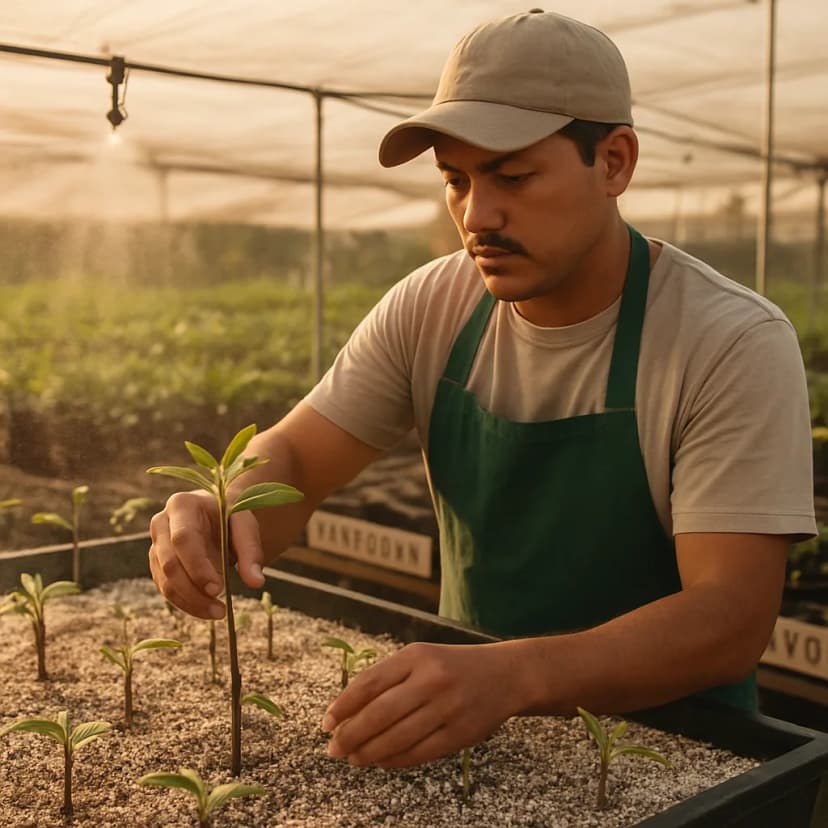
Excess water is, without doubt, the most frequent and destructive mistake in avocado rooting. Many growers, in an attempt to maintain moisture, overwater and create an anaerobic environment that rots the base of the cutting. The correction involves establishing an irrigation regime that keeps the substrate moist but not waterlogged. The practical rule is to water when the surface of the substrate begins to dry out, and to ensure that the water drains freely. In pots, check that the holes are clear and that the saucer does not accumulate water. In water propagation systems, change the liquid every 2-3 days and submerge only the lower third of the cutting.
The lack of drainage in the substrate is another critical mistake. A substrate that is too compact or with excess clay retains water and reduces porosity, which prevents the oxygenation of the roots. The solution is to use airy mixes, such as blond peat, coconut coir, perlite or vermiculite in suitable proportions. A recommended mix can be 50% peat, 30% perlite and 20% coconut coir, which offers good drainage and moisture retention. In addition, it is important that the container has sufficient holes and that it is not placed directly on an impermeable surface.
Using cuttings or seeds in poor condition is another mistake that condemns the process from the start. Cuttings must come from healthy mother plants, free of pests and diseases, and be at least 15-20 cm long, with 2-3 nodes. Seeds must be fresh and viable; old or badly stored seeds lose their germinative power. In the case of propagation by seed, it is essential to extract it from the ripe fruit and clean it well to remove pulp remnants that could encourage fungi. Surface disinfection with a 1% sodium hypochlorite solution for 10 minutes can reduce the microbial load.
Transplanting too early is an impatience that usually comes at a high cost. The roots must be visible and sufficiently developed before moving the plant to a larger container or to the field. In avocado, rooting can take 4 to 8 weeks, depending on the conditions. Forcing the transplant when the roots are incipient causes stress, dehydration and death. The signal to transplant is the appearance of white, firm roots protruding through the drainage holes or surrounding the root ball. At that moment, you can proceed with care, keeping the substrate moist and avoiding damage to the roots.
Another common mistake is the lack of hygiene in the nursery. Tools, trays and surfaces must be disinfected regularly to prevent the spread of pathogens. The use of reused substrates without treatment is a frequent route of contamination. The implementation of a cleaning and disinfection protocol, together with the use of resistant varieties, reduces the incidence of diseases. In regions with high Phytophthora pressure, it may be necessary to graft onto resistant rootstocks, such as hybrids of Persea americana × Persea schiedeana.
Professional techniques for successful rooting
To achieve successful rooting in avocado, professional nurseries employ techniques that combine environmental control, suitable substrates and hormonal treatments. One of the most effective is the use of indolebutyric acid (IBA) at concentrations that vary according to the type of cutting and the variety. In trials cited for Mexico, up to 66 % rooting was reported using etiolation, IBA at 10,000 mg/L and wounding. Etiolation consists of keeping the cuttings in partial darkness before the application of IBA, which stimulates the formation of adventitious roots. Wounding refers to making cuts at the base of the cutting to increase the absorption surface.
The application of IBA must be carried out at the base of the cutting, either as a powder or in solution, and then the cutting should be placed in the substrate. It is important not to exceed the recommended dose, since very high concentrations can be phytotoxic. Another technique is the use of propagation chambers with intermittent mist, which maintain a high relative humidity and a controlled temperature, reducing transpiration and favouring photosynthesis. These chambers allow greater control over environmental conditions and improve the uniformity of rooting.
The use of clonal rootstocks is a widespread practice in commercial nurseries. Clonal rootstocks offer genetic uniformity, disease resistance and adaptation to specific soil conditions. In Mexico, for example, rootstocks such as 'Duke 7', 'Thomas' or 'Topa Topa' are used, which have shown good compatibility with commercial varieties such as 'Hass'. The propagation of these rootstocks by rooting of cuttings requires controlled conditions and can benefit from the application of biostimulants that promote root emission.
The nutrition of the cutting during rooting is also relevant. Although the reserves of the mother plant supply the initial needs, the foliar application of micronutrients such as zinc, boron and manganese can improve root formation. Boron, in particular, is involved in cell division and the growth of meristematic tissues. A balanced nutrient solution, with low nitrogen content and sufficient phosphorus, can be applied via foliar spray to maintain metabolic activity without stimulating excessive growth that competes with root formation.
Inoculation with beneficial microorganisms, such as arbuscular mycorrhizal fungi and plant growth-promoting bacteria, is a sustainable strategy that improves nutrient uptake and stress tolerance. These microorganisms colonise the rhizosphere and establish symbioses that favour root development. In ecological nurseries, the use of biostimulants based on seaweed and microalgae extracts provides natural phytohormones, amino acids and polysaccharides that stimulate root formation and improve substrate health.
The role of biostimulants in rooting
Agricultural biostimulants are products that, applied to plants or to the substrate, improve nutritional efficiency, tolerance to abiotic stress and crop quality. In avocado rooting, biostimulants can play a key role by providing bioactive compounds that stimulate cell division and root differentiation. Seaweed extracts, such as Ascophyllum nodosum, contain natural auxins, cytokinins and betaines, which promote root growth and reduce transplant stress. Freshwater microalgae, such as Chlorella, are rich in amino acids, vitamins and polysaccharides that improve soil structure and microbial activity.
The application of biostimulants based on fulvic and humic acids improves nutrient availability and water retention in the substrate, as well as stimulating root growth. Fulvic acids, due to their low molecular weight, easily penetrate the plant cell and act as micronutrient carriers, improving foliar and root absorption. In nurseries, incorporating these compounds into the substrate or applying them through irrigation can increase the rooting rate and reduce the time needed for roots to be ready for transplanting.
The use of biostimulants also contributes to reducing chemical fertilisers, in line with the principles of sustainable agriculture. By improving nutrient use efficiency, doses of synthetic fertilisers can be reduced without compromising growth. This is especially relevant in organic production, where the aim is to minimise environmental impact. Biostimulants certified for organic farming, such as those offered by Ecoganic, are formulated with natural ingredients and comply with Regulation (EU) 2019/1009, guaranteeing their suitability for this type of production.
In practice, a rooting programme with biostimulants may include dipping the base of the cutting in a biostimulant solution before planting, followed by foliar applications every 7-10 days. The combination of IBA with biostimulants can have a synergistic effect, improving both the quantity and quality of roots. It is important to follow the manufacturer's recommendations and adjust doses according to local conditions and the physiological state of the plant material.
Research into biostimulants for avocado has shown promising results. For example, the application of seaweed extracts in clonal rootstocks has improved the rooting rate and the uniformity of batches. These products can also help mitigate transplant stress, reducing mortality in the field. In regions with degraded soils or high salinity, biostimulants that improve soil microbiota and organic matter can facilitate the adaptation of young plants.
Stress management and root health
Abiotic stress, such as water stress, salinity or extreme temperatures, negatively affects avocado rooting. During the nursery phase, plants are exposed to temperature and humidity fluctuations that can trigger stress responses. The application of biostimulants containing osmoprotectants, such as glycine betaine or mannitol, helps maintain cell turgor and protect membranes. Likewise, adequate nutrition with potassium and calcium strengthens cell walls and improves resistance to pathogens.
Root health is a critical aspect. Diseases such as root rot caused by Phytophthora cinnamomi can decimate a batch of cuttings in a few days. Prevention includes the use of sterile substrates, disinfected tools and careful irrigation management. The application of natural bioprotectors, such as Trichoderma spp. or Bacillus subtilis, can protect roots against pathogenic fungi through mechanisms of competition, antibiosis and induced resistance. These beneficial microorganisms colonise the rhizosphere and create a biological barrier against pathogens.
Regular monitoring of substrate moisture and temperature is essential to detect problems in time. The use of moisture sensors and thermometers can help maintain optimal conditions. If signs of rot are detected, such as a soft base or bad smell, affected cuttings should be removed immediately and irrigation adjusted. Substrate aeration can be improved by adding materials such as perlite or composted pine bark.
In the Latin American context, where avocado is grown in areas with high rainfall, nursery drainage is fundamental. Propagation beds must have a slope that facilitates runoff and prevents water from accumulating. The construction of propagation tables with mesh or porous materials helps maintain an airy environment. In addition, crop rotation in the nursery and soil disinfection between batches reduce the accumulation of pathogens.
The implementation of an integrated management programme, combining cultural practices, biological control and rational use of plant protection products, is the most effective strategy for maintaining root health. In organic farming, the use of natural bioprotectors is permitted and can be very effective if applied preventively and consistently. CE 2019/1009 organic certification guarantees that these products meet the requirements for use in organic production.
Related articles
Do you need professional help?
At Ecoganic in Spain, Europe, we offer organic Biostimulants and Fertilisers. Call us: +34 623 753 719.
Request your free quote
Frequently asked questions
How long does it take for an avocado cutting to root?
The rooting time for avocado varies depending on environmental conditions and the type of cutting. In general, it can take between 4 and 8 weeks, although under suboptimal conditions it may extend to 12 weeks. Temperature, humidity and light are determining factors. It is important not to force transplanting until the roots are visible and firm.
Why is the base of my avocado cutting rotting?
Rotting at the base is usually caused by excess water and a lack of oxygen in the substrate, which favours fungi such as Phytophthora. To prevent it, make sure the substrate has good drainage, water only when necessary and disinfect your tools. In water propagation, change the water every 2-3 days and submerge only the lower third of the cutting.
Which substrate is best for rooting avocado?
An ideal substrate should be porous, with good moisture retention but without becoming waterlogged. A mix of blonde peat, perlite and coconut fibre in balanced proportions works well. Vermiculite can also be added to improve aeration. Avoid heavy substrates or those with excess clay, as they reduce the oxygenation of the roots.
Can I use biostimulants to improve rooting?
Yes, biostimulants based on algae, microalgae and fulvic acids can stimulate root formation and improve substrate health. Applied at the base of the cutting or via foliar application, they provide phytohormones, amino acids and micronutrients that favour root development. It is advisable to combine them with appropriate cultural practices and to follow the doses recommended by the manufacturer.
For more information on biostimulants and organic fertilisers for avocado, visit our page on avocado cultivation with organic nutrition and discover our fertilisation programme for avocado. At Ecoganic we work to offer sustainable solutions that improve the productivity and health of your crops. Request your free quote and take your nursery to the next level!
References