
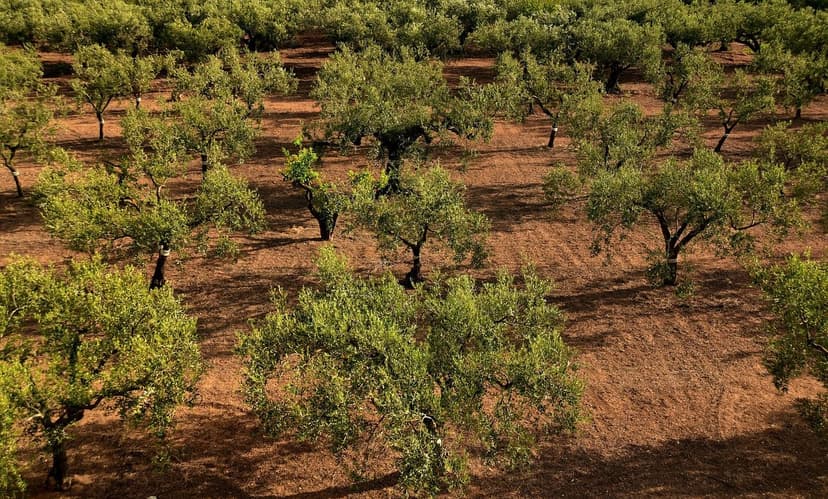
In a 3.5 ha commercial plot of super-high-density hedgerow Arbequina olives, ECOGANIC UNIVERSAL increased olive production by +9.8% (10,285 → 11,289 kg/ha) and oil yield by +8% (1,776 → 1,916 kg/ha) compared to the control treated with animal-derived amino acids.
The trial: Super-high-density Arbequina, 3.5 ha, 4 applications
Super-high-density hedgerow olive orchards (with densities of 1,000 to 2,000 plants per hectare) are the production system that has grown the most in Spain and the Arab world over the last decade. Their profitability depends on maximizing oil yield per hectare —the combination of kg of olives and the percentage of extractable oil— with the fewest possible interventions.
In this context, the trial compared ECOGANIC UNIVERSAL 0-0-1 against a control treated with animal-derived amino acids (the industry standard). The choice of comparator is relevant: animal-derived amino acids are the most widespread biostimulant alternative in olive growing, making the comparison technically more demanding than comparing with an untreated control.
Quantified results
| Parameter | Control (amino acids) | ECOGANIC UNIVERSAL | Variation |
|---|---|---|---|
| Olive production (kg/ha) | 10,285 | 11,289 | +9.8% |
| Oil yield (kg/ha) | 1,776 | 1,916 | +8.0% |
The full trial data —application protocol, statistical analysis, and verifiable source— are available in the technical datasheet:
View full trial: Super-intensive Arbequina olive →
Why 4 foliar applications generate +8% in fat yield
Olive oil yield depends on two factors: olive production per hectare and the percentage of extractable oil from the fruit. ECOGANIC UNIVERSAL acts on both through its technology of unicellular freshwater microalgae (Chlorella), without adding chlorides or sodium to the soil —something especially relevant in olive groves with deficit irrigation where accumulated salinity reduces enzymatic activity.
The 4-application protocol was designed to coincide with the phenological stages of highest metabolic demand in the olive tree:
- Budding (BBCH 07-09): Activation of reserves for a vigorous start to the season.
- Pre-flowering (BBCH 54-57): Maximization of fruit set potential and reduction of flower drop.
- Fruit set (BBCH 71-72): Support for initial fruit development and reduction of young olive drop.
- Fruit filling (BBCH 75-77): Optimization of oil accumulation in the mesocarp.
For the complete technical program of biostimulants in olive trees, consult the organic fertilization guide for olive trees.
Frequently asked questions about biostimulants in super-intensive olive orchards
Why does the trial control use animal-derived amino acids instead of an untreated control?
Animal-derived amino acids (hydrolyzed feathers, blood, or viscera) are the most widely used biostimulant in conventional olive growing. Comparing against them—rather than against an untreated control—is the most demanding technical standard and offers the greatest commercial value for the farmer.
Is ECOGANIC UNIVERSAL suitable for producing organic-certified extra virgin olive oil?
Yes. It is certified under Regulation (EU) 2018/848, NOP USDA, and JAS. It leaves no detectable residues in the fruit or extracted oil. It can be recorded in the field notebook of certified organic farms without additional restrictions.
Does it work on varieties other than Arbequina, such as Arbosana or Koroneiki?
The published trial covers Arbequina in super-intensive hedgerow systems. The mechanisms of action of microalgae biostimulants are variety-independent, but it is recommended to validate on your own plots before extrapolating quantitative results to other varieties or cropping systems (traditional, intensive).