
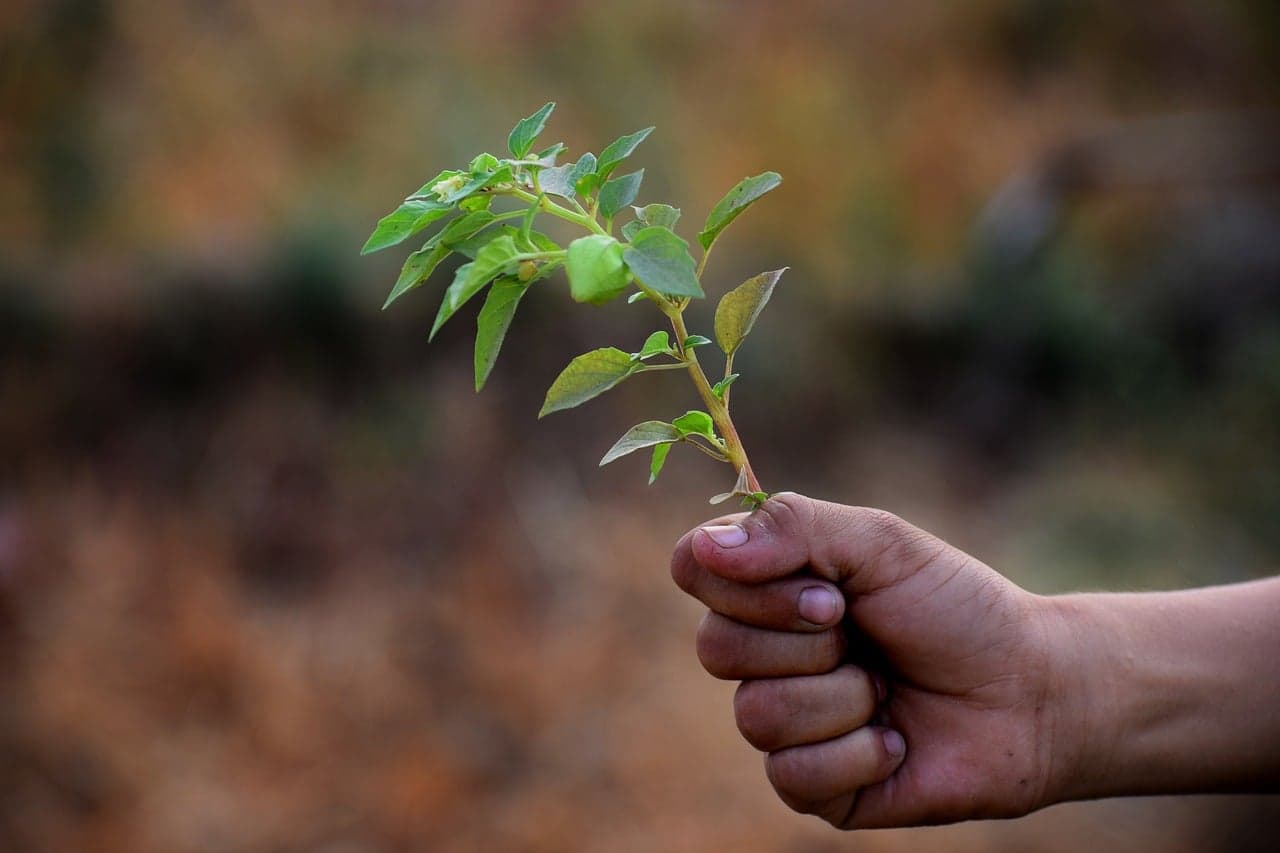
Foliar potassium in organic avocado for size and filling: rates, phenological timings and microalgae biostimulants. Request your free quote.
Why potassium defines avocado size
Foliar potassium in organic avocado has become a strategic tool for growers seeking to improve fruit size and filling without resorting to chemically synthesised sources. Potassium (K) is the most abundant cation in the cytoplasm and takes part in osmotic regulation, enzyme activation, photoassimilate transport and protein synthesis. In avocado, its availability during the fruit growth and swelling phase directly determines final weight, the proportion of exportable fruit and pulp quality.
In organic orchards in the tropics and subtropics, potassium dynamics are especially complex. Soils with high fixation, extreme pH, salinity or imbalances with calcium and magnesium reduce the efficiency of root fertilisation. In this context, the foliar route makes it possible to correct specific deficiencies and sustain supply during peak demand that the root cannot cover. Experience accumulated in Hass, Fuerte and Lamb Hass avocado plantations shows that a combined strategy of soil fertilisation with targeted foliar applications consistently improves commercial size.
Avocado physiology explains this dependence. The fruit accumulates dry matter steadily from fruit set to harvest, and potassium acts as an osmotic driver that promotes the entry of water and sugars into the mesocarp tissues. When K supply is limited, the tree prioritises vegetative maintenance and the fruit remains small, with lower oil content and greater susceptibility to post-harvest disorders. Potassium management is therefore not a cosmetic adjustment: it is an agronomic decision that affects orchard profitability.
A typical field example in producing areas of Michoacán (Mexico), La Libertad (Peru) or Valle del Cauca (Colombia) is that of orchards with clay soils and alkaline pH where leaf analysis reveals K levels below the critical range (0.8–1.0 % in 5–7-month-old leaves) despite generous soil inputs. Foliar potassium application at key timings corrects this gap and translates into visible size increases in the following harvest.
Foliar absorption of potassium: mechanisms and conditions
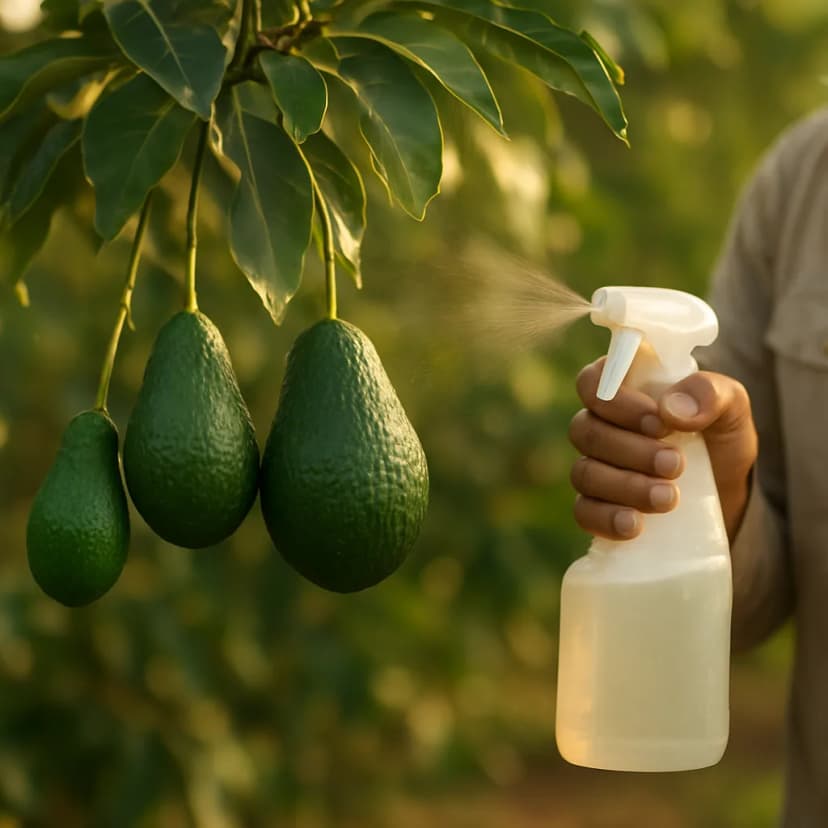
Foliar absorption of nutrients in avocado depends on the structure of the cuticle, stomatal density, relative humidity and the formulation of the product. Potassium penetrates mainly through the cuticle and the stomata as the K⁺ ion, and its rate of entry is conditioned by the concentration gradient, the pH of the solution and the presence of surfactants that reduce surface tension. In avocado, a leathery, waxy leaf, absorption efficiency is lower than in thin-leaved crops, so formulation and timing of application are decisive.
Various studies on foliar absorption agree that temperature, relative humidity and the water status of the plant modulate ion penetration. Applications with relative humidity above 60 %, temperatures between 18 and 28 °C and without severe water stress favour the entry of potassium. Conversely, applications during hours of maximum radiation, with a high vapour pressure deficit, can cause stomatal closure and reduce absorption. In avocado, the abaxial side of the leaf has a higher stomatal density, which justifies careful coverage of the underside.
Formulation also matters. Potassium sources accompanied by organic acids, such as fulvic acids for organic farming, improve penetration and reduce the risk of phytotoxicity. Fulvic acids act as a carrier and chelating agent, favouring the entry of K⁺ and its movement within the tissue. Likewise, the presence of amino acids and seaweed extracts in the application mixture can increase leaf tolerance and the overall efficiency of the treatment.
Field trials in organic avocado under high radiation show that foliar application of potassium carried out at dusk, with complete wetting and a fine droplet, improves product retention and reduces evaporation. A common mistake is to apply with excessive volumes that generate run-off, losing a large part of the nutrient. The technical recommendation is to adjust the volume to the size of the tree and ensure uniform coverage without reaching the point of drip.
Key phenological timings for foliar potassium
Avocado has a potassium demand that is concentrated in three phenological windows: fruit set, rapid fruit growth and final filling. Each has different objectives and requires specific doses and formulations. Applying potassium at the wrong time can be an expense with no return; doing so in the right window multiplies the impact on calibre.
Fruit set and establishment
During fruit set, the tree determines how many fruits it will carry to harvest. Potassium participates in the osmotic regulation of the ovary and in initial cell division. A light foliar application of potassium at this time, combined with boron and calcium, helps to reduce the abortion of flowers and newly set fruits. The dose must be moderate so as not to interfere with the absorption of calcium, with which it competes at the transport level.
Rapid fruit growth
Between 6 and 16 weeks after fruit set, the fruit undergoes its highest rate of cell expansion. Here potassium is the protagonist: it drives water entry and the accumulation of dry matter. Foliar applications of potassium at this stage, at intervals of 14 to 21 days, maintain the supply when the root cannot meet the demand. In Hass avocado, this stage coincides with maximum sensitivity to water stress, so foliar application becomes a nutritional insurance.
Final filling and oil accumulation
In the last 6 to 8 weeks before harvest, the fruit gains weight and oil. Potassium favours the translocation of sugars from the leaf and their conversion into lipids. Foliar applications of potassium at this stage, accompanied by magnesium, improve the percentage of dry matter and the organoleptic quality. This is the time to adjust the dose to avoid excesses that could delay ripening or affect post-harvest.
A practical case documented in organic orchards in the Uruapan region (Mexico) shows that a programme of three foliar applications of potassium (fruit set, rapid growth and filling) made it possible to increase the percentage of exportable-calibre fruit by more than 12 points compared with the control, without increasing soil applications. This type of result reinforces the importance of phenological precision.
Dosage, formulations and compatibility in organic farming
In organic farming, permitted sources of potassium include potassium sulphate, potassium from plant extracts, vinasse, wood ash and formulations with algae. The choice depends on leaf analysis, soil type and phenological stage. The usual foliar dosages in avocado range from 2 to 5 kg of K₂O per hectare and application, diluted in volumes of 400 to 800 litres of water, adjusted according to tree size.
The ideal formulation combines potassium with fulvic acids, amino acids and microalgae extracts. Organic agricultural biostimulants based on freshwater microalgae provide phytohormones, polysaccharides and bioactive compounds that improve absorption and reduce the oxidative stress associated with the application. This synergy makes it possible to reduce the potassium dosage without losing efficacy, a key aspect in the context of sustainable agriculture and agroecology promoted by international organisations.
Compatibility in mixture is another critical factor. Foliar potassium should not be mixed with calcium in the same application, as they precipitate as calcium sulphate or carbonate, blocking both nutrients. Nor is it advisable to mix it with copper at high doses, which is common in organic disease management. The correct strategy is to alternate potassium and calcium applications in different weeks, or to use chelated formulations that prevent precipitation.
Organic certification requires that all inputs be authorised. In the European Union, Regulation (EU) 2018/848 and Regulation (EU) 2019/1009 establish the framework for fertilisers and biostimulants. In Latin America, each country has its own regulations, but the trend is towards harmonisation. Working with suppliers that offer organic certifications and complete technical data sheets is essential to maintain traceability.
Synergy with microalgae biostimulants and organic matter
Foliar application of potassium reaches its maximum potential when integrated into a biostimulation strategy. Microalgae biostimulants provide compounds that stimulate the metabolic activity of the leaf, improve photosynthetic efficiency and increase tolerance to abiotic stress. In avocado, this translates into greater filling capacity and better calibre.
Soil organic matter and the associated microbiota play a complementary role. A biologically active soil improves potassium availability and its root absorption, reducing dependence on foliar applications. Fulvic acids applied to the soil or via foliar application act as a bridge between soil and foliar nutrition, improving the overall efficiency of the programme.
Comparative trials in organic avocado indicate that combining foliar potassium with microalgae extracts improves chlorophyll content, photosynthetic rate and final fruit weight compared with potassium applications alone. This synergistic effect is attributed to the presence of cytokinins, betalains and polysaccharides in the microalgae extracts, which enhance cell division and expansion in the fruit.
Field experience in orchards under regenerative management suggests that foliar application of potassium should be accompanied by practices that maintain soil health: living cover crops, compost inputs, reduced tillage and the use of root biostimulants. This holistic vision is what makes it possible to sustain calibre over the years without depending exclusively on external inputs.
Common mistakes and field validation
One of the most common mistakes is applying foliar potassium without a prior diagnosis. Leaf analysis and soil analysis are the basis for deciding doses and timing. Applying potassium when levels are already adequate can create imbalances with calcium and magnesium, affecting fruit quality and post-harvest life. The rule is to correct deficiencies, not to overfeed.
Another mistake is neglecting the pH of the application water. Alkaline waters (pH > 8) reduce the efficiency of potassium absorption and can precipitate with other ions. Adjusting the pH to 5.5–6.5 before application improves penetration and mixture stability. The use of organic acidifiers permitted in organic farming is a recommended practice.
Field validation is essential. Keeping records of applications, weather conditions, leaf analyses and harvest results allows the programme to be adjusted year after year. Ecoganic's field trials and results in avocado and other crops show the importance of repetition and local adjustment. There are no universal recipes: every orchard has its own dynamics.
Finally, it is essential to avoid absolute promises. The response to foliar potassium depends on the condition of the orchard, the fruit load, the climate and general management. A well-designed programme improves calibre and filling, but it does not replace comprehensive agronomic management. Transparency and technical rigour are the foundation of trust.
For those looking to implement this strategy, Ecoganic's fertilisation programme for avocado offers a guide adapted to different conditions. The key lies in combining diagnosis, timing and appropriate formulations to obtain fruit of consistent calibre and superior quality.
Related articles
Do you need professional help?
At Ecoganic in Spain, Europe, we offer organic biostimulants and fertilisers. Call us: +34 623 753 719.
Request your free quote
FAQ
When is the best time to apply foliar potassium in avocado?
The most effective windows are fruit set, rapid fruit growth (6–16 weeks later) and final filling (the last 6–8 weeks before harvest). Each moment has different objectives: reducing abortion, driving cell expansion and favouring oil accumulation. Applying during these phases maximises the impact on calibre and quality.
What dose of foliar potassium is recommended in organic avocado?
Usual doses range between 2 and 5 kg of K₂O per hectare and application, diluted in 400–800 litres of water. The exact dose depends on the leaf analysis, tree size and fruit load. It is advisable to start with moderate doses and adjust according to the response observed in the field.
Can foliar potassium be mixed with calcium in the same application?
It is not advisable, since calcium and potassium compete for absorption sites and can precipitate forming insoluble compounds. The ideal approach is to alternate applications in different weeks or to use chelated formulations that prevent precipitation and allow controlled co-absorption.
How does foliar potassium improve avocado calibre?
Potassium regulates osmotic pressure and the transport of photoassimilates to the fruit, driving water uptake and dry matter accumulation. This translates into larger, heavier fruits with a higher proportion of exportable calibre. It also improves oil content and pulp firmness.
Is foliar potassium compatible with microalgae biostimulants?
Yes, the combination is highly synergistic. Microalgae extracts provide phytohormones and bioactive compounds that improve absorption and reduce oxidative stress. This mixture allows the potassium dose to be reduced and better results to be obtained in fruit calibre and quality, while maintaining the organic approach.