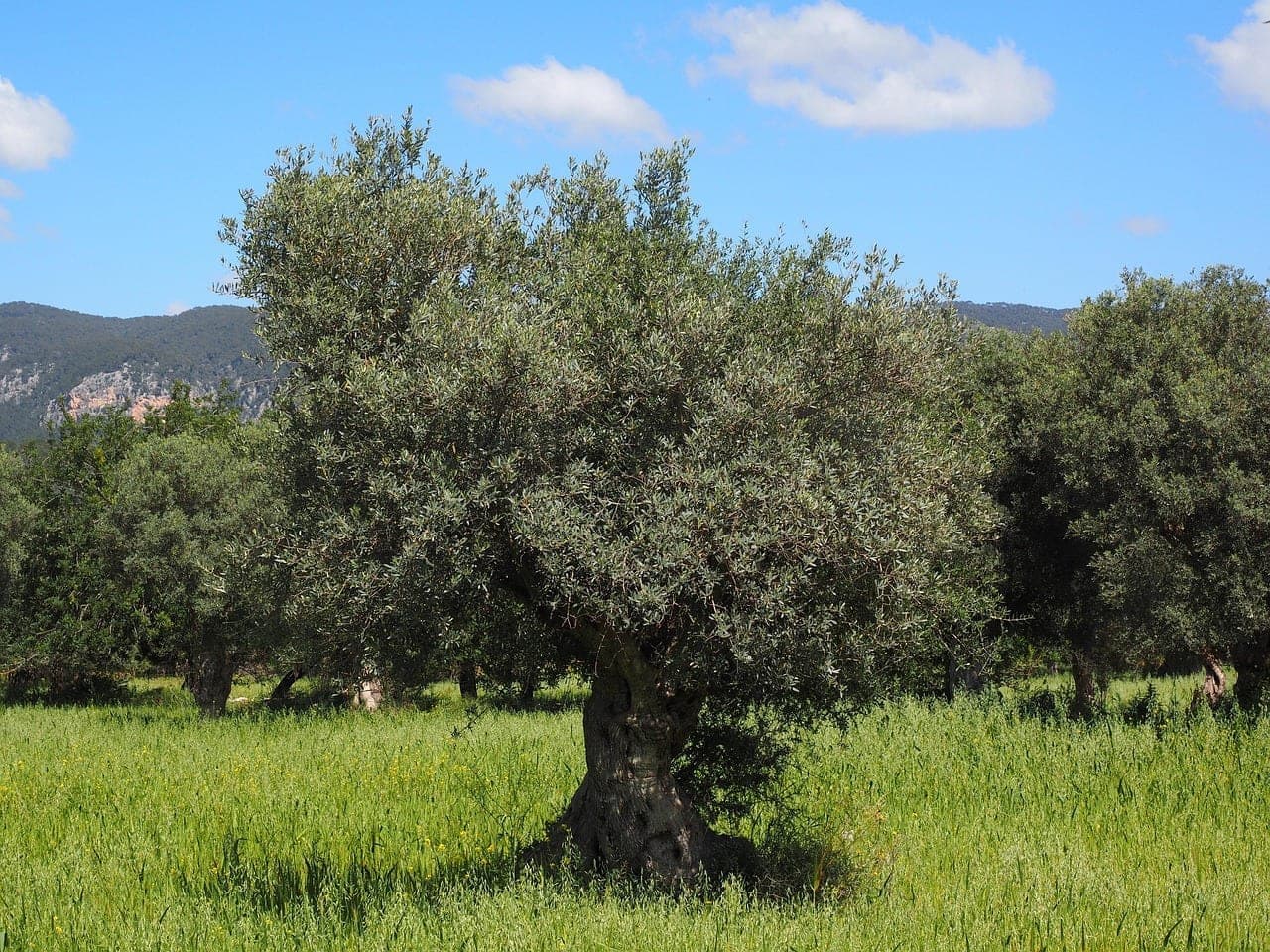
Learn how to manage living cover crops in organic olive groves: reduce erosion, improve the soil and control water competition. Request your free quote!
Introduction to the management of living cover crops in organic olive groves
The management of living cover crops in organic olive groves has become a key practice for conserving the soil, improving its fertility and increasing functional biodiversity. In a context of climate change, with longer, drier summers, the organic olive grower needs strategies that protect the most valuable resource: the soil. Cover crops, whether spontaneous or sown, offer an integral solution that combines erosion control, the supply of organic matter and water regulation.
In this article we will address the technical aspects of managing living cover crops in organic olive groves: from the selection of species and sowing rates to the optimal time for mowing and its interaction with fertilisation. We will also analyse how organic biostimulants and fertilisers can enhance the benefits of the cover crop, improving soil health and olive tree nutrition. If you are looking to optimise your holding, this article will provide you with the keys to implementing successful management.
Agronomic benefits of cover crops
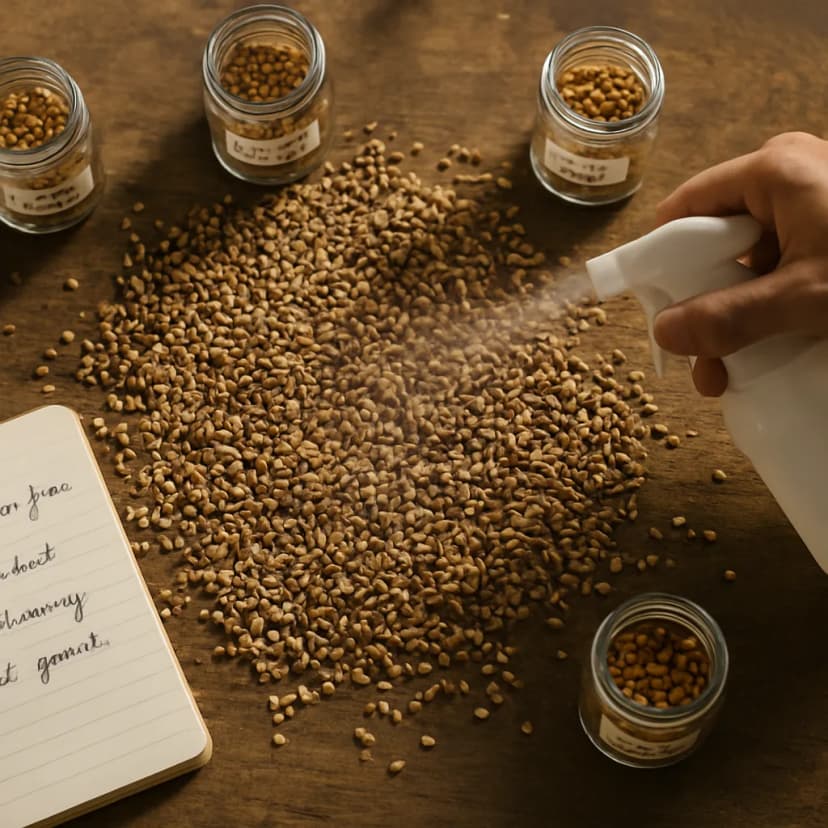
Living cover crops provide multiple benefits to the organic olive grove. Firstly, they drastically reduce soil erosion. In comparative trials in Andalusian olive groves, runoff was reduced by more than 60% and soil and organic carbon losses decreased by more than 90% compared with conventional tillage. These data demonstrate the protective role of the cover crop against the impact of raindrops and surface wash-off.
Another fundamental benefit is the improvement of soil structure. The roots of the cover crops, especially those of grasses and legumes, aggregate the soil particles, increasing porosity and infiltration. This translates into better use of rainwater, which remains available to the olive tree in deeper layers. In addition, the decomposition of plant residues feeds the soil microbiota, increasing organic matter and nutrient availability.
Functional biodiversity is another pillar. Flowering cover crops attract pollinators and natural enemies of pests, reducing the need for bioprotectants. In olive groves with managed cover crops, an increase in the presence of beneficial insects has been observed, which contributes to the biological control of pests such as the olive fruit fly. This approach is aligned with the principles of regenerative agriculture and organic production.
Finally, living cover crops contribute to climate change mitigation by fixing carbon in the soil. The accumulated organic matter improves long-term fertility and reduces dependence on external fertilisers. In this sense, the integration of certified organic fertilisers and microalgae biostimulants can further enhance these effects, stimulating microbial activity and the gradual release of nutrients.
Recommended species and mixtures for organic olive groves
The choice of species for the cover crop depends on the main objective, the type of soil and water availability. In rainfed olive groves, species with good early cover and a short cycle are preferred, so that they do not compete excessively for water in spring. Grasses such as barley (Hordeum vulgare) or brome (Brachypodium distachyon) are robust options. Brachypodium has been shown to reduce soil loss by 80% in university trials, reaching the sustainable erosion limit.
Legumes, such as bitter vetch (Vicia ervilia) or subterranean clover (Trifolium subterraneum), add nitrogen to the soil through symbiosis with rhizobia. However, their establishment may be slower and their initial covering capacity lower. For this reason, cereal-legume mixtures are especially recommended: they combine the rapid cover of the cereal with the nitrogen fixation of the legume. A usual proportion is 70% cereal and 30% legume, adjusted according to local conditions.
In olive groves with problems of difficult weeds, species such as common vetch (Vicia sativa) or Italian ryegrass (Lolium multiflorum) can be included, as they compete effectively. However, species that behave as weeds or have very long cycles must be avoided. The 2026 review on cover crops in Mediterranean climate recommends adjusting the mixture to the type of soil and the agronomic objective, prioritising early autumn sowing and timely mechanical termination.
For organic olive groves, it is essential that the seeds are not treated with non-authorised products. The organic certification of the seeds must be verified or, failing that, their use justified before the control body. Well-managed spontaneous cover crops are also valid and do not require sowing, although their composition is less controllable.
Sowing and establishment of the cover crop
The success of the cover crop begins with good soil preparation and sowing at the right time. In Mediterranean climate, autumn sowing (October-November) takes advantage of the rains and mild temperatures for rapid establishment. The indicative sowing rate for sown cover crops is 100-110 kg/ha of seed, or 20-50% higher than that used if the species were intended for grain. This rate ensures an adequate density to cover the soil without competing excessively.
Sowing can be done by broadcasting or in rows. Row sowing, when possible, facilitates subsequent management and reduces competition with the olive tree. It is recommended to leave an uncovered strip under the olive canopy of at least 0.5 m, to avoid competition for water and nutrients in the root zone of the tree. On slopes, it is important to sow following the contour lines to reduce erosion.
After sowing, it is crucial to ensure good establishment. If there is not enough rainfall, a support irrigation may be necessary, although in rainfed systems this depends on the weather. In the early stages, the cover crop is vulnerable to competition from weeds; selective mowing can help. Once established, the cover crop competes better and requires less intervention.
In organic olive groves, fertilisation of the cover crop must be minimal and based on organic sources. An input of 50 UF/ha of nitrogen in organic form can favour initial development, but always adjusted to the fertilisation plan and to organic regulations. Microalgae biostimulants, rich in phytohormones and amino acids, can be applied to the soil to stimulate microbial activity and improve the availability of nutrients for the cover crop and the olive tree.
Mowing management and control of water competition
Mowing management is the most critical aspect for avoiding water competition in spring. In rainfed olive groves, the cover must be mown before it begins to consume water significantly. The optimal moment is usually in late winter or early spring, when the cover has reached good development but has not yet depleted the soil's water reserves. In Córdoba, in an average year, the third week of March is recommended.
Mowing can be carried out with a brushcutter or shredder, leaving the plant residues on the soil so that they decompose and contribute organic matter. In grass covers, it is recommended to leave a living strip of at least 0.5 m to encourage self-seeding the following year. This strip also serves as a refuge for beneficial insects. In alternate rows, one row can be mown and another left unmown, rotating each year, to maintain biodiversity.
Control of water competition is especially important in dry years. If the spring is very dry, it may be necessary to bring mowing forward or even to carry out a second cut. The cover must not compete with the olive tree during the flowering and fruit set period, which is when the tree is most sensitive to water stress. Water stress at this moment can reduce fruit set and, therefore, production.
To mitigate stress, biostimulants that improve tolerance to water stress can be applied, such as those based on microalgae or fulvic acids. These products act on the physiology of the olive tree, improving the absorption of water and nutrients, and reducing the negative effects of competition. In addition, the organic matter generated by the cover improves soil structure, increasing water retention capacity.
Interaction with fertilisation and soil microbiota
Living covers directly influence soil nutrient dynamics. During their growth, they absorb nitrogen and other nutrients, which are temporarily immobilised. After mowing, the decomposition of the residues gradually releases these nutrients, synchronising with the olive tree's demand. However, if the C/N ratio of the residues is high (as in cereals), a net immobilisation of nitrogen can occur, which competes with the olive tree. This is why mixtures with legumes are recommended, as they have a lower C/N ratio and provide additional nitrogen.
Soil microbiota is favoured by the presence of living roots and plant residues. Decomposer microorganisms, mycorrhizae and nitrogen-fixing bacteria increase their activity, improving nutrient cycling. In this context, the application of microalgae and fulvic acid biostimulants can further stimulate microbial activity, providing easily assimilable compounds and improving soil structure.
Certified organic fertilisers, such as those based on organic matter and micronutrients, complement the olive tree's nutrition. It is important to adjust the fertilisation plan considering the contribution of the cover. In organic olive groves, periodic soil and foliar analyses are recommended to adjust the doses. The combination of living covers, organic fertilisers and biostimulants makes it possible to reduce dependence on external inputs and improve the sustainability of the system.
A key aspect is the synchronisation between the release of nutrients from the cover and the olive tree's demand. The olive tree has two peaks of demand: one in spring, during vegetative growth and flowering, and another in autumn, during fruit fattening and oil accumulation. Spring mowing releases nutrients that can coincide with the first peak, while the residues from autumn mowing (if carried out) can contribute to the second. Well-planned management maximises efficiency.
Organic regulations and certification
The management of living cover crops in organic olive groves must comply with Regulation (EU) 2018/848 on organic production, applicable from 1 January 2022. This regulation lays down the rules for the production, labelling and control of organic products. Living cover crops are compatible with the regulations provided that no unauthorised inputs are used and compliance with the holding's organic plan is maintained.
Organic operators must be certified by a competent authority or an accredited control body. In Spain, certification is managed by the regional authorities and authorised certification bodies. It is the farmer's responsibility to ensure that all practices, including cover crops, meet the requirements. The seeds used must be of organic varieties or, failing that, their use must be justified to the control body.
Living cover crops can also contribute to meeting the objectives of the new CAP, which encourages practices beneficial to the climate and the environment. Eco-schemes include the maintenance of plant cover in woody crops, offering aid to farmers who implement them. This represents an additional economic incentive to adopt this practice.
To guarantee conformity, it is recommended to keep a detailed record of operations: sowing dates, species, rates, mowing, applications of fertilisers and biostimulants. This record facilitates inspections and demonstrates commitment to organic production. In addition, organic certification is an added value for the marketing of olive oil, which is increasingly in demand among consumers.
Related articles
Do you need professional help?
At Ecoganic in Spain, Europe, we offer organic biostimulants and fertilisers. Call us: +34 623 753 719.
Request your free quote
Frequently asked questions
Does living cover reduce olive production?
Not necessarily. In comparative trials, no significant reduction in yield has been observed compared with no-tillage, although in rainfed conditions there may be a slight decrease if the cover competes for water. Proper mowing management minimises this risk and the long-term benefits outweigh possible occasional losses.
Which species are best for sowing in organic olive groves?
Mixtures of cereals and legumes are the most recommended. Barley, brome or ryegrass provide rapid cover, while legumes such as vetch or clover fix nitrogen. The choice depends on the soil and climate, but priority should be given to species adapted to the area and with a short cycle.
When should I mow the cover?
In Mediterranean rainfed conditions, mowing should be carried out before the cover competes strongly for water, normally in late winter or early spring. In Córdoba, for example, the third week of March is recommended in an average year. In dry years, it can be brought forward.
How does the cover affect nitrogen in the olive tree?
There may be temporary nitrogen immobilisation if the cover has a high C/N ratio, as in cereals. To avoid this, it is recommended to include legumes in the mixture and to mow before the biomass becomes excessive. The gradual release after mowing is synchronised with the olive tree's demand.
Can I apply biostimulants with the cover?
Yes, microalgae and fulvic acid biostimulants can be applied to the soil or foliarly. They stimulate the microbiota, improve structure and help the olive tree tolerate stress. It is important to choose products certified for organic farming and to follow the recommended rates.
References