
Learn how to recover vine roots affected by soil salinity with biostimulants and sustainable management. Technical guide for 2026. Request your quote.
Introduction
Soil salinity has become one of the main limiting factors for grapevine cultivation (Vitis vinifera) in arid and semi-arid regions of Latin America. Excess soluble salts in the soil directly affect water and nutrient uptake, compromising root development and, consequently, grape yield and quality. In this context, the recovery of roots damaged by salt stress is presented as a key strategy to restore vineyard productivity.
The problem of salinity manifests itself not only in naturally saline soils, but also in those where irrigation with low-quality water or the excessive use of chemical fertilisers has increased the salt concentration. According to the FAO, it is estimated that more than 20% of irrigated land worldwide is affected by some degree of salinity, which represents a serious threat to food security and agricultural sustainability. In grapevines, salinity tolerance is moderate, but the negative effects can be devastating if not properly managed.
This article offers a detailed technical guide on how to identify, manage and reverse the effects of soil salinity in grapevines, focusing on the recovery of the root system through the use of organic agricultural biostimulants, organic amendments and sustainable agronomic practices. Throughout the text, agronomic data, physiological mechanisms and field strategies supported by practical experience are presented, with the aim of providing producers with effective tools to improve the health of their vineyards.
How does soil salinity affect grapevines?
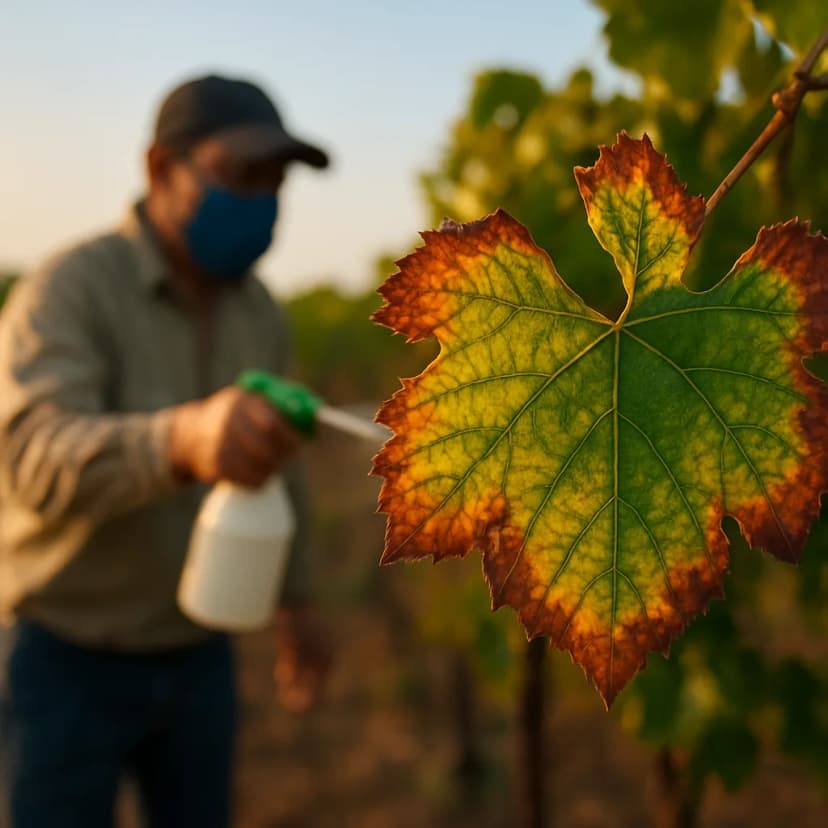
Soil salinity refers to the concentration of soluble salts, mainly chlorides, sulphates, carbonates and bicarbonates of sodium, calcium and magnesium. When these salts exceed certain thresholds, the osmotic potential of the soil solution becomes more negative, hindering water uptake by the roots. This phenomenon, known as osmotic stress, induces a decrease in the plant's water potential, similar to a physiological drought, even when the soil has sufficient moisture.
In addition to the osmotic effect, salinity causes specific ion toxicity. The chloride ion (Cl⁻) and sodium (Na⁺) can accumulate in plant tissues, especially in the leaves, interfering with essential metabolic processes such as photosynthesis and protein synthesis. In grapevines, chloride accumulation in the leaves can cause marginal necrosis and reduce the photosynthetic area, affecting grape ripening and sugar accumulation.
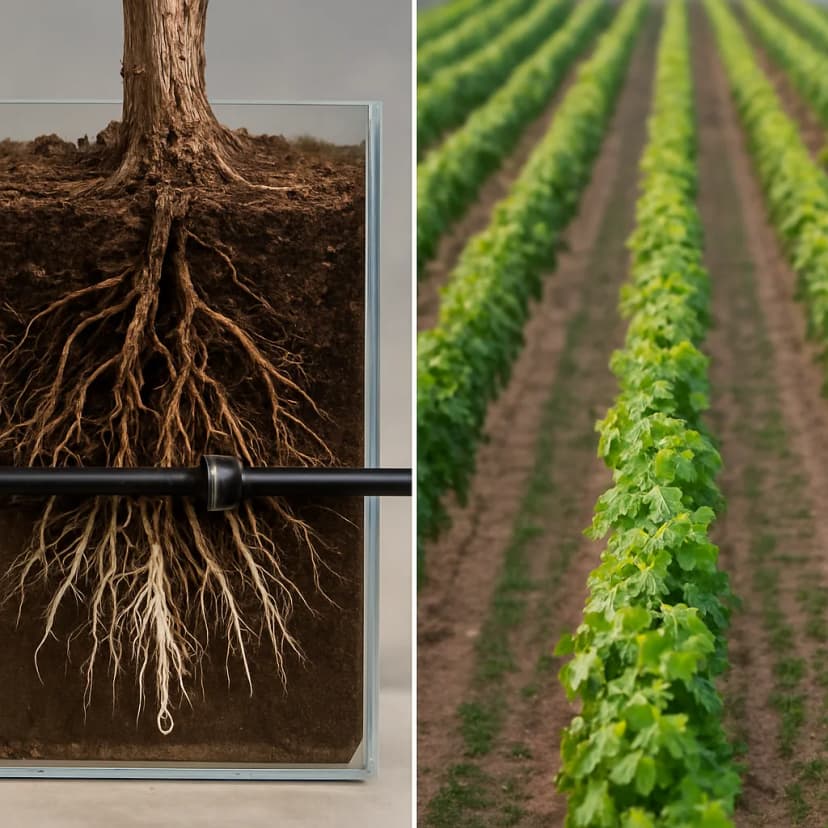
The root system is the first organ to suffer the consequences of salinity. Salts can damage root cells, alter membrane permeability and reduce the activity of the absorbent hairs. In the long term, salinity inhibits root growth, decreases root length and density, and promotes premature suberisation and lignification, which reduces the soil exploration capacity and nutrient uptake. In trials carried out in vineyards in Peru and Chile, it has been observed that salinity can reduce root volume by up to 40% compared with non-saline soils, which has a direct impact on plant vigour and production.
Effects on grapevine physiology
Grapevines respond to salt stress through a series of physiological mechanisms that include stomatal closure, reduced transpiration and the accumulation of osmoprotective compounds such as proline and soluble sugars. However, these defence mechanisms have an energy cost that reduces the availability of resources for growth and production. Studies have shown that under saline conditions, the photosynthetic rate of grapevines can decrease by between 20% and 50%, depending on the salt concentration and the duration of exposure.
Salinity also affects the plant's mineral nutrition. Excess sodium can interfere with the uptake of potassium (K⁺), an essential nutrient for osmotic regulation and enzyme activation. The induced potassium deficiency aggravates the effects of salt stress, causing ionic imbalances that affect grape quality, particularly the content of anthocyanins and phenolic compounds in red varieties.
Another important effect is the reduction in the synthesis of cytokinins, hormones that promote cell division and root growth. The decrease in cytokinins under salt stress contributes to the inhibition of root growth and to premature leaf senescence. Therefore, recovery of the root system requires not only correcting the salt levels in the soil, but also stimulating the physiological activity of the plant through the application of biostimulants that favour the development of new roots and the synthesis of phytohormones.
Symptoms of salt stress in grapevines
Symptoms of salinity in grapevines can vary depending on the severity of the problem, the variety and the climatic conditions. The first signs usually appear on the older leaves, which show scorching at the margins and tips, known as "marginal scorch". These lesions are caused by the accumulation of chloride and sodium in the leaf tissues, which reach toxic levels when transpiration concentrates the salts in the leaves.
In addition to the scorching, generalised yellowing (chlorosis) is commonly observed due to iron and other micronutrient deficiency induced by the high pH and the presence of carbonates in saline soils. Iron chlorosis manifests as interveinal yellowing in young leaves, which reduces photosynthetic capacity and affects vegetative development.
As for the root system, the symptoms are less visible but equally critical. Roots affected by salinity show reduced growth, a dark brown colour and a woody texture. The density of absorbent hairs decreases markedly, and in severe cases, necrosis of the root tips occurs, which prevents the absorption of water and nutrients. This root damage is the main cause of the loss of vigour and of plant wilting, even when irrigation is adequate.
Salt stress also affects the phenology of the grapevine. Budburst may be delayed, shoot growth is reduced and flowering and fruit set may be compromised, which translates into lower grape production. In winegrowing varieties, salinity can affect sugar accumulation in the berry, delaying ripening and altering the aromatic profile of the wine. It is therefore essential to detect the symptoms early and apply corrective measures to minimise the impact on harvest quality.
Diagnosis through soil and water analysis
To confirm the presence of soil salinity, it is essential to carry out soil and irrigation water analyses. The most widely used parameter is the electrical conductivity of the saturation extract (ECe), which measures the concentration of soluble salts. ECe values above 4 dS/m are considered moderately saline for grapevines, while above 8 dS/m growth is severely affected. It is also important to analyse the sodium adsorption ratio (SAR) and the soil pH, since sodicity can cause infiltration and compaction problems, aggravating the effects of salinity.
Leaf analysis complements the diagnosis by revealing the concentrations of chloride, sodium and nutrients in the plant tissues. Chloride levels above 0.5% dry weight in mature leaves are usually considered toxic for grapevines. With these data, the grower can make informed decisions on irrigation management, the application of amendments and the selection of salinity-tolerant rootstocks.
Recovery of roots damaged by salinity
The recovery of the vine's root system in saline soils is a gradual process that requires a comprehensive approach. There is no single solution, but rather a combination of practices that must be implemented in a coordinated manner. The first step is to reduce the salt concentration in the root zone by leaching the soil, either with copious irrigations of good-quality water or by installing subsurface drainage. However, this practice is not always sufficient, especially in regions with scarce fresh water or with fine-textured soils that hinder drainage.
Once salinity has been reduced to tolerable levels, it is necessary to stimulate the regeneration of the damaged roots. This can be achieved through the application of biostimulants containing bioactive compounds such as amino acids, humic and fulvic acids, seaweed extracts and beneficial microorganisms. These products have been shown to improve root architecture, increase root length and density, and promote the formation of absorbent hairs, which restores the plant's capacity to absorb water and nutrients.
In particular, biostimulants based on freshwater microalgae, such as those developed by Ecoganic from Chlorella and Scenedesmus, contain natural phytohormones such as auxins, cytokinins and gibberellins, which stimulate cell division and root elongation. In addition, the polysaccharides and betaines present in these algae act as osmoprotectants, helping root cells to tolerate residual osmotic stress. The application of these biostimulants at recommended doses of 2-3 L/ha via fertigation or by soil injection has shown promising results in the recovery of vineyards affected by salinity, with increases in root biomass of up to 30% in one growing cycle.
Another important aspect is the incorporation of organic matter into the soil, such as compost or well-decomposed manure. Organic matter improves soil structure, increases cation exchange capacity and favours microbial activity, which contributes to reducing sodium toxicity and to nutrient availability. In addition, organic matter acts as a water reservoir, reducing water stress under salinity conditions.
Irrigation management strategies
Irrigation management is crucial for root recovery in saline soils. The use of more frequent irrigations with a smaller volume is recommended to maintain constant moisture in the root zone, thus avoiding peaks in salt concentration. Drip irrigation is particularly suitable under these conditions, as it allows localised application of water and nutrients, reducing salt accumulation in the wet bulb. In addition, the use of lower-salinity water, when available, can help to leach salts out of the soil profile.
Irrigation scheduling should be based on measuring soil moisture using tensiometers or capacitance probes, as well as on monitoring the electrical conductivity of the drainage water. This information allows the frequency and amount of irrigation to be adjusted to keep salinity at acceptable levels and prevent water stress in the plant.
Biostimulants for root recovery
Biostimulants are defined as substances or microorganisms that, applied to plants or soil, stimulate natural processes to improve nutrient uptake, water-use efficiency and tolerance to abiotic stress. In the context of salinity, biostimulants play a fundamental role in root recovery, as they act on the physiological mechanisms that are altered by salt stress.
One of the most studied groups is seaweed extracts, such as Ecklonia maxima and Ascophyllum nodosum, which contain a wide range of bioactive compounds, including auxins, cytokinins, betaines, polyphenols and polysaccharides. These compounds have been shown to induce the formation of lateral and adventitious roots, increase the activity of antioxidant enzymes and improve the synthesis of osmoprotectants, which reduces the impact of salt stress on the root system. In field trials carried out in vineyards in Chile, the application of seaweed extracts in combination with fulvic acids resulted in a 25% increase in root length and an improvement in stomatal conductance, compared with the untreated control.
Another promising approach is the use of beneficial microorganisms, such as plant growth-promoting rhizobacteria (PGPR) and arbuscular mycorrhizal fungi. These microorganisms establish symbiotic associations with vine roots, improving nutrient uptake, especially phosphorus and zinc, and producing phytohormones that stimulate root growth. In addition, mycorrhizae can protect roots against sodium toxicity by selectively filtering ions. The inoculation of mycorrhizae in nurseries and their subsequent transplanting to the field has been shown to be an effective strategy for improving salinity tolerance in several crops, including the vine.
Ecoganic has developed a line of biostimulants based on freshwater microalgae, which combine a richness in phytohormones and osmoprotectants with the sustainability of their production. These products can be integrated into organic fertilisation programmes, such as those detailed in the fertilisation programme for vines, offering a natural and effective solution for root recovery under salinity conditions. The application of these biostimulants is preferably carried out at key phenological stages, such as budburst and fruit set, when the root system is in full activity.
Mechanisms of action of biostimulants
Biostimulants act through various mechanisms that contribute to root recovery under salinity conditions. Firstly, the phytohormones present in seaweed extracts and in microbial metabolites stimulate cell division and the elongation of root cells, which translates into greater root growth. Auxins, for example, promote the formation of lateral roots, while cytokinins stimulate branching and the formation of root hairs.
Secondly, osmoprotectant compounds, such as glycine betaine and proline, help cells to maintain water balance under osmotic stress. By accumulating in the cytoplasm, these compounds reduce the cellular osmotic potential without interfering with enzymatic functions, which allows roots to continue absorbing water even when the soil solution is hypertonic.
Thirdly, biostimulants can improve the activity of antioxidant enzymes, such as superoxide dismutase and catalase, which neutralise the reactive oxygen species (ROS) generated by salt stress. This protects the cell membranes and DNA of root cells, preventing oxidative damage and favouring tissue regeneration.
Finally, biostimulants can influence the expression of genes related to stress tolerance. Recent research has shown that the application of seaweed extracts induces the overexpression of genes encoding osmotic shock proteins and ion transporters, which increases the plant's capacity to exclude sodium and accumulate potassium in the cells.
Agronomic management of saline soil
Agronomic management of saline soil is essential to prevent the accumulation of salts and to promote the recovery of vine roots. Among the most effective practices are the application of organic amendments, the use of cover crops and the implementation of adequate drainage systems.
The incorporation of organic matter, such as compost, manure or crop residues, improves soil structure, increasing porosity and water retention capacity. This facilitates the leaching of salts and reduces the concentration of exchangeable sodium in the exchange complex. In addition, organic matter stimulates microbial activity, which contributes to the mineralisation of nutrients and to the production of organic acids that can solubilise carbonates and reduce pH.
Cover crops, such as barley or oats, can help to extract salts from the soil through their root system, reducing salinity at the surface. These crops also protect the soil from erosion and improve its structure with their roots. However, it is important to select salt-tolerant species and to manage them properly to prevent them from competing with the vine for water and nutrients.
Drainage is essential in saline soils, as it allows the removal of excess water and salts from the soil profile. Subsurface drainage, such as perforated pipes, is effective in soils with low permeability, whereas in coarse-textured soils, surface drainage may be sufficient. The installation of a drainage system must be accompanied by regular monitoring of the electrical conductivity of the drainage water to verify its efficiency.
Use of chemical and organic amendments
In sodic soils, where exchangeable sodium is high, chemical amendments such as agricultural gypsum (calcium sulphate) can be applied. The calcium in gypsum replaces sodium in the exchange complex, allowing sodium to be leached as sodium sulphate, which is soluble. The gypsum dose depends on the exchangeable sodium content and can vary between 2 and 10 tonnes per hectare, according to soil analyses.
Organic amendments, such as humic and fulvic acids, can also be beneficial. These compounds chelate cations, improve soil structure and stimulate root growth. The application of fulvic acids through the irrigation system can help to mobilise nutrients and to reduce sodium toxicity in the rhizosphere.
Prevention and monitoring of salinity
The prevention of salinity is more effective than its correction. To avoid the accumulation of salts in the soil, it is essential to regularly monitor the quality of the irrigation water and the electrical conductivity of the soil. Irrigation water with an EC above 0.7 dS/m can be problematic in the long term, especially in soils with poor drainage. In these cases, management strategies such as drip irrigation and the application of periodic leaching must be implemented.
Salinity monitoring must be carried out at least twice a year, before budbreak and after harvest, by means of soil analyses at different depths. It is also advisable to install electrical conductivity sensors in the soil to obtain real-time readings and to adjust irrigation precisely. The data obtained allow informed decisions to be made on the need to apply amendments or to modify the fertilisation programme.
The choice of salt-tolerant rootstocks is another key preventive strategy. Some vine rootstocks, such as 1103 Paulsen and 140 Ruggeri, show greater tolerance to salinity than others, displaying lower accumulation of chloride and sodium in the leaves and better root growth under salt stress. The selection of the appropriate rootstock must be based on the specific soil and climate conditions of each vineyard.
Within the framework of sustainable agriculture, the prevention of salinity also implies reducing the use of high-salinity chemical fertilisers, such as potassium chloride, and adopting slow-release or organic-source nutrient sources. The certified organic fertilisers from Ecoganic are formulated with natural ingredients that minimise the input of salts to the soil, helping to maintain the health of the root system in the long term.
Related articles
- Recovery of damaged citrus roots after flooding
- Sodium chloride in citrus: improvement with algae
- Foliar calcium in organic almond: technical guide
Do you need professional help?
At Ecoganic in Spain, Europe, we offer Biostimulants and Organic Fertilisers. Call us: +34 623 753 719.
Request your free quote
FAQ
What are the first symptoms of salinity in grapevines?
The first symptoms of salinity in grapevines usually appear on the older leaves, with scorching at the margins and tips, known as marginal scorch. Chlorosis is also observed, interveinal yellowing in young leaves, due to induced deficiencies of iron and other micronutrients. In the root system, there is reduced growth and a lower density of absorbent hairs, which manifests as a loss of plant vigour.
How can the root system of grapevines affected by salinity be recovered?
Recovery of the root system requires a comprehensive approach that includes: reducing soil salinity through leaching, applying biostimulants that promote root growth, incorporating organic matter to improve soil structure and managing irrigation to maintain constant moisture. Biostimulants with seaweed extracts and beneficial microorganisms are particularly effective at stimulating root regeneration.
Which biostimulants are most effective for root recovery in saline soils?
Biostimulants containing seaweed extracts, such as Ecklonia maxima, and freshwater microalgae, as well as humic and fulvic acids, are effective for root recovery. These products provide phytohormones, osmoprotectants and antioxidant compounds that stimulate root growth and improve stress tolerance. Beneficial microorganisms, such as mycorrhizae and rhizobacteria, can also be inoculated to improve root health.
What is the recommended dose of biostimulants to apply to grapevines under salt stress?
The recommended dose of biostimulants varies according to the product and its concentration. In general, for liquid products such as those from Ecoganic, it is recommended to apply 2 to 3 litres per hectare, diluted in the irrigation water, at key phenological stages such as budburst and fruit set. It is important to follow the manufacturer's instructions and carry out a preliminary trial in a small area to adjust the dose to the specific conditions of the vineyard.
To obtain personalised advice and a free quotation, growers can contact Ecoganic through its distributor network.
References