Introduction: organic certification in vines beyond the label
Organic certification in vines is a regulatory framework that affects both vineyard management and the way grapes or wine are marketed. Obtaining it means adapting nutrition, soil care, crop protection and farm documentation to what the standard establishes, and submitting to an independent control system. This guide explains what certification requires, which management factors condition production and how to approach the use of biostimulants and organic fertilisers with judgement, without attributing to them effects that depend on each farm.
It is worth starting from a simple idea: certification alone does not determine how much a vineyard produces. What influences production is the set of management decisions that accompany it, such as the origin of the fertilisers, the care of soil organic matter, the irrigation schedule, the management of the cover crop and the rational use of agricultural biostimulants. The response of each plot depends on the soil, the climate, the variety, the rootstock, the age of the vine and the technical execution; that is why it is not possible to give a figure for improvement, or for loss, that applies to all farms.
Throughout the guide, the regulatory requirements, the management factors that tend to weigh on a conversion, the points in the cycle at which the use of biostimulants is considered and the most common mistakes are reviewed. The aim is to offer a verifiable framework so that growers and advisers can evaluate their own vineyard with their own data, such as soil analyses, the field notebook and the monitoring of ripening, instead of relying on third-party figures that are not comparable.
What organic certification in vines really requires
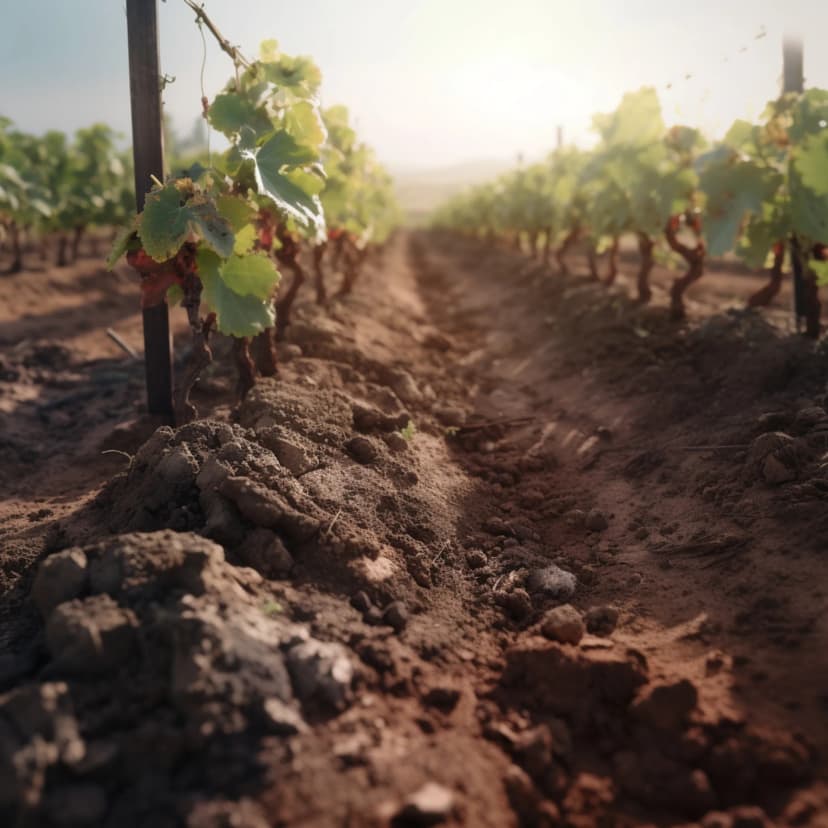
Organic certification in vines is based on Regulation (EU) 2018/848, which establishes the rules for organic production and labelling in the European Union. For perennial crops such as vines, the regulation provides for a conversion period before the grapes or wine can be marketed as organic; its duration and its start date for each plot are confirmed with the control or certification body. During conversion, the grower must demonstrate that they apply compliant practices, keep records of inputs and submit to inspections by an authorised control body. The final product must bear the EU organic logo, the Euroleaf, together with the code of the control body.
Beyond the paperwork, the standard conditions management: it does not allow synthetic mineral fertilisers, limits crop protection to authorised products and methods and requires that fertilisation be based on organic matter, by-products of plant origin and permitted mineral sources. This makes it necessary to rethink the nutrition strategy. In practice, the winegrower moves from a logic of one-off correction to one of long-term soil care, with inputs of compost, mature manure or composted pruning residues and, when the technical adviser and the certification body confirm that they are permissible, other amendments of organic origin.
One practical aspect is documentary consistency. The field notebook, input invoices, analyses and harvest records must tally with one another: the area, the inputs used and the declared production must be compatible. Keeping reliable records from day one makes inspections easier and allows any change in management to be justified with one's own data. They should be treated as part of the farm's working system and not as an administrative formality.
Furthermore, any claim about the organic or sustainable nature of a product must be demonstrable. Independent certification is the usual route to back up that information before the buyer, but it does not exempt one from describing accurately what is done on the farm or from avoiding attributing to a product or a practice effects that have not been verified.
How the conversion of the vineyard is organised: factors that condition yield
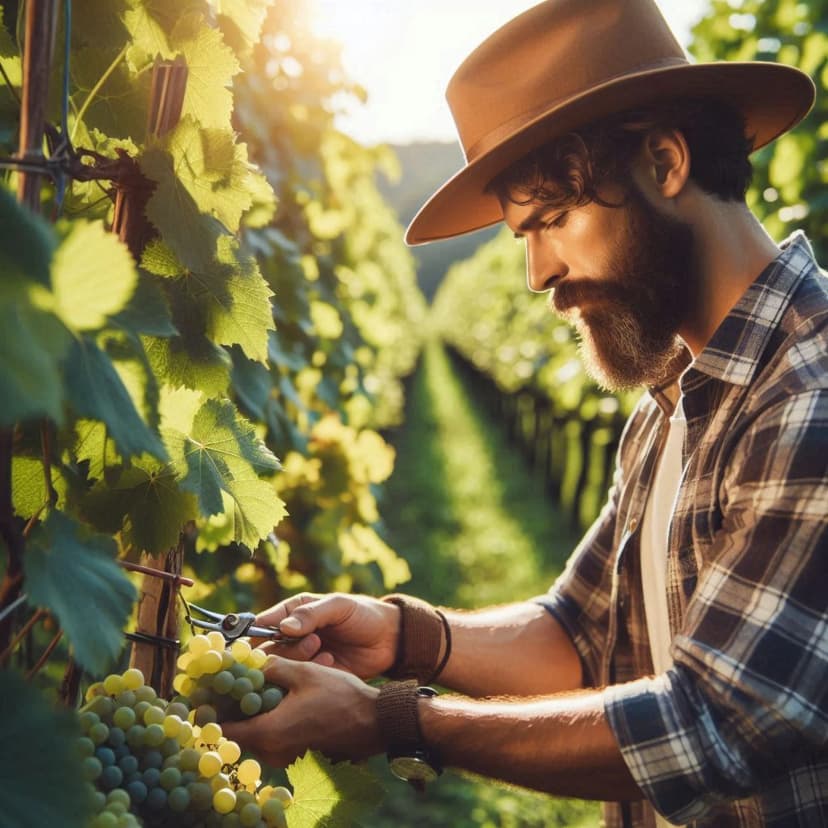
To illustrate how a conversion is approached, one can think of a hypothetical example, without numerical results and not corresponding to any specific holding: a plot of black grapevines in a Mediterranean climate with dry summers, with loam-clay textured soil and little organic matter, coming from conventional management with mineral fertilisation and frequent tillage. The aim of whoever converts such a plot should not be only to certify, but to understand what currently limits its production and quality and what management decisions can help to correct it.
Before changing anything it is advisable to establish one's own starting point: the marketable production per hectare of previous seasons, soil and leaf analyses, the state of the cover crop and the record of inputs used. Comparing seasons requires taking into account that production varies from one year to another due to weather, frost, hail, crop load or phytosanitary pressure. That is why an honest comparison uses several seasons, notes the incidents of each one and, even so, does not allow the difference to be attributed to a single practice.
In practice, the conversion is usually organised around several areas of decision. None functions as a closed package: they are combined and adapted to each holding.
- Tillage and cover crop. Many holdings review the frequency of tillage and consider maintaining covers in the alleys. These decisions can influence erosion, water infiltration and competition with the vine, so they are adjusted to the slope, rainfall and water available in each plot.
- Fertilisation. Synthetic mineral fertilisers are replaced by organic inputs and by fertilisers permitted in organic production. The decision is supported by soil and leaf analyses, and the admissibility of each product is confirmed with the certification body.
- Irrigation. Where there is irrigation, the schedule is adjusted to the needs of the crop and to the phase of the cycle. Tools such as moisture probes can help to decide, but they must be calibrated and interpreted plot by plot.
- Biostimulation. It is assessed whether a biostimulant fits into the programme and at what times, always as a complement to fertilisation and soil care, not as a substitute.
- Crop protection and biodiversity. In organic production, plant protection is limited to authorised products and methods and is approached with technical advice and with the certification body. The management of the cover and of the margins forms part of the system design, but does not replace the measures that the adviser considers necessary.
One aspect that is advisable to anticipate is the adaptation period. In systems that reduce or replace inputs, the vineyard may need time to adjust to the new management, and the production of the first seasons may behave differently from the previous one, in one sense or another, depending on the plot. There is no pattern that can be taken as certain for all holdings: what is advisable is to carry out one's own monitoring of each season and not to rely on third-party promises of results.
Agronomic management of the organic vineyard: soil, water and nutrition
The soil is the starting point. In organic vineyards, organic matter fulfils important functions: it contributes to structure, to water retention and to nutrient supply. Increasing it is a gradual process that depends on the climate, the type of soil and the inputs maintained year after year, such as compost, cover crops or pruning residues. It is therefore advisable to repeat soil analyses at a reasonable interval and always compare them with the same laboratory and the same method, so that the differences are interpretable.
Water management is another axis of management. The vine tolerates a certain degree of water deficit, but a severe deficit in sensitive stages of the cycle, such as flowering and fruit set, can affect production. Water management is therefore decided taking into account the variety, the oenological objective, the type of soil and the availability of irrigation. If moisture probes are installed, it is advisable to define in advance which criteria will be used and who interprets the data. Biostimulants do not replace adequate water management.
Nutrition is approached on the basis of data. Soil analyses and leaf analyses make it possible to see which elements may be limiting and which are at an adequate level. Priority is given to the supply of organic matter and it is complemented, if necessary, with fertilisers permitted in organic farming. Some programmes incorporate products with amino acids, algae extracts or microorganisms; they can contribute to the general vigour of the crop, but they do not by themselves correct a diagnosed deficiency nor are they a plant protection treatment. Micronutrients are applied when the diagnosis justifies it and always according to the product label.
The cover crop deserves a specific decision. The species sown in the alleys, for example legumes and winter cereals, the timing of mowing and the destination of the residues depend on rainfall, on the slope and on the competition that is accepted with the vine. In the planting row, working without synthetic herbicides requires planning labour and machinery. These practices are part of the system design and are adjusted season by season, with the field notebook as a record of what was done and when.
Biostimulants and organic fertilisation in vines: application timings and use according to the label
Agricultural biostimulants are products applied to plants or to the root zone for the purpose declared on their label, and which the European regulation associates with traits such as nutrient use efficiency, tolerance to abiotic stress, crop quality characteristics or nutrient availability in the soil. They are not a plant protection treatment and they replace neither fertilisation nor crop protection measures. Their place in the farm programme is decided after soil and plant diagnosis, and they may contribute to the general vigour of the crop without this being guaranteed on a specific plot.
Regulation (EU) 2019/1009, applicable since July 2022, regulates EU fertilising products, including plant biostimulants, and lays down conformity and labelling requirements. The fact that a product complies with that standard does not in itself mean that it is authorised for organic production: that check is made against Regulation (EU) 2018/848 and its implementing rules, and must be confirmed with the certification body before application.
The points in the cycle at which their use in vines is usually considered are budburst and vegetative development, pre-flowering, fruit set, berry growth, veraison and post-harvest. That does not mean they must be applied at all of them: the decision depends on the programme objective, the state of the vineyard, the plot's history and the budget. An application without phenological criteria and without a clear objective is a cost with no reasonable expectation.
The application route (foliar, drip irrigation or soil) and the conditions of use, such as time of day, tank mixes, compatibilities and the interval with respect to other treatments and to harvest, are stated on the product label, which is the mandatory reference. Doses are always applied according to the product label; neither this guide nor any outreach material replaces them. If the product is combined with other inputs, compatibility should be checked with the manufacturer and with the adviser.
The following table summarises, in an indicative way and without doses, what is usually assessed at each point in the cycle and what to check before applying. It is not an application programme.
| Point in the cycle | What is usually assessed | What to check before applying |
|---|---|---|
| Budburst and vegetative development | Crop status, soil analysis and reserves from the previous season | That the product is authorised for organic production; dose and route according to the label |
| Pre-flowering | General vigour and nutritional status according to leaf analysis | Compatibility with other products and the weather conditions on the day of application |
| Flowering and fruit set | Sensitivity of the stage and the weather forecast | Whether the label sets any restriction of use at this stage |
| Berry growth | Water availability and nutritional status | Recording of the application in the field notebook; interval to harvest according to the label |
| Veraison and ripening | Oenological objective, sanitary status and monitoring of ripening | Safety periods, if any, stated on the label |
| Post-harvest | Recovery of the vine, reserves and base fertilisation | Soil analysis, planned organic inputs and recording in the field notebook |
Before buying any input, it is advisable to ask the supplier for the label and the technical data sheet, the declaration of conformity with Regulation (EU) 2019/1009 where applicable and confirmation that the product may be used in organic production; in case of doubt, the certification body is consulted. Outside the European Union each country has its own regulatory framework, and the destination of the production determines which standards must be met: if the grapes or the wine are to be exported, that enquiry avoids surprises at audit.
Profitability, market and common mistakes in certification
Organic certification can open access to channels that require certified product and, in some cases, to prices different from those of conventional grapes, but this is not guaranteed: it depends on the buyer, the type of wine, the area and the season. Before converting, it is advisable to ask potential buyers whether they value organic product and under what conditions, and not to take any price difference for granted. Certification costs, costs of permitted inputs and labour costs must also be included in the calculation.
The most common mistakes in conversion include the following:
- Underestimating the transition period and its costs.
- Not adjusting fertilisation to the new regulatory framework.
- Maintaining intensive tillage without evaluating alternatives.
- Not measuring the water status of the vineyard.
- Applying biostimulants without phenological criteria or a clear objective.
- Not documenting practices.
This last mistake deserves separate attention: certification requires records, and without them any change in management is difficult to justify before an audit. The field notebook and the analyses must form part of the process from the start.
It is also common to confuse production with profitability. Higher production per hectare does not automatically translate into greater profit, because inputs permitted in organic farming and labour may cost more and because the selling price depends on the market. A realistic budget includes conversion and certification costs, inputs, labour, possible variations in production during the transition and the expected price, with prudent scenarios.
Finally, communication must be consistent with what can be demonstrated. Organic certification is a solid tool, but it must be accompanied by transparent information about what is done on the farm: documenting the process and sharing information rigorously is more useful than promising more than can be accredited. Ecoganic works in the biostimulants and organic fertilisers sector and offers advice and quotations to anyone who wants to assess which inputs may fit their vineyard's management plan, always taking as a reference the label of each product and confirmation from the certification body.
Related articles
Do you need professional help?
At Ecoganic in Spain, Europe, we offer biostimulants and organic fertilisers. Call us: +34 623 753 719.
Request your free quotation
FAQ: frequently asked questions about organic certification in vines
How long does organic certification in vines take?
It depends on the starting situation of each plot. In the European Union, Regulation (EU) 2018/848 provides for a conversion period for perennial crops such as vines, during which the grapes or wine cannot yet be sold as organic; the control or certification body indicates the applicable duration and the start date in each case. During conversion the producer must apply the rules, keep records and undergo the corresponding inspections. Outside the European Union, the timeframes and requirements vary according to the country and the destination of the production, so it is advisable to confirm them with the certification body and to plan the conversion in advance.
Can yields be increased with organic certification?
Certification alone does not determine yield. What influences production is the management that accompanies it: the care of organic matter, fertilisation, water and cover crop management and, where applicable, the use of biostimulants. The response depends on the soil, the climate, the variety and the technical execution, and may differ from one plot to another and from one season to another. That is why it is advisable to measure your own production over several seasons rather than relying on figures from other estates.
Which biostimulants are recommended for organic vines?
There is no product suitable for all vineyards. Biostimulants made from seaweed extracts, amino acids, humic and fulvic substances or microorganisms, among others, are available on the market. They can contribute to the general vigour of the crop, but they are not a plant protection treatment and do not replace fertilisation. Before choosing, it is advisable to define the objective, review the label, check compliance with Regulation (EU) 2019/1009 and confirm with the certification body that the product may be used in organic production. The dose and timing of application are those stated on the product label.
Does organic certification in vines improve profitability?
It can improve it if there are buyers who value the organic product and if input, labour and certification costs are controlled, but it is not guaranteed: it depends on the market and on each holding. It is advisable to carry out your own economic analysis before starting the conversion, with prudent scenarios that include the transition period, possible variations in production and the sale prices that each buyer confirms in writing.
What mistakes should be avoided when certifying a vineyard as organic?
The most common mistakes are underestimating the transition period, failing to adjust fertilisation to the new framework, maintaining soil management without reviewing it, failing to measure the vineyard's water status and applying products without a clear objective or phenological criterion. Another is failing to document practices, because certification requires records and inspections, or confusing production with profitability. Planning the conversion with technical advice, checking every input with the certification body and drawing up a realistic budget helps to avoid them.
References