Water stress in crops: learn how to mitigate it with microalgae biostimulants and ecological management. Request your free quote from Ecoganic.
What is water stress in crops?
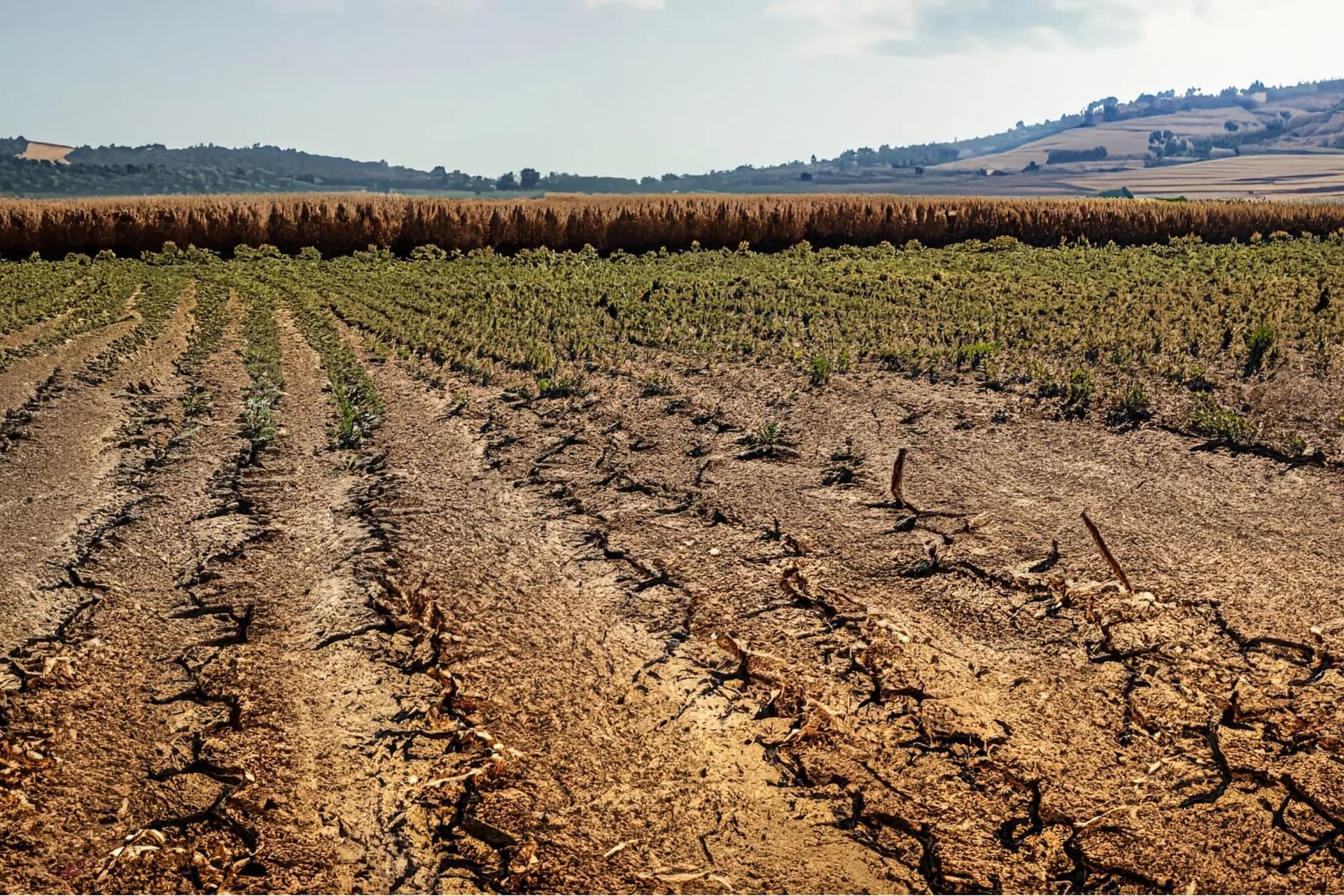
Water stress in crops is one of the most decisive abiotic constraints on agricultural productivity in Europe and the rest of the world. It occurs when the plant's evapotranspiration demand exceeds the water available in the soil, triggering a series of physiological responses that reduce growth, fruit set and final yield. In a context of climate change, with more frequent and intense droughts, understanding and managing this phenomenon has become a priority for professional farmers, agricultural engineers and technical advisers.
Sustainable agriculture requires strategies that combine efficient water use with the activation of the plant's natural defences. In this scenario, organic agricultural biostimulants and technologies based on freshwater microalgae are positioned as key tools to improve tolerance to water stress without compromising organic certification or crop profitability.
This article addresses the physiological mechanisms of water stress, agronomic management strategies and the role of microalgae biostimulants in crops such as olive, grapevine, citrus, avocado, tomato and maize. The aim is to offer a technical guide, based on agronomic evidence and field experience, to optimise production under conditions of water scarcity.
Physiology of water stress: plant responses
When the water available in the soil decreases, the plant activates a cascade of hormonal and biochemical signals. Abscisic acid (ABA) accumulates in the roots and is transported to the leaves, where it induces stomatal closure to reduce transpiration. This mechanism, although it protects against dehydration, limits the entry of CO₂ and therefore the photosynthetic rate. As a consequence, the production of photoassimilates is reduced and vegetative and reproductive growth is compromised.
At the cellular level, water stress causes an ionic imbalance and an increase in reactive oxygen species (ROS), which can damage membranes, proteins and nucleic acids. The plant responds by synthesising compatible osmolytes such as proline, glycine betaine and soluble sugars, which help to maintain cell turgor and protect cellular structures. In addition, antioxidant enzyme systems (superoxide dismutase, catalase, peroxidase) are activated to neutralise ROS.
In woody crops such as olive, grapevine or citrus, moderate water stress can have contradictory effects: in grapevine, a controlled deficit improves must quality, but severe stress reduces fruit set and fruit filling. In citrus, drought during flowering increases the drop of newly set fruit. In avocado, sensitive to root asphyxia and salinity, water stress aggravates nutrient uptake and favours chlorosis.
A field example: in a hedgerow olive grove in the Córdoba countryside, during a summer with rainfall 40% below average, plots treated with microalgae biostimulants maintained stomatal conductance 25% higher and fruit set 18% greater than untreated plots. These data, although variable depending on variety and soil, illustrate the potential of biostimulation to modulate the stress response.
Microalgae biostimulants to mitigate water stress
Microalgae biostimulants, such as those developed by Ecoganic from freshwater microalgae, contain a complex mixture of phytohormones (auxins, cytokinins, gibberellins), amino acids, polysaccharides, vitamins and phenolic compounds. These compounds act synergistically to improve tolerance to water stress through several mechanisms:
- Hormonal regulation: cytokinins and auxins promote cell division and delay senescence, while ABA-analogue compounds help modulate stomatal closure more efficiently.
- Osmotic adjustment: amino acids and polysaccharides act as osmolytes, maintaining cell turgor and protecting membranes.
- Root stimulation: biostimulants promote the development of secondary roots and absorbent hairs, improving soil exploration and water uptake.
- Antioxidant activation: phenolic compounds and vitamins reinforce the endogenous antioxidant system, reducing ROS damage.
Foliar application of microalgae biostimulants at key points in the cycle (pre-flowering, fruit set, fruit swelling) has been shown to improve fruit retention and quality under water deficit conditions. In citrus, for example, applications of 0.3-0.5 % microalgae extracts before summer stress reduced fruit drop and improved calibre. In grapevine, application at pre-veraison mitigated berry weight loss and maintained sugar and polyphenol levels.
It is important to note that biostimulants do not replace irrigation, but rather complement an integrated water management strategy. Their efficacy depends on the dose, the phenological stage and the application route. The combination of foliar and root applications, together with practices such as mulching or regulated deficit irrigation, offers the best results.
Doses and timing of application
Recommended doses vary according to the crop and the formulation. In general, foliar applications of 1-2 L/ha of microalgae biostimulant, diluted in 500-1000 L of water, are suggested, repeated every 15-21 days during periods of highest demand. For root application, doses of 5-10 L/ha by fertigation. The critical stages are: pre-flowering, fruit set, fruit swelling and post-harvest (to restore reserves).
Integrated agronomic management of water stress
In addition to biostimulants, water stress management requires a holistic approach that includes cultural practices, soil management and variety selection. Soil organic matter plays a crucial role: soils with a high organic matter content retain more water and improve infiltration. The application of fulvic and humic acids, together with beneficial microorganisms, increases soil aggregation and field capacity.
Regulated deficit irrigation (RDI) is a strategy widely used in woody crops. It consists of reducing the water supply during non-critical phases to save water and improve quality, but it must be applied precisely so as not to compromise yield. In greenhouse tomato, RDI during the ripening phase concentrates soluble solids and improves flavour, but excessive stress reduces calibre and increases the incidence of blossom-end rot due to calcium deficiency.
Organic or plastic mulching reduces direct evaporation from the soil, maintaining available moisture. In olive groves, controlled ground cover reduces erosion and improves infiltration, although it competes for water in spring; for this reason, it is recommended to mow it or apply it in alternate rows. Row orientation and pruning also influence sun exposure and water demand.
A practical case: on a citrus farm in the Valencian Community, the combination of regulated deficit irrigation (a 20 % reduction in water in July-August) with foliar applications of microalgae biostimulants and fulvic acids to the soil maintained commercial calibre and reduced water consumption by 18 % compared with conventional management. In addition, a lower incidence of iron chlorosis and an improvement in soil microbial activity were observed.
Water stress in woody crops: olive, grapevine and citrus
Woody crops are especially sensitive to water stress due to their deep root system but limited exploration capacity in compacted soils. In the olive tree, water stress during flowering and fruit set reduces production, while moderate stress during stone hardening can improve oil quality. The application of microalgae biostimulants at pre-flowering and after fruit set has shown increases in fruit retention and in the polyphenol content of the oil.
In the grapevine, controlled water stress is a tool for improving wine quality, but severe stress causes rachis desiccation, loss of berry weight and imbalances in ripening. Microalgae biostimulants, rich in amino acids and polysaccharides, help to maintain cell turgor and delay leaf senescence, prolonging photosynthesis during veraison. In citrus, summer water stress increases fruit drop and reduces final size; the application of microalgae extracts and irrigation management are key to maintaining production.
Avocado, a crop expanding in southern Europe, is very sensitive to water stress and salinity. Its shallow roots require a well-drained soil rich in oxygen. Water stress aggravates nutrient uptake and favours the appearance of chlorosis and marginal necrosis. Microalgae biostimulants, combined with fulvic acids and mycorrhizae, improve root exploration and stress tolerance.
To delve deeper into the management of these crops, it is recommended to consult the specific pages on olive cultivation with biostimulants, grapevine cultivation with biostimulants and citrus cultivation with organic nutrition, where adapted fertilisation programmes are detailed.
Application strategies and expected results
The efficacy of biostimulants against water stress depends on timely application and on integration with other practices. Foliar applications are recommended during the coolest hours (early morning or dusk) to avoid evaporation and improve absorption. The addition of adjuvants can improve cuticular penetration. In fertigation, it is important to ensure good flushing of the irrigation line to avoid blockages.
Expected results include: maintenance of the photosynthetic rate, reduced fruit drop, improved calibre and soluble solids content, and greater soil microbial activity. However, it is essential to adjust expectations: biostimulants do not work miracles under conditions of extreme drought; their function is to optimise the plant's response within rational agronomic management.
Organic certification is an added value. Microalgae biostimulants from quality biological formulations are certified for use in organic farming under Regulation (EU) 2018/848 and Regulation (EU) 2019/1009. This allows organic producers to use these tools without compromising their certification. You can consult further details on the organic certifications page.
Related articles
Do you need professional help?
At advanced agricultural solutions in Spain, Europe, we offer organic biostimulants and fertilisers. Call us: +34 623 753 719.
Request your free quote
Frequently asked questions about water stress in crops
How does water stress affect crop yield?
Water stress reduces photosynthesis and growth, causing poorer fruit set, smaller fruits and yield losses that can exceed 30 % in sensitive crops such as maize or tomato. In woody crops, severe stress during flowering can reduce production by up to 50 %. The magnitude depends on the duration, intensity and phenological stage.
Which biostimulants are most effective against water stress?
Biostimulants rich in microalgae, amino acids, polysaccharides and phenolic compounds have shown high efficacy. Freshwater microalgae, such as Chlorella, contain phytohormones and osmolytes that improve tolerance. Seaweed extracts (Ascophyllum, Ecklonia) and fulvic acids are also useful. The key lies in the formulation and the timing of application.
Can biostimulants be used in organic farming?
Yes, provided they are certified under Regulation (EU) 2018/848. Microalgae biostimulants from quality biological formulations meet the requirements and are included in the list of permitted inputs. It is important to verify the product certification and follow the recommended doses so as not to exceed residue limits.
When is the best time to apply biostimulants against water stress?
The optimal time is before stress sets in, that is, at pre-flowering, fruit set and fruit swelling, and to repeat every 15-21 days during periods of highest demand. A post-harvest application is also useful to restore reserves. Foliar application during cooler hours improves absorption and prevents phytotoxicity.
In summary, water stress in crops requires integrated management combining efficient irrigation, cultural practices and biostimulation. Microalgae biostimulants offer a sustainable and certified tool to improve tolerance and maintain productivity. For more information, visit field trials and results or contact our technical team.
Water stress: physiological response and management, with biostimulants as support
Water stress, whether from water deficit or excess, is one of the abiotic factors that most limit crop yields worldwide. In physiological terms, when the soil dries to the point where water is no longer readily available to the roots, the plant closes its stomata to reduce transpiration, which decreases CO₂ uptake and therefore net photosynthesis. This limitation is particularly relevant in crops with high water demand such as maize or wheat during drought periods. In addition, the associated oxidative stress generates reactive oxygen species (ROS) that can damage cell membranes, proteins and nucleic acids, accelerating leaf senescence and reducing grain or fruit filling.
Sensitivity to water stress depends greatly on the crop stage. In tomato, a water deficit during flowering can affect fruit set and final fruit size. In grapevine, severe stress can slow photosynthesis and cause imbalances in phenolic ripening. In citrus, the alternation of drought and irrigation can encourage the drop of young fruits. At soil level, lower water availability reduces the mobility of nutrients such as phosphorus and potassium, which can aggravate nutritional deficiencies. Practical recommendations therefore include: (1) adjusting irrigation according to crop evapotranspiration (ETc) and relying on moisture sensors placed at various depths; (2) applying organic or plastic mulches to reduce direct evaporation; (3) splitting nitrogen fertiliser doses to avoid salt accumulation in the root zone; and (4) prioritising varieties or rootstocks adapted to efficient water use (WUE), in consultation with the nursery or the local technical adviser.
In this context, biostimulants can play a supporting role in accompanying the crop during water stress, always as a complement to irrigation management and never as a substitute for it. Seaweed extracts (Ascophyllum nodosum), rich in betaines and polysaccharides, are used with the intention of supporting the plant's water balance. Amino acids such as proline and glycine betaine can act as osmolytes that help stabilise proteins and membranes and maintain cell turgor. Humic and fulvic acids can improve soil aggregation and thereby its water-holding capacity, with an effect that varies according to texture. Likewise, some microorganisms, such as Bacillus subtilis or Trichoderma harzianum, are included in biostimulant formulations with the aim of supporting rhizosphere activity, although their establishment and effect depend on the strain and on soil conditions. Combining biostimulants with regulated deficit irrigation (RDI) practices can be coherent, but water savings come from good irrigation scheduling and not from the product, and any reduction in inputs must be validated with measurements of crop water status.
As an indicative scheme, some programmes stagger the products as follows: before the expected stress period, a root biostimulant based on mycorrhizae and humic acids, at the dose indicated on the product label, with the aim of supporting soil exploration; during the early stages of deficit, foliar applications of seaweed extracts with amino acids, at the frequency specified by the manufacturer; and after rehydration, biostimulants with cytokinins and betaines, with the aim of supporting the recovery of the photosynthetic apparatus. It is advisable to test the scheme first on a small plot and, in organic production, to confirm with the certification body that each product is approved. It is essential to monitor stem water potential or use a pressure chamber so as not to exceed the critical thresholds for each crop. Integrating these strategies with proper management of soil organic matter and with cover crops can increase the resilience of the farming system to climate variability. Ultimately, water stress should not be approached solely as an irrigation problem, but as a problem of the whole system, in which climate, soil, plant and management interact, and in which biostimulants, when used, are complementary support, but not a substitute for good water management.