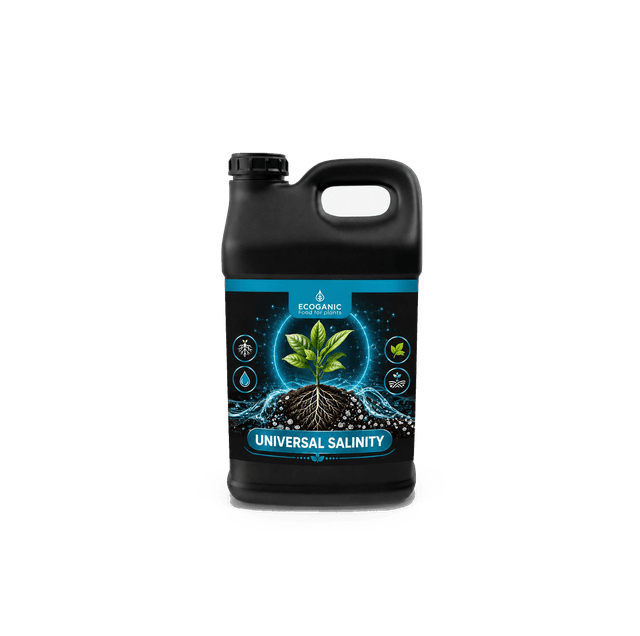
BOOST UNIVERSAL SALINITY
NPK
Description
Brown liquid. All the analytical values below come from testing at an ENAC-accredited laboratory on a single batch and are provisional results, pending confirmation of batch-to-batch repeatability; there is no declared specification or tolerance range for them: pH 4.35; density 1.007 g/cc at 20 °C; total organic matter 1.911% w/w, equivalent to 100.0% of the dry matter; organic carbon 1.070% w/w; C/N ratio 14.3; ash < 0.100% w/w, below the detection limit; potassium oxide (K2O) 0.0466% w/w / 0.0469% w/v and sulphur trioxide (SO3) 0.306% w/w / 0.308% w/v. The same test measured total calcium (CaO) at 0.150% w/w / 0.151% w/v, 25% below the ≥ 0.20% declared in the product's safety data sheet: a documented specification failure, and it occurs on both bases of expression. The safety data sheet also declares 25% algae solution (100% freshwater unicellular algae), a declared value that the test does not quantify. The official price list declares the product as a pH corrector and salt reducer for water and soil, and the safety data sheet identifies it as an additive for fertiliser solutions. It is applied through fertigation, preferably by drip, in the root zone.
Key benefits
- ✓Chloride < 0.05% measured in the laboratory
- ✓25% freshwater unicellular algae extract
- ✓Specific rate for saline or sodic soils: 5-10 L/ha
- ✓1.911% organic matter — 100% of the dry matter
Guaranteed composition
Physical properties
Chloride determined by ion chromatography UNE-EN 10304-1 at an ENAC-accredited laboratory.
Laboratory analysis
| Parameter | Datasheet declares | Test measures |
|---|---|---|
| Chloride (Cl)UNE-EN 10304-1 | — | < 0,05 % p/pnot declared |
Tested at an ENAC-accredited laboratory. Values relate to the batch analysed and are not a warranty of composition for every batch.
What NOT to tank-mix with this product
With caution (8)
TERRA HUMID LIQUID
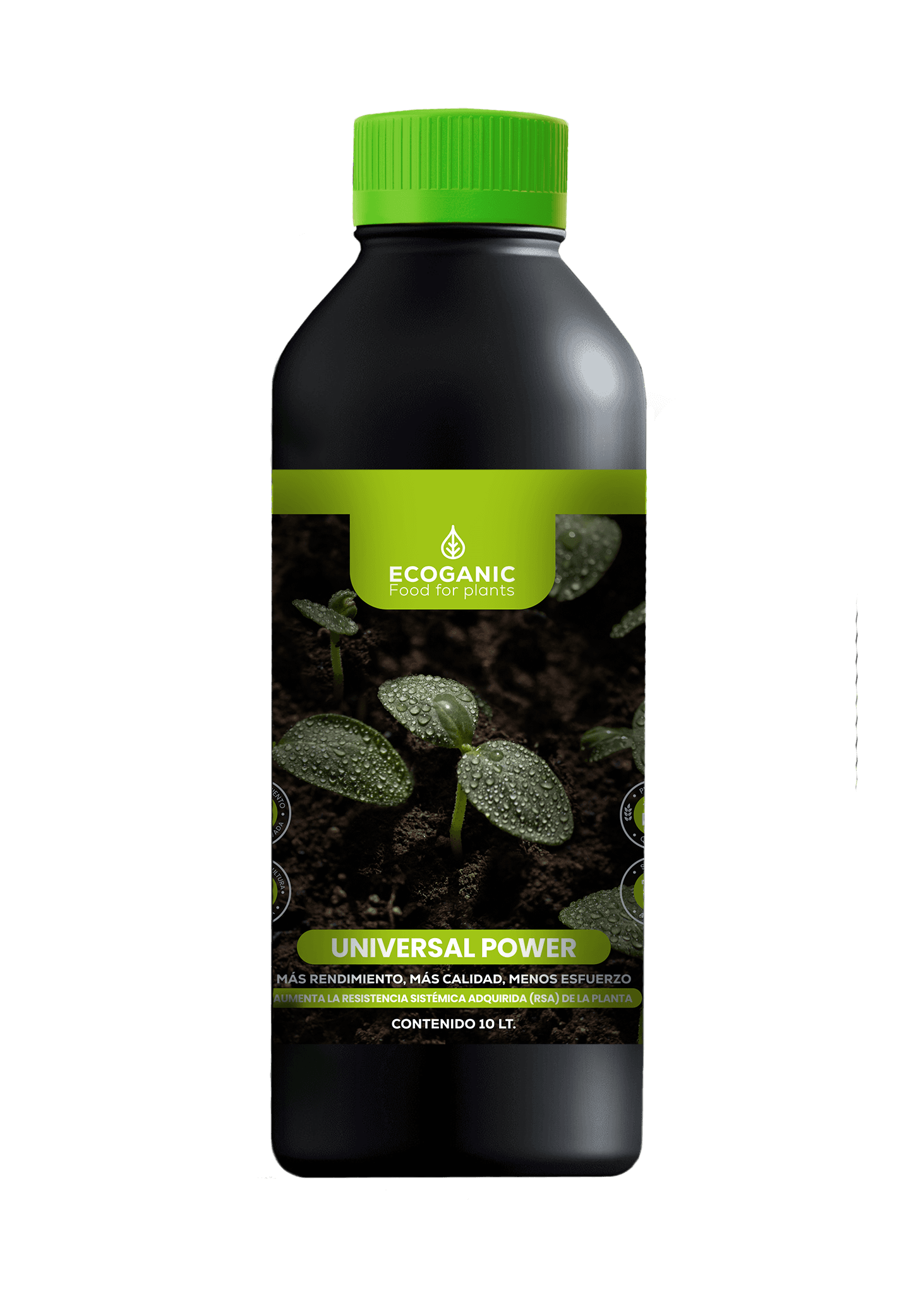
UNIVERSAL POWER
CALCIUM 40
MICRO PLUS 1-0-0
PHOSMAX 20
PHOSMAX 20 Suspensión Líquida
ZINCFORCE 40
K-FLOW 20
Verdicts derived from each product's composition and pH using applied chemistry. They do not come from a compatibility trial: always run the jar test with your own field water before loading the tank.
See the full compatibility table →Pack sizes
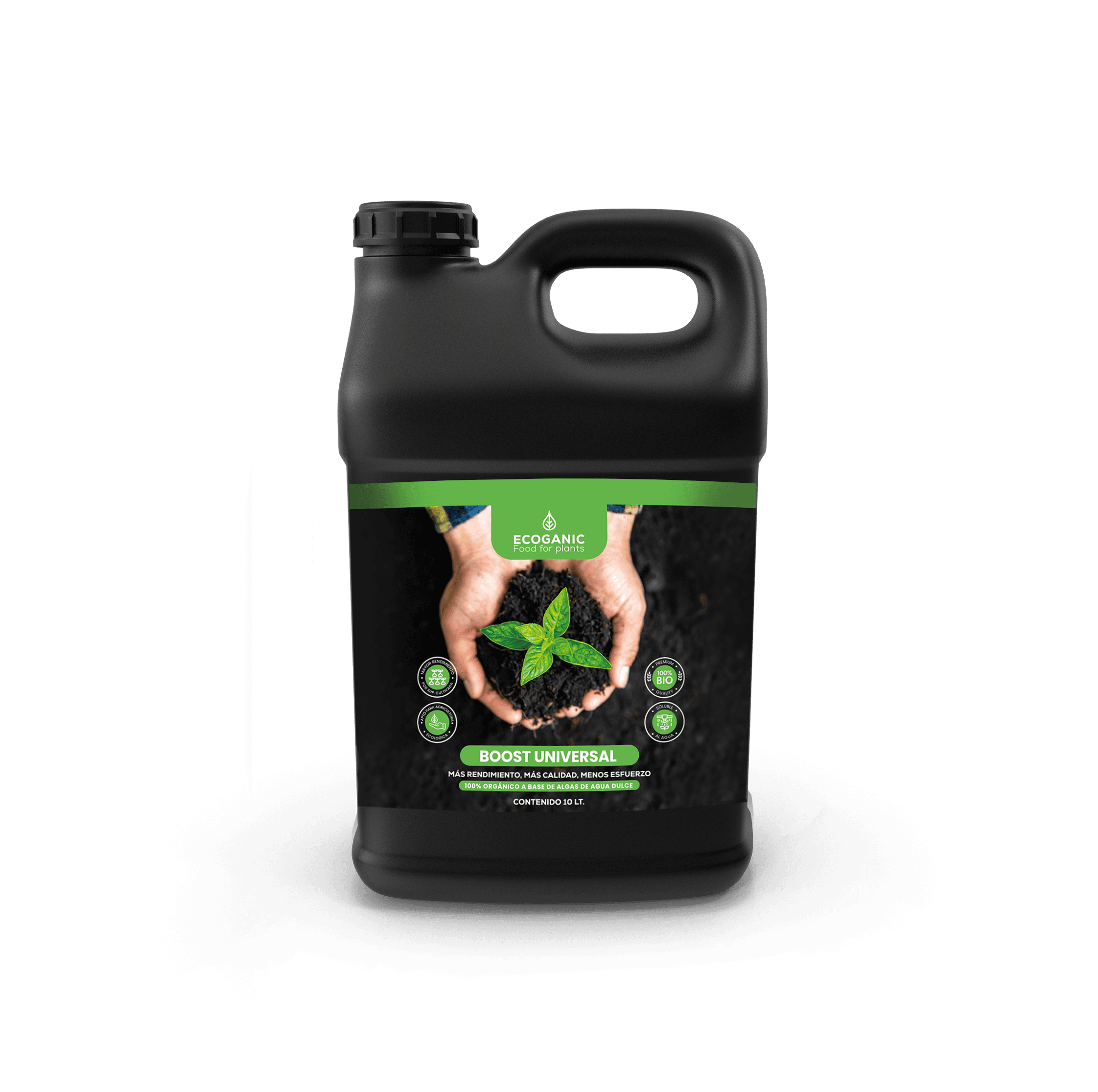
Stackable jerrican, the usual fertigation format
Stackable jerrican, the usual fertigation format
300 L
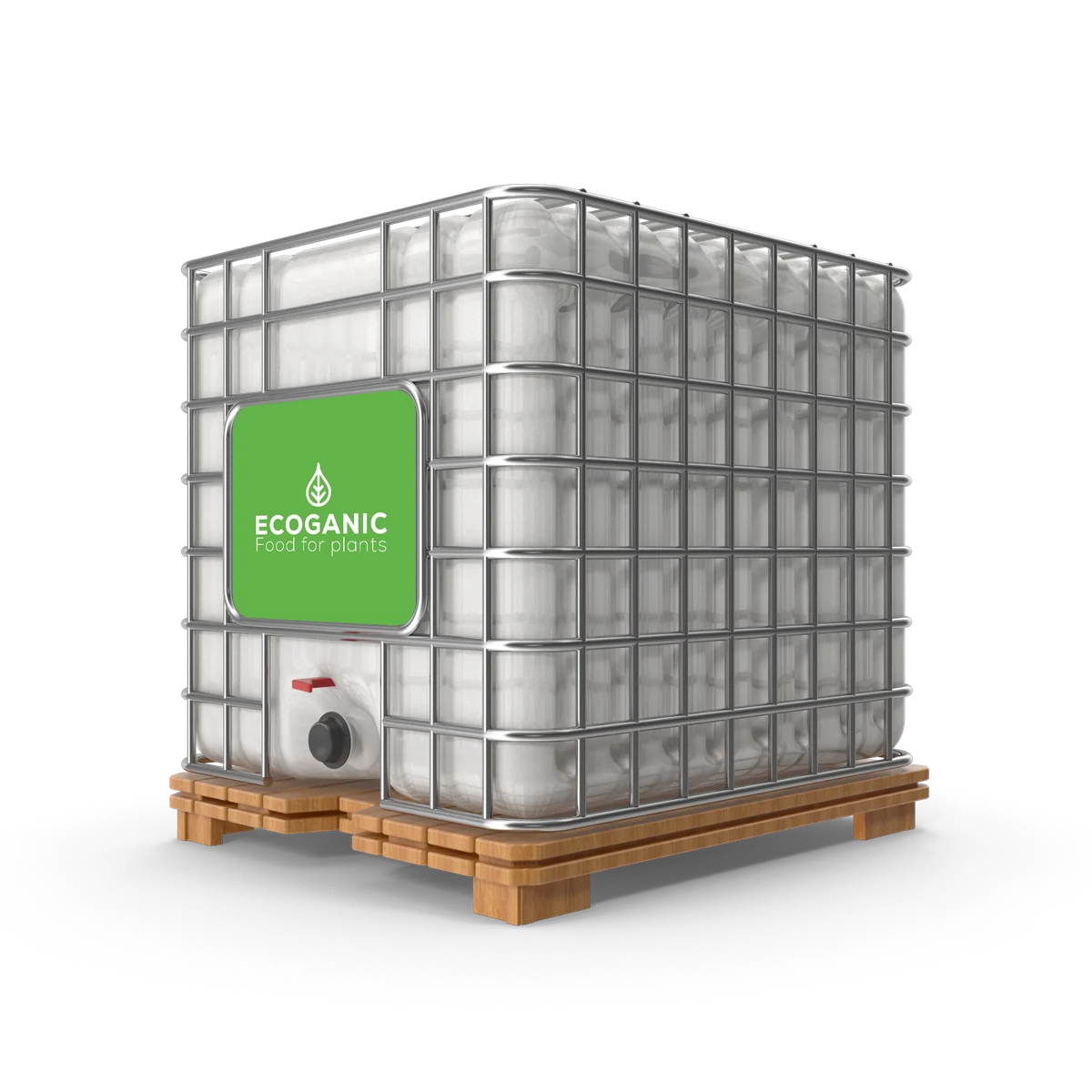
IBC tank on pallet, for fertigation of large areas
IBC tank on pallet, for fertigation of large areas
IBC tank on pallet, for fertigation of large areas
Documentation and safety
Not classified as hazardous under Regulation (EC) 1272/2008
Read the full safety data sheet before handling the product.
Application method
Recommended dose: Drip fertigation: 2-4 L/ha, maximum 5 L/ha applied at the root; saline/sodic soils: 5-10 L/ha.
Recommended crops
- ▸General agriculture
- ▸Forestry
- ▸Floriculture
- ▸Fruit growing
- ▸Indoor plants
- ▸Wheat
- ▸Maize
- ▸Peanut
- ▸Soybean
- ▸Sweet potato
- ▸Tomato
- ▸Watermelon
- ▸Cabbage
- ▸Green pepper
- ▸
- ▸
- ▸
- ▸
- ▸
Crop program:
Frequently asked questions
What are the main benefits of BOOST UNIVERSAL SALINITY?
+
Chloride < 0.05% measured in the laboratory. 25% freshwater unicellular algae extract. Specific rate for saline or sodic soils: 5-10 L/ha. 1.911% organic matter — 100% of the dry matter
Which crops is BOOST UNIVERSAL SALINITY indicated for?
+
General agriculture. Forestry. Floriculture. Fruit growing. Indoor plants. Wheat. Maize. Peanut. Soybean. Sweet potato. Tomato. Watermelon. Cabbage. Green pepper. . . . .
How and when is BOOST UNIVERSAL SALINITY applied?
+
Drip fertigation at 2-4 L/ha, not exceeding 5 L/ha, applied at the plant root., Saline or sodic soils: 5-10 L/ha through fertigation., Additive in fertiliser solutions, as per the use identified in its safety data sheet., Use on field and vegetable crops (wheat, maize, peanut, soybean, sweet potato, tomato, green pepper, watermelon, cabbage) and in fruit growing, floriculture, forestry and indoor plants.. Recommended dose: Drip fertigation: 2-4 L/ha, maximum 5 L/ha applied at the root; saline/sodic soils: 5-10 L/ha.
Is BOOST UNIVERSAL SALINITY suitable for certified organic farming?
+
Yes. BOOST UNIVERSAL SALINITY is certified under CE 2018/848 (EU), NOP USDA (USA) and JAS (Japan). It is suitable for certified organic production in those markets.
How much chloride does BOOST UNIVERSAL SALINITY contain?
+
Below the limit of detection: under 0.05% w/w on the original sample. Measured by ion chromatography to UNE-EN 10304-1 at an ENAC-accredited laboratory. The value relates to the batch analysed and is a provisional result, single batch and single sample.
Recommended dose
Drip fertigation: 2-4 L/ha, maximum 5 L/ha applied at the root; saline/sodic soils: 5-10 L/ha.
Formats
Certifications
More in this category
Biostimulant →