
The technology behind Ecoganic
Ecoganic's difference lies in the origin of its raw materials. While most biostimulants on the market use marine algae extracts, Ecoganic uses unicellular algae extracts grown in fresh water. A difference that has direct consequences on agronomic efficacy and crop safety.
Why fresh water and not marine algae?
| Feature | Marine algae | Ecoganic (Freshwater) |
|---|---|---|
| Salt content | High — adds sodium and chlorides to soil | Salt-free — no salinization risk |
| Biostimulant concentration | Variable — depends on origin and season | High and constant — controlled cultivation |
| Leaf burn risk | Moderate to high at high concentrations | Minimal — no salt |
| Fertigation compatibility | Limited at high doses | Total — 100% soluble, no residues |
| Suitable for salt-sensitive crops | With caution (avocado, citrus, strawberry) | Yes — no restrictions |
How do Ecoganic algae extracts work?
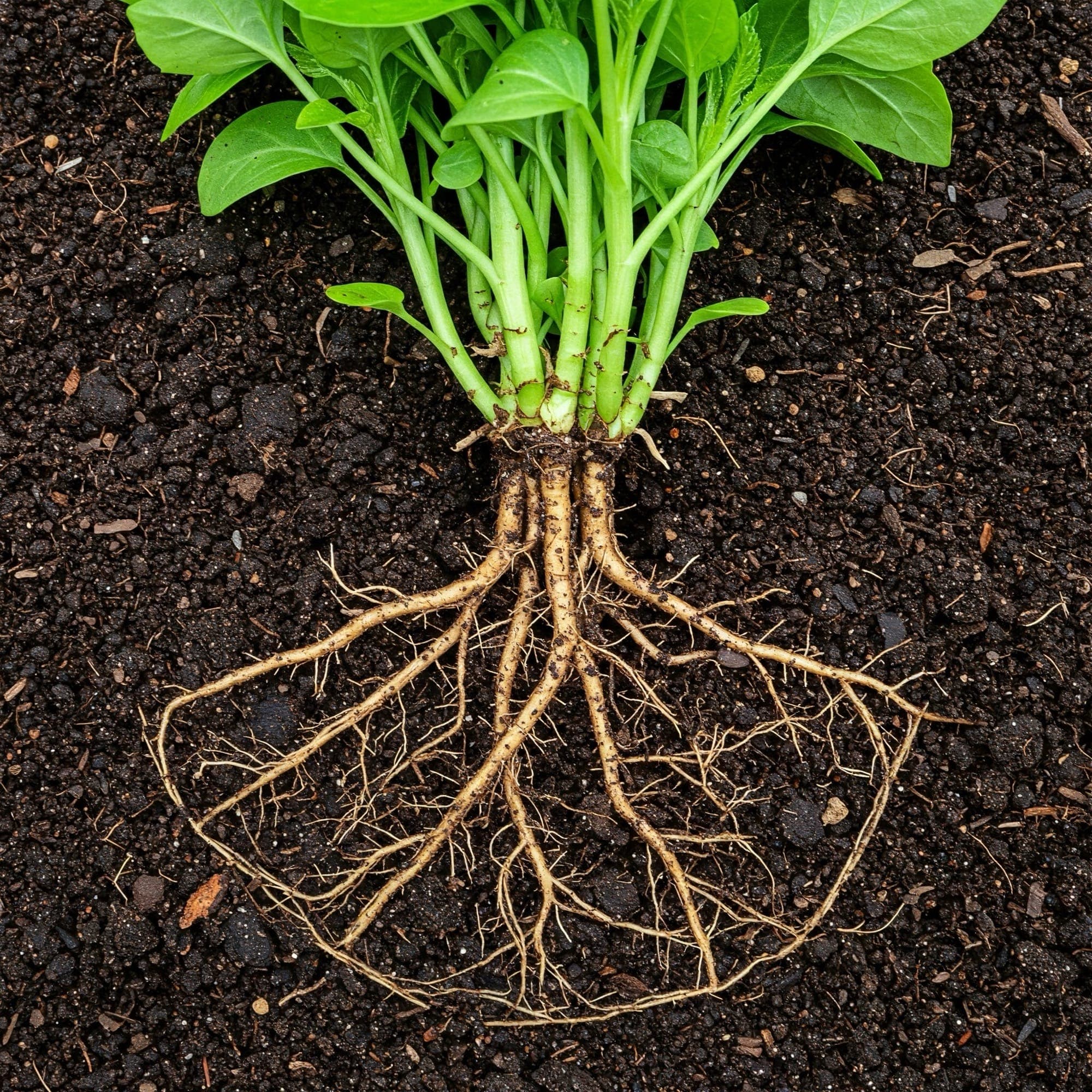
Root stimulation
Promote root hair proliferation and increase root absorption surface.
Nitrogen in organic form
They supply amino acids the plant assimilates directly, without spending energy reducing nitrate.
Water efficiency
Improve stomatal regulation and tolerance to water and thermal stress.
Nutrient absorption
Act as carriers that facilitate the transport and assimilation of macro and micronutrients.
Plant-origin amino acids — not animal
Ecoganic amino acids come from non-genetically modified (non-GMO) soy. Unlike animal-origin amino acids (derived from feathers, leather or meat by-products), Ecoganic's plant amino acids are accepted without restrictions in certified organic farming under CE 2018/848, NOP USDA and JAS.
Technology summary
- ▸Chlorella unicellular algae grown in fresh water
- ▸No salt or chloride input to soil
- ▸Non-GMO soy amino acids
- ▸100% water soluble
- ▸Triple certification: CE 2018/848 + NOP USDA + JAS
Unique technology
Chlorella + Scenedesmus: Ecoganic's unique combination
While most algae biostimulant manufacturers use a single species (generally marine Ascophyllum nodosum or, at best, freshwater Chlorella), Ecoganic combines two genera of freshwater unicellular microalgae: Chlorella and Scenedesmus. This combination enhances the active compound profile since each species contributes a different spectrum of amino acids, betaines and polysaccharides.
The result is a broader-spectrum biostimulant that simultaneously covers vegetative growth stimulation (Chlorella), stress response improvement (Scenedesmus) and soil microbiota activation (both species).
Chlorella
- ▸Amino acids and peptides
- ▸Soluble organic matter
- ▸Root efficiency
Scenedesmus
- ▸Stress tolerance
- ▸Osmoprotection
- ▸Soil activation
Active biochemistry
Active compounds and their agronomic function
Free amino acids
Nitrogen in organic form
Up to 98.4% total amino acids measured in NITROTECH 16 and 60.90% in NITROTECH 10. The plant assimilates them without having to reduce nitrate, its most energy-costly pathway.
Soluble organic matter
Soil structure and availability
60.60% w/w total organic matter measured in FULVEX 50S. It improves water retention and the availability of nutrients already present in the soil.
Cell-wall polysaccharides
Soil microbial activation
They act as a substrate for soil microbiota, favouring organic matter mineralisation and phosphate solubilisation.
Betaines
Osmoprotection
They act as compatible solutes: they hold cell water potential when the plant loses water faster than it takes it up.
Micronutrients in organic form
Correcting deficiencies
Zinc 26.8%, iron 5.99% and boron 5.97% measured at an ENAC-accredited laboratory. We publish the measured value, not the declared one.
No chloride or sodium
What it does NOT add to the soil
Eight references with chloride below the limit of detection (< 0.05% w/w) by ion chromatography to UNE-EN 10304-1. This is the real difference from marine macroalgae, and it is measurable.
Frequently asked technical questions
What is the difference between Ecoganic algae biostimulants and marine algae ones?
The fundamental difference lies in the origin of the algae. Ecoganic uses unicellular microalgae grown in fresh water (Chlorella and Scenedesmus), while most competitors use marine algae (Ascophyllum nodosum, Ecklonia maxima). Marine algae contain salts and chlorides that accumulate in the soil over time, which can be problematic in sensitive crops such as avocado, citrus, strawberry or asparagus. Ecoganic's freshwater algae add no salt or chlorides, and are obtained under controlled cultivation conditions that guarantee a constant concentration of active compounds.
What does a freshwater microalga really bring compared with a marine macroalga?
Two measurable things and one that is not measured: what it does NOT bring. Brown macroalgae extracts (Ascophyllum, Ecklonia) owe their composition to mannitol and alginic acid, characteristic of that family, and come with the salts of the marine environment. Chlorella and Scenedesmus are freshwater green algae: their contribution lies in free amino acids — up to 98.4% total amino acids measured in NITROTECH 16 — in soluble organic matter and in micronutrients, with zinc at 26.8% and iron at 5.99% measured at an accredited laboratory. What they do not bring is chloride: eight references below the limit of detection, under 0.05% w/w by ion chromatography to UNE-EN 10304-1. In a salt-sensitive crop, and under localised irrigation with no rain to leach, that absence is worth as much as the supply.
Are Ecoganic products suitable for hydroponic crops?
Yes. Being 100% cold-water soluble and free of impurities, insoluble organic matter and chlorides, Ecoganic products are perfectly compatible with recirculating hydroponic systems. They present no risk of dripper clogging or salt accumulation in the substrate. The electrical conductivity of the products is controlled and compatible with standard nutrient solutions for hydroponic crops.
What exactly does CE 2018/848 certify for Ecoganic biostimulants?
Regulation (EU) 2018/848 on organic production certifies that Ecoganic products can be used as inputs in agricultural productions certified as organic in the European Union. This means that raw materials, the manufacturing process and the final product comply with organic farming requirements: no chemical synthesis, no GMOs, no restricted contaminants and full traceability.