What seaweed biostimulants are and why they suit NOP olive groves
Seaweed biostimulants in NOP olive groves are formulations based on macroalgae extracts such as Ascophyllum nodosum or microalgae such as Chlorella, which are applied to the crop to improve nutrient use efficiency, tolerance to abiotic stress and harvest quality. On an olive farm enrolled in the USDA organic programme (NOP), their use is conditional on the product being listed as suitable for organic production and on none of its inputs being prohibited by the standard.
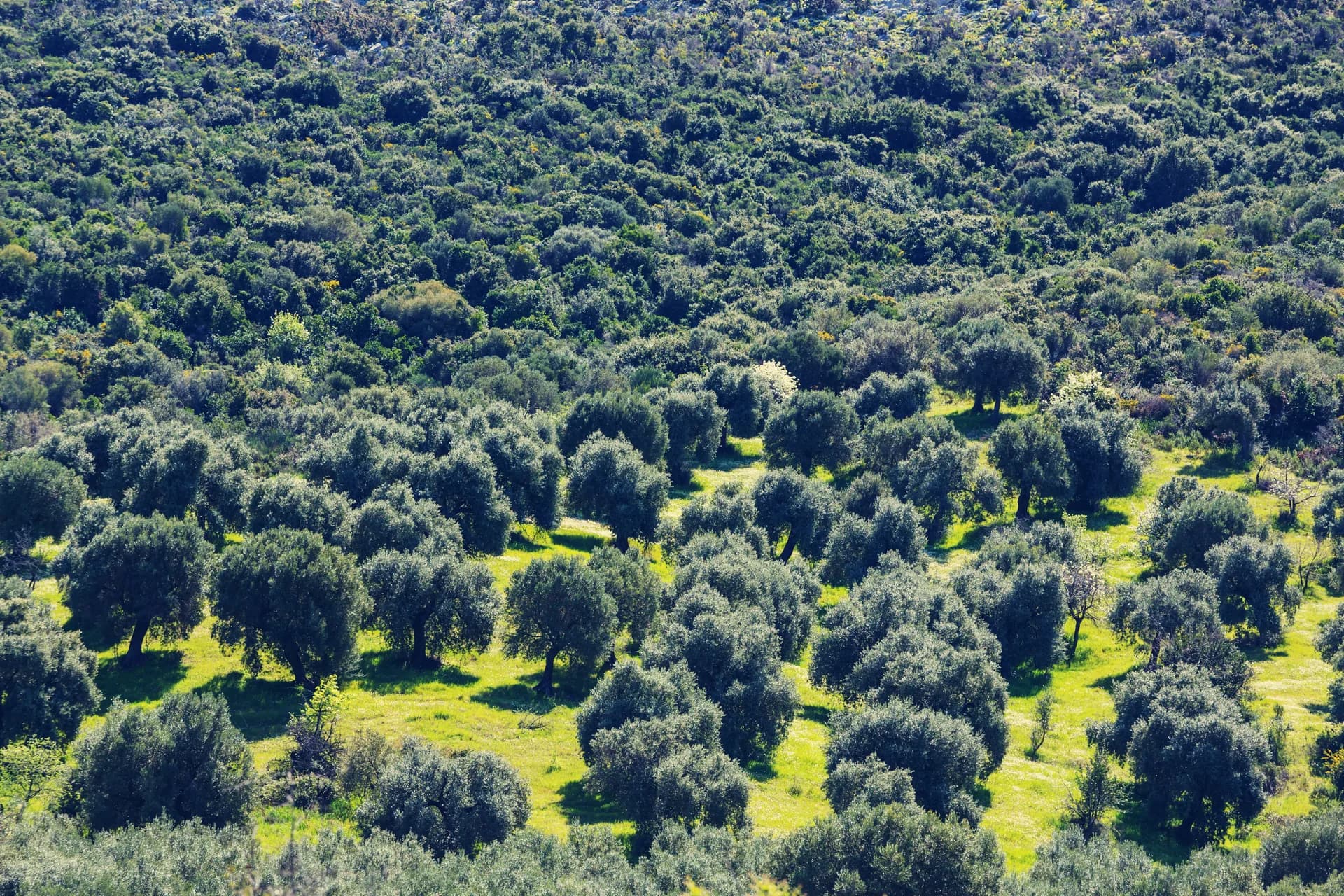
The olive tree is a long-cycle woody crop with a marked alternation in production and great sensitivity to water availability during flowering and fruit set. When the grower works under NOP certification, many of the conventional stimulants on the market are not an option, so seaweed extracts become a central tool in the nutritional programme. The key lies in integrating them at the right phenological stages and with rates adjusted to the condition of the tree, not in applying them indiscriminately.
On rainfed farms, where water stress is the main limiting factor, a well-scheduled application can make the difference between a commercially viable harvest and a very reduced yield. Under irrigation, the biostimulant helps the available water and nutrients to be used more efficiently, which is especially relevant when fertilisation is restricted to organic sources.
Regulatory framework: USDA NOP, EC 2018/848 and EC 2019/1009
Before incorporating any product into the olive grove programme, it is worth reviewing the documentation. Under NOP, the manufacturer must declare the product as suitable or approved for organic production and back this up with the technical data sheet, the composition and the certification body. It is not enough for the extract to be of natural origin: it must be verified that no prohibited inputs were used in its manufacturing process.
In parallel, Regulation (EU) 2018/848 has governed organic production in the European Union since 1 January 2022, and is the reference for farms that export to Europe or that work with dual certification. For fertilisers and biostimulants, Regulation (EU) 2019/1009 defines a biostimulant by its function: improving nutrient use efficiency, tolerance to abiotic stress or harvest quality, without being a nutrient in itself.
Standard UNE 142500:2017 reminds us that inputs cannot be certified as organic in themselves under organic legislation. In practice, they are marketed as suitable or compatible inputs, and that distinction must be clear on the labelling and in the documentation submitted to the certifier. For NOP olive groves, this means the grower must keep the technical data sheets and declarations of conformity for each product applied.
A common mistake in audits is to apply a biostimulant with European certification assuming that it automatically complies with NOP. These are different frameworks, and equivalence should be confirmed with the certification body before the first application of the season.
Mechanisms of action of seaweed extracts in olive trees
Extracts of Ascophyllum nodosum provide bioactive compounds such as polysaccharides, phytochemicals and betaines that act on the physiology of the tree. One of the most documented effects is the regulation of the hormonal balance, with an increase in the activity of cytokinins and auxins that translates into better fruit set and more uniform fruit development.
Under water stress conditions, seaweed extracts favour the accumulation of osmolytes in plant tissue, which helps to maintain cell turgor and to reduce premature stomatal closure. This is especially valuable in Mediterranean rainfed olive groves, where the plant faces water deficit during much of the cycle.
Microalgae such as Chlorella provide plant amino acids, peptides and compounds that stimulate soil microbial activity when applied through fertigation. This synergy with the rhizospheric microbiota improves nutrient availability and reinforces soil structure, a key aspect in organic systems where fertilisation depends to a large extent on the mineralisation of organic matter.
In olive trees, these mechanisms translate into greater fruit retention per inflorescence, a more homogeneous olive size and a better response to episodes of extreme heat during the summer. They are not instantaneous effects: they require repeated applications and planning consistent with the crop cycle.
Key phenological stages and application rates
The efficacy of a seaweed biostimulant depends to a large extent on the timing of application. In olive groves, the most relevant windows are pre-flowering, flowering, fruit set and early fruit bulking. Applying outside these phases reduces the return on investment, because the tree is not in the right physiological state to take advantage of the bioactive compounds.
An indicative schedule for olive groves under NOP, based on commercial formulations with NOP USDA certification, would be as follows:
| Phenological stage | Objective | Indicative rate | Route |
|---|---|---|---|
| Pre-flowering (BBCH 54-57) | Prepare flowering and reduce flower abortion | 200-300 cc/hl | Foliar |
| Full flowering | Favour pollen viability | 150-250 cc/hl | Foliar |
| Fruit set | Improve fruit retention | 200-300 cc/hl | Foliar |
| Early bulking | Uniformise size and quality | 2-3 L/ha | Fertigation |
The specific rates depend on the concentration of the product, the condition of the tree and the crop load. In years of high alternate bearing, it is advisable to adjust downwards so as not to overstress the tree, whereas in off years the schedule can be maintained to recover vigour. It is always advisable to carry out a trial in a small plot before extending the treatment.
In fertigation, the application is split over several irrigation events to improve root uptake and avoid losses through leaching. For foliar application, it is recommended to apply during the cooler hours and with adequate relative humidity to favour the foliar uptake of nutrients and bioactive compounds.
Application route: foliar, fertigation and synergies with the soil
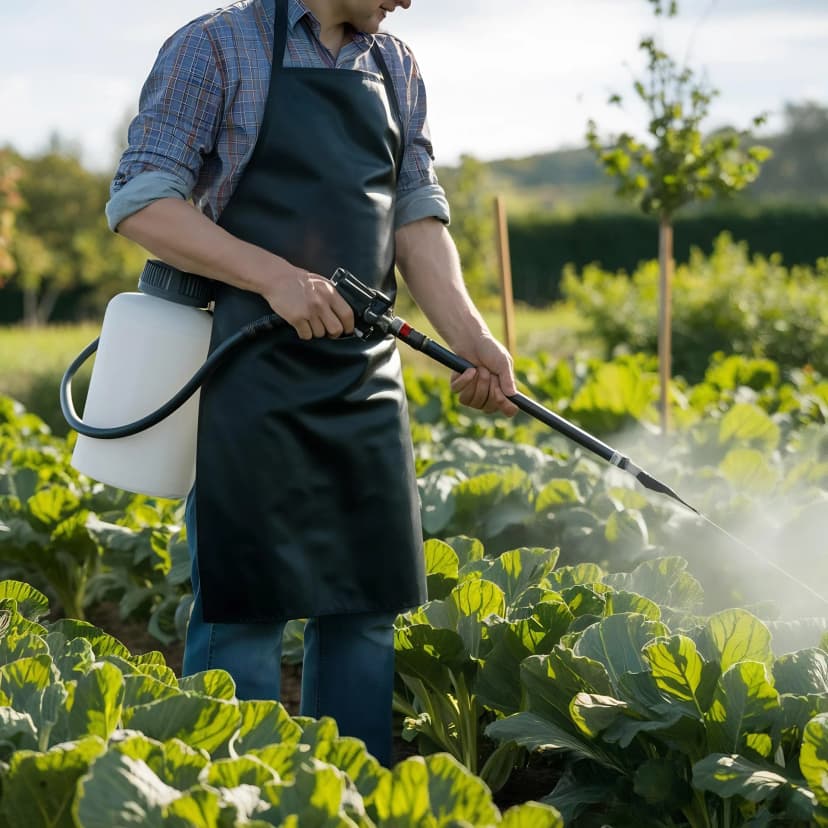
The foliar route is the most widely used in olive groves for the flowering and fruit set stages, because it allows a rapid response and a homogeneous distribution over the canopy. The foliar uptake of nutrients and bioactives is more efficient when the leaf is metabolically active and environmental conditions are mild.
Fertigation, for its part, is the preferred route for bulking applications and for treatments aimed at the soil microbiota. When the seaweed biostimulant is combined with fulvic acids or with sources of organic matter, microbial activity is enhanced and nutrient availability for the tree is improved.
In organic systems, this synergy is especially important because fertilisation depends on biological mineralisation processes. A soil with good soil microbiota and adequate levels of organic matter responds better to any subsequent input, including the biostimulant.
The combination of foliar and fertigation throughout the cycle makes it possible to cover both the phases of high physiological demand and those of soil maintenance. In high-density olive groves, where competition between trees is greater, this integrated strategy is especially useful for maintaining stable production.
Expected results and field experience
In organic olive groves with repeated applications of seaweed extracts, an improvement in fruit set and greater homogeneity in olive size are frequently observed. These effects are not spectacular in a single season, but they accumulate when the programme is maintained over several years.
A typical field example: on a rainfed holding with the Picual variety and alternate bearing, the incorporation of a seaweed biostimulant at pre-flowering and fruit set over three consecutive seasons resulted in a reduction in fruit drop in the off years. The farmer did not change the rest of the management, which allows the improvement to be attributed to the new protocol.
Under irrigation, experience suggests that the biostimulant helps to maintain production in years of water restrictions, when the tree cannot access all the water it would need. In those cases, foliar application at the critical moments is the most accessible tool for the farmer.
It is important not to promise guaranteed results. The response depends on soil condition, tree load, climate and the quality of the product used. What can be stated is that a well-designed programme improves the resilience of the olive grove and reduces dependence on external inputs.
How to choose a seaweed biostimulant suitable for NOP
Product selection is as important as the timing of application. The first criterion is that the manufacturer explicitly declares suitability for NOP USDA and provides the documentation to support it. Without that declaration, the farmer assumes an unnecessary risk in the audit.
The second criterion is composition: it is advisable to review the origin of the seaweed, the extraction process and the presence of additives. Formulations based on Ascophyllum nodosum and Chlorella with plant amino acids are common on the organic market and usually have multiple certifications that facilitate export.
The third criterion is compatibility with the rest of the nutritional programme. A biostimulant that integrates well with organic fertilisers and with fulvic acids simplifies management and reduces the number of applications. The supplying company must be able to advise on mixtures and sequences.
Finally, it is advisable to assess the technical support. A distributor with experience in organic olive growing can help to adjust doses and timings, and to resolve doubts during the season. That support is, in practice, part of the value of the product.
Related articles
Do you need professional help?
At Ecoganic in Spain, Europe, we offer organic biostimulants and fertilisers. Call us: +34 623 753 719.
Request your free quote
Frequently asked questions about seaweed biostimulants in NOP olive groves
Can seaweed biostimulants be used in olive groves with NOP certification?
Yes, provided that the product is approved for NOP organic use and that its composition and manufacturing process do not include prohibited inputs. The manufacturer must declare this and provide the technical data sheet. Before the first application, confirm equivalence with your certification body.
What is the best time to apply seaweed biostimulants to olive trees?
The most relevant moments are pre-flowering, flowering, fruit set and early fruit enlargement. Applying at these stages takes advantage of the tree's physiological activity and improves the return. Outside these periods, the effect is usually smaller.
What dose of seaweed biostimulant is recommended in olive groves?
Indicative doses range from 150 to 300 cc/hl in foliar application, depending on the timing and the product. In fertigation, 2-3 L/ha are usually used. Adjust according to the concentration of the formulation and the condition of the tree.
Do seaweed biostimulants replace fertilisers in organic olive groves?
No. Biostimulants improve nutrient use efficiency and stress tolerance, but they do not replace fertilisation. Under NOP they must be integrated into a programme that includes organic nutrient sources and soil management.
Can they be applied by fertigation and by foliar route in the same season?
Yes, and in fact it is advisable to combine both routes. The foliar route covers the critical moments of flowering and fruit set, while fertigation reinforces root activity and soil microbiota. Planning must avoid unnecessary overlaps.
How can you verify that a seaweed biostimulant is suitable for NOP?
Review the technical data sheet, the declaration of suitability for NOP USDA and the manufacturer's certification body. Keep that documentation for the audit. If in doubt, consult your certifier before applying.
Seaweed biostimulants in olive groves under NOP certification: technical management and criteria for field use
USDA National Organic Program (NOP) certification requires that inputs applied in organic olive groves be permissible under the programme's regulations and accepted by the certifier. Seaweed extracts (Ascophyllum nodosum, Laminaria spp. and Ecklonia maxima) may be permissible depending on the product and its extraction process; the specific conditions (for example, regarding the extraction process, preservatives or additives) must be confirmed with the certification body, since each product must be reviewed individually and the certifier has the final say. In olive groves under NOP, the application of seaweed biostimulants is proposed as a support to photosynthetic activity and oil yield, for example with foliar applications at pre-flowering and post-fruit set. Any improvement must be verified with comparison plots and over several seasons, because summer water stress, planting density and variety (Picual, Arbequina, Hojiblanca) strongly condition the response.
The effect attributed to Ascophyllum nodosum extracts is related to their content of betaines, mannitol, alginic acid and natural phytohormones (cytokinins, auxins and gibberellins), in concentrations that vary greatly between products and batches. Applied by foliar route, they are proposed as potentially supporting photosynthetic activity during the stone-hardening phase, although the response is variable. In NOP olive groves, where nitrogen supply depends on sources permitted by the certifier, such as composted manure, an improvement in nitrogen use efficiency would be especially valuable, and for this reason combining seaweed with the base fertilisation of late winter is proposed. The dose must be followed according to the label, and the spray volume must be adjusted to the size of the tree and the spraying equipment, so that uniform coverage is achieved without runoff.
The application schedule under NOP must respect the safety intervals and residue restrictions stated on the label and in the organic management plan. Three key timings are proposed: (1) pre-flowering, when the flower buds are already formed, with seaweed extract and, if foliar analysis justifies it, a supply of boron from a source permitted by the certifier; (2) post-fruit set, shortly after petal fall, with seaweed and free amino acids; and (3) post-harvest, to favour carbohydrate reserves in branches and roots, with seaweed and a supply of potassium from a source permitted by the certifier. This last treatment is proposed for its possible contribution to the tree's reserves, something that should be checked on the farm itself. It is important to avoid applications at high temperatures or with low relative humidity, since foliar absorption decreases and the risk of phytotoxicity from salts increases; the most prudent approach is to treat early in the morning or at dusk.
NOP certification requires keeping records and traceability of inputs. It is advisable for seaweed biostimulants to have a recognised verification (for example, an OMRI listing) or an equivalent acceptance by the certifier, and the producer must keep the technical data sheets, certificates of analysis and invoices for the period required by their certifier. It is worth asking the supplier how the extract has been obtained and what preservatives, additives or extraction agents it contains, and to check the response with the certifier before purchase, because not all extraction processes are acceptable. It is recommended to request heavy metal analyses of the biostimulant from the supplier, since seaweeds can accumulate these elements from the marine environment, and to file them together with the rest of the documentation. In an NOP fertilisation programme, seaweed can be one more component, but the result depends above all on the whole of the management: soil fertility, irrigation, pruning and health. For this reason, before generalising any programme, it is worth evaluating it with control plots and recording the results of each season.