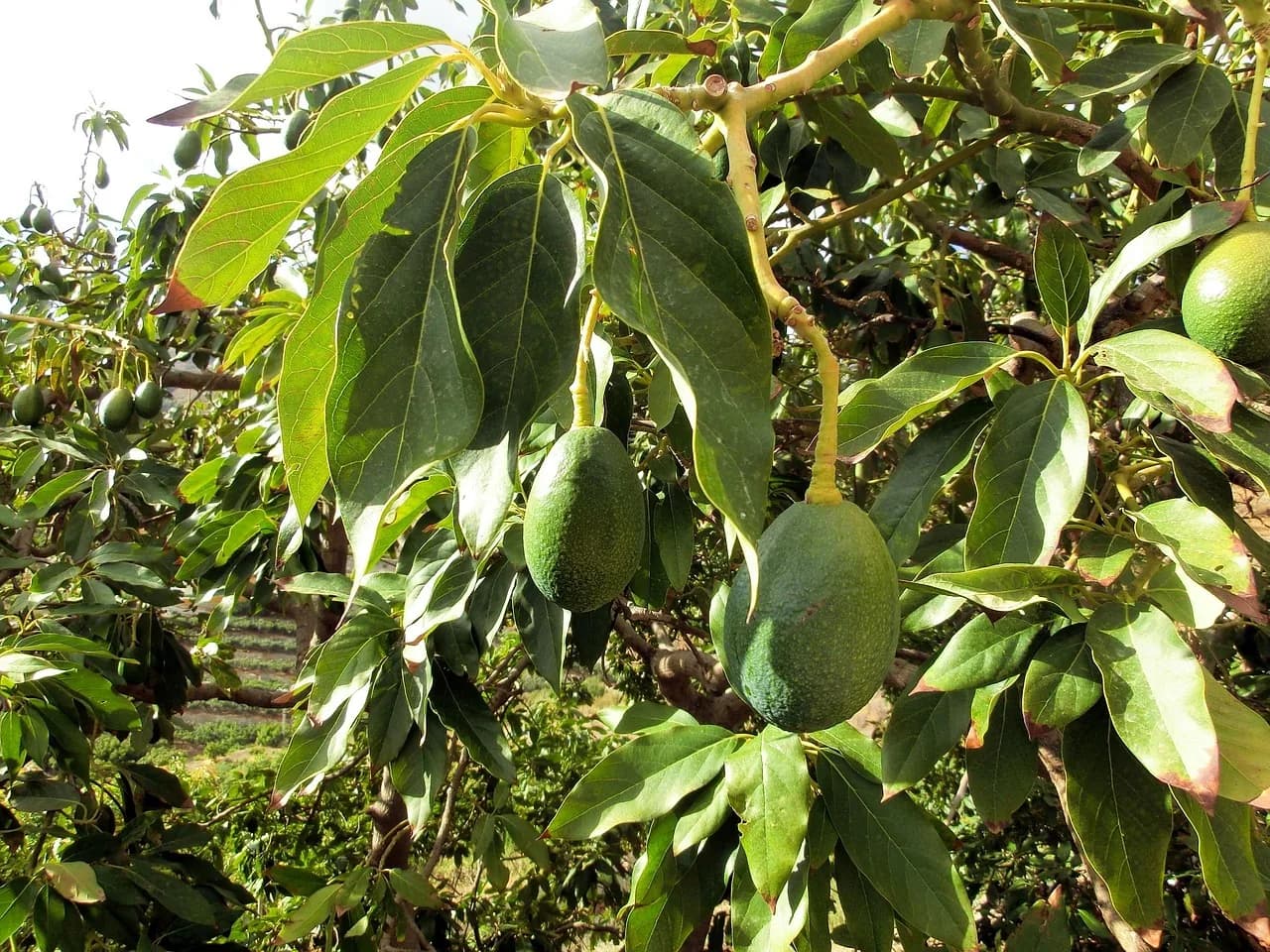
Fruit set in organic avocado: critical phases and the role of foliar nutrition
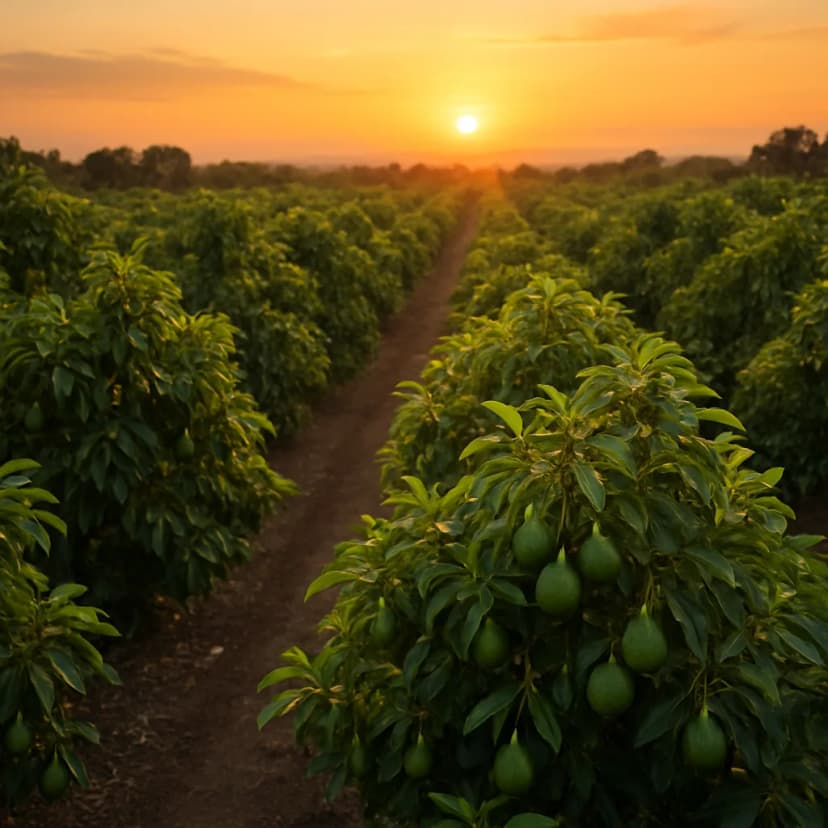
Fruit set in organic avocado is one of the most important stages of the production cycle: it is the moment when fertilised flowers become young fruits that remain on the tree until harvest. Avocado produces very abundant flowering, but only a proportion of the flowers go on to form fruit, and a proportion of the newly formed fruits drop in the following weeks. This drop is part of the normal behaviour of the species; what matters to the grower is understanding which factors make it worse and which can be managed.
Fruit set depends on many factors at once: the variety and rootstock, pollination, temperature and ambient humidity during flowering, the water status of the tree, the fruit load of the previous season, the general health of the plantation and nutrition. No single input, whether a foliar fertilizer or a biostimulant, guarantees a specific result: nutrition is one piece within an integrated management approach.
This general guide explains what foliar urea phosphate is, why its use in organic production requires prior verification, at which phenological stages foliar nutrition in avocado is usually considered, and what should be reviewed with the technical adviser and with the certification body before applying any input. It does not include closed doses or schedules, because these depend on the product, the farm and the season.
Illustrative example, without real data: a grower observes that, after abundant flowering with high temperatures and low ambient humidity, many young fruits drop. Before buying any product, the sensible step is to review irrigation, the presence of pollinators, soil condition and leaf analysis. The cause may lie in the weather or in water management, and a nutritional input may not change the situation.
What is urea phosphate and what should you know before using it?
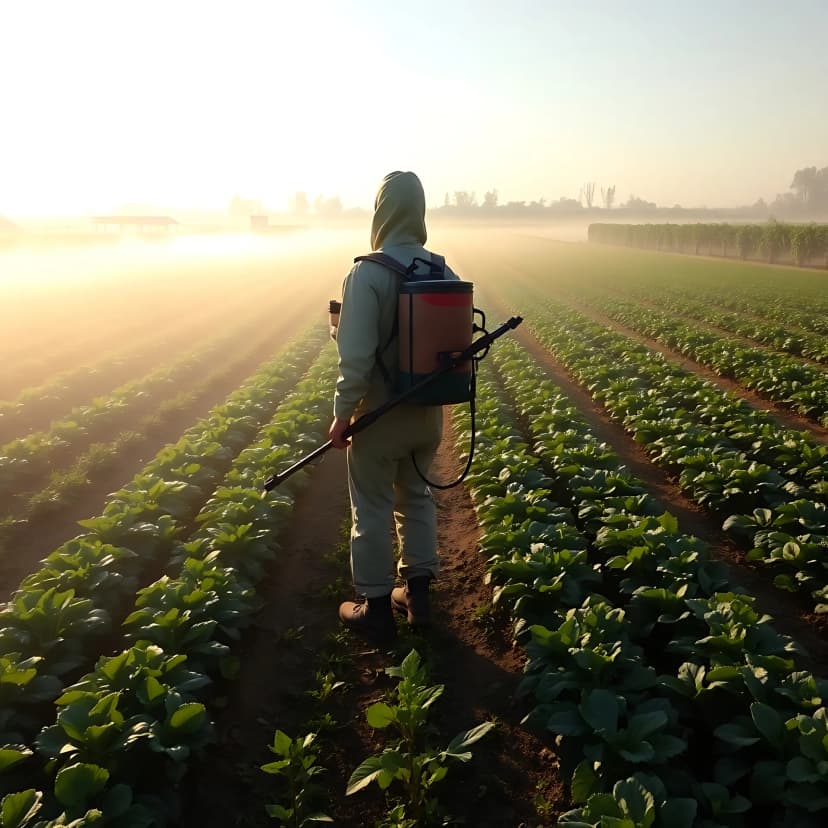
Urea phosphate is a fertilizer of industrial origin, highly soluble in water, which supplies nitrogen and phosphorus in a single salt. It is marketed for fertigation and for foliar application. The nutrient ratio and the characteristics of the formulation vary from one manufacturer to another, so the data sheet of each product is the reference document.
Nitrogen and phosphorus are nutrients that avocado needs throughout the cycle, including during flowering and fruit set. However, the fact that a nutrient is necessary does not mean it must be supplied via the leaves: if the soil and irrigation cover the tree's needs, an additional input may have no effect at all. Soil analysis and leaf analysis make it possible to know whether a real deficiency exists or whether the problem has another origin, such as excess moisture in the root zone, salinity or compaction.
The foliar route is sometimes considered as a complement when uptake by the roots is limited, for example in soils with poor drainage or with root asphyxia problems, to which avocado is especially sensitive. It is a one-off support: it does not replace well-planned base fertilization, nor does it by itself correct a soil or irrigation problem.
There is also a prior point that conditions everything else: urea phosphate is a synthetic fertilizer and its use on an organically certified farm must not be taken for granted. This is addressed in the section on certification.
Phenological stages and foliar nutrition in avocado
When planning a foliar application, the useful criterion is the phenological stage of the tree and not a calendar date, because avocado flowering is brought forward or delayed depending on the area, the variety and the season. That is why this guide does not propose month-by-month calendars: each grower should be guided by what they observe in their trees and by the judgement of their technical adviser.
These are the stages usually taken into account when discussing avocado nutrition around fruit set:
- Inflorescence bud break (pre-flowering): the flower buds begin to develop. This is the time to assess whether the tree enters this phase in a good nutritional state, supported by the foliar analysis from the previous season and by observation of vigour.
- Flowering: a stage that is very sensitive to environmental conditions. Applications with open flowers require special care: heat and wind increase the risk of damage to leaves and flowers, and treatments should be avoided when pollinators are active, always following the product label.
- Fruit set and newly formed fruit: this is the phase in which young fruit drop, the general condition of the foliage and irrigation and weather conditions are monitored most closely.
- Initial fruit growth: the management of irrigation and base nutrition becomes especially relevant to sustain fruit development.
- Post-harvest: the time to review the condition of the tree, interpret the analyses from the season and prepare the fertilization for the next cycle.
The number of applications, the intervals between them and the concentration depend on the product and are stated on its label or data sheet; the technical adviser adapts them to the farm. As a general rule, it is advisable to apply during the coolest hours of the day and with little wind, and not to repeat treatments "just in case": each application should respond to an identified need.
There is no fixed recipe valid for all plots. The more recent and complete the diagnosis, the better founded the decision to apply or not to apply will be.
Preparation of the spray solution and application technique
The dose of any foliar fertilizer is the one stated on the product label, and it varies according to the formulation, the stage of the crop and the conditions of the plantation. There is no universal dose for avocado, and the figures that circulate for other crops or other farms cannot be extrapolated. When in doubt, consult the manufacturer's data sheet and check it with the adviser.
The preparation of the spray solution requires basic care:
- Clean water of good quality: water with high salinity or an inadequate pH can reduce the efficacy of the product or cause precipitates.
- Measurement of pH: it should be measured before and after adding the product and corrected, if necessary, only with correctors accepted by the certification body.
- Order of mixing and compatibility: before mixing several products in the tank, carry out a jar test in a small container to check that no lumps, precipitates or separations form. The label of each product states the known incompatibilities.
- Adjuvants: on a certified farm, only those that are permitted in organic production and confirmed by the certification body should be used.
As for the application, the important thing is to achieve uniform coverage of the foliage without reaching excessive run-off. The volume of spray solution depends on the size of the trees and on the equipment, so the machine should be calibrated before each job. Apply during cool hours, without wind and outside the periods of peak pollinator activity.
Before extending a new product or a new tank mix to the whole farm, it is prudent to treat a few trees and observe their development: leaf-edge burn, spots or the drop of young leaves are signs of phytotoxicity and mean you must stop. The equipment should be cleaned well at the end, and personnel will use the protection indicated on the label.
Organic certification: regulations and eligibility of urea phosphate
In the European Union, organic production is governed by Regulation (EU) 2018/848, and the fertilizers and soil conditioners that may be used are subject to lists of authorised inputs. It is not enough for a product to be a good fertilizer: it must be approved for use in organic farming.
Urea phosphate is a synthetic fertilizer. For this reason, it should not be assumed to be approved on a certified holding: with any nitrogen or phosphate fertilizer of industrial origin, the first question is not how much to apply, but whether it can be used. The answer is given by the certification body on the basis of the data sheet and the exact composition of the product, not by the manufacturer or the distributor. If there is no written confirmation, the prudent course is not to apply it.
Outside the European Union, organic production regulations and certification bodies differ from country to country, and destination markets may add their own requirements. It is advisable always to confirm with the body that certifies the holding and with the competent authority of the country before incorporating a new input.
To facilitate audits and to be able to demonstrate compliance, it is worth keeping a detailed record of each application: product, date, phenological stage, plot, volume, conditions of the day and operator. Data sheets, invoices and confirmations from the certification body are also filed.
Nutrition of organic avocado with approved inputs
In organic production, avocado nutrition is approached from the soil and from the management of the plantation as a whole, and foliar applications remain, where applicable, as a complement. Some points that usually form part of a management programme:
- Organic matter and amendments: compost, composted manures or other organic fertilizers, always within what the certification body approves.
- Irrigation and drainage: irrigation adjusted to the tree's demand and a well-drained soil reduce the risk of root asphyxia, a problem that limits nutrient uptake.
- Cover crops and mulching: they help to maintain soil structure and moisture.
- Pollinators: encouraging their presence in the plot and respecting their activity during flowering is part of fruit set management.
- Balance between crop load and vigour: pruning and the management of the fruit load influence how the tree reaches the following flowering.
Biostimulants approved by the certification body can contribute to the general vigour of the crop, but they are not a plant protection treatment and do not replace fertilization. Regulation (EU) 2019/1009 regulates plant biostimulants; the fact that a product complies with that regulation does not mean that it is approved for organic farming, and this is why it must be confirmed with the certification body before use.
Prior diagnosis and records: what to check before applying
Before deciding on any nutritional input, an orderly diagnosis prevents over-application or applying what is not needed. A reasonable checklist includes:
- Soil analysis: texture, organic matter, salinity and pH, to know the conditions in which the roots are working.
- Foliar analysis: it allows the nutritional status of the tree to be compared with the reference values used by the laboratory or the adviser.
- Irrigation water analysis: water quality influences soil salinity and the preparation of the spray solution.
- Field observation: symptoms on leaves, shoot vigour, flowering status and the progression of fruit drop.
- Plot history: fruit set behaviour and fruit load in previous seasons.
- Certifier confirmation: verifying that each input is approved before buying it.
When choosing a product, it is worth asking the supplier for the data sheet and the safety data sheet, the full composition, the instructions for use and, for certified holdings, the documentation that allows the certification body to assess the input. A serious supplier does not promise specific fruit set or production results: they explain what the product contains, how it is used and what limitations it has.
An independent technical adviser can help to interpret the analyses, to decide whether a foliar application is justified and to plan the timing of application according to the phenological stages of the plot.
Conclusion: integrated strategy for fruit set in organic avocado
Foliar urea phosphate is a specific fertilizer with specific uses, not a general solution for fruit set. In organic avocado, the first question is whether the product is permitted by the certification body; the second, whether there is a real need demonstrated by soil and foliar analysis; and only then are the timing and method of application according to the product label considered.
Fruit set rests on integrated management: a soil with good structure and organic matter, well-adjusted irrigation, pollinators present, a balanced tree and nutrition based on diagnosis. Permitted biostimulants can contribute to the general vigour of the crop, but they are not a plant protection treatment and do not guarantee a result.
If you need guidance on products for your plantation, you can consult the range of organic agricultural biostimulants and organic fertilizers, or consult a distributor, always confirming with your certification body that each input is permitted in organic production.
Related articles
Do you need professional help?
At Ecoganic in Spain, Europe, we offer biostimulants and organic fertilizers. Call us: +34 623 753 719.
Request your free quote
Frequently Asked Questions
Can foliar urea phosphate be used in organic avocado?
It should not be taken for granted. Urea phosphate is a synthetic fertilizer and, in organic production, only inputs permitted by the regulations and confirmed by the certification body may be used. The answer depends on the exact composition of the product, so the certifier must be consulted before purchasing it and their confirmation kept in writing. If this is not obtained, the prudent course is not to apply it.
What does fruit set in avocado depend on?
It depends on several factors at once: the variety and rootstock, pollination, temperature and humidity conditions during flowering, the water status of the tree, the fruit load of the previous season, the balance between shoots and fruit and nutrition. That is why a single input, on its own, does not guarantee a result: it is advisable to review the management as a whole.
At which phenological stages is foliar nutrition in avocado considered?
It is usually assessed around inflorescence bud break, flowering, fruit set and early fruit growth. The most useful approach is to be guided by the phenological stage rather than calendar dates, because flowering varies with the area, the variety and the season. The number of applications and the intervals are those indicated on the product label and by the technical adviser.
What dose of foliar fertilizer should be used in avocado?
The one stated on the product label, adapted by the technical adviser to the farm. There is no universal dose: it changes with the formulation, the condition of the crop and the conditions of the plantation. Before generalising a new application, it is prudent to test it on a few trees and observe whether symptoms of phytotoxicity appear, such as leaf-edge burn.
Is a foliar fertilizer compatible with other products in the tank?
It depends on the formulation and on water quality. Before mixing several products, a jar test is carried out in a small container to check that no lumps, precipitates or phase separation appear, and the incompatibilities indicated on each label are reviewed. On a certified farm, moreover, each product in the tank mix must be permitted for organic production.
What role do biostimulants play in fruit set in avocado?
Biostimulants permitted by the certification body can contribute to the general vigour of the crop, but they are not a plant protection treatment, they do not replace fertilization and they do not guarantee fruit set. Regulation (EU) 2019/1009 regulates plant biostimulants, although complying with it does not mean the product is permitted for organic production: that is confirmed by the certification body.
What should be checked before applying a nutritional input?
It is advisable to have soil analysis, foliar analysis and irrigation water analysis, to observe symptoms in the field and to review the fruit set history of the plot. The supplier should also be asked for the data sheet and the composition of the product, its admission should be confirmed with the certifier and each application should be recorded in the farm register.