Improve grain protein in organic soft wheat with biostimulants, foliar nutrition and soil management. Request your free quote.
What grain protein is and why it determines the quality of organic soft wheat
Grain protein in organic soft wheat is one of the parameters that most strongly determines the crop's commercial value, its industrial destination and the final profitability of the holding. In a European context where demand for organic flours with breadmaking suitability is growing, producing soft wheat with stable protein percentages has become a technical challenge for the professional farmer. Protein depends not only on available nitrogen, but also on the interaction between genetics, soil, water, phenological stage and the plant's capacity to mobilise reserves towards the grain.
In organic farming, synthetic fertilisation is restricted, so management must be based on certified organic fertilisers, agricultural biostimulants and foliar nutrition strategies that comply with European regulations. The aim is not only to reach a specific protein percentage, but also to guarantee gluten quality, specific weight and grain uniformity, factors that determine breadmaking suitability and acceptance by mills and cooperatives. Understanding the physiology of grain filling is the first step towards designing an effective agronomic programme.
Agronomic factors that affect protein in organic soft wheat
Grain protein is built from amino acids that the plant mobilises from leaves, stems and roots towards the grain during the filling period. This process, known as remobilisation, depends on the plant's photosynthetic health, its water status and the availability of nitrogen in the soil. In soft wheat, the protein percentage usually correlates with nitrogen availability at anthesis and with the plant's capacity to keep the flag leaf active during filling.
Genetics and variety
Soft wheat varieties show notable differences in their protein accumulation potential. Some are selected for high yield with a lower protein percentage, while others prioritise breadmaking quality. In organic farming, it is advisable to choose varieties adapted to the area, with good tolerance to rust, septoria and water stress, because a healthy plant maintains photosynthesis better and, therefore, protein synthesis. Variety choice alone does not guarantee the result, but it determines the productive and qualitative ceiling.
Nitrogen availability and timing of uptake
Wheat takes up nitrogen mainly in two phases: during tillering and during stem elongation. Late uptake, between ear emergence and anthesis, is what most influences the protein content of the grain. In organic systems, nitrogen comes from the mineralisation of soil organic matter, from preceding legumes and from authorised organic fertilisers. If this mineralisation does not coincide with the periods of highest demand, the plant may not meet its needs and the grain will reduce its protein percentage.
Water and water stress
Water stress in wheat crops during grain filling has a dual effect: it can concentrate proteins if the reduction in yield is greater than the reduction in nitrogen uptake, but it can also cause small grains and unevenness. In rainfed conditions, interannual variability is high, so management should aim to improve the resilience of the crop. Water availability at anthesis and during filling is a critical factor that determines both yield and quality.
Ecological fertilisation strategy to raise grain protein
In organic farming, fertilisation must be understood as an integrated system in which the soil is the main engine. Certified organic fertilisers supply nutrients, but their effectiveness depends on microbial activity and soil organic matter. To raise grain protein, the strategy must combine balanced base applications, organic amendments and targeted applications at key phenological stages.
Base fertilisation and organic amendments
Base fertilisation must cover phosphorus, potassium and sulphur requirements, as well as supplying nitrogen with gradual release. Organic fertilisers based on plant raw materials, composted manures or animal-origin meals allow a progressive release that accompanies the crop cycle. Incorporating mature compost improves soil structure and water-holding capacity, which reduces the impact of water stress on grain filling.
Sulphur and protein quality
Sulphur is a key nutrient for the formation of sulphur-containing amino acids such as methionine and cysteine, which influence gluten quality. In soils with low organic matter or a history of intensive tillage, sulphur deficiencies can limit protein quality. Organic fertilisers rich in sulphur and specific foliar applications can help maintain an adequate balance during stem elongation and ear emergence.
Splitting and adjustment to phenology
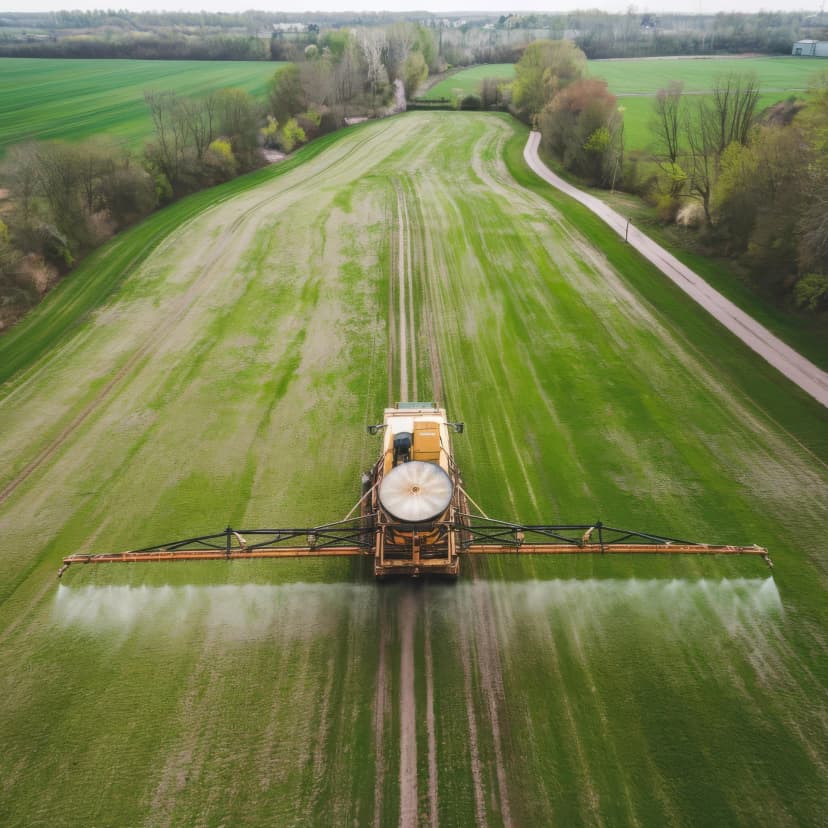
Unlike conventional fertilisation, in organic farming it is not always possible to apply large doses of soluble nitrogen at the exact moment. For this reason, it is recommended to split applications and combine soil fertilisation with foliar applications of nutrients and biostimulants. Applications at stem elongation and at flag leaf can complement nutrition and favour the remobilisation of nitrogen to the grain. The aim is for the plant to have nitrogen available at anthesis without causing imbalances or lodging.
Biostimulants and foliar nutrient uptake during grain filling
Agricultural biostimulants are tools that make it possible to modulate crop physiology without supplying large quantities of nutrients. In organic soft wheat, their use at key moments can improve photosynthetic efficiency, stress tolerance and the mobilisation of reserves to the grain. Foliar nutrient uptake is a complementary route that, when well used, helps maintain protein quality when the soil cannot cover the entire demand.
Microalgae and amino acids during filling
Microalgae biostimulants, such as those derived from Chlorella, supply bioactive compounds, amino acids and growth factors that favour the plant's metabolic activity. Foliar applications between ear emergence and anthesis can help keep the flag leaf functional, delay senescence and improve nitrogen remobilisation. The biostimulant technology of quality biological formulations is based on natural extracts and beneficial microorganisms that act on crop physiology and soil health.
Micronutrients and grain quality
Zinc, manganese and iron take part in enzymatic processes related to protein synthesis and photosynthesis. In calcareous soils or soils with high pH, these micronutrients may be poorly available, limiting grain quality. Micronutrients for organic crops, applied foliarly at times of high demand, can correct deficiencies and improve metabolic efficiency during filling.
Indicative foliar application protocol
An indicative protocol for organic soft wheat could include an application at stem elongation with biostimulant and micronutrients, and another between ear emergence and anthesis with microalgae biostimulant and amino acids. Doses must be adjusted according to crop status, soil analysis and weather conditions. Foliar application should be carried out during the cooler hours and with adequate relative humidity to favour uptake. It is advisable to validate the protocol with field trials and adjust it according to the results.
Soil management, microbiota and organic matter for stable protein
Grain protein is not built only in the aerial part: the soil is the origin of nutrients and the support of the microbiota that makes them available. Soil organic matter and soil microbiota determine the mineralisation capacity and the synchrony between nitrogen supply and demand. In organic farming, looking after the soil is the most profitable investment to stabilise wheat quality.
Organic matter and structure
A soil with a good organic matter content retains more water and nutrients, and presents a structure that favours root development. Fulvic acids for organic farming help to improve soil aggregation, nutrient availability and microbial activity. Applications of organic amendments and humic extracts can increase crop resilience to periods of water stress.
Soil microbiota and the nitrogen cycle
Soil microorganisms take part in the mineralisation of organic matter, biological nitrogen fixation and phosphorus solubilisation. A diverse microbiota improves the efficiency of organic fertilisers and reduces nitrogen losses. Practices such as rotation with legumes, the use of cover crops and reduced tillage favour soil biological activity and nitrogen availability at key moments.
Rotations and preceding crops
Legumes such as pea, vetch or broad bean fix atmospheric nitrogen and incorporate it into the system, improving soil fertility for the following wheat. A well-planned rotation can reduce dependence on external fertilisers and improve the protein quality of the grain. In addition, crop diversification helps to break disease cycles and improve the overall health of the agrosystem.
Common mistakes and good practices in organic soft wheat
Field experience shows that many problems of low protein in organic wheat are not due to a lack of fertiliser, but to mismanaged practices at critical moments. Identifying the most common mistakes makes it possible to correct course and improve grain quality.
Common mistakes
- Applying organic fertilisers without analysing the soil or adjusting the dose to the real needs of the crop.
- Concentrating all the nitrogen in the base fertilisation, without splitting it or matching it to wheat phenology.
- Neglecting sulphur and micronutrients, limiting protein quality and gluten formation.
- Ignoring the water status of the crop and not reinforcing stress tolerance during drought periods.
- Not evaluating the results with plot trials or adjusting the protocol according to variety and area.
Good practices
- Carrying out soil and organic matter analyses before planning fertilisation.
- Splitting nitrogen inputs and combining soil fertilisation with foliar applications.
- Incorporating agricultural biostimulants at stem elongation and anthesis to favour remobilisation.
- Maintaining cover crops and rotations with legumes to improve soil fertility.
- Documenting the results and adjusting the programme according to the crop response.
Improving grain protein in organic soft wheat is a process of continuous adjustment. There are no universal solutions, but there are agronomic principles that, applied with judgement, make it possible to achieve competitive breadmaking qualities. The combination of organic fertilisation, biostimulation and soil management offers a solid route to improve protein without compromising the sustainability of the system.
Related articles
Do you need professional help?
At advanced agricultural solutions in Spain, Europe, we offer Biostimulants and Organic Fertilisers. Call us: +34 623 753 719.
Request your free quote
FAQ on grain protein in organic soft wheat
These are some of the most frequently asked questions we receive from farmers and agronomists working with organic soft wheat who are looking to improve the protein quality of their crops.
What percentage of protein is considered adequate in organic soft wheat?
The adequate percentage depends on the industrial end use. For breadmaking flours, values of around 11-13 % protein on a dry matter basis are usually sought, although varieties and miller requirements may vary. In organic farming, more important than reaching an exact figure is achieving stability between seasons and good gluten quality. A grain analysis at reception allows management to be adjusted for the following sowing.
Can wheat protein be increased without synthetic fertilisers?
Yes, it is possible to improve protein in organic farming through certified organic fertilisers, agricultural biostimulants and proper soil management. The key lies in synchronising nitrogen availability with periods of highest demand, especially between heading and anthesis. It also helps to keep the flag leaf active and to reduce water stress during grain filling.
When should biostimulants be applied to improve grain protein?
The most effective timings are usually stem elongation and the period between heading and anthesis. At stem elongation, biostimulants support vegetative development and ear formation. Between heading and anthesis, they help maintain photosynthetic activity and favour the remobilisation of nitrogen towards the grain. The dose and specific product should be adjusted according to crop status and field conditions.
How does water stress influence protein in soft wheat?
Water stress during filling can increase the protein percentage if it reduces yield more than nitrogen uptake, but it can also lead to small grains and unevenness. In rainfed conditions, variability is high, so it is advisable to improve the soil's water retention capacity and apply biostimulants that strengthen stress tolerance. Integrated management allows quality to be stabilised in dry seasons.
References