Fertilisation checklist for organic conversion: soil analysis, nutrient balance and approved products. Request your free quote.
What organic conversion involves in terms of fertilisation
Fertilisation during organic conversion is not about replacing a chemical product with an "organic" one bearing a green label. It is about redesigning the crop nutrition programme so that it works with approved inputs, with soil microbiota as an ally and with documentary traceability that will withstand an inspection by the control body. In Latin America, this process is particularly relevant in coffee, cocoa, avocado, citrus, maize, rice and export vegetables, where organic certification opens markets with a price premium but demands rigorous agronomic management.
During conversion, the soil carries the legacy of conventional management: excess salts, pH imbalances, low organic matter and an impoverished microbial community. The challenge is twofold: maintaining yield while rebuilding the system's natural fertility. This requires analysis, plot-by-plot planning, the use of stabilised organic sources and, where appropriate, biostimulants that improve uptake efficiency. Conversion is not a formality: it is a change of production model built on soil biology.
Regulation (EU) 2018/848 and its derived legislation set the reference framework for products exported to Europe, while in the destination country local certification bodies apply their own input lists. A coffee producer in Colombia or an avocado producer in Peru who wants to certify their farm must verify each product with their certifier before applying it. The golden rule is simple: if it is not documented, it is not approved.
Step-by-step fertilisation checklist
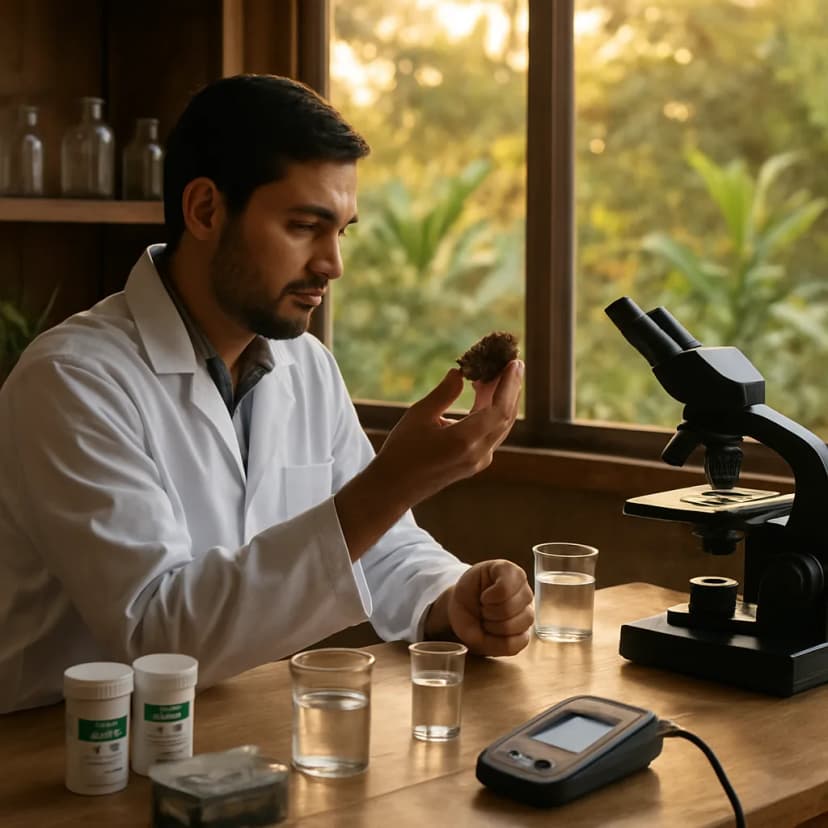
This checklist summarises the minimum actions a producer must complete before and during conversion. It is not a theoretical list: each point responds to a real audit requirement or to a specific agronomic need.
- Confirm the official conversion start date with the authority or control body. The entire fertilisation plan is organised from that date.
- Carry out an initial soil analysis: pH, organic matter, electrical conductivity, mineral nitrogen, phosphorus, potassium, calcium, magnesium, micronutrients and, where applicable, heavy metals.
- Analyse the irrigation water: salinity, bicarbonates, nitrates, sodium, chlorides and risk of clogging in fertigation.
- Draw up a per-plot balance of N, P and K, considering crop uptake, soil contributions, manures, compost, cover crops, legumes and fertilisers.
- Prioritise rotations, green manures, compost and stabilised organic matter before resorting to external fertilisers.
- Avoid mineral nitrogen fertilisers: European regulations do not permit them in organic production.
- Verify each product on the label, technical data sheet, safety data sheet and valid certificate for the batch or product.
- Confirm that the product is permitted for the crop and the intended use by the certification body.
- Record date, plot, crop, product, dose, application method, spray volume and application conditions.
- Separate stores and equipment, or document cleaning when they are used on organic and conventional plots.
- Review the plan annually with the analytical results and the actual crop yield.
- Keep invoices, delivery notes, labels, certificates, analyses and records for the period required by the control body.
This checklist adapts to different crops and scales. On a 5-hectare coffee farm in Colombia, the nutrient balance can be done per lot and with composite sampling; on a 50-hectare avocado holding in Peru, it is advisable to divide the area into sectors by environment and manage fertigation with differentiated recipes. The logic is always the same: measure, plan, apply and record.
Soil and water analysis: the basis of the plan
Without analysis, any fertilisation plan is a gamble. The initial soil analysis reveals the real starting point: not only how much nutrient there is, but in what form it is present and whether the crop can access it. A soil with pH 5.2 and high exchangeable aluminium in a coffee plantation may have acceptable total phosphorus but with blocked availability. That diagnosis completely changes the liming and fertilisation strategy.
Sampling must be representative: zigzag walks, between 15 and 25 sub-samples per management unit, at a depth that depends on the crop. In annual crops such as maize or rice, the 0-20 cm layer is usually sufficient; in fruit trees such as avocado or citrus, it is advisable to also sample 20-40 cm to assess leaching and root development. Organic matter, cation exchange capacity and electrical conductivity are key indicators for deciding the type and dose of amendments.
Water analysis is equally critical in irrigated areas. Water with an electrical conductivity above 1.5 dS/m and a high sodium adsorption ratio can salinise the root bulb and block the uptake of calcium and potassium. In citrus in northern Argentina or in avocado in the Peruvian valley, this factor explains many yield drops that are wrongly attributed to a lack of fertiliser. Correcting the water or leaching salts with leaching irrigations is part of the organic fertilisation plan.
The recommended analysis frequency during conversion is annual for soil and six-monthly for water in arid areas. In intensive greenhouse crops, such as tomato, a sap or petiole analysis can be useful to adjust fertigation in real time. Analytical information is what makes it possible to justify to the certifier why one product is applied rather than another.
Nutrient balance and authorised organic sources
The nutrient balance is the heart of the plan. It consists of calculating, for each plot, the difference between what the crop extracts and what the system can supply. If the balance is negative, it must be covered with authorised sources; if it is positive, there is a risk of leaching, salinisation or imbalances. In coffee, a harvest of 30 quintals per hectare can extract on the order of 90-120 kg of N, 15-20 kg of P₂O₅ and 100-130 kg of K₂O, in addition to calcium and magnesium. These figures guide the replacement.
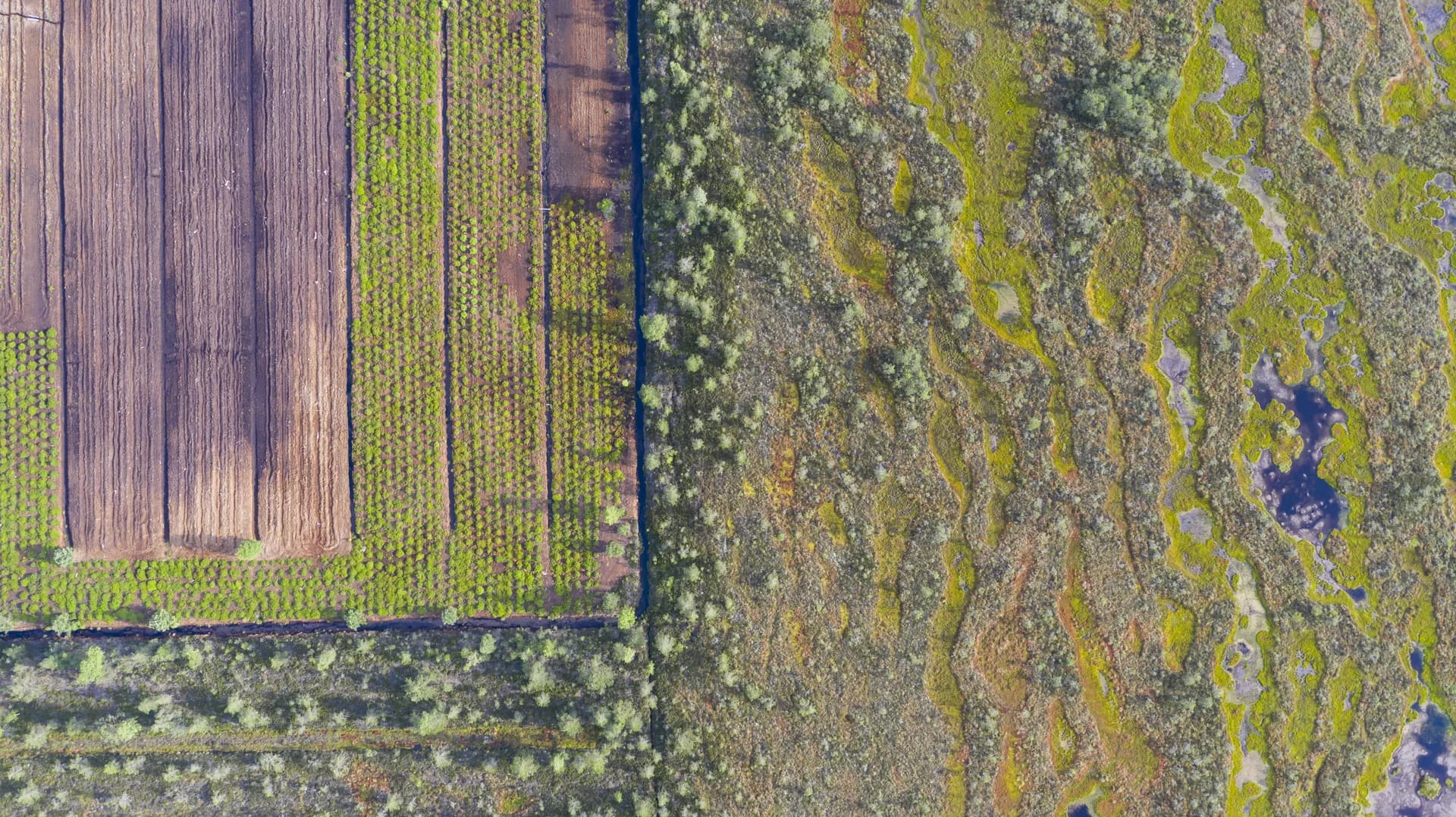
Authorised organic sources include manure compost, vermicompost, peat, guano, blood, bone and feather meals, algae, treated vinasses and commercial organic fertilisers with certification. In practice, compost is the base, but its composition varies widely: a mature compost may contain between 1.5% and 3% total nitrogen, with slow mineralisation that depends on soil temperature and moisture. It is therefore advisable to analyse each batch of compost before incorporating it into the balance.
Biostimulants based on microalgae, humic and fulvic extracts, amino acids and beneficial microorganisms complement fertilisation without replacing it. Their function is to improve absorption efficiency, stimulate root development and increase stress tolerance. In a conversion programme, they are useful tools for keeping the crop productive while soil fertility is rebuilt. You can consult the organic agricultural biostimulants and the certified organic fertilisers to integrate them into the plan.
The calculation of doses must start from the guaranteed content of the product, not from the trade name. If a fertiliser declares 20% K₂O and the balance indicates that 10 kg of K₂O per hectare are missing, the theoretical amount of product is 50 kg. This indicative calculation never replaces the label, the crop analysis or the authorisation of the control body. In fertigation, moreover, the compatibility between products and the risk of precipitation in the irrigation head must be verified.
Fertilisation calendar by phenological stage
Conversion does not change the physiology of the crop: it changes the sources and the timing of application. A well-designed plan distributes the inputs according to the real demand of the plant. In perennial crops such as coffee, cocoa, avocado or citrus, fertilisation is organised around growth flushes, flowering, fruit set and fruit filling. In annuals such as maize, rice or tomato, the calendar is adjusted to sowing, tillering or vegetative growth, flowering and grain or fruit filling.
In coffee, for example, a common strategy includes a basal application with compost and calcareous amendments after harvest, a maintenance application before the main flowering and a supply of potassium and magnesium during grain filling. Biostimulants with microalgae can be applied at the start of each vegetative flush to favour rooting and absorption. In avocado, foliar potassium during fruit filling helps with calibre and oil content, while calcium and boron at flowering and fruit set reduce the drop of small fruits.
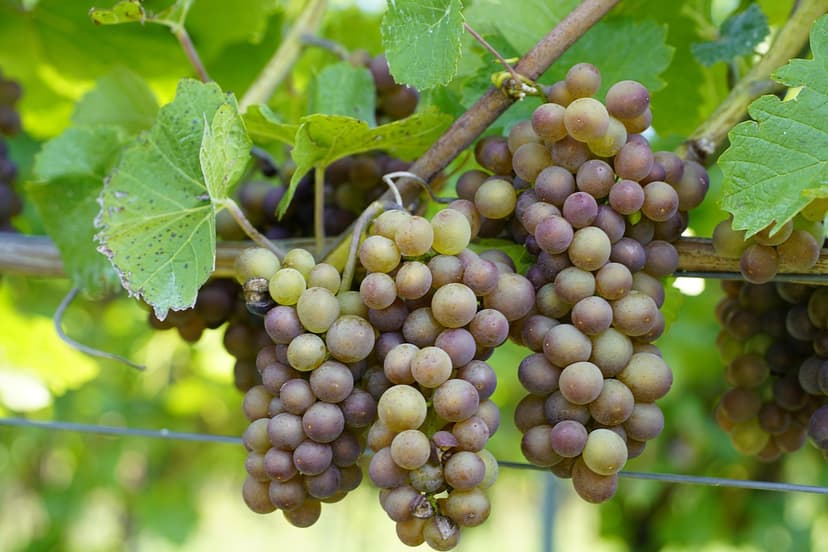
In citrus, the plan is structured in three moments: post-harvest, pre-flowering and swelling. The application of organic matter and fulvic acids post-harvest improves the microbial activity of the soil and the recovery of the tree. In grapevine, fertilisation is concentrated at budburst, pre-flowering and veraison, avoiding excess nitrogen that delays ripening and favours diseases. In maize and rice, the critical window is flowering: this is where the number of grains and the final weight are defined.
The key is not to apply out of habit, but out of measured need. A rigid calendar that ignores foliar analysis or the evolution of the weather can generate imbalances. In tropical areas with intense rainfall, the leaching of nitrogen and potassium is high, so it is advisable to split the inputs and use sources of gradual release. In arid areas, salinity makes it necessary to apply with leaching irrigations and to monitor the electrical conductivity of the saturated extract.
Common mistakes during conversion
The most common mistake is reducing fertilisation abruptly without compensating with organic matter and biostimulation. The crop responds with a drop in yield, small leaves and greater sensitivity to pests. Conversion must be gradual: in perennial crops, the conversion period is usually two to three years, and in annual crops two cycles. Using that time to build fertility is the difference between a successful transition and an economic failure.
Another common mistake is trusting the word "organic" on the label without verifying the certificate. A product may be organic in origin but not authorised for organic production, or be authorised only for certain uses. The certification body requires documentation for the product and the batch. In Latin America, moreover, it must be checked that the certificate is recognised by the destination market, whether the European Union, the United States or Japan.
The lack of records is a recurring problem. Many producers apply correctly but do not document it. In an inspection, an incomplete field notebook can cost the certification. The date, plot, product, dose, method, spray volume and weather conditions must be recorded. It is also advisable to keep invoices, delivery notes and labels. Traceability is not bureaucracy: it is the proof that the management complies with the regulation.
A fourth mistake is neglecting soil health. Organic fertilisation does not work without active microbiota. Compacted soils, with low organic matter or extreme pH limit mineralisation and absorption. Incorporating compost, maintaining plant covers, avoiding excessive tillage and applying beneficial microorganisms are practices that multiply the efficiency of the nutrients applied. In this sense, fulvic acids for organic farming and micronutrients for organic crops are useful allies when there are specific deficiencies.
Traceability and documentation for certification
Organic certification rests on three pillars: compliance, evidence and coherence. Compliance refers to using only authorised inputs; evidence, to records and invoices; coherence, to the fertilisation plan making agronomic sense and being consistent with the nutrient balance. An audit does not only look for paperwork: it looks for the history of management to be credible and verifiable.
The application record must include the plot, the date, the product with its batch number, the dose, the area treated, the application method and the operator. If applied by fertigation, the water volume and the electrical conductivity of the spray solution should be recorded. If applied foliar, the wind and temperature conditions. These data make it possible to reconstruct what happened and to justify decisions in the event of a query from the inspector.
Product documentation includes the label, the technical data sheet, the safety data sheet and the manufacturer's or distributor's certificate. In the case of imported inputs, it must be verified that the certificate is valid and that it covers the intended use. The valid certificate for each product must be requested and checked before recommending it on a certified holding. You can consult the organic certifications and the trials and field results available.
The fertilisation plan must be reviewed annually with the analyses and the yields obtained. That review demonstrates to the control body that the producer does not apply out of inertia, but adjusts their management with data. In export crops such as avocado, coffee or cocoa, this practice also improves competitiveness: a fine-tuned plan reduces costs and improves the quality of the final product.
Related articles
Do you need professional help?
At Ecoganic in Spain, Europe, we offer organic biostimulants and fertilisers. Call us: +34 623 753 719.
Request your free quote
Frequently asked questions about fertilisation during conversion to organic
Can fresh manure be used during conversion to organic?
Fresh manure is not advisable because it can contain pathogens, weed seeds and unstable nitrogen. Organic regulations usually require prior composting or waiting periods before harvest. The safest approach is to use mature compost or composted manure and to verify with the certification body the specific conditions for each crop and country.
What is the difference between an organic fertiliser and one authorised for organic production?
An organic fertiliser is one whose origin is organic matter, but it is not necessarily authorised for organic production. To use it on a certified farm, it must be included in the list of inputs permitted by the applicable regulation and have a valid certificate. The "organic" label is not enough: the product and batch documentation must be checked.
How long does conversion last and how does it affect fertilisation?
In annual crops, the conversion period is usually two cycles; in perennials, two to three years. During that time, the fertilisation plan must be built with authorised sources, organic matter and biostimulants, avoiding mineral nitrogen fertilisers. The key is to maintain productivity while soil fertility is rebuilt.
Can microalgae biostimulants be used in organic production?
Yes, provided the product is authorised by the certification body and used in accordance with the label. Microalgae biostimulants, such as those derived from Chlorella vulgaris or Scenedesmus, can improve microbial activity, rooting and stress tolerance. They should be integrated into the plan as a complement, not as a substitute for fertilisation.
How is the dose of an organic fertiliser calculated?
The dose is calculated from the product's guaranteed nutrient content and the nutrient balance. If the analysis indicates that 10 kg of K₂O per hectare are missing and the product declares 20 % K₂O, the theoretical amount is 50 kg. That indicative calculation must be adjusted according to the label, leaf analysis and the certification body's authorisation.
References