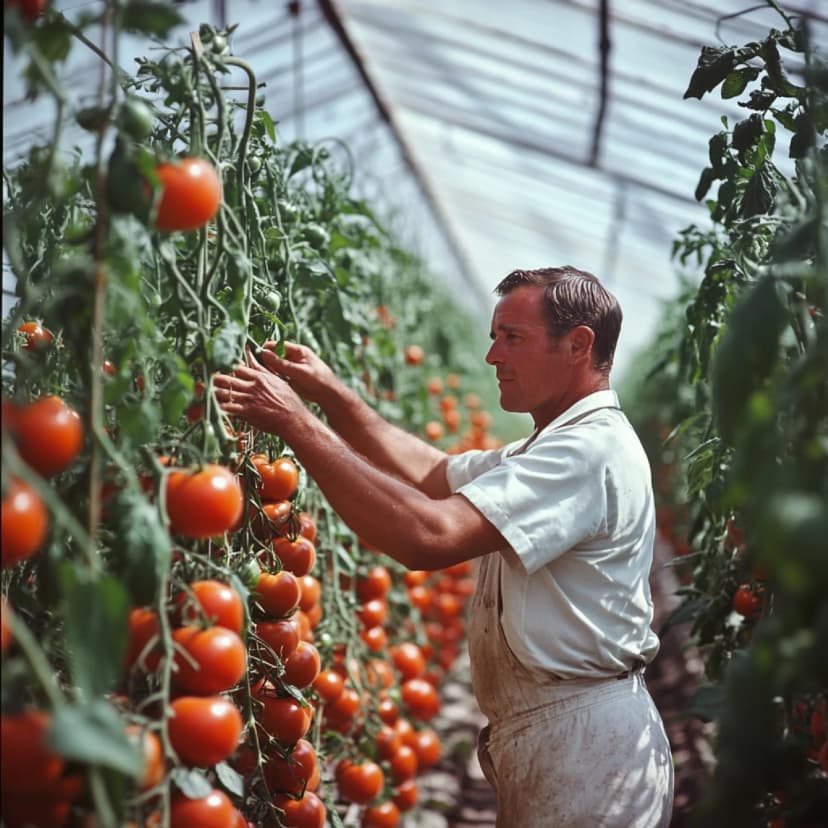
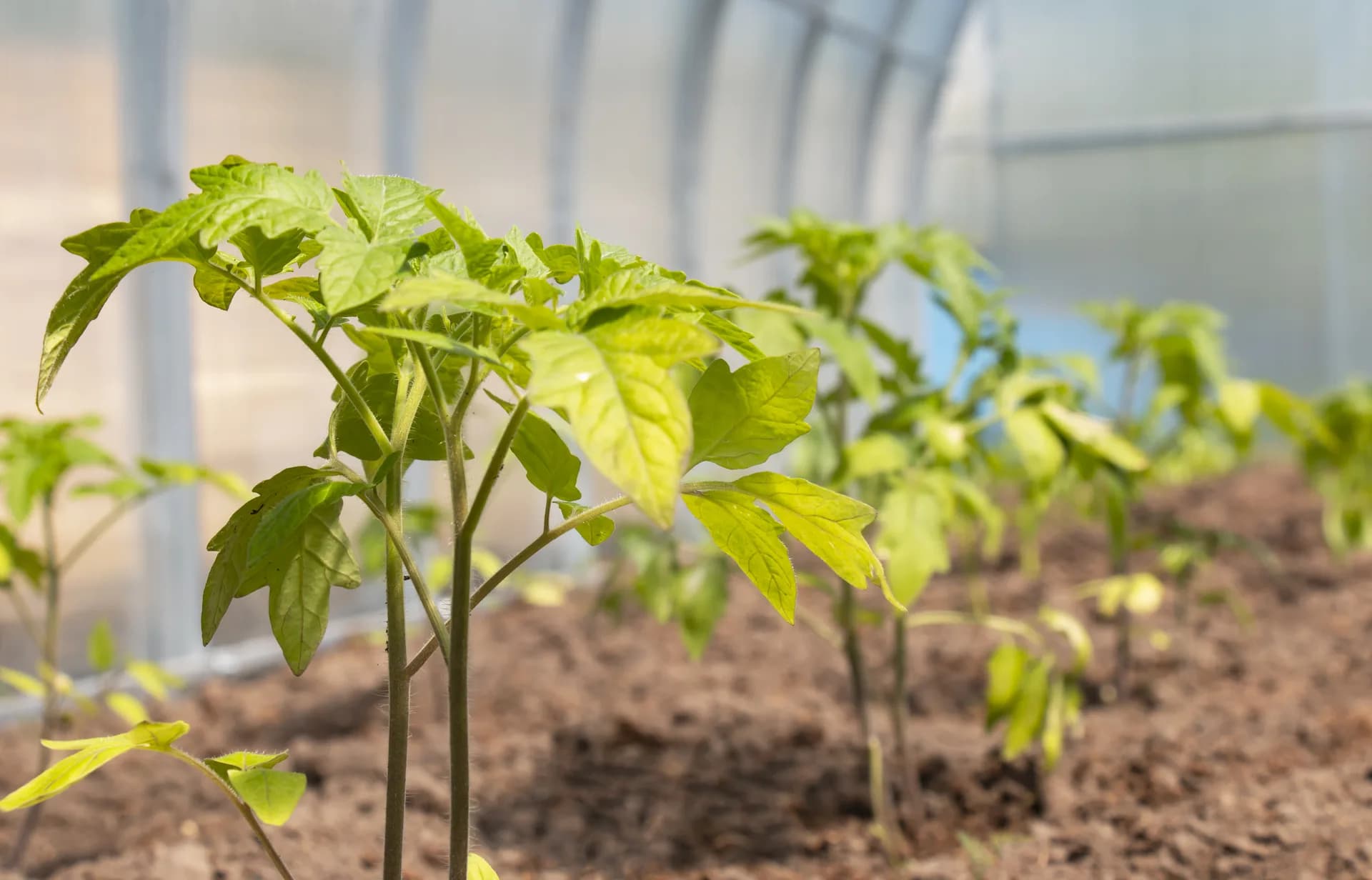
What calcium deficiency in organic greenhouse tomatoes is
Calcium deficiency in organic greenhouse tomatoes usually manifests as blossom-end rot, also known by its English name, blossom-end rot: a dark, sunken, dry lesion at the end of the fruit opposite the peduncle. It is a physiological disorder, that is, an alteration not caused by a pest or a pathogen, but by an imbalance in the crop. And that imbalance is not always a lack of calcium in the soil: it is often the case that the young fruit does not receive the calcium it needs at the moment it needs it, even though soil or nutrient solution analysis indicates adequate levels.
Calcium is involved in the firmness and structure of tissues, and growing fruits need it continuously. A common explanation of the problem is that calcium moves through the plant along with water, so that organs receiving little water, such as fast-growing young fruits, may fall short. In a greenhouse, where environmental humidity and temperature can reach values that hinder this movement, the situation arises easily. It is therefore advisable to look at management as a whole (irrigation, climate, nutrition and roots) before concluding that there is a "calcium shortage".
In organic production the issue has an added nuance: the room for manoeuvre is smaller. Not all the fast-acting correctives available in conventional agriculture are at hand, and every input must be permitted under organic regulations and by the certification body. Management therefore relies on prevention: stable irrigation, balanced nutrition, a well-managed greenhouse climate and soil or substrate in good condition. This general guide reviews how to recognise the problem, which factors favour it, what should be checked and what to ask your technician or supplier. It does not replace the advice of a professional who knows your holding.
Symptoms and diagnosis of blossom-end rot
The characteristic symptom is blossom-end rot itself. It begins as a water-soaked-looking spot at the end of the fruit which, over time, turns brown or black, sinks and takes on a dry, leathery texture. The lesion can spread over a significant part of the surface and, once the tissue is damaged, opportunistic fungi may establish themselves on it, darkening and softening the fruit still further. Affected fruits often ripen prematurely and lose their commercial value. It is common for the plant's leaves to look healthy while the fruits show the lesion, which points to a problem with the distribution of calcium rather than a total absence in the growing medium.
In severe situations, young leaves with curled edges or marginal necrosis may also be observed, along with a weakened root system when the problem is associated with compaction or salinity. Before attributing the symptoms to calcium, other causes should be ruled out: insect damage, sunscald, phytotoxicity from a product applied or rots caused by pathogens. A useful clue is the location: blossom-end rot appears at the end of the fruit, not next to the peduncle, and in its early stages the affected area is sunken and dry, with no mould or sporulation typical of an infection. If in doubt, the prudent course is to take a sample to a laboratory or consult a technician.
To confirm the deficiency, foliar tissue analysis and, where possible, analysis of the fruit itself are useful tools. Each laboratory provides reference ranges according to the species, the crop stage and the type of sample, and it is with these values that the result should be interpreted. What matters is comparing plants or areas with symptoms against others without them, because that comparison indicates whether the problem affects the total calcium content or its arrival at the fruit.
Integrated diagnosis: soil, water and tissue
A good diagnosis draws on several sources: soil, substrate or nutrient solution analysis; irrigation water analysis; tissue analysis; and direct observation in the greenhouse. Blossom-end rot can appear with sufficient calcium in the soil if something limits its arrival at the fruit, so a normal result in a single analysis does not rule out the problem. Taken together, the results make it possible to distinguish whether the origin lies in calcium availability, in the presence of other nutrients that hinder its uptake or in environmental conditions that alter its distribution within the plant.
It also helps to know the history of the plot: amendments applied, type of water, previous crops and earlier episodes of affected fruits. Always starting from an analysis before deciding on any correction avoids investing in inputs that do not address the real cause.
Common causes in organic greenhouses
The causes of calcium deficiency in organic greenhouse tomatoes are multiple and often combine. Irregular irrigation is one of the factors that should be checked first: alternating dry periods with heavy watering alters root activity and encourages the appearance of blossom-end rot. The salinity of the water or soil also interferes, because an excess of salts makes it difficult for the plant to take up water and nutrients. And in a greenhouse, a high evaporative demand, with high temperatures and intense radiation, can limit the movement of water towards the fruits and, with it, that of calcium.
Nutritional imbalance is another factor to consider. An excess of potassium, magnesium or ammonium can make it difficult for the plant to take up calcium. In organic farming, potassium-rich fertilisers are sometimes used to encourage fruit set and fruit quality, and if applied in excess they can upset the balance with calcium. Something similar happens with nitrogen in ammoniacal form: it can influence the reaction in the root zone and calcium uptake, although its use in organic farming depends on the sources permitted by the certification body. Excessive vegetative growth, with a lot of leaf in relation to the fruits, can also divert calcium towards the vegetative organs at the expense of the fruit.
Roots damaged by compaction, an unsuitable pH or water with high bicarbonate levels limit soil exploration and nutrient absorption. In organic greenhouses, organic matter and the biological activity of the soil contribute to nutrient availability, and an impoverished soil may offer less to the plants. For this reason, looking after organic matter and the root system is part of prevention, together with irrigation and nutrition.
The variety also matters. Some varieties are more sensitive than others to this problem, especially those with large fruits or very rapid growth. It is worth asking the seed or seedling supplier about the behaviour of the chosen variety and noting the incidence observed on the holding itself in order to adjust management in subsequent cycles.
The role of environmental stress
Water stress and heat are frequent triggers of calcium deficiency in greenhouses. When the plant goes through periods of water shortage or high temperatures, the distribution of calcium to the fruits can suffer. A very low relative humidity during the middle hours of the day, insufficient irrigation or, conversely, a very high humidity maintained for a long time, which slows the movement of water through the plant, can lead to the same result: lesions on the young fruits.
That is why irrigation management and reducing stress are a central part of the strategy. Attention should be paid to sudden changes: a heatwave, a breakdown in the irrigation system or a succession of cloudy days followed by very sunny days can cause symptoms in the trusses that were setting fruit at that moment. Recording these episodes makes it possible to relate them to the appearance of affected fruits some time later.
Nutritional management of calcium and the role of biostimulants
The management of calcium deficiency in organic greenhouse tomatoes must be preventive and based on nutritional balance. Before increasing the calcium supply, it is advisable to check whether there are excesses of potassium, magnesium or ammoniacal nitrogen that are displacing it: sometimes it is enough to correct that balance so that the available calcium reaches the fruits better.
In organic production, the calcium sources usually discussed are liming amendments, agricultural gypsum and other calcium fertilisers, but not everything used in conventional agriculture is permitted. Before buying or applying any product containing calcium, confirm with the certification body that it is among the permitted inputs, that it is correctly labelled and that it complies with the regulations of your country and with the European regulation on organic production. Amendments and soluble sources do not act in the same way or at the same speed: the choice depends on the type of soil or substrate, the pH and the irrigation system.
If the system allows fertigation, soluble calcium can be supplied provided that the analysis confirms the need and the product is permitted in organic farming. It is advisable to check compatibility with the other fertilisers in the tank as indicated by the manufacturer, because some mixtures form precipitates that clog the system and render the supply ineffective. The dose and timing of application are those stated on the product label and those recommended by the technician familiar with the crop.
Biostimulants are a complementary tool. Regulation (EU) 2019/1009 already regulates plant biostimulants (applicable since July 2022), and products must comply with its declaration and labelling requirements. A biostimulant based on seaweed or microalgae extracts can contribute to the general vigour of the crop, but it is not a plant protection treatment, it does not by itself supply the missing calcium, it does not correct an already manifested deficiency and it does not replace the management of irrigation and nutrition. If it is included in the programme, it should be admissible in organic farming (confirm with the certification body), it should be used according to the product label and its role should be assessed within the whole, without expecting specific solutions from it.
Foliar applications: scope and limitations
Foliar applications of calcium are a complement, not a substitute for the management of the roots and irrigation. Their result may be uneven: it depends on the source used, the timing of application, whether the product reaches the developing fruits and the conditions in the greenhouse. Before considering them, the risks of phytotoxicity must be reviewed, such as burns on leaves and fruits if the concentration or the application conditions are not suitable, as well as residues and the authorisation of the product in organic production, which is not the same in all countries. Confirmation must be requested from the certification body.
If this route is finally chosen, the dose is the one indicated on the product label, and it is prudent to apply during the hours of lowest radiation and temperature, and to test first on a small group of plants. It should not be assumed that any spraying improves the situation: if the diagnosis has not shown that the problem can be resolved by that route, it is preferable to devote the effort to the real cause.
Calcium analysis and monitoring
Monitoring is a central part of prevention. Soil or nutrient solution analysis reveals the availability of calcium and its relationship with other cations such as potassium and magnesium. Irrigation water analysis serves to detect high bicarbonate levels or salinity that may interfere with uptake. Leaf tissue analysis provides guidance on the nutritional status of the plant, and some laboratories also offer calcium analysis in fruit, useful for assessing the risk of blossom-end rot.
The frequency of analyses depends on the crop cycle and the greenhouse conditions. In organic greenhouse tomato it is sensible to carry out an initial analysis before transplanting and to repeat it at key stages of the crop: start of flowering, fruit set and fruit swelling. This allows the fertilisation programme to be adjusted dynamically, and in long cycles or with changing conditions monitoring should be reinforced. The interpretation of results must take into account nutrient interactions and the environmental conditions at the time the sample was taken.
In addition to analysis, observation in the greenhouse is fundamental. Recording the incidence of blossom-end rot by variety, by fruit-set date and by the position of the fruit on the plant helps to identify patterns. The lesion frequently appears on the first fruits of the truss or on the fruits most exposed to heat. This information allows specific decisions to be made, such as adjusting irrigation or reinforcing monitoring at sensitive times.
Rapid diagnostic tools
Simple tools exist that complement laboratory analyses. Electrical conductivity and pH meters, applied to the irrigation solution and to the drainage, help to monitor salinity and the reaction of the medium. Soil moisture sensors and tensiometers make it possible to maintain a stable water regime. On holdings with more technical resources, sensors that report the water status of the plant are also used. Combined with visual observation, these tools improve the capacity to anticipate, although they do not replace the judgement of a technician or laboratory analysis.
Irrigation and climate strategies to promote calcium supply
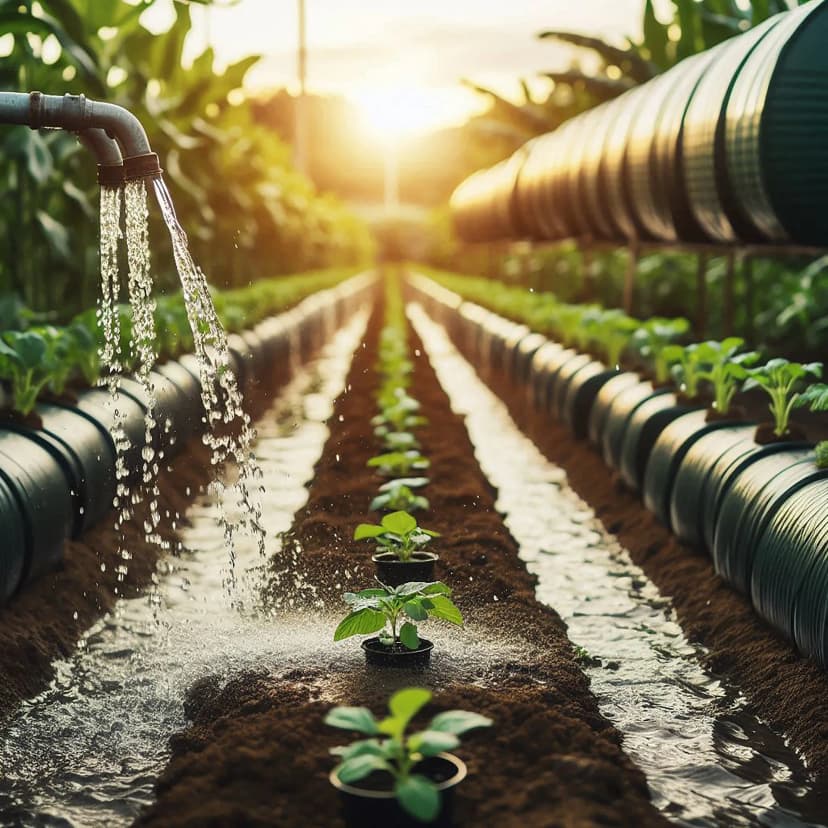
Irrigation plays an important role in managing calcium deficiency in organic greenhouse tomatoes. Maintaining stable moisture through frequent irrigation adjusted to radiation, temperature and drainage prevents the cycles of drought and saturation that disrupt uptake. In a greenhouse, irrigation must be adapted to the demand of the moment: on hot, sunny days it may be advisable to split the supply into more, smaller applications to keep moisture in the root zone without waterlogging. The use of tensiometers or moisture sensors makes this adjustment easier.
The quality of the irrigation water also matters. Water with high bicarbonate levels can favour calcium precipitation and limit its availability, and in such cases the agronomist can consider correcting the water with products permitted in organic farming (confirm with the certification body). Water temperature also counts: very cold water can slow root activity, so it is advisable to prevent it reaching the roots under extreme conditions.
Climate control is another factor. Adequate ventilation lowers ambient relative humidity and favours water movement in the plant, which helps calcium reach the fruits. Shading during periods of high radiation can relieve heat stress. Moisture management is especially delicate during fruit set, when young fruits have a high demand for calcium: an excessively humid, stagnant environment slows water movement in the plant and is associated with more lesions.
Illustrative example, without figures: imagine a greenhouse that, after several cloudy days with a constant irrigation schedule, suddenly receives a day of intense sun. If irrigation follows the same timetable, the plants may run short of water during the central hours of the day, and the youngest fruits, which grow quickly, would be the first to suffer. Adjusting irrigation to the actual radiation of the day, and not only to a fixed timetable, is a simple preventive measure to apply.
Managing fruit set and the leaf/fruit balance
Fruit set is a sensitive moment for calcium demand. Excessive fruit set can create competition between fruits for available calcium and increase the risk of blossom-end rot. In organic production, manual thinning or regulating the number of fruits per truss can help balance that demand. Excessive vegetative growth, which competes with the fruits, should also be avoided. Appropriate pruning and training help maintain the balance between leaf and fruit and moderate the incidence of this physiological disorder.
Related articles
Do you need professional help?
At Ecoganic in Spain, Europe, we offer organic biostimulants and fertilisers. Call us: +34 623 753 719.
Request your free quote
Frequently asked questions about calcium deficiency in tomatoes
Why does blossom-end rot appear if the soil has enough calcium?
Because the problem is not always the total amount of calcium, but how much of it reaches the growing fruit. Water stress, heat, an excess of other nutrients or very high ambient humidity can alter that distribution. That is why soil analysis should be complemented with tissue analysis, a review of the irrigation water and observation of irrigation and climate.
How do I distinguish blossom-end rot from other fruit lesions?
Blossom-end rot is located at the end of the fruit opposite the peduncle and, at first, is a sunken, dry area with no mould. Insect damage, sunscald, phytotoxicity and pathogen rots have a different appearance or location. If in doubt, the prudent course is to consult a technician or send a sample to a laboratory.
What calcium sources can I use in organic production?
Liming amendments, agricultural gypsum and other calcium fertilisers are often mentioned, but not everything used in conventional agriculture is permitted. Before applying any calcium product, confirm with the certification body that it is among the permitted inputs and that it complies with the regulations of your country and the European regulation on organic production.
Are foliar calcium applications a good solution?
They are a complement, not a substitute for managing irrigation and roots, and their results can be uneven. The risks of phytotoxicity, residues and the authorisation of the product for organic use must be assessed, and this should be confirmed with the certification body. The dose is the one stated on the product label, and the decision should be based on a prior diagnosis.
Can a biostimulant solve blossom-end rot on its own?
No. A biostimulant can contribute to the general vigour of the crop, but it is not a plant protection treatment, it does not by itself supply the missing calcium, nor does it replace the management of irrigation and nutrition. Plant biostimulants are regulated at European level and, in organic production, their admission should be confirmed with the certification body.
What analyses should be carried out and at what stages of the crop?
It is advisable to analyse the soil, the substrate or the nutrient solution, the irrigation water and the leaf tissue, and to repeat the monitoring at key stages: before transplanting, at the start of flowering, during fruit set and during fruit swelling. The laboratory provides the reference values with which to interpret each result.
How can I reduce the risk of calcium deficiency in the next cycle?
The basis is stable irrigation, balanced nutrition that avoids excesses of potassium, magnesium and ammonium, and regular monitoring with analyses. Managing ventilation, shading and greenhouse humidity helps calcium reach the fruits. A permitted biostimulant can be a complement, never a substitute for that management.
Conclusion: towards integrated management of calcium deficiency
Calcium deficiency in organic greenhouse tomatoes is a multifactorial problem that requires an integrated approach. Diagnosis should combine soil or substrate analysis, water analysis and tissue analysis with direct observation of the crop. Management focuses on maintaining stable irrigation, balancing nutrition, managing the greenhouse climate and, as a complement, assessing permitted biostimulants that can contribute to the general vigour of the crop. In organic production, where rapid corrections are limited, anticipating is usually more practical than reacting once fruits are already affected.
If you would like guidance on which Ecoganic products fit your nutrition programme, you can contact our team. Any decision about inputs should be confirmed with your certification body and based on the analysis of your crop and the advice of a technician.