Introduction: the challenge of reducing synthetic fertiliser in bananas
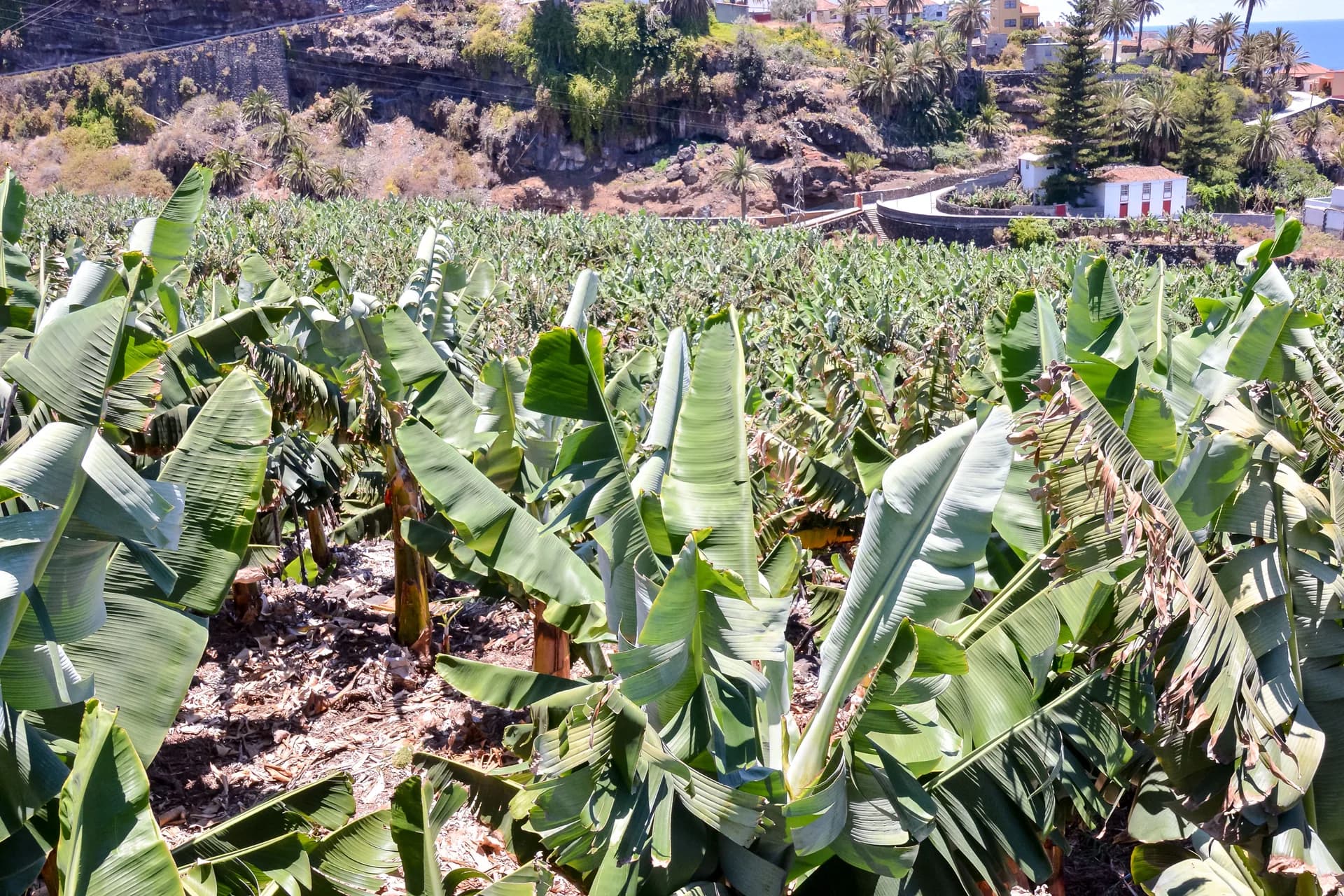
Organic bananas are an alternative that many growers are considering in order to depend less on synthetic fertilisers. In Latin America, the banana (Musa paradisiaca) is an important crop for food and for the livelihood of many families, and conventional fertilisation with urea, potassium chloride and soluble phosphates represents a significant cost which, if not managed well, can contribute to soil acidification and to nitrate losses through leaching. The transition towards an organic model requires management based on knowledge of the soil, the needs of the crop and the use of authorised inputs.
The key is usually not to eliminate fertilisers all at once, but to progressively replace synthetic sources with permitted organic alternatives, supported by good soil management and, if desired, by biostimulants. The results of each plantation depend on the soil, the climate, the variety, the available water and the consistency of management, so no single recipe works the same for all farms. This guide reviews the factors that should be taken into account, what to check before changing the fertilisation programme, how to set up your own monitoring and which aspects of regulation and certification need to be confirmed.
Factors that condition a gradual transition
Reducing synthetic fertiliser is not only a technical decision. Before starting, it is advisable to review the plantation's starting point: the composition and structure of the soil, its organic matter content, the pH, the drainage, the fertilisation history and the nutritional status of the plants. A highly degraded soil or one with drainage problems will require more time and more improvement work than one with a good organic base, and it is not reasonable to expect the same rate of transition in both cases.
Organisational factors also play a part. Organic fertilisation requires access to sources of organic matter at a reasonable cost (compost, vermicompost, crop residues, composted manure), technical assistance, staff training and record-keeping of all operations. On small farms, working in association can facilitate access to advice, cost-sharing and, if the certification body allows it, group certification. Finally, it is worth bearing in mind the commercial destination of the product, because each buyer may require their own quality, traceability and documentation requirements.
Key factors to review before reducing synthetic fertilisation
- Soil and foliar analysis: these serve to adjust fertilisation to the real needs of the crop rather than to generic recipes.
- Compost and vermicompost: they provide organic matter and slow-release nutrients; their quality and degree of maturity matter as much as the quantity.
- Localised fertilisation: applying fertilisers in the root zone can help to limit losses through leaching and runoff.
- Organisation and technical assistance: a technician who knows the area helps to interpret the analyses and to correct course when necessary.
- Traceability: a record of all operations, dates and inputs used, essential for any certification.
Agronomic management for effective organic fertilisation
Reducing synthetic fertiliser in banana requires a plan that takes into account the nutritional needs of the crop at each phenological stage. Banana is a crop with high nutritional demand, particularly for potassium, nitrogen and magnesium, as well as calcium and micronutrients. The specific amounts the plant extracts depend on the variety, planting density, bunch size and soil, so the most reliable approach is to rely on analyses and on a technician's recommendation, rather than on generic figures. To meet these needs without synthetic fertilisers, permitted organic sources, good management of organic matter and, optionally, biostimulants are combined.
Soil organic matter plays a central role. A soil with an adequate organic matter content usually has better structure, a greater capacity to retain nutrients and more biological activity, which makes it easier for nutrients to be available to the crop and can reduce the need for frequent applications of soluble fertilisers. Incorporating crop residues, maintaining plant covers and using green manures helps to preserve fertility and to recycle nutrients within the farm itself.
Step-by-step organic fertilisation programme
A programme for organic banana usually includes the following practices, which a technician must adapt to each plantation:
- Initial soil analysis: determine pH, organic matter, macronutrients and micronutrients. If the pH needs correcting, the amendment must be permitted in organic farming; confirm this with the certification body.
- Basal fertilisation: incorporate mature compost or vermicompost into the planting hole. The amount depends on the quality of the material, the soil and the technical recommendation.
- Maintenance fertilisation: periodic applications of compost and permitted organic fertilisers, with a potassium source if the analysis advises it. The frequency and amounts are set according to the analysis and the product label.
- Foliar biostimulation (optional): seaweed or microalgae extracts as a complement to the programme, with doses and timing of application according to the product label. They do not replace fertilisation and are not a plant health treatment.
- Cover management: maintain living covers or mulch to conserve soil moisture and limit erosion.
Organic fertilisation must be accompanied by soil and water conservation practices. On sloping land, terraces and living barriers help to limit nutrient loss through runoff. Fertigation with soluble organic fertilisers can be a useful tool for applying nutrients in a localised way, provided the product is permitted in organic farming and compatible with the irrigation system.
The role of biostimulants and microorganisms
Agricultural biostimulants, such as those made from seaweed or microalgae extracts, are used as a complement to a fertilisation programme. They can contribute to the general vigour of the crop, but they do not replace nutrients, they are not a plant health treatment and their response varies with the product, the timing of application and the conditions of each plantation. The dose and timing of application are established according to the product label.
In the European Union, Regulation (EU) 2019/1009 already regulates plant biostimulants (applicable from July 2022). It is therefore advisable to ask the supplier for the product documentation and, if the farm is organic or in conversion, to confirm with the certification body whether that specific product may be used.
Soil life is an ally in the transition towards organic fertilisation: microorganisms take part in the decomposition of organic matter and in the gradual release of nutrients. It is therefore advisable to apply good-quality organic amendments and to avoid practices that deteriorate that soil life, such as the excessive use of agrochemicals. Some programmes also include microbial inoculants, such as mycorrhizae or plant growth-promoting bacteria. If their use is being considered, it is advisable to request the technical data sheet with the identification of the strains, check the storage conditions and not expect the same effect in all soils.
How to set up monitoring and trials on your plantation
Before changing the fertilisation programme across the whole farm, the prudent approach is to check how the crop responds in the field. The response of banana to organic fertilisation varies with the area, the soil, the variety and management, so what is observed on another plantation cannot simply be transferred to one's own. A simple, well-recorded trial provides more useful information than any generic data from another area.
A practical way to start is to devote a pilot plot to the new programme and keep another reference plot under the usual management. Both should be as similar as possible in soil type, plant age, variety, irrigation and orientation, and receive the rest of the operations equally. In this way, the differences observed can be attributed more reliably to the change in fertilisation and not to other causes.
What to measure and record
- Plant status: vegetative development and nutritional status, with leaf analysis throughout the cycle.
- Bunch: weight, number of hands and fingers, and homogeneity of the harvested lot.
- Fruit quality: calibre, appearance, taste and post-harvest behaviour, with laboratory analysis if a commercial claim is to be supported.
- Soil: organic matter, pH and available nutrients, repeated with the same methodology so that they can be compared.
- Costs: inputs, labour, transport and certification, to know whether the change is economically viable.
- Operations and inputs: dates, products and quantities, also necessary for traceability.
Patience is advisable: the effects of organic matter on the soil accumulate over several cycles, and what is observed in the early stages of the crop does not guarantee long-term commercial yield. It is therefore better to expand the new programme gradually, as the records confirm that it works under the conditions of the farm.
How to interpret studies and trials from other areas
When reading a study or a trial on organic fertilisation in banana, it is worth noting the type of soil and climate where it was carried out, the variety, the duration, the number of replicates and whether commercial yield was measured or only the initial development of the plants. It should also be checked whether the differences between treatments were statistically significant and whether the products compared are equivalent to those to be used. A localised application technique, such as injection into the pseudostem, may be of interest, but it requires training and specialised equipment, and its adoption should be evaluated carefully and as a complement, not as a substitute for a balanced programme.
An illustrative example
By way of an illustrative example, without numerical results: a plantation with a soil poor in organic matter decides to start with a pilot plot. First it carries out a soil and leaf analysis, then it incorporates mature compost into the pilot plot, keeps a reference plot under its usual management and records over several cycles the development of the plants, the quality of the fruit and the costs. With these records, and with the support of a technician, it decides whether to expand the programme, adjust it, or whether it is advisable to maintain part of the current fertilisation while the soil improves.
Organic certification and regulations for export bananas
In the European Union, organic production is governed by Regulation (EU) 2018/848, which sets out which substances and practices are permitted, requires controls and restricts the use of fertilisers and soil amendments to those included in the authorised lists. To sell bananas as organic in Europe, the farm and the supply chain must be certified by a recognised control body. This involves periodic audits, detailed records and compliance with the applicable residue limits. Certification also provides traceability and allows the buyer to verify the origin of the product.
Fresh bananas are also subject to European Union quality and marketing standards. To export from a non-EU country of origin, phytosanitary, traceability and residue requirements apply, and the specific scheme for recognition of organic certification depends on the country and the importer. The safest approach is to consult an accredited certification body and the importer before planning the transition.
If the plantation is in EU territory, nitrate regulations limit nitrogen inputs of organic origin in vulnerable zones; it is advisable to check the limits that apply in each region. And it is worth remembering that a product authorised as a fertiliser is not thereby permitted in organic farming. Therefore, before adopting a new nutrient source, it is essential to confirm with the certification body that it can be used.
Related articles
Do you need professional help?
At Ecoganic in Spain, Europe, we offer organic biostimulants and fertilisers. Call us: +34 623 753 719.
Request your free quote
FAQ: frequently asked questions about organic bananas
Is it possible to completely reduce synthetic fertiliser in bananas?
On some plantations it is possible, but it depends on the soil, the climate, the variety and management, and there is no universal guarantee. The prudent approach is to start with a soil and foliar analysis, trial the changes on a pilot plot and record how the crop responds before extending them. The transition should be gradual and monitored, with technical advice and, if the farm is organic or in conversion, with confirmation from the certification body.
What does yield depend on with organic fertilisation?
A specific yield cannot be promised: it depends on the organic matter in the soil, water availability, crop health, the variety, the quality of the fertilisers and the consistency of management. The recommended approach is to compare a pilot plot with a reference plot, measure bunch weight and adjust the programme periodically with the help of a technician.
How does reducing synthetic fertiliser affect fruit quality?
Fruit quality depends on the variety, the nutritional status of the plants, post-harvest management and climatic conditions, and not only on the type of fertiliser. It is therefore advisable to measure quality parameters, such as calibre, appearance, taste and post-harvest life, on the plantation itself. Any commercial claim must be able to be backed up with analyses and records.
What certifications do I need to export organic bananas to Europe?
To sell bananas as organic in the European Union, production must comply with Regulation (EU) 2018/848 and be certified by a recognised control body, which verifies the entire chain, from the farm to packaging. In addition, phytosanitary, traceability and residue limit requirements apply. The specific recognition scheme depends on the country of origin and the importer, so it is advisable to contact an accredited certification body and the buyer in advance.
What role do biostimulants play in reducing fertilisers?
Biostimulants can contribute to the general vigour of the crop and are used as a complement to a fertilisation programme, not as a substitute for nutrients. They are not a plant protection treatment. The dose and timing of application are established according to the product label. In the European Union, Regulation (EU) 2019/1009 regulates plant biostimulants; for their use in organic farming, this must be confirmed with the certification body.