Introduction: soil as an ally of banana
Organic matter and microbiota in banana are two pillars that determine the sustainability and productivity of the crop. Banana (Musa spp.) is a nutrient-demanding crop that is sensitive to soil depletion, especially in intensive plantations in tropical and subtropical regions such as Ecuador, Colombia, Costa Rica, Guatemala, Mexico, Peru and Brazil. In these areas, pressure for yield has led to intensive use of chemical fertilisers, with the consequent loss of organic carbon and deterioration of soil microbial life.
Soil organic matter (SOM) not only supplies nutrients but also improves structure, water retention and cation exchange capacity (CEC). Microbiota, for its part, participates in the decomposition of residues, phosphorus solubilisation, biological nitrogen fixation and protection against pathogens such as Fusarium oxysporum f. sp. cubense or the nematode Radopholus similis. Understanding its management is fundamental for sustainable and profitable agriculture.
In this article we answer the most frequent questions that farmers and technicians raise about the management of organic matter and microbiota in banana plantations, with specific agronomic data and field examples. If you are looking for personalised advice, you can consult our trials and field results or learn about our organic agricultural biostimulants.
What is soil organic matter and why is it key in banana?
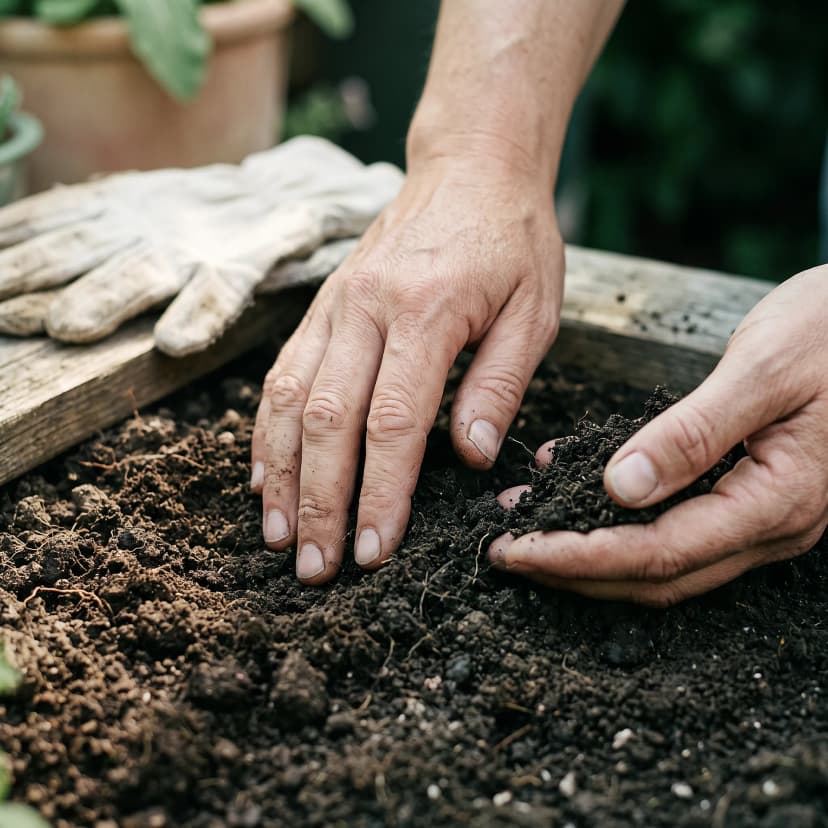
Soil organic matter is the set of plant and animal residues in different stages of decomposition, together with microbial biomass and humic substances. In banana plantations, an adequate level of SOM (ideally between 3% and 5% in the first 30 cm) improves soil structure, reduces erosion and increases water retention, which is critical in areas with seasonal water stress.
Banana has a shallow and sparsely branched root system, so it depends on a well-aggregated soil with good porosity. SOM acts as a cementing agent for particles, forming stable aggregates that facilitate root penetration and gas exchange. In addition, SOM increases CEC, allowing the retention of cations such as K⁺, Ca²⁺ and Mg²⁺, essential for bunch filling and fruit quality.
A study by the University of Costa Rica indicates that plantations with SOM contents above 3% maintain more stable yields during drought periods, compared with degraded soils with less than 1.5%. In practical terms, each 1% increase in SOM can increase the soil's water retention capacity by about 15,000 litres per hectare in the profile explored by the roots.
Functions of organic matter in banana cultivation
- Nutrient supply: releases N, P, K, Ca, Mg and micronutrients gradually.
- Improvement of structure: favours aggregation and reduces compaction.
- Water retention: increases water availability in dry periods.
- Stimulation of microbiota: serves as an energy substrate for beneficial bacteria and fungi.
- Reduction of erosion: protects the bare soil typical of banana plantations.
In a real case in the Machala area (Ecuador), the incorporation of 8 t/ha of banana rachis compost over three cycles raised SOM from 1.8% to 2.6% and reduced nitrogen fertilisation by 20% without reducing yield. This type of practice aligns with the principles of soil health that we promote at Ecoganic.
Soil microbiota in plantain: functions and management
Soil microbiota comprises bacteria, fungi, actinomycetes, protozoa and beneficial nematodes. In plantain plantations, the most relevant functional groups are plant growth-promoting bacteria (PGPR), arbuscular mycorrhizal fungi (AMF) and organic matter decomposers. These microorganisms directly influence crop nutrition, health and stress tolerance.
PGPR, such as Bacillus spp. and Pseudomonas spp., solubilise phosphates, produce siderophores and synthesise phytohormones (auxins, cytokinins) that stimulate rooting. AMF, for their part, extend the hyphal network and improve the absorption of phosphorus, zinc and water, as well as competing with root pathogens. A trial by the National Institute of Agricultural Research (INIAP) of Ecuador showed that inoculation with AMF in plantain increased phosphorus uptake by 30 % and reduced nematode incidence by 25 %.
Microbiota also participates in disease suppression. Soils with high microbial diversity show a lower incidence of Fusarium and Radopholus similis, thanks to competition for nutrients, the production of antibiotics and the induction of systemic resistance in the plant. Therefore, maintaining an active microbiota is a natural bioprotection strategy.
Main microbial groups and their function in plantain plantations
| Microbial group | Main function | Benefit in plantain |
|---|---|---|
| PGPR bacteria (Bacillus, Pseudomonas) | P solubilisation, hormone production | Greater rooting and nutrient uptake |
| Mycorrhizal fungi (AMF) | Absorption of P, Zn and water | Better drought tolerance and nutrition |
| Actinomycetes | Decomposition of organic matter | Gradual release of nutrients |
| Decomposer fungi | Degradation of cellulose and lignin | Formation of humus and aggregates |
| Beneficial nematodes | Biological pest control | Reduction of Radopholus similis |
To enhance these groups, it is advisable to apply mature organic amendments, avoid excessive tillage and maintain plant cover. At Ecoganic we work with biostimulant technology based on microalgae and natural extracts that stimulate the native microbiota.
Doses and sources of organic matter for plantain
The dose of organic matter depends on the soil type, the initial SOM content and the management system. In sandy or degraded soils, annual applications of 10 to 20 t/ha of mature compost or well-decomposed manure are recommended. In loamy soils with SOM above 3 %, doses of 5 to 10 t/ha may be sufficient for maintenance.
The most commonly used sources in plantain plantations include rachis compost, cattle manure or poultry manure, coffee pulp, sugarcane filter cake and harvest residues. It is essential that these materials are well composted to avoid phytotoxicity, odours and the transmission of pathogens. Plantain rachis compost, for example, provides around 1.5 % N, 0.5 % P and 2.5 % K, as well as micronutrients.
Application can be carried out in bands or broadcast, incorporating superficially to accelerate decomposition. In plantain plantations in production, it is recommended to apply after harvest, in the area of greatest root density (30-40 cm from the pseudostem). Combining with biostimulants such as fulvic acids for organic farming improves mineralisation and nutrient uptake.
Example of an organic fertilisation programme in plantain
| Phenological stage | Organic amendment | Dose | Complementary biostimulant |
|---|---|---|---|
| Pre-planting | Mature compost | 15-20 t/ha | Fulvic acids (5 L/ha) |
| Vegetative development | Vermicompost | 5 t/ha | Microalgae extract (3 L/ha) |
| Floral differentiation | Compost + poultry manure | 8 t/ha | Biostimulant with K and B |
| Bunch filling | Coffee pulp | 4 t/ha | Foliar micronutrients |
This scheme is indicative and must be adjusted according to soil and water analysis. In the Urabá region (Colombia), farmers who implemented this programme reported increases of 15 % in bunch weight and a 25 % reduction in chemical fertilisation. For more details, consult our fertilisation programme for avocado, adaptable to other fruit trees.
Interaction between organic matter, microbiota and banana nutrition
Organic matter and microbiota act synergistically. SOM provides the energy substrate for microorganisms, while these mineralise nutrients and make them available to the plant. This interaction improves nutrient use efficiency (NUE) and reduces losses through leaching and volatilisation.
A study by the National University of Colombia found that the combined application of compost and PGPR increased N availability by 40 % and P by 35 % compared with chemical fertilisation alone. In addition, the microbiota produces humic substances that chelate micronutrients such as Fe, Zn and Mn, facilitating their foliar and root absorption.
In plantain, potassium uptake is critical for bunch filling. SOM and microbiota favour the gradual release of K from soil minerals and organic residues, avoiding salinity peaks. Likewise, the microbiota can induce the production of osmolytes and antioxidants in the plant, improving its tolerance to water and heat stress.
Effect on abiotic and biotic stress
Soils rich in SOM and diverse microbiota confer greater resilience to the crop. Under water stress, AMF improve hydraulic conductivity and water retention. Against pathogens, antagonistic microbiota compete for niches and produce lytic enzymes that degrade the cell walls of phytopathogenic fungi.
In field trials in the Guápiles area (Costa Rica), plots with high SOM content and organic management showed 30 % less incidence of black sigatoka (Mycosphaerella fijiensis) than conventional plots. This is attributed to the greater availability of silicon and to the induction of systemic resistance by the microbiota.
Good practices to enhance microbiota in plantain plantations
To maintain an active and diverse microbiota, conservation management practices must be adopted. Minimum tillage prevents the destruction of hyphae and soil compaction. Maintaining live plant covers or organic mulch protects the surface, regulates temperature and continuously supplies carbon.
Rotation with legumes, although limited in established plantain plantations, can be implemented during renewal phases. Incorporating harvest residues (rachis, leaves) as mulch is a widespread practice that feeds the microbiota and reduces erosion. Avoiding the excessive use of broad-spectrum agrochemicals is crucial, as these can eliminate beneficial populations.
Inoculation with commercial biofertilisers based on Bacillus, Pseudomonas or mycorrhizae is a complementary strategy. At Ecoganic we offer certified organic fertilisers and natural bioprotectants for crops that respect and stimulate the native microbiota.
Organic management calendar for plantain plantations
- Dry season: apply mulch and organic amendments to conserve moisture.
- Start of rains: incorporate compost and biostimulants to activate microbiota.
- Post-harvest: shred rachis and leaves, apply fulvic acids.
- Maintenance: live covers and foliar applications of micronutrients.
A case in the Sullana area (Peru) demonstrated that implementing these practices over two years increased SOM from 1.2 % to 2.0 % and reduced dependence on fungicides by 40 %. These results reinforce the importance of a comprehensive soil management approach.
Related articles
Do you need professional help?
At Ecoganic in Spain, Europe, we offer Biostimulants and organic Fertilizers. Call us: +34 623 753 719.
Request your free quote
Frequently asked questions about organic matter and microbiota in banana
How much organic matter should I apply per hectare in banana?
The dose depends on the soil analysis. In degraded soils with less than 2% SOM, 15-20 t/ha of mature compost per year is recommended. In soils with 3-5% SOM, 5-10 t/ha is sufficient for maintenance. It is important to split the application into two doses and supplement with biostimulants to accelerate mineralisation.
How can I tell whether my soil has good microbiota?
You can assess microbial activity through soil respiration, mycorrhiza counts or microbial fatty acid analysis. Indirect indicators include the presence of earthworms, the rate of residue decomposition and the absence of surface crusting. A specialised laboratory can quantify microbial biomass and functional diversity.
Is organic fertilisation compatible with sigatoka control?
Yes, in fact, a soil with high SOM and diverse microbiota can reduce the incidence of sigatoka by improving nutrition and activating natural defences. However, in severe cases it must be supplemented with specific bioprotectors and integrated management. The key is to maintain nutritional balance, especially of potassium and silicon.
Which biostimulants do you recommend to enhance banana microbiota?
Biostimulants based on microalgae extracts, fulvic acids and amino acids are effective at stimulating microbiota. Inoculants with PGPR and AMF are also effective. At Ecoganic we have a line of ecological agricultural biostimulants that you can apply via root or foliar according to the phenological stage.
How often should I apply organic matter to a banana plantation in production?
It is recommended to apply at least once a year, preferably after the main harvest. In very degraded soils, two annual applications may be necessary. The ideal frequency is determined by monitoring the SOM content every 2-3 years and adjusting according to the soil analysis results.
If you would like personalised advice for your banana plantation, contact our distributor network or request your free quote. At Ecoganic we support you in the transition towards more sustainable and productive agriculture.
References
- Sustainable agroecology — FAO