
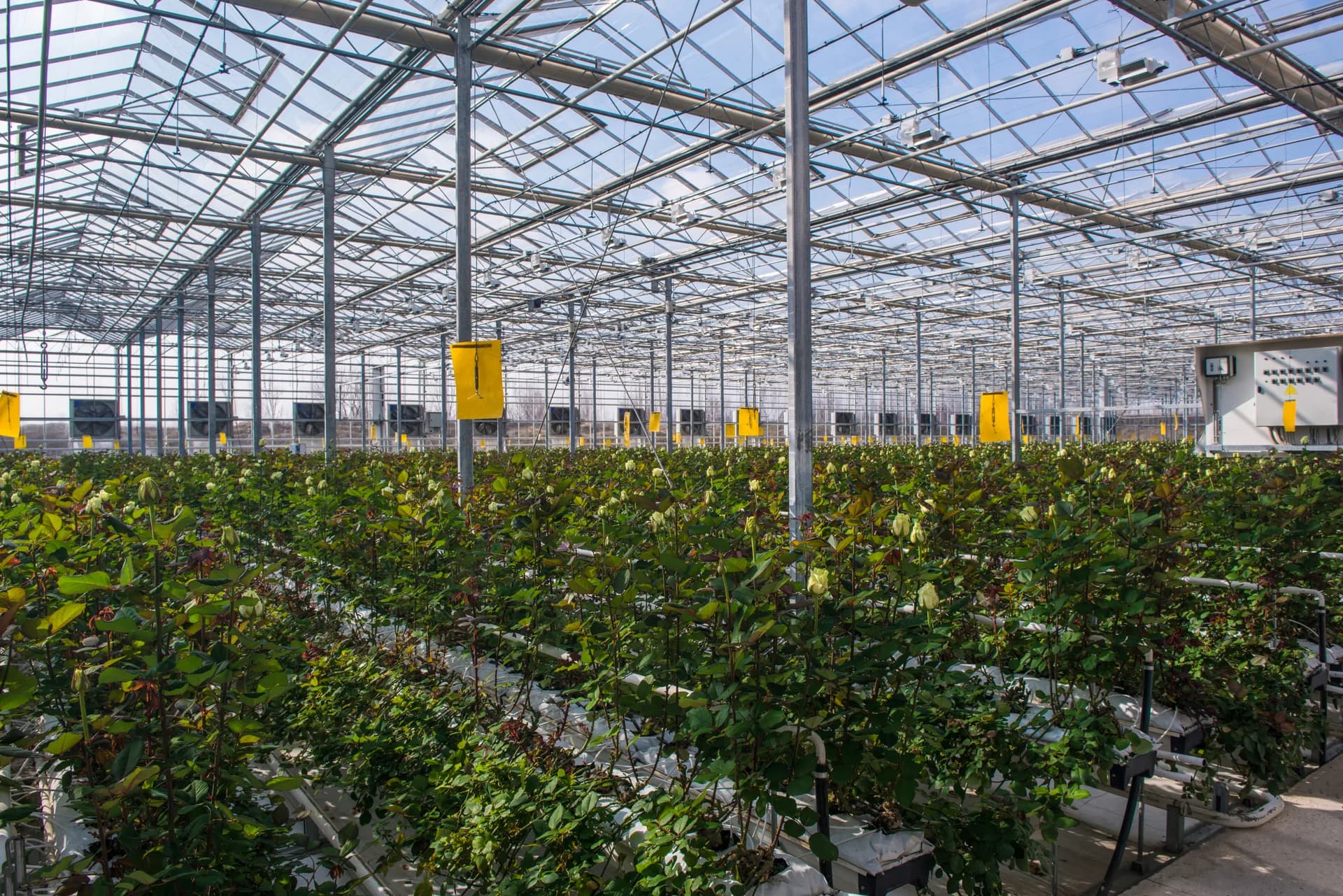
General guide for planning the fertilisation of organic greenhouse tomatoes: it starts from soil and water analysis, relies on well-stabilised organic matter, adapts to each stage of the crop and is confirmed with the certification body before using any product.
Introduction
Fertilisation for organic greenhouse tomatoes is one of the pillars for obtaining quality production under organic certification. Unlike open-field growing, the greenhouse allows the environment to be partially controlled, but it also demands careful nutritional management to avoid imbalances, salt accumulation and plant stress. This general guide reviews the criteria that should be taken into account when planning crop nutrition from transplanting to harvest, without offering fixed recipes: every greenhouse has a different soil, irrigation water and history.
Tomato (Solanum lycopersicum) is a nutrient-demanding crop, especially for potassium, calcium and magnesium, and is very sensitive to fluctuations in moisture and temperature. In organic systems, nutrient availability depends largely on the biological activity of the soil and on the quality of the organic matter applied. That is why the programme usually combines organic amendments, fertilisers permitted in organic farming and, where considered appropriate, biostimulants. The following sections explain what each decision depends on, what should be checked and what to ask the person advising the holding. The specific amounts of each application are determined by the analysis, the product label and the technical adviser.
Key aspects of soil and organic matter in organic tomato
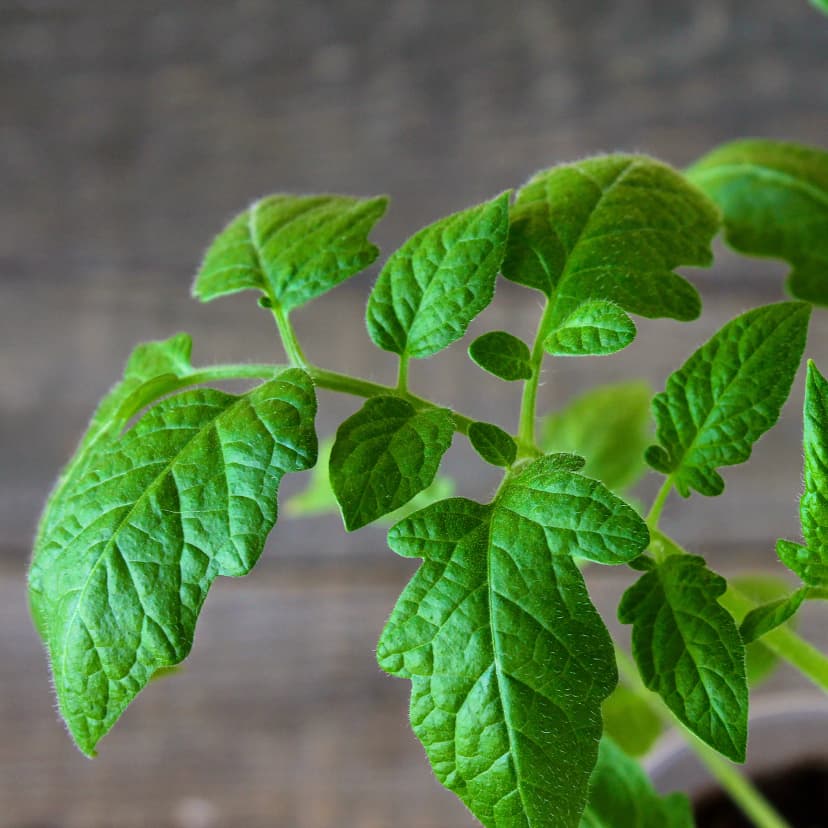
Soil is the foundation of the organic system. In greenhouses, intensive cultivation and drip irrigation can gradually reduce organic matter and encourage the accumulation of salts. That is why the first step in any fertilisation programme is to know the state of the soil: texture, pH, electrical conductivity, organic matter content and the carbon/nitrogen ratio. A soil with good structure and a level of organic matter appropriate to its type retains water and nutrients better, and supports a diverse microbiota that helps nutrients to be available gradually. What level is considered appropriate depends on texture, climate and the field's history, and it is interpreted by the laboratory or the adviser from the analysis.
The incorporation of mature, well-stabilised compost is usually the basis of base fertilisation. The amount is not the same for all greenhouses: it depends on the prior analysis, the type of compost (manure, plant residues or others), its nutrient and salt content, the history of applications and what the certification body allows. Before buying it, it is advisable to ask the supplier for the compost data sheet with its origin and analysis, and to check that it is suitable for organic farming. Immature compost can harm young roots after transplanting, so maturity is a criterion as important as the amount. This application can be complemented with more fibrous materials, such as straw or shredded pruning residues, which provide structure and aeration and help to prevent compaction. In addition, organic matter serves as a reserve of nutrients and as food for soil microorganisms, including mycorrhizae.
In soils with a history of salinity, it is advisable to monitor the electrical conductivity of the soil and of the irrigation water, to schedule controlled leaching when the adviser indicates it and to avoid applications with a high content of salts or sodium. Some humic and fulvic products permitted in organic farming are used as a complement to organic matter management. To learn more about organic matter and microbiota, see our article on organic matter and microbiota in banana, whose general principles are applicable to other intensive crops.
Baseline fertilisation programme by crop phase
The fertilisation programme should follow the phenological phases of the tomato: transplanting, vegetative growth, flowering, fruit set and fruit swelling. The following table summarises, as a general outline, what type of input is usually envisaged at each phase, by which route it is applied and what should be monitored. It deliberately contains no quantities: the dose of each product is the one stated on its label and the one the adviser adjusts according to the soil and water analysis and the needs of each holding.
| Phenological phase | Usual type of input | Application route | What should be monitored |
|---|---|---|---|
| Pre-transplanting (base dressing) | Mature compost and organic amendments suitable for organic farming | Incorporation into the soil | Compost maturity, soil structure and electrical conductivity |
| Transplanting | Seaweed or microalgae biostimulant, according to the product label | Root (irrigation) | Uniform moisture, root condition and compatibility with the other products in the irrigation water |
| Vegetative growth | Balanced organic fertiliser, with micronutrients if the analysis indicates it | Fertigation | Colour and vigour of the foliage, pH and electrical conductivity of the irrigation water |
| Flowering | Calcium and boron inputs permitted in organic farming, only if the analysis justifies it | Foliar or fertigation | Fruit set of the first trusses, temperature and humidity of the greenhouse |
| Fruit set to swelling | Fertiliser predominantly of potassium and a permitted calcium source | Fertigation | Balance between potassium, calcium and magnesium, and regularity of irrigation |
| Swelling to harvest | Permitted potassium sources and, where appropriate, a humic or fulvic supplement | Foliar and root | Size, colour and firmness of the fruit, and accumulated salinity |
It is important to split the inputs over the course of the cycle and adjust them to the electrical conductivity of the irrigation water, the nutritional status of the plant and the climatic conditions of the greenhouse. A fertiliser or an amendment is only suitable in organic farming if it is listed as a permitted input, so before using any new product it should be checked on its label and confirmed with the certification body. To see the available products, visit our page of certified organic fertilisers.
In practice, fertigation can be combined with occasional foliar applications when the leaf analysis or the symptoms of the crop point to a specific deficiency. These applications are a one-off correction and do not replace the baseline programme: it is advisable that the adviser decides on them and that each application is recorded in the holding's register.
Biostimulants and microorganisms: what they are and how to use them
Plant biostimulants are products applied to the crop or to the root zone as a complement to the nutrition programme. Regulation (EU) 2019/1009 already regulates plant biostimulants and has been applicable since July 2022. Among the best-known types are seaweed extracts, microalgae, protein and amino acid hydrolysates, and humic and fulvic substances. They can contribute to the overall vigour of the crop, but they are not a fertiliser that replaces fertilisation nor a plant protection treatment. When choosing one, it is advisable to check on the label what exactly the product is, which crop it is intended for and how it is applied.
There are also microbial biostimulants, such as arbuscular mycorrhizae and certain rhizobacteria. They are applied at transplanting, with irrigation or in the seedling substrate, and their use in the greenhouse is decided according to soil management: after a disinfection, for example, the soil microbiota changes and the adviser can assess whether it makes sense to replenish it. When choosing a microbial product, it is advisable to ask about the strains it contains, its expiry date and storage conditions, and its compatibility with the other products in the irrigation. To learn more about our microbial solutions, see organic agricultural biostimulants.
An illustrative example, without figures: anyone wishing to evaluate a biostimulant in their greenhouse can set aside a reference area with the usual management and apply the product, according to the label, in another comparable area. By recording dates, inputs and observations from both, and comparing at the end of the cycle, you obtain your own information, albeit indicative, on whether the product contributes anything under those conditions, instead of relying on general promises. Any change in nitrogen fertilisation must be decided by the adviser based on the analysis and crop monitoring, and not simply because a biostimulant is being used.
It is advisable to choose products suitable for organic farming and always respect the dose and method of application on the label, because an excess can damage the crop. Liquid organic fertilisers containing humic and fulvic acids are used as a complement to the nutrition programme; in organic farming, it is advisable to check that the specific product is approved. For more information on fulvic acids, visit fulvic acids for organic farming.
Micronutrients and detection of deficiencies
Tomato is sensitive to micronutrient deficiencies, among which iron, zinc, manganese and boron are usually monitored. In calcareous soils with high pH, some of these elements become less available to the plant, and that is when symptoms such as iron chlorosis (yellowing of young leaves) or leaves smaller than normal appear. Before correcting anything, it is advisable to confirm the cause with a soil and foliar analysis, because similar symptoms may be due to excess salts, irrigation problems or an unsuitable pH. In organic farming, correction is approached with approved micronutrient sources; if chelates or other synthetic forms are involved, it must be confirmed with the certification body that they can be used. In addition, background measures, such as the supply of organic matter and pH management, act over the longer term.
Boron receives special attention at flowering and fruit set, because the crop is sensitive to its lack during that stage. However, the margin between deficiency and excess is narrow, so it is not advisable to improvise: the source, dose and frequency must follow the product label and the adviser's recommendation. Calcium deserves a separate mention for its relationship with blossom-end rot of the fruit, a physiological disorder associated with irrigation irregularities, salinity, imbalances with potassium and magnesium, and low-transpiration conditions. That is why it is usually addressed with regular irrigation and a good nutrient balance rather than with an isolated calcium supply.
For integrated micronutrient management, we recommend consulting our micronutrients for organic crops page, where you will find specific products and their use information.
Stress management and fruit quality
Greenhouse tomatoes are exposed to abiotic stress factors such as high temperatures, water deficit, salinity and humidity fluctuations. These factors can affect fruit set, fruit growth and organoleptic quality. The first line of action is the management of the greenhouse itself: ventilation, shading where appropriate and irrigation adjusted to crop demand. Algae or amino acid biostimulants are proposed as a complement during these periods, never as a substitute for that management, and always according to the product label.
Potassium is one of the nutrients with the highest demand during fruit bulking, and its balance with calcium and magnesium influences final quality: colour, flavour and firmness. In organic farming, only potassium sources permitted by organic production regulations may be used, so it is advisable to choose the source with the adviser. At this stage it is also advisable to avoid excess nitrogen, which can lead to disproportionate vegetative growth at the expense of fruit quality.
Irrigation management is key to avoiding physiological disorders. Regulated deficit irrigation is sometimes proposed with the aim of improving fruit quality, but it is a technique that requires experience and it is advisable to apply it with advice so as not to induce excessive stress. Soil moisture sensors and irrigation scheduling based on crop evapotranspiration are useful tools for adjusting water and nutrient inputs. To learn more about salt stress, you can consult the article on pepper salinisation: causes and solution, which shares principles applicable to tomato.
Common mistakes and good practices
A mistake to avoid in the fertilisation of organic greenhouse tomatoes is starting without soil and water analyses. Without these data it is easy to fall into nutritional imbalances or an excess of salts. The sensible approach is to repeat the analyses periodically, at the frequency indicated by the adviser, and adjust the programme accordingly. Another mistake is applying fertilisers without taking into account the biological activity of the soil: in organic farming, nutrition must be based on organic matter and living soil, and not only on external inputs.
Crop rotation and the incorporation of green manures help to maintain soil fertility and structure. In greenhouses, soil disinfection with steam or solarisation is used on some holdings; when these are carried out, it must be confirmed with the certification body that the technique is permitted and the replenishment of organic matter must then be planned. Cover crops between cycles also help to improve soil structure and reduce erosion.
What to check before starting the cycle
- Soil and water analysis: texture, pH, electrical conductivity and organic matter, interpreted by an adviser.
- Compost and amendments: data sheet with origin and analysis, maturity and suitability for organic farming.
- Inputs: product label, intended use and confirmation from the certification body before applying them.
- Irrigation: scheduling system, water quality and moisture sensors or controls.
- Records: application logbook, analyses and observations for each stage of the crop.
Keeping records of the analyses, applications and observations for each cycle allows you to learn and improve from one season to the next, and the certification body may request them. Organic farming is a process of continuous adjustment and each greenhouse has its particularities; therefore, when in any doubt about an input or a practice, the prudent course is to consult a technical adviser and the certification body before applying it.
Related articles
Do you need professional help?
At Ecoganic we offer biostimulants and fertilisers for organic farming. Call us: +34 623 753 719.
Request your free quote
Frequently asked questions
Where does an organic greenhouse tomato fertilisation programme start?
By knowing the starting point. A soil analysis (texture, pH, electrical conductivity and organic matter) and a separate analysis of the irrigation water show what the crop really needs and what risks exist, such as salt accumulation. With that data, the technical adviser defines the base and top-dressing applications, and the certification body confirms that the chosen inputs are permitted in organic farming.
How much compost should be applied before transplanting?
There is no universal amount. It depends on the soil analysis, the greenhouse's application history, the type of compost and its nutrient and salt content. What you should insist on is that the compost is mature, stable and suitable for organic farming; an immature one can harm young roots. Always ask for the data sheet with its origin and analysis, and consult your adviser on the right amount.
When can seaweed biostimulants be applied to organic tomatoes?
They are usually considered at specific points in the cycle, such as transplanting, flowering or periods of heat or salinity. The dose, the route (root or foliar) and the frequency are those stated on the product label. A biostimulant can contribute to the general vigour of the crop, but it is not a plant protection treatment and does not replace fertilisation. In organic farming, check that the specific product is suitable for your holding.
What factors influence blossom-end rot in tomatoes?
It is a physiological disorder, not an infectious disease, and it is associated with several factors at once: irregular irrigation, salinity, an imbalance between calcium, potassium and magnesium, and conditions of low transpiration. That is why it is addressed above all with regular irrigation and good nutritional balance. If it appears, it is worth reviewing greenhouse management with your adviser before resorting to an isolated calcium application.
Can nitrogen fertilisation be reduced by using biostimulants?
There is no general rule. Biostimulants do not replace fertilisation, and any adjustment to nitrogen application must be decided by the technical adviser based on soil and water analysis and crop monitoring. If you want to evaluate a product in your greenhouse, compare it with a reference area managed in the usual way and note the differences throughout the cycle.
Which micronutrients should be monitored in organic tomatoes?
Iron, zinc, manganese and boron are usually monitored, as well as calcium and magnesium among the secondary nutrients. In calcareous soils with high pH, some of these become less available. A foliar analysis, together with the soil analysis, helps confirm whether there is a real deficiency before correcting it with sources permitted in organic farming.
What role does the certification body play in choosing products?
It is the body that confirms whether a fertiliser, an amendment or a biostimulant can be used on your organic holding. Before applying a new product, consult it, keep the label and the invoice, and record the application in the holding's register.