
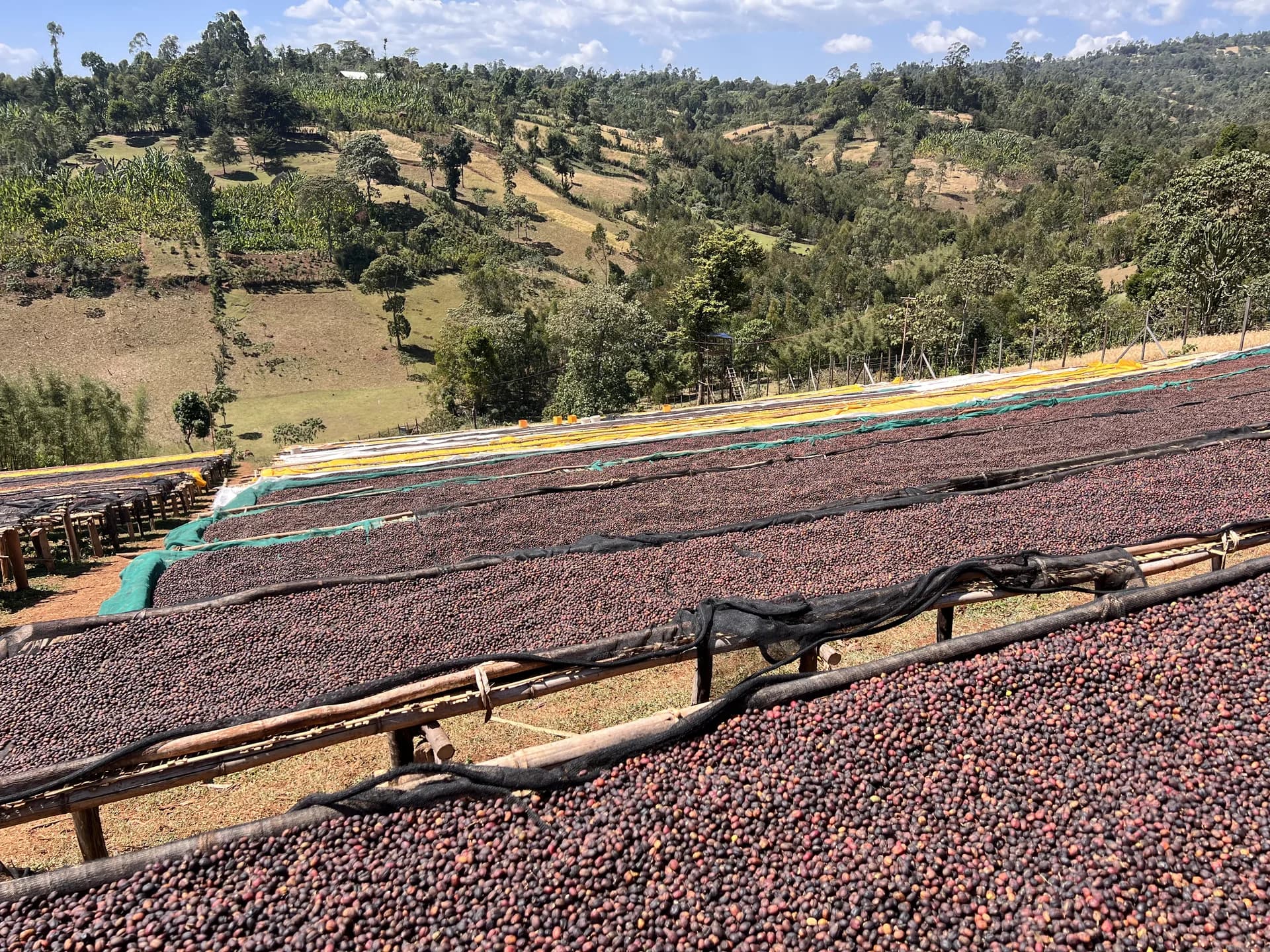
Mycorrhizae for Arabica coffee: fundamentals in degraded soils
Mycorrhizae for Arabica coffee in degraded soils have become a relevant tool for coffee growers facing acidity, low organic matter and limited phosphorus. The symbiosis between arbuscular mycorrhizal fungi (AMF) and coffee roots can improve nutrient uptake, especially phosphorus, and increase tolerance to transplant stress. It does not replace fertilisation, but it can help restore soil functionality and reduce dependence on external inputs.
In Latin America, a significant proportion of coffee plantations are found in soils with a pH below 5.5, high exchangeable aluminium and organic matter content below 2 %. Under these conditions, coffee roots struggle to explore the soil and take up phosphorus, which is poorly mobile and tends to be fixed by iron and aluminium oxides. Inoculation with AMF can expand the effective volume of root exploration through external hyphae, which act as an extension of the root system. This article reviews the physiological fundamentals, the available agronomic evidence and practical recommendations for integrating mycorrhizae into Arabica coffee nutrition programmes.
The relevance of this technology is growing in a context of volatile fertiliser prices and increasing demand for coffee produced under sustainability criteria. Organic agricultural biostimulation offers complementary alternatives that can be integrated into rational soil management. The aim is not to replace mineral fertilisation, but to optimise its efficiency and favour the resilience of the soil-plant system.
What arbuscular mycorrhizae are and how they act in coffee
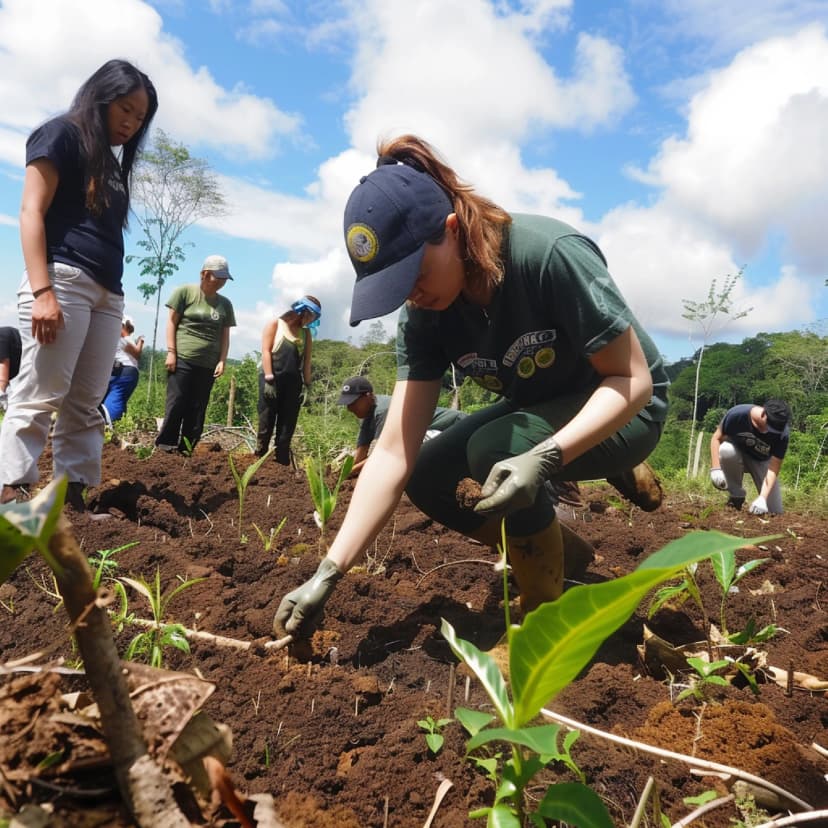
Arbuscular mycorrhizae are symbiotic associations between fungi of the phylum Glomeromycota and the roots of most terrestrial plants, including coffee. The fungus colonises the root cortex and forms specialised structures: arbuscules, where nutrient exchange takes place, and vesicles, with a storage function. In exchange for carbohydrates that the plant provides, the fungus supplies water and nutrients, particularly phosphorus, zinc and copper, which it takes up from the soil through its network of external hyphae.
The main mechanism is the expansion of the absorption surface. External hyphae can extend several centimetres beyond the root depletion zone, accessing forms of phosphorus that are poorly available to the root. In addition, AMF produce phosphatase enzymes that mineralise organic phosphorus and release orthophosphate, and they acidify the rhizosphere, which favours the solubilisation of calcium and aluminium phosphates. They also produce glomalin, a glycoprotein that contributes to the aggregation of soil particles and improves structural stability.
In Arabica coffee, natural mycorrhizal colonisation can reach between 25 % and 48 % at sites with higher organic matter and low available phosphorus, according to observations in Colombian coffee plantations reported by Cenicafé. The symbiosis is usually more effective at a pH of approximately 5.7 to 6.6 and with soil phosphorus below 50 mg/kg. When available phosphorus is very high, the plant reduces colonisation because it does not need the association, which explains why phosphate over-fertilisation can inhibit the establishment of the fungus.
Another relevant effect is tolerance to abiotic stresses. The symbiosis can modulate the hormonal balance, increase the production of osmolytes and improve stomatal conductance under drought conditions. In soils with high exchangeable aluminium, the hyphae can retain part of the metal in their walls, reducing its translocation to the root. These mechanisms explain why inoculation can help improve seedling survival when transplanted to the field.
Agronomic evidence: nursery and field results
The experimental evidence with mycorrhizae in arabica coffee comes mainly from Mexico and Colombia. In a Mexican study with four varieties —Garnica, Catimor, Caturra and Catuaí—, the application of a mycorrhizal consortium improved mycorrhizal efficiency compared with the control. The Caturra variety showed the highest efficiency and phosphorus availability, which suggests a differential varietal response that should be considered when selecting the inoculum.
In Colombia, inoculation increased soil quality indicators: organic carbon +14 %, moisture +19 % and phosphorus +30 %, as well as increases in nitrogen-fixing and phosphate-solubilising bacteria. In that trial, native strains outperformed commercial products, which reinforces the importance of prioritising local isolates validated for the variety and soil type. The response, however, depends on available phosphorus: in Colombian seedlings, inoculation increased shoot biomass and leaf phosphorus when phosphorus in solution was 0.02 mg/L; the effect decreased at 0.2 mg/L and disappeared under other conditions evaluated.
These results indicate that mycorrhiza is not a silver bullet. Its effect is greater in soils with phosphorus limitation and low organic matter, which are precisely the degraded soils where biological functionality most needs to be restored. In coffee plantations with intensive phosphate fertilisation, the response may be marginal. For this reason, prior soil analysis is essential before deciding on inoculation.
A critical aspect is the gap between greenhouse and field. Nursery results are not always reproduced in the field, where competition with native microbiota, variable climatic conditions and agronomic management come into play. It is therefore recommended to measure root colonisation, transplant survival, growth and yield over at least one full production cycle before generalising conclusions. Local experimentation remains the most reliable reference.
Practical management: inoculation, doses and phenological timing
The most effective stage for inoculation is the nursery or seedbed, before transplanting. At this stage, young roots are in direct contact with the substrate and the likelihood of the fungus colonising is higher. Inoculation in the field on already established plants is possible, but it requires applying the inoculum near the active root zone and with sufficient moisture for the hyphae to develop.
Indicative doses depend on the concentration of the product and the type of inoculum (spores, colonised root fragments or mycelium). In general terms, it is recommended to apply between 1 and 5 grams of inoculum per seedling in the nursery, mixed with the substrate in the zone where the roots will be located. In the field, the dose may range between 10 and 50 grams per plant, applied in the transplant hole or in the drip zone. It is essential to follow the manufacturer's instructions and validate with a small-scale trial.
The optimal phenological timing for inoculation in the field is at the start of the rainy season, when the soil has adequate moisture and the plant is in the vegetative growth phase. Avoid applying at full flowering or during periods of severe water stress, because the plant prioritises other processes. Application can be root-applied, by mixing with the substrate or injecting into the soil, or by drenching around the base of the stem.
Compatibility with other practices is key. Broad-spectrum systemic fungicides can reduce mycorrhizal colonisation, so it is advisable to space out applications or choose products with lower impact. Phosphate fertilisation must be adjusted: if available phosphorus exceeds 50 mg/kg, the response to inoculation decreases. In degraded soils, inoculation should be combined with compost inputs, plant cover and regulated shade to create a favourable environment for the fungus.
Soil analysis prior to inoculation
Before inoculating, it is essential to analyse pH, available phosphorus, organic matter, exchangeable aluminium and texture. These parameters determine whether the symbiosis makes sense and what dose may be appropriate. A pH between 5.7 and 6.6 favours colonisation; below 5.0, aluminium can limit both the root and the fungus. Organic matter below 2 % indicates a degraded soil where inoculation may provide benefits, but also where a broader recovery plan is needed.
Available phosphorus is the parameter that best predicts the response. If it is above 50 mg/kg, the plant does not need the symbiosis and colonisation will be low. If it is below 10 mg/kg, the response tends to be more consistent. In soils with exchangeable aluminium above 1 cmol/kg, liming before inoculation is advisable to reduce toxicity and favour the establishment of the fungus.
Texture also has an influence. Clay soils retain more moisture and organic matter, but may have aeration problems. Sandy soils drain well but lose nutrients easily. In both cases, mycorrhiza can help, but irrigation management and plant cover are necessary complements.
Integrated management of degraded soil in coffee plantations
Inoculation with mycorrhizae should not be seen as an isolated intervention. Restoring degraded Arabica coffee soils requires an integrated approach that combines complementary agronomic practices. The first is the addition of organic matter: compost, mature manure or crop residues incorporated into the soil feed microorganisms and improve structure. The second is living or dead plant cover, which reduces erosion, moderates soil temperature and conserves moisture.
Regulated shade is another key practice. Arabica coffee originates from subtropical forests and benefits from partial shade, especially in areas with a water deficit. Shade trees provide leaf litter, reduce evapotranspiration and maintain a more stable microclimate. However, excessive shade can reduce productivity, so it is recommended to regulate it according to altitude and local conditions.
Erosion control is essential in coffee plantations on slopes. Live barriers, diversion channels and terraces reduce the loss of fertile soil. Erosion not only carries away nutrients, but also the topsoil layer where organic matter and microbiota are concentrated. Without erosion control, any restoration effort is lost with the first heavy rain.
Fertilisation must be adjusted to the needs of the crop and to the results of soil analysis. In degraded soils, it is advisable to prioritise organic and slow-release sources, supplemented with mineral fertilisers in moderate doses. Certified organic fertilisation offers alternatives that respect the soil microbiota and comply with organic production requirements. The combination of mycorrhizae, organic matter and rational fertilisation can contribute to restoring soil fertility in the medium term.
Rotation and diversification in coffee plantations
Diversification with service crops or leguminous trees can supply nitrogen and improve soil structure. Legumes establish symbiosis with nitrogen-fixing bacteria, which in some trials increase with mycorrhizal inoculation. This synergy between fungi and beneficial bacteria is part of the potential of the soil microbiota to restore degraded soils.
In young coffee plantations, association with cover crops such as crotalaria or canavalia reduces erosion and adds organic matter. In mature coffee plantations, diversification with shade trees and fruit trees can generate additional income and improve the microclimate. The key is to design a system that mimics the structure of a forest and favours the biological activity of the soil.
Market, regulation and organic certification
In Latin America, the commercial opportunity for mycorrhizal inoculants is linked to coffee plantation rehabilitation, fertiliser reduction and climate adaptation. The experimental evidence is especially relevant in Mexico and Colombia, where positive responses have been documented in nursery and field. The strongest differentiation for a commercial product is to demonstrate strain, viable concentration, varietal compatibility and reproducible field results.
To sell in the European Union, a microbial inoculant must be reviewed under Regulation (EU) 2019/1009, applicable to EU fertilising products since 16 July 2022. Microorganisms and agronomic claims must fit the corresponding categories and conformity requirements. In addition, each country may apply national controls if the product is not marketed with the CE marking. No claim of soil restoration or yield increase should be made without documented trials supporting the claim.
Organic certification adds requirements on the origin of raw materials and the absence of genetically modified organisms. Producers seeking to certify their coffee under organic standards must verify that the inputs used are authorised.
Transparency is a growing value in the coffee market. International buyers increasingly value traceability and sustainable practices. Inoculation with mycorrhizae, when documented with field data, can be a differentiation argument. However, exaggerated promises should be avoided and realistic results presented, with measurements of colonisation, yield and organoleptic quality.
Related articles
Do you need professional help?
At Ecoganic in Spain, Europe, we offer Biostimulants and Organic Fertilizers. Call us: +34 623 753 719.
Request your free quote
Frequently asked questions about mycorrhizae in Arabica coffee
Can mycorrhizae replace phosphate fertilisation in coffee?
No. Mycorrhizae improve the efficiency of phosphorus uptake, but they do not replace fertilisation. In soils with low phosphorus availability, the symbiosis can help the plant make better use of the nutrient applied, but a balanced fertilisation programme is needed. The fertiliser rate can be adjusted downwards in some cases, always based on soil analysis and crop monitoring.
What rate of mycorrhizae is recommended for Arabica coffee?
The rate depends on the concentration of the product and the type of inoculum. In the nursery, between 1 and 5 grams per seedling are usually applied, mixed with the substrate. In the field, between 10 and 50 grams per plant, applied in the transplanting hole or in the drip zone. It is essential to follow the manufacturer's instructions and to validate with a small-scale trial before generalising.
What is the best time to inoculate mycorrhizae in coffee?
The optimal time is the nursery or seedbed, before transplanting, because the young roots are in direct contact with the inoculum. In the field, it is advisable to inoculate at the start of the rainy season, when the soil has adequate moisture and the plant is in vegetative growth. Avoid flowering and periods of severe water stress.
Do mycorrhizae work in soils with acidic pH?
The symbiosis is usually more effective at a pH between 5.7 and 6.6. In very acidic soils, with a pH below 5.0, exchangeable aluminium can limit both the root and the fungus. In those cases, it is advisable to lime before inoculating to reduce toxicity and favour the establishment of the symbiosis. Liming must be based on soil analysis.
How can you tell if the inoculation is working?
It can be assessed by measuring the percentage of root colonisation, transplant survival, vegetative growth and yield. Soil quality indicators such as organic carbon, moisture and available phosphorus can also be analysed. Monitoring for at least one full production cycle is recommended in order to have a realistic view of the effect.
Conclusion: mycorrhizae as part of an integrated strategy
Mycorrhizae for Arabica coffee in degraded soils can help to improve phosphorus uptake, transplant tolerance and soil quality. Experimental evidence in Mexico and Colombia shows positive responses, especially in soils with low phosphorus and organic matter availability. However, the response depends on the variety, the type of inoculum and the soil conditions, so local experimentation is essential.
Inoculation must be integrated into a management plan that includes the supply of organic matter, plant cover, regulated shade, erosion control and rational fertilisation. Soil health is the basis of a productive and resilient coffee plantation. Without an integrated approach, mycorrhiza alone will not solve the problems of a degraded soil.
For coffee growers seeking to reduce costs and improve sustainability, mycorrhiza is one more tool in the toolbox. The key lies in analysing, experimenting and measuring. Request your free quote to assess how to integrate biostimulants and organic fertilisers into your coffee nutrition programme.