Post-harvest boron and calcium in organic olive groves: improve flowering and fruit set with foliar absorption strategies. Request your free quote.
Importance of boron and calcium in olive flowering
Post-harvest boron and calcium in organic olive groves are two nutritional pillars that are often overlooked after harvest. While the tree prepares for winter dormancy, the reproductive tissues begin to differentiate and accumulate reserves. A boron deficiency at this stage can result in poor flowering, with weak flowers and a high rate of flower abortion. Calcium, for its part, strengthens cell walls and improves the resistance of tissues to abiotic and biotic stress.
In organic farming, where rapid corrections with synthetic products are not available, post-harvest nutritional planning becomes even more strategic. Applying boron and calcium at the right time, with the correct formulation and in compliance with certification standards, can make the difference in fruit set and production in the following season. This article addresses the physiological mechanisms, indicative doses and best practices for integrating these nutrients into an organic fertilisation programme.
The olive tree is a crop of great relevance in Latin America, especially in countries such as Argentina, Chile and Peru, where soil and climate conditions vary widely. The availability of boron and calcium depends on soil pH, texture and organic matter, so a prior diagnosis is essential. Throughout these sections, we will explore how to optimise post-harvest nutrition to ensure vigorous flowering and successful fruit set.
Physiology of boron and calcium absorption
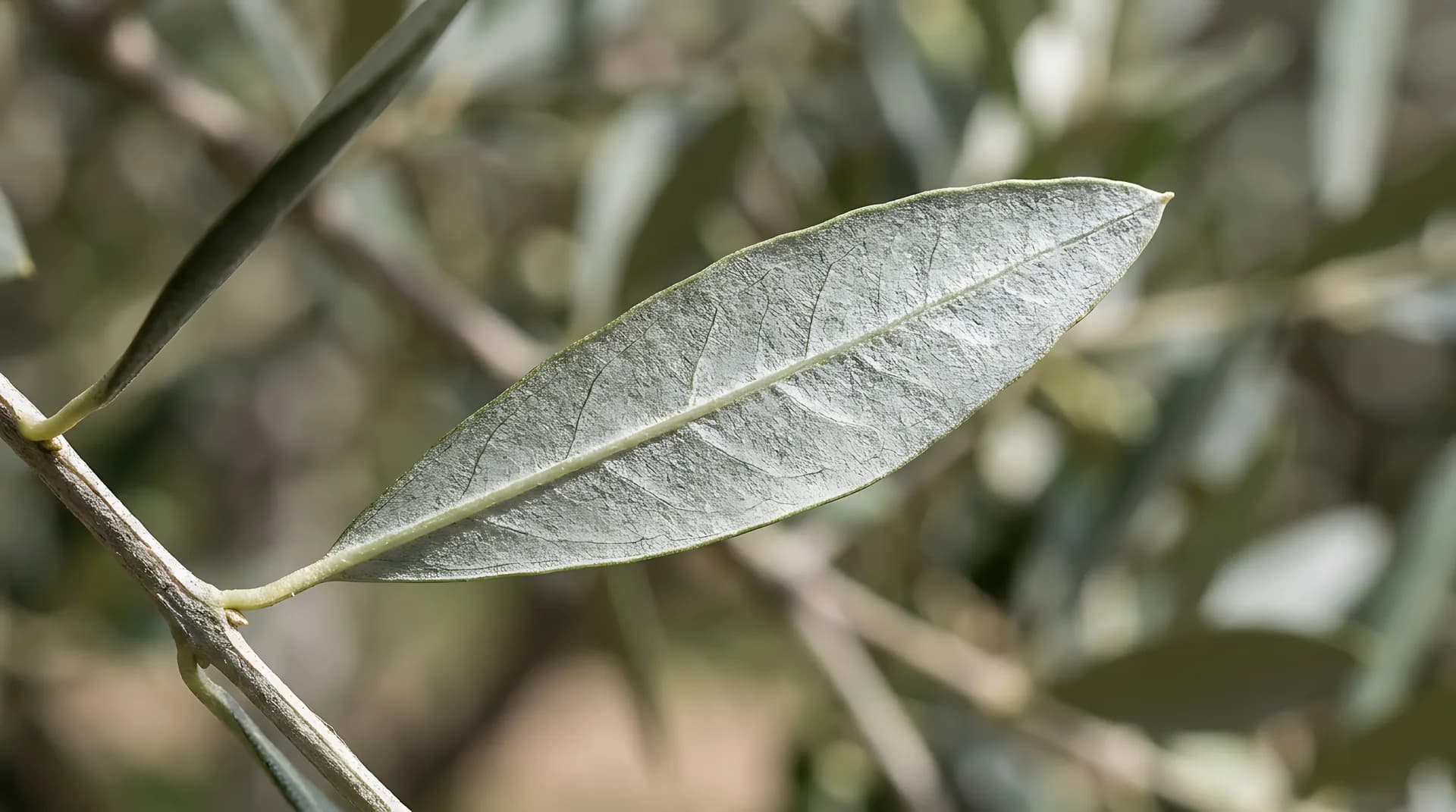
Boron is an essential micronutrient involved in cell wall synthesis, sugar transport and cell division. Its absorption by the roots occurs mainly as undissociated boric acid, and is highly dependent on soil pH. In alkaline soils, typical of many olive-growing regions, boron can be retained and unavailable to the plant. Foliar absorption of boron is an effective alternative for correcting specific deficiencies, since the nutrient penetrates rapidly through the cuticle and is mobilised via the xylem.
Calcium, by contrast, is a macronutrient that is absorbed as the Ca2+ ion and is transported almost exclusively via the xylem, following the transpiration stream. This means that organs with low transpiration, such as developing fruits, may show local deficiencies even when the soil is rich in calcium. Foliar application of calcium post-harvest helps maintain levels in leaves and buds, but its mobility within the plant is limited, so application at times of high demand is recommended.
The interaction between boron and calcium is well known: boron facilitates the transport of calcium to growing tissues and participates in cell wall formation. An imbalance between the two can cause physiological problems. For this reason, in the post-harvest management of organic olive groves, a balance is sought that favours flower differentiation and pollen viability. Research in plant physiology has shown that the joint application of boron and calcium can improve flower quality and reduce the abortion of newly set fruits.
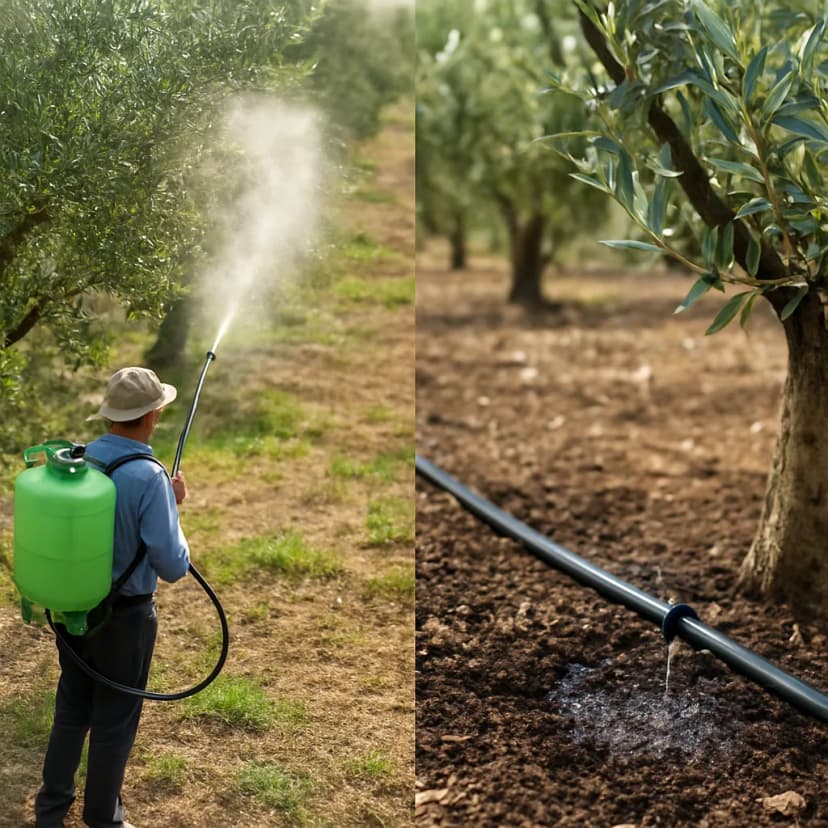
In practical terms, foliar absorption of nutrients is a key tool in organic farming, where synthetic fertilisers are restricted. Products based on seaweed extracts, amino acids and fulvic acids can improve the penetration and efficiency of boron and calcium. Microalgae biostimulant technology, for example, has been shown to increase cuticle permeability and stimulate cell metabolism, which can enhance the response to these nutrients.
Post-harvest application timing
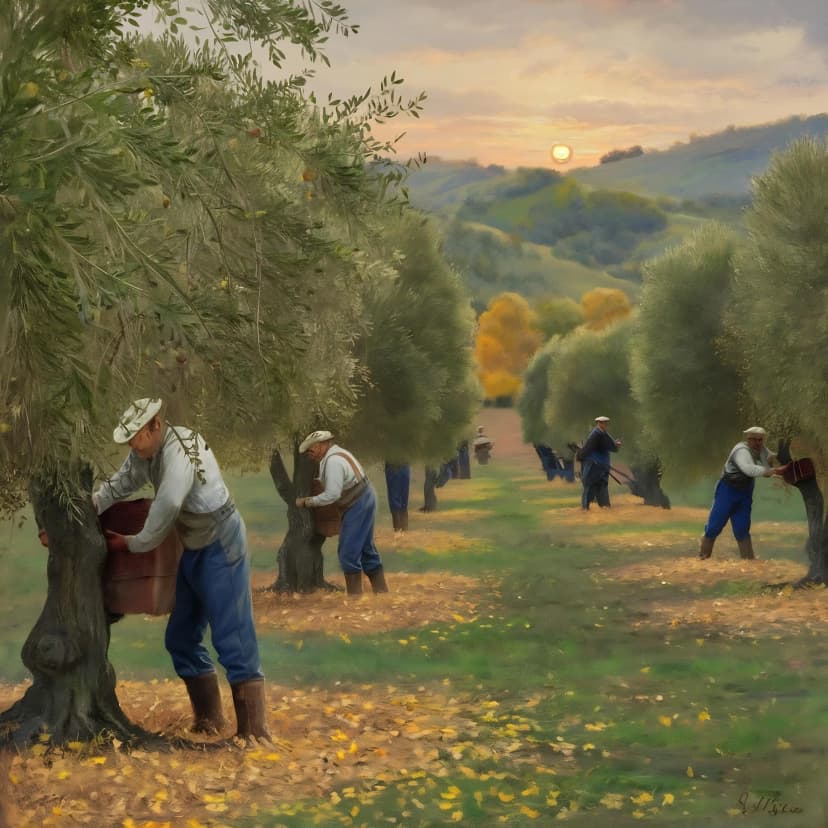
The post-harvest period of the olive tree runs from the end of harvesting to the start of spring budbreak. During this period, the tree accumulates reserves and begins the differentiation of flower buds. Boron and calcium should be applied when the leaves are still active and the conductive tissues are functioning, that is, immediately after harvesting or in the following weeks, before winter temperatures slow down metabolism.
In areas with a temperate climate, a foliar application of boron in early autumn can help maintain adequate levels in buds and young branches. Calcium, for its part, is often applied in combination with boron to strengthen the structure of the tissues that will support flowering. It is important to avoid late applications, when the tree is already dormant, since absorption would be very limited.
The choice of the exact timing depends on the phenological stage and the weather conditions. In irrigated olive groves, one application can be scheduled after harvesting and another at the end of winter, provided there is no risk of frost. In rainfed groves, residual soil moisture is used or foliar applications are carried out that do not depend on the root. The key is to ensure that boron and calcium are available when the plant needs them for flower differentiation.
A critical aspect is the phytotoxicity of boron. Excessive doses can cause necrosis in leaves and buds. For this reason, it is recommended to carry out prior leaf analyses and adjust the doses according to the levels detected. In organic farming, precision is even more important, since there are no fast correctors available and imbalances can persist.
Foliar and root application strategies
Foliar application is the most direct route for correcting boron and calcium deficiencies post-harvest. Quality biological formulations usually present boron in the form of ethanolamine or boric acid, and calcium in the form of chloride, nitrate or complexes with amino acids. In organic farming, it is essential to verify that the products are certified in accordance with Regulation (EU) 2019/1009 and that they do not contain prohibited substances.
For boron, the recommended doses usually range between 0.5 and 1.5 kg of boron per hectare, depending on the nutritional status and soil texture. Foliar application is carried out with spray volumes that ensure complete coverage of the canopy, preferably during the cooler hours to avoid rapid evaporation. The addition of a wetting agent or biostimulant can improve absorption.
Foliar calcium is applied at doses that vary according to the formulation, but generally a supply of 2 to 4 kg of CaO per hectare is sought. It is common to combine it with boron in the same application to take advantage of synergies. However, it is important to avoid incompatible mixtures, such as calcium with phosphates or sulphates, which can precipitate and clog nozzles.
Root application is complementary and especially useful in soils with widespread deficiencies. In organic farming, fertilisers based on algae, humic and fulvic acids can be used that improve nutrient availability. Fulvic acids, for example, chelate micronutrients and facilitate their absorption. A fertilisation programme for organic olive groves must integrate both routes to ensure a balanced supply.
It is advisable to carry out soil and leaf analyses at least once a year to adjust the doses. The interpretation of the results makes it possible to identify not only boron and calcium deficiencies, but also imbalances with other nutrients such as potassium, magnesium or zinc, which can affect flowering.
Interaction with other nutrients and soil management
Boron and calcium do not act in isolation. Their availability and uptake are influenced by interactions with other nutrients and by soil conditions. For example, an excess of potassium can compete with calcium and magnesium, reducing their uptake. Similarly, high levels of phosphorus can immobilise zinc and iron, indirectly affecting flowering.
In organic olive groves, the management of soil organic matter is essential for improving structure and cation exchange capacity, which favours the availability of boron and calcium. The incorporation of compost, well-matured manure or cover crops increases microbial activity and the gradual release of nutrients. Soil microorganisms, such as mycorrhizae, can facilitate the uptake of phosphorus and micronutrients, including boron.
Soil pH is another critical factor. In acidic soils, boron is more available but can be easily leached; in alkaline soils, it tends to be fixed. Liming in acidic soils can improve the availability of calcium and magnesium, but it must be done carefully so as not to induce boron deficiencies. In calcareous soils, foliar applications of boron are especially recommended.
Soil microbiota plays a key role in the solubilisation of nutrients. Biostimulants based on microalgae and beneficial microorganisms can stimulate microbial activity and improve the rhizosphere. This translates into greater efficiency in nutrient uptake and greater tolerance to water stress, a limiting factor in many olive-growing regions.
Practical cases and recommendations
In an organic olive grove in the Coquimbo region of Chile, irregular flowering and poor fruit set were observed over several seasons. Leaf analyses revealed low levels of boron and calcium, despite applications of organic fertilisers to the soil. A post-harvest foliar application plan was implemented with boron (1 kg/ha) and calcium (3 kg/ha) combined with a microalgae biostimulant. The following year, flowering was more uniform and fruit set improved significantly, according to field records.
In another case, in an olive grove in Argentina, a drought-induced boron deficiency was detected. Foliar application of boron at two timings (post-harvest and pre-flowering) helped maintain adequate levels in buds, despite low water availability in the soil. The key was the rapid foliar uptake and the mobility of boron towards the reproductive tissues.
These examples illustrate the importance of an accurate diagnosis and of integrating foliar and root strategies. In organic farming, where fast-acting synthetic correctors cannot be used, planning and consistency in applications are essential. It is recommended to carry out leaf analyses at least once a year and to adjust the doses according to the results.
For more information on specific fertilisation programmes for olive, you can consult the fertilisation programme for olive. You may also be interested in learning about the micronutrients for organic crops and the fulvic acids for organic farming, which improve nutrient availability in the soil.
The FAO highlights the importance of balanced nutrition to improve the productivity and sustainability of agricultural systems. In this sense, the management of boron and calcium post-harvest is aligned with the climate-smart agriculture practices promoted by international organisations. For more details, you can consult the FAO agroecology approach.
In addition, European fertiliser regulations, such as Regulation (EU) 2019/1009, establish the requirements for fertiliser products on the market, including those used in organic farming. You can find more information on the European Commission's website on organic farming.
Related articles
Do you need professional help?
In Spain and Europe we offer advanced agricultural solutions: biostimulants and organic fertilisers. Call us: +34 623 753 719.
Request your free quote
Frequently asked questions about post-harvest boron and calcium in organic olive groves
When is the best time to apply boron and calcium post-harvest?
The best time is immediately after harvest, when the leaves are still active and the conductive tissues are functioning. In temperate climates, it can be applied in early autumn; in warmer areas, up to late autumn. Avoid applications during the winter dormancy period, as absorption is very limited. A second application in late winter, before budbreak, can be beneficial in regions without risk of frost.
What doses of boron and calcium are recommended for organic olive groves?
The indicative doses are 0.5 to 1.5 kg of boron per hectare and 2 to 4 kg of CaO per hectare, depending on leaf analysis and crop status. It is crucial not to exceed the boron doses to avoid phytotoxicity. In organic farming, use certified products and adjust according to the needs detected in the analyses. Always consult a technical adviser to adapt the doses to your farm.
Can boron and calcium be mixed in the same foliar application?
Yes, it is common to mix boron and calcium in the same application to take advantage of synergies. However, you must verify the compatibility of the formulations to avoid precipitation. Avoid mixing calcium with phosphates or sulphates. Carry out a test in a small volume before preparing the final spray mixture. The addition of microalgae biostimulants can improve absorption and reduce the risk of incompatibility.
How does soil pH affect the availability of boron and calcium?
Soil pH influences the availability of both nutrients. In acid soils, boron is more available but can be leached; in alkaline soils, it tends to become fixed and less available. Calcium is more available in neutral to slightly acid soils, but in calcareous soils it can precipitate. It is therefore advisable to carry out soil analyses and adjust foliar applications to correct deficiencies induced by pH.
What role do biostimulants play in the absorption of boron and calcium?
Biostimulants, especially those based on microalgae and fulvic acids, can improve the absorption of boron and calcium by increasing cuticle permeability and stimulating cell metabolism. They also improve soil structure and microbial activity, which favours nutrient availability. In organic farming, they are a key tool for optimising nutrition without synthetic inputs.