
Learn to manage water stress in export citrus with agronomic strategies and biostimulants. Improve fruit quality and productivity.
Introduction
Water stress management in export citrus is one of the most critical challenges for Latin American producers seeking to meet the demanding quality standards of markets such as Europe, the United States, and Asia. Irregular water availability, exacerbated by climate change and competition for water resources, makes it essential to adopt comprehensive strategies that combine agronomic practices, balanced nutrition, and the use of biostimulants.
In this article, we will address everything from the physiology of water stress to practical solutions based on field experience and scientific research. Our goal is to provide a technical guide that allows citrus producers to optimize water use, maintain productivity, and ensure the fruit quality demanded by international markets.
Impact of water stress on citrus physiology
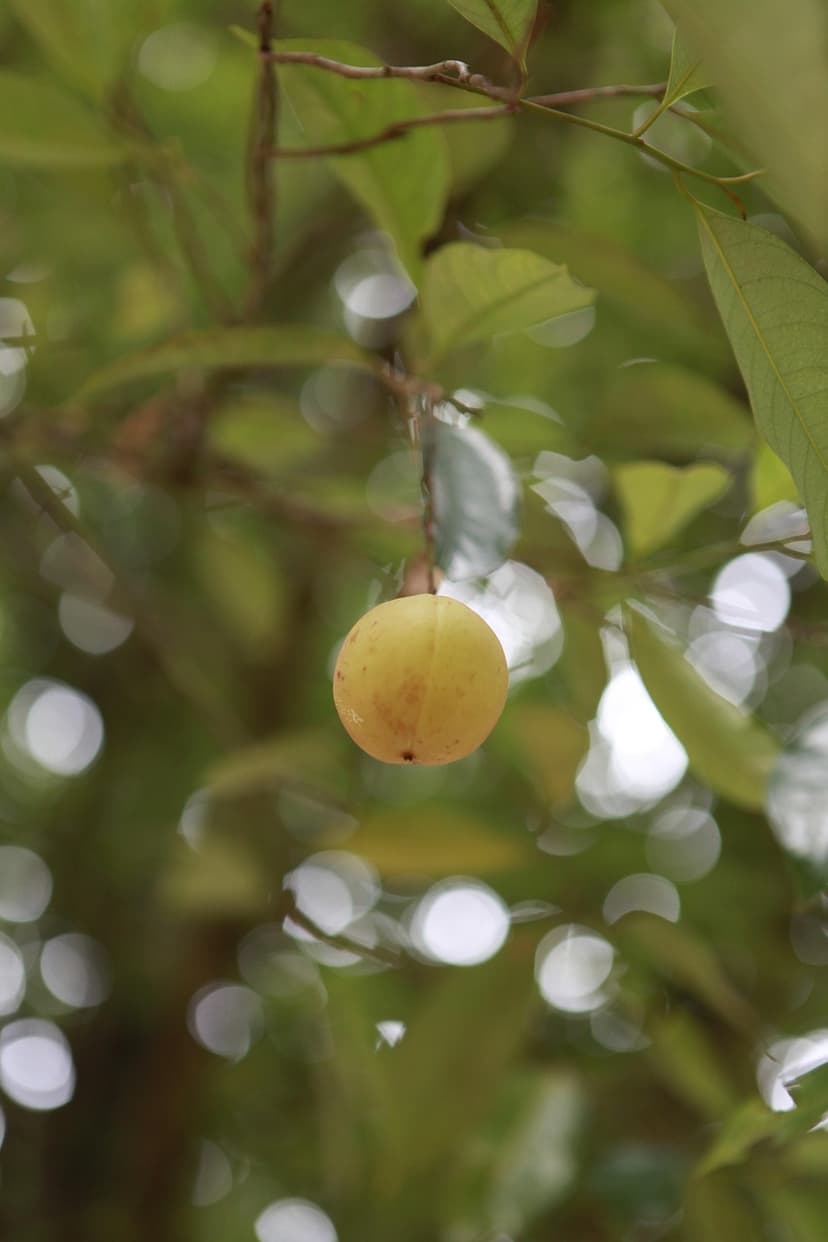
Water stress in citrus triggers a series of physiological responses that directly affect fruit growth, development, and quality. When water availability is insufficient, the plant reduces stomatal opening to minimize water loss through transpiration, which decreases the photosynthetic rate and, consequently, the production of carbohydrates needed for fruit filling.
Additionally, water stress alters the hormonal balance, increasing the synthesis of abscisic acid (ABA) and reducing the production of gibberellins and cytokinins. This causes premature fruit drop, especially during fruit set and early development. Research published in the Journal of Citrus Research indicates that moderate water deficits can reduce yield by up to 30% if they occur during critical phenological stages.
Effects on fruit quality
In export citrus, quality is as important as yield. Water stress affects parameters such as fruit size, total soluble solids (TSS) content, acidity, and peel firmness. Severe water deficit during fruit growth reduces final size and can increase the incidence of physiological disorders such as creasing or splitting.
On the other hand, controlled moderate stress during ripening stages can increase TSS, improving flavor, but if not properly managed, there is a risk of obtaining small, dehydrated fruit unsuitable for export. Therefore, water stress management must be precise and adapted to each variety and soil-climatic condition.
Symptoms and diagnosis of water stress in the field
Early identification of water stress symptoms is essential for taking corrective measures. The most evident signs include leaf curling, loss of leaf shine, temporary wilting during the hottest hours, and yellowing of older leaves. In advanced stages, defoliation and dieback of terminal branches are observed.
For an accurate diagnosis, the use of soil moisture sensors, tensiometers, and weather stations that allow calculating crop evapotranspiration is recommended. Additionally, monitoring leaf water potential using a pressure chamber (Scholander) is a useful tool to determine the plant's water status. FAO recommends maintaining leaf water potential above -1.5 MPa during most of the cycle to avoid yield losses.
Factors that aggravate water stress
Water stress does not depend solely on a lack of water. Factors such as compacted soils, salinity, the presence of nematodes, or root diseases limit the water absorption capacity, even when water is available in the soil. In citrus, the presence of Phytophthora spp. or nematodes of the genus Tylenchulus semipenetrans significantly reduces root volume, making plants more susceptible to water stress.
Likewise, a nutritional imbalance, especially potassium and calcium deficiencies, can worsen the effects of water deficit, as these nutrients are involved in stomatal regulation and cell membrane integrity. Therefore, a balanced fertilization program is an essential part of stress management.
Agronomic management strategies to mitigate water stress
Agronomic management of water stress in export citrus should be based on practices that optimize water use efficiency and improve the plant's ability to tolerate deficits. Among the most effective strategies are:
- Regulated deficit irrigation (RDI): This involves applying less water than needed during less sensitive phenological stages, such as vegetative growth, to save water without significantly affecting yield. Studies on citrus in Brazil have shown that RDI can reduce water consumption by up to 25% without production losses.
- Use of mulches and cover crops: Keeping the soil covered with crop residues or cover crops reduces evaporation and maintains soil moisture. In tropical regions, the use of legumes as cover crops also adds nitrogen to the system.
- Improvement of soil structure: The application of organic matter, such as compost or humic acids, improves the soil's water retention capacity and stimulates root development. Fulvic acids, in particular, act as natural chelating agents and improve nutrient absorption under stress conditions.
Canopy management and pruning
Proper pruning allows balancing the source-sink relationship, reducing the transpiring surface area and improving water use efficiency. In citrus, it is recommended to remove unproductive branches and maintain an open structure that allows light and air penetration, reducing water demand. Additionally, root pruning in the nursery can induce a denser and deeper root system, improving soil exploration.
Biostimulants as a key tool in stress tolerance
Agricultural biostimulants have proven to be effective tools for mitigating the effects of water stress in citrus crops, improving water use efficiency and activating natural defense mechanisms. The use of biostimulants based on freshwater microalgae, such as Chlorella and Scenedesmus, which contain phytohormones, amino acids, and polysaccharides that induce stress tolerance.
These biostimulants act at the physiological level by promoting root development, increasing the activity of antioxidant enzymes (such as superoxide dismutase and catalase), and regulating hormonal balance. Foliar or root application of these products at critical stages (pre-flowering, fruit set, and fruit filling) helps maintain cell turgor and photosynthesis even under water deficit conditions.
Biostimulant technology is based on the controlled production of microalgae in photobioreactors, ensuring a constant concentration of bioactive compounds. These products are certified for organic agriculture and are compatible with both conventional and organic fertilization programs.
Field results with biostimulants in citrus crops
Trials conducted on citrus farms in the São Paulo region, Brazil, showed that the application of a Scenedesmus-based biostimulant during moderate water stress increased yield by 18% and improved fruit quality, with a 12% increase in total soluble solids and an 8% reduction in acidity. These results were consistent across Valencia orange and Tahiti lime varieties.
Similarly, under severe water stress conditions, plants treated with biostimulants maintained higher leaf water potential and a photosynthetic rate 25% higher compared to the untreated control. These data support the inclusion of biostimulants in integrated stress management programs.
Integrated management program for export citrus crops
An effective water stress management program for export citrus crops should integrate the following components:
| Component | Action | Phenology |
|---|---|---|
| Water monitoring | Installation of moisture sensors and weather station | Entire cycle |
| Controlled deficit irrigation | Apply 70-80% of ETc during vegetative stages | Post-harvest to pre-flowering |
| Biostimulant (Scenedesmus) | Foliar application 2 L/ha or root application 5 L/ha | Pre-flowering, fruit set, and fruit filling |
| Balanced fertilization | Maintain adequate levels of K, Ca, and Mg | Entire cycle |
| Soil management | Application of organic matter and fulvic acids | Soil preparation and post-harvest |
For export varieties such as Navel orange, Persian lime, or Clemenules mandarin, it is recommended to adjust the program according to local conditions. Growers can consult the citrus fertilization program for specific recommendations.
Additionally, it is essential to train technical staff in the use of diagnostic tools and the correct application of biostimulants. Training programs are offered for distributors and technical advisors through the distributor network.
Related articles
Need professional help?
We offer certified Biostimulants and Organic Fertilizers. Call us: +34 623 753 719.
FAQ
How does water stress affect fruit set in citrus?
Water stress during flowering and fruit set causes hormonal imbalances that increase the abscission of flowers and young fruits. Reduced photosynthesis limits the availability of carbohydrates, which are necessary for initial fruit development. Applying biostimulants at this stage can improve fruit set by maintaining physiological activity.
Which biostimulants are most effective for water stress in citrus?
Biostimulants based on microalgae such as Scenedesmus and Chlorella have shown high efficacy, as they contain phytohormones, amino acids, and antioxidants that activate stress tolerance mechanisms. Seaweed extracts and fulvic acids, which improve water and nutrient uptake, are also effective.
What is the recommended biostimulant dose for citrus under water stress conditions?
The dose varies depending on the product and application method. For foliar biostimulants based on microalgae, 2-3 L/ha is recommended in biweekly applications during critical periods. For root applications, 5-10 L/ha. Always consult the product's technical data sheet and adjust according to crop conditions.
Is regulated deficit irrigation safe for export citrus?
Yes, as long as it is applied during less sensitive phenological stages and the plant's water status is monitored. Regulated deficit irrigation can save water without compromising yield or quality, provided the deficit is not severe. It is important to adjust the deficit level according to the variety and climate.
How to integrate biostimulants into an organic fertilization program?
Biostimulants certified for organic agriculture can be combined with permitted organic and mineral fertilizers. It is recommended to apply them with irrigation or in a mixture with other compatible products. For more information, visit our page on certified organic fertilizers.
Water stress management strategies in export citrus: physiological indicators and mitigation protocols
Water stress represents one of the main limiting factors in citrus production for export, especially in Mediterranean regions where annual rainfall ranges between 350 and 450 mm, well below the 800-1200 mm required for optimal development. Recent studies from the Valencian Institute of Agricultural Research (IVIA) indicate that controlled water deficit during the fruit growth phase (between 60 and 90 days after flowering) can reduce final fruit size by 12% to 18%, directly affecting commercial grading for markets such as the European Union or the United States. To maintain profitability in crops of varieties such as 'Navelina' or 'Clemenules', it is critical to implement continuous monitoring of leaf water potential, keeping it above -1.2 MPa during key phenological stages. Field data show that each day with potentials below -1.5 MPa during fruit enlargement reduces exportable yield by 2.3%, translating into economic losses of up to 1,200 euros per hectare in seasons with prolonged stress.
To mitigate these impacts, the application of biostimulants based on proline and glycine betaine at doses of 2-3 L/ha during the flowering and fruit set stages is recommended, which has been shown to increase cellular water retention capacity by 15% to 22%. Controlled trials in the Region of Murcia during the 2022-2023 season showed that trees treated with these compounds maintained a leaf water potential 0.3 MPa higher than the control during 21-day drought periods, preserving cell turgor and reducing small fruit abscission by 34%. Furthermore, the inclusion of seaweed extracts (Ascophyllum nodosum) in the fertigation program, applied every 15 days during the summer, improved stomatal conductance by 28%, allowing net photosynthesis to be 19% higher even with water restrictions of 40% compared to optimal irrigation. These practices not only stabilize fruit size (increase of 2-3 mm compared to controls without biostimulants) but also maintain total soluble solids (TSS) between 11.5 and 12.5 °Brix, meeting the quality standards required by international markets.
Water stress management must be integrated with a controlled deficit irrigation (CDI) program based on soil moisture measurement using capacitance sensors installed at depths of 30, 60, and 90 cm. Field data indicate that maintaining available soil water content between 65% and 75% of field capacity during the vegetative growth phase, and reducing it to 50-60% during fruit maturation (60-30 days before harvest), saves between 800 and 1,200 m³/ha of water without compromising exportable yield. However, it is crucial to avoid deficits below 45% for more than 10 consecutive days, as this triggers irreversible stomatal closure, reducing CO₂ assimilation by 40% and causing fruit drop of 15-20%. In 'Valencia Late' orange varieties, foliar application of salicylic acid (0.5 mM) 48 hours before a scheduled water stress event has been shown to reduce lipid peroxidation by 32% and maintain superoxide dismutase (SOD) enzyme activity 25% above the control, protecting cell membrane integrity and postharvest fruit quality.
To optimize the response to water stress in export citrus, it is recommended to establish a weekly monitoring protocol that includes measuring stem water potential (ψstem) at solar noon using a Scholander-type pressure chamber. ψstem values between -1.0 and -1.2 MPa indicate optimal conditions; between -1.3 and -1.5 MPa signal moderate stress requiring adjustment in irrigation scheduling; and below -1.6 MPa demand immediate intervention with recovery irrigation (20-25 mm in 4-6 hours) followed by the application of a biostimulant with branched-chain amino acids (leucine, is
References
Frequently Asked Questions
How does water stress affect fruit set in citrus?
Water stress during flowering and fruit set causes hormonal disorders that increase abscission of flowers and young fruits. Reduced photosynthesis limits carbohydrate availability, necessary for initial fruit development. Applying biostimulants at this stage can improve fruit set by maintaining physiological activity.
Which biostimulants are most effective for water stress in citrus?
Biostimulants based on microalgae such as Scenedesmus and Chlorella have shown high efficacy, as they contain phytohormones, amino acids, and antioxidants that activate stress tolerance mechanisms. Seaweed extracts and fulvic acids, which improve water and nutrient uptake, are also effective.
What is the recommended dose of biostimulant for citrus under water stress conditions?
The dose varies depending on the product and the application method. For foliar biostimulants based on microalgae, 2-3 L/ha is recommended in biweekly applications during critical periods. For root applications, 5-10 L/ha. Always consult the product's technical data sheet and adjust according to crop conditions.
Is regulated deficit irrigation safe for export citrus?
Yes, as long as it is applied during less sensitive phenological stages and the plant's water status is monitored. Regulated deficit irrigation can save water without compromising yield or quality, provided the deficit is not severe. It is important to adjust the deficit level according to the variety and climate.