Water stress in avocado causes physiological disorders such as stem-end rot and flesh spotting. Learn how to prevent them with biostimulants and.
What is water stress in avocado?
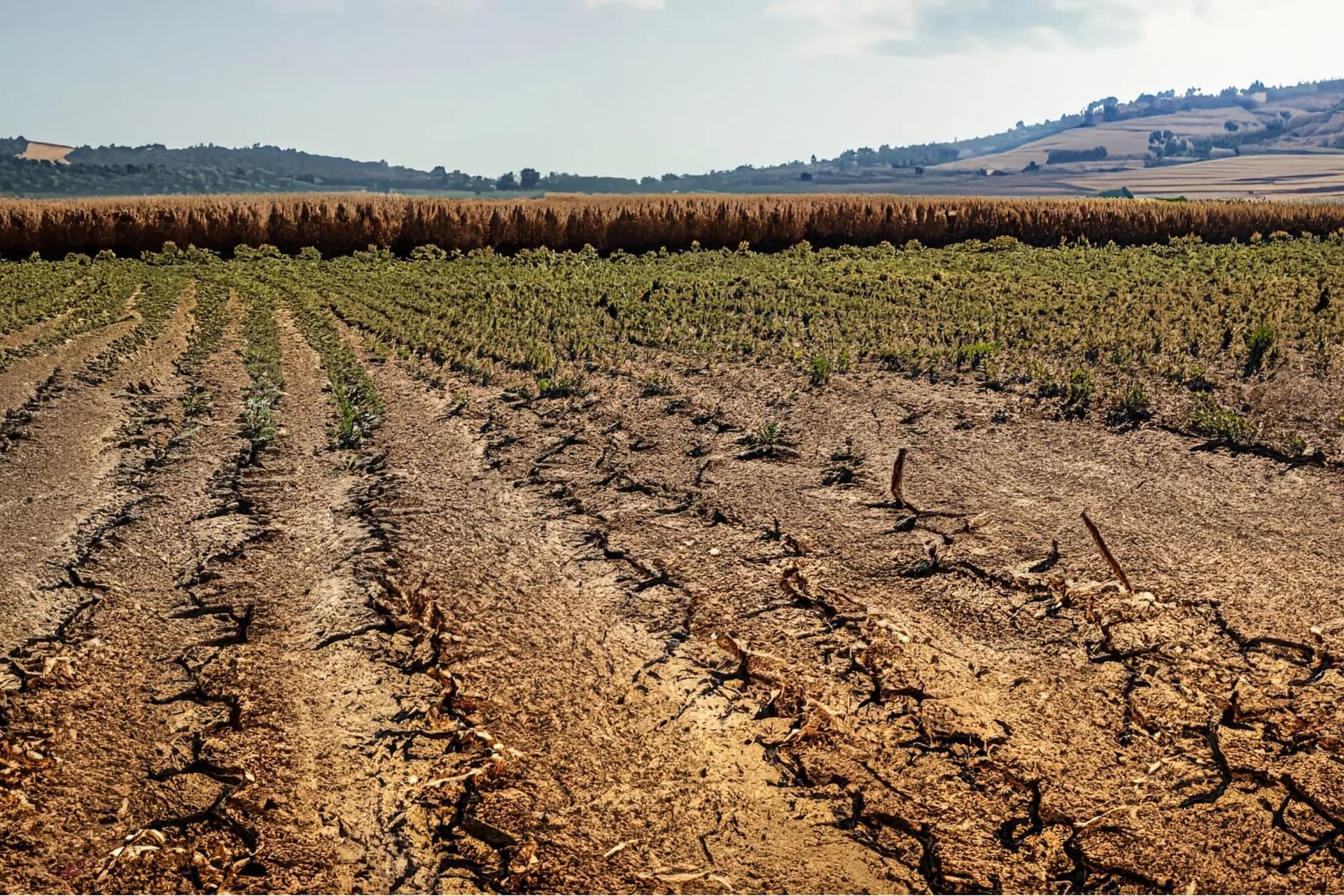
Water stress in avocado is a condition in which the plant experiences a deficit or an excess of water that affects its physiological balance. In avocado cultivation, both drought and waterlogging can trigger physiological disorders in the fruit, reducing their commercial quality and shelf life. This phenomenon is especially relevant in tropical and subtropical regions where rainfall is irregular and extreme temperatures are frequent.
Avocado (Persea americana) originates from climates with well-distributed rainfall, so its shallow root system is very sensitive to a lack of oxygen in the soil and to dehydration. When water is scarce, the plant closes its stomata to reduce transpiration, which limits photosynthesis and nutrient uptake. On the other hand, excess water causes root anoxia, preventing root respiration and favouring the proliferation of pathogens such as Phytophthora cinnamomi.
The most common physiological disorders in avocado fruit under water stress include stem-end rot, premature softening, the appearance of brown spots in the flesh and a reduction in oil content. These defects not only affect the appearance of the fruit but also reduce its market value, especially in highly demanding export markets.
Managing water stress requires a comprehensive approach that combines efficient irrigation practices, improved soil structure, the use of cover crops and the application of biostimulants that strengthen the plant's tolerance. In this article, we will explore in detail the physiological mechanisms of damage and the most effective strategies to mitigate it, with a focus on sustainable and organic agriculture.
Physiological disorders associated with water stress
Peduncle rot
Peduncle rot is one of the most frequent disorders in avocados subjected to water stress. It manifests as a softening and darkening in the area where the fruit joins the branch, which advances towards the flesh. This symptom is related to the accumulation of phenolic compounds and the activity of oxidative enzymes, which are enhanced by water imbalance. Under conditions of water deficit, the plant produces ethylene in greater quantities, accelerating the senescence of the peduncle tissue.
Peduncle rot significantly reduces the shelf life of the fruit, as it facilitates the entry of secondary pathogens. In field studies, it has been observed that fruit from trees under regulated deficit irrigation show a higher incidence of this disorder compared with those under optimal irrigation. Prevention is based on maintaining constant soil moisture, especially during the fruit growth stages.
In addition, the application of microalgae-based biostimulants such as Chlorella and Scenedesmus can help to reinforce cell walls and reduce the activity of degrading enzymes. These products provide phytohormones and amino acids that stimulate the plant's defence mechanisms.
Premature softening and flesh spotting
Premature softening is another physiological disorder that is exacerbated by water stress. The fruit lose firmness rapidly after harvest, which makes them susceptible to mechanical damage and irregular ripening. This is due to the degradation of cell walls by the action of polygalacturonases, whose activity increases with stress.
The brown spots in the flesh, known as "browning", are the result of the oxidation of phenolic compounds by the enzyme polyphenol oxidase. This process intensifies when there is an imbalance in the calcium concentration in the tissues, since calcium acts as a stabiliser of cell membranes. Water stress interferes with the uptake and translocation of calcium, increasing susceptibility to browning.
To mitigate these effects, it is essential to ensure balanced nutrition, especially with calcium and potassium, and to maintain a constant water supply. Foliar application of calcium at critical moments can improve flesh firmness and reduce browning. Likewise, the use of biostimulants that favour the synthesis of stress proteins can help to maintain cell integrity.
Reduction in calibre and oil content
Water stress during fruit development causes a reduction in the final calibre, which affects commercial grading. Smaller fruit have lower yield and are less valued on the market. In addition, the oil content, which is a quality indicator in avocado, decreases when the plant does not have enough water to carry out photosynthesis and lipid accumulation.
The reduction in calibre is due to lower cell expansion, which depends on turgor and the availability of photoassimilates. When water is scarce, the plant prioritises survival over fruit growth, redirecting resources towards the roots and young leaves. This results in smaller fruit with lower dry matter accumulation.
To avoid these losses, it is crucial to implement regulated deficit irrigation only at non-critical stages, and to ensure an adequate water supply during the cell expansion phase. The incorporation of organic matter into the soil improves water retention and reduces stress peaks. The use of cover crops is also recommended to moderate soil temperature and conserve moisture.
Physiological mechanisms of damage
Water stress triggers a cascade of physiological responses in the avocado plant. One of the first effects is stomatal closure, mediated by abscisic acid (ABA), which reduces water loss through transpiration but also limits CO2 entry, decreasing photosynthesis. This reduction in carbon assimilation directly affects the production of sugars and lipids needed for fruit development.
At the cellular level, water stress causes the accumulation of reactive oxygen species (ROS), such as hydrogen peroxide and the superoxide radical. These molecules damage lipid membranes, proteins and DNA, accelerating cellular senescence. The plant responds by activating antioxidant systems, but if the stress is severe or prolonged, the damage exceeds the repair capacity.
Hormonal imbalance also plays a crucial role. The increase in ABA induces ethylene synthesis, which promotes fruit ripening and senescence. In addition, the decrease in cytokinins and gibberellins affects cell growth and division, contributing to the reduction in calibre. Calcium, which is essential for membrane stability, is mobilised less under stress, increasing permeability and the incidence of disorders.
Nutrient uptake is compromised, especially that of potassium, calcium and boron, which are fundamental for fruit quality. Potassium regulates stomatal opening and turgor pressure, while calcium is key for the integrity of cell walls. Boron participates in cell wall synthesis and in sugar transport. A deficit of these nutrients aggravates the symptoms of water stress.
Efficient irrigation and scheduling
Irrigation is the most direct tool for controlling water stress. In avocado, drip irrigation is recommended to ensure a uniform distribution of water and to avoid waterlogging. Irrigation frequency and amount must be adjusted according to the phenological stage, the soil type and the climatic conditions. During flowering and fruit set, water stress is especially harmful, so constant moisture must be maintained.
The use of soil moisture sensors allows real-time monitoring of the water content and precise adjustment of irrigation. This technology reduces water consumption and prevents both deficit and excess. In regions with water scarcity, regulated deficit irrigation can be applied at non-critical stages, such as after harvest, to induce a mild stress response that improves water use efficiency.
Water quality is also important; water with high salinity can aggravate osmotic stress. In these cases, periodic salt leaching is recommended, together with the use of organic amendments that improve soil structure and facilitate drainage.
Improving soil structure and water retention
The soil's capacity to retain water is fundamental for mitigating water stress. Sandy soils drain quickly and retain little water, while clay soils can compact and hinder infiltration. The incorporation of organic matter, such as compost or fulvic acids, improves soil structure, increasing its water retention capacity and porosity.
Organic matter also favours microbial activity, which contributes to nutrient availability and to the formation of stable aggregates. A soil with good structure allows deeper and more extensive root development, which increases the plant's capacity to explore water and nutrients. In addition, beneficial microorganisms can produce substances that improve the plant's tolerance to stress.
Mulching with plant residues is another effective practice for conserving soil moisture, reducing evaporation and moderating temperature. This technique also suppresses weeds and adds organic matter as it decomposes.
Canopy management and cover crops
Proper pruning can reduce water demand by decreasing the leaf area, but it must be carried out carefully so as not to compromise production. The removal of diseased or unproductive branches improves ventilation and light penetration, favouring photosynthesis. However, excessive pruning can stress the plant even further.
Cover crops, such as legumes or grasses, help to maintain soil moisture and prevent erosion. These covers also add nitrogen to the soil when they are legumes, reducing the need for nitrogen fertilizers.
The implementation of windbreaks reduces wind speed, decreasing transpiration and water loss. In areas with strong winds, this practice is essential to protect the crop. The use of shade nets in nurseries or in young plantations is also recommended to reduce solar radiation and temperature.
Use of biostimulants and organic nutrition
Biostimulants are products that, applied to plants, improve their growth, development and stress tolerance without supplying nutrients directly. These microalgae contain phytohormones, amino acids, vitamins and polysaccharides that stimulate the plant's defence mechanisms and improve nutrient uptake.
The application of biostimulants at critical moments, such as flowering or fruit set, can reduce the impact of water stress. These products favour the synthesis of osmolytes such as proline and glycine betaine, which help maintain water balance in the cells. They also stimulate the production of antioxidants, which neutralise reactive oxygen species.
Organic nutrition plays a complementary role. The use of organic fertilizers, such as compost or vermicompost, improves soil fertility and nutrient availability. The application of fulvic acids, which are low-molecular-weight organic compounds, increases the soil's cation exchange capacity and facilitates the uptake of micronutrients.
A balanced fertilization programme, including calcium, potassium and boron, is essential to prevent physiological disorders. Foliar application of calcium during fruit growth stages improves firmness and reduces browning. Potassium regulates stomatal opening and turgor, while boron is crucial for cell wall formation.
At Ecoganic, we offer solutions based on microalgae and other biostimulants that have been tested in the field. Our goal is to provide growers with sustainable and effective tools to manage water stress and improve the quality of their crops.
Prevention and monitoring strategies
Prevention is key to avoiding the physiological disorders caused by water stress. Constant monitoring of weather conditions and the plant's water status allows anticipating stress situations. Soil moisture sensors, weather stations and visual observation of symptoms are useful tools.
It is important to establish an irrigation threshold, that is, the soil moisture level at which irrigation should be applied. This threshold varies according to the type of soil and the phenological stage. For example, during flowering, it is recommended to keep moisture close to field capacity, while in the ripening phase a slight deficit can be allowed.
The use of vegetation indices, such as NDVI, through satellite or drone imagery, can detect water stress in the crop early. These technologies allow more precise irrigation management and the application of localized treatments.
Training and education of growers in water stress management is fundamental. Knowing the symptoms and mitigation strategies allows them to make informed and timely decisions. In addition, the exchange of experiences between producers from different regions enriches collective knowledge.
Related articles
- Microalgae for fruit set and heat stress in grapevine
- Cold resilience in avocado with microalgae
- Pulp firmness in banana for European export
Do you need professional help?
At Ecoganic in Spain, Europe, we offer biostimulants and organic fertilizers. Call us: +34 623 753 719.
Request your free quote
What are the main physiological disorders in avocado due to water stress?
The main disorders include peduncle rot, premature softening, brown spots in the pulp, reduced calibre and lower oil content. These symptoms are due to the alteration of the plant's water, hormonal and nutritional balance.
How does water stress affect avocado fruit quality?
Water stress reduces firmness, increases susceptibility to mechanical damage and accelerates ripening. It also decreases oil content and shelf life, which affects market acceptance.
Which agronomic practices help mitigate water stress?
Drip irrigation, soil improvement with organic matter, the use of cover crops and the implementation of windbreaks are effective practices. It is also important to monitor soil moisture and adjust irrigation according to the phenological stage.
How can biostimulants help in water stress management?
Biostimulants, such as those based on microalgae, strengthen the plant by stimulating the synthesis of osmolytes and antioxidants, improve nutrient uptake and favour stress tolerance. Their application at critical moments can reduce damage to the fruits.
Conclusion
Water stress in avocado is an agronomic challenge that affects crop quality and yield. The resulting physiological disorders, such as stem-end rot and premature softening, can be prevented through integrated management that combines efficient irrigation, soil improvement, balanced nutrition and the use of biostimulants.
The adoption of sustainable practices not only mitigates the impact of stress, but also contributes to ecosystem health and long-term profitability. Ecoganic biostimulants, based on microalgae and other natural compounds, offer an effective and ecological solution. Prevention and preparation are the key to facing climatic challenges and ensuring a high-quality harvest.
Related articles
- Ecological agricultural biostimulants
- Certified organic fertilizers