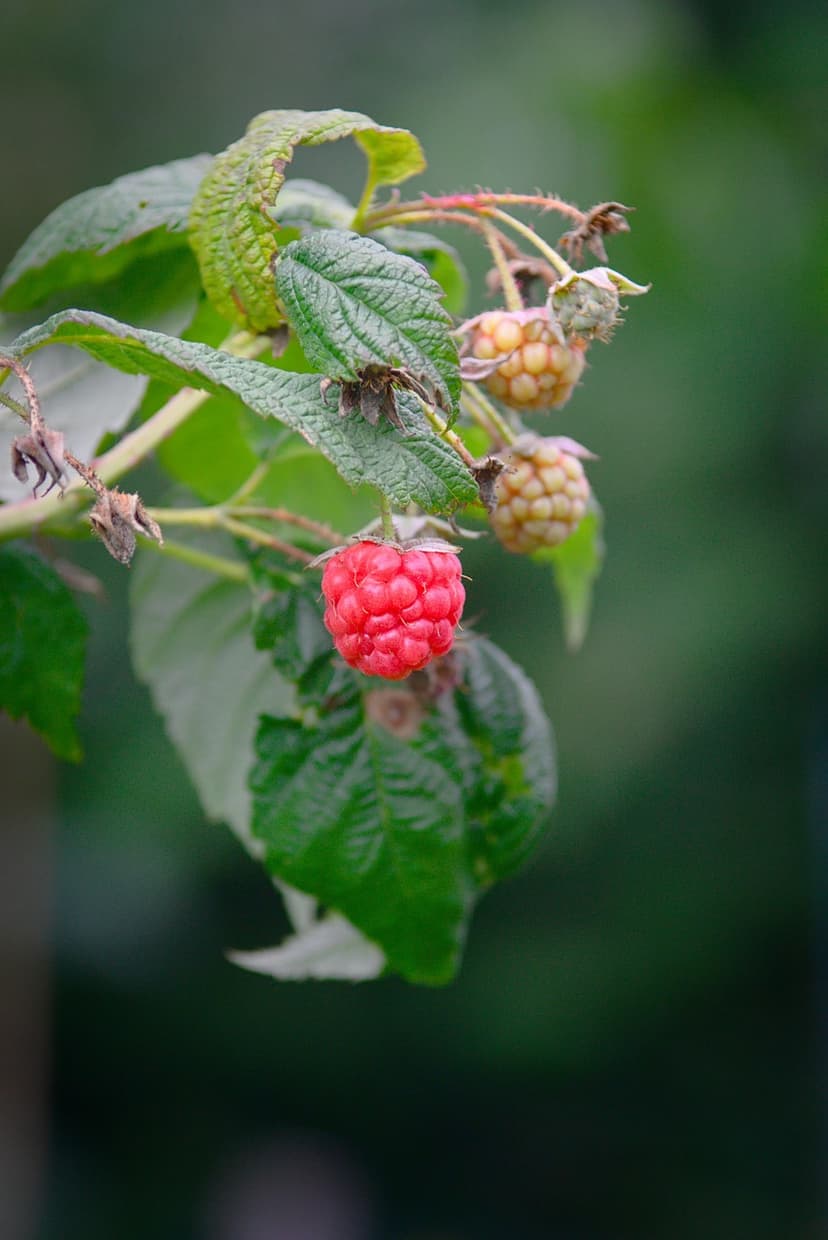

Discover how calcium boosts cell division in raspberries, improving fruit size and firmness. Learn about doses, phenological stages, and programs.
Importance of calcium in raspberry cell division
Cell division in raspberry is a key physiological process determining final fruit size, firmness, and quality. This process mainly occurs during the early stages of fruit development, immediately after fruit set. Calcium plays a fundamental role as a secondary messenger in cell signaling and as a structural component of cell walls. Without an adequate calcium supply, cell division is limited, resulting in smaller fruits with lower firmness and greater susceptibility to physiological disorders.
Under field conditions, soil calcium availability does not always guarantee efficient plant uptake. Factors such as soil pH, competition with other cations (potassium, magnesium, ammonium), and water stress can significantly reduce calcium uptake. Therefore, it is crucial to implement fertilization strategies that ensure a constant supply during critical crop stages. Foliar calcium application at strategic times can complement root uptake and improve nutrient partitioning to developing fruits.
Functions of calcium in fruit physiology
Calcium performs multiple functions in raspberry physiology. At the cellular level, it acts as a second messenger in signaling pathways that regulate cell division and elongation. The formation of the mitotic spindle during mitosis requires calcium for proper chromosome segregation. Additionally, calcium is integrated into the middle lamella of the cell wall in the form of calcium pectate, which provides rigidity and stability to tissues. A well-structured cell wall is essential to resist turgor pressure and prevent fruit dehiscence.
In raspberry fruit, calcium concentration is directly correlated with firmness and postharvest life. Recent research indicates that fruits with higher calcium content exhibit lower rates of softening and weight loss during storage. Likewise, calcium participates in regulating enzymes involved in cell wall degradation, such as polygalacturonases, thereby delaying senescence. Therefore, adequate calcium nutrition not only improves initial fruit size but also extends the fruit's marketing window.
Interaction of calcium with other nutrients
Calcium does not act in isolation; its absorption and translocation are influenced by other nutrients. Boron, for example, is essential for calcium mobilization within the plant, as it forms complexes with pectates and facilitates its transport in the xylem. Boron deficiency can induce symptoms similar to calcium deficiency, even when the latter is present in the soil. On the other hand, an excess of potassium or magnesium can compete with calcium for root absorption sites, reducing its availability. Therefore, fertilization programs must consider the soil's cation balance and adjust doses according to soil and sap analyses.
Critical phenological stages for calcium application
Raspberry has specific phenological windows where calcium demand is highest. The first critical stage occurs during flowering and fruit set. In this period, rapid cell division requires a continuous supply of calcium for the formation of new tissues. A deficiency at this stage can result in a lower number of cells per fruit, irreversibly limiting potential fruit size. The second stage occurs during fruit growth, when cells expand and the cell wall must be reinforced to support the increase in size.
Foliar applications of calcium are especially effective during these stages, as calcium has low mobility in the phloem and is primarily transported through the xylem. Weekly sprays with calcium salts (such as calcium chloride or calcium nitrate) at concentrations of 0.5-1.0 g/L can significantly improve calcium content in the fruits. It is important to apply these during periods of low solar radiation and moderate temperatures to avoid phytotoxicity. In soils with an acidic pH (5.5-6.5), calcium availability is adequate, but in very acidic soils (pH < 5.5) or alkaline soils (pH > 7.5), absorption is compromised.
Calcium deficiency symptoms in raspberry
Calcium deficiency in raspberry initially manifests in young tissues, as calcium is not redistributed from older leaves. Typical symptoms include deformation of new leaves, necrosis on margins and tips, and reduced shoot growth. In fruits, deficiency results in smaller size, soft fruits prone to decay. Necrotic spots may also appear on the fruit surface, known as "calcium burn" or "blossom-end rot" in other crops. In raspberry, this disorder appears as sunken, dark areas at the distal end of the fruit, especially under conditions of high humidity and water stress.
Early identification of these symptoms is crucial for taking corrective measures. A sap or leaf tissue analysis can confirm suspected deficiency. Leaf calcium levels below 0.5% on a dry matter basis are considered deficient. However, even with adequate foliar levels, fruits may exhibit localized deficiency due to calcium's low mobility. For this reason, foliar applications directed at the fruit are more effective than soil applications for correcting fruit deficiencies.
Calcium sources and organic fertilization strategies
In organic agriculture, permitted calcium sources include calcium carbonate (ground limestone), calcium sulfate (agricultural gypsum), and natural calcium chelates. Calcium carbonate is ideal for raising the pH of acidic soils, while gypsum provides calcium without altering pH, making it useful in soils with adequate pH but low calcium availability. Calcium chelates, such as calcium bound to fulvic acids or amino acids, offer greater efficiency in foliar and root absorption. Ecoganic develops formulations based on microalgae and fulvic acids that improve calcium availability in the soil and its translocation to the fruits.
A calcium fertilization program for organic raspberries should include a base application of calcium carbonate or gypsum before planting, adjusting the pH to 6.0-6.5. During the growing cycle, foliar applications of chelated calcium are recommended every 7-14 days from flowering until fruit filling. In fertigation systems, organic calcium nitrate can be incorporated, provided the nutrient solution pH is maintained between 5.5 and 6.0 to prevent precipitation. The total calcium dose applied should be based on soil and sap analysis, with a typical range of 100-200 kg/ha of CaO per cycle.
Use of biostimulants to improve calcium absorption
Biostimulants can enhance calcium absorption and utilization by raspberries. For example, seaweed extracts contain phytohormones such as cytokinins and auxins that stimulate cell division and root development, improving nutrient uptake. Fulvic acids act as natural chelating agents, keeping calcium in solution and facilitating its transport through the xylem. Ecoganic offers products that combine freshwater microalgae with fulvic acids, designed to optimize calcium nutrition in berry crops. These biostimulants not only improve calcium efficiency but also increase tolerance to abiotic stress, such as salinity or drought.
Factors affecting calcium absorption
Calcium absorption by raspberry roots is influenced by multiple edaphic and climatic factors. Soil pH is one of the most important: in acidic soils (pH < 5.5), calcium availability decreases due to leaching and competition with aluminum and manganese. In alkaline soils (pH > 7.5), calcium forms insoluble compounds with carbonates and phosphates. Soil moisture also plays a critical role; calcium is transported to the roots mainly by mass flow, so water deficit reduces its absorption. However, excessive irrigation can lead to calcium leaching in sandy soils.
Soil temperature affects root activity and nutrient absorption. Temperatures below 10°C reduce calcium uptake, while optimal temperatures (18-25°C) favor it. The presence of arbuscular mycorrhizae can improve calcium uptake by exploring a larger soil volume. In soils with low biological activity, the application of organic matter and microbial biostimulants can increase calcium availability. Finally, the raspberry variety also influences this process: some varieties are more efficient in calcium absorption and translocation, making varietal choice a factor to consider in nutritional management.
Related articles
Need professional help?
At Ecoganic in Spain, Europe, we offer certified Biostimulants and Organic Fertilizers. Call us: +34 623 753 719.
FAQ
1. What is the best time to apply calcium to raspberries? The best time is from flowering to fruit filling, with weekly foliar applications. The first application should be made right after fruit set to support initial cell division.
2. What symptoms indicate calcium deficiency in raspberries? Symptoms include deformation of young leaves, marginal necrosis, small and soft fruits, and necrotic spots on the fruit (blossom-end rot). A sap analysis can confirm the deficiency.
3. Can calcium deficiency be corrected with soil applications alone? Not always. Due to the low mobility of calcium in the plant, foliar applications are more effective for correcting deficiencies in fruits. Soil applications are important for maintaining adequate levels in the long term.
4. Which calcium source is most recommended in organic farming? Agricultural gypsum (calcium sulfate) is a good option for providing calcium without altering pH. Calcium chelates with fulvic acids or amino acids are ideal for foliar applications due to their high absorption efficiency.
5. How does soil pH influence calcium absorption? The optimal pH for calcium absorption is between 6.0 and 6.5. Very acidic or very alkaline soils reduce calcium availability. Liming acidic soils is recommended to improve availability.
6. What other nutrients are important alongside calcium for cell division? Boron is essential for calcium mobilization. Potassium and magnesium must be balanced to avoid competition. Zinc and manganese are also important for auxin synthesis and cell division.
Optimizing cell division in raspberry through strategic calcium application
Cell division in raspberry cultivation is a critical physiological process that directly determines potential yield and fruit quality. During the first 4-6 weeks after flowering, the cells of the floral receptacle and drupelets undergo accelerated mitosis, where calcium (Ca²⁺) acts as an essential second messenger. Recent studies on varieties such as 'Heritage' and 'Tulameen' demonstrate that a foliar calcium concentration between 1.8% and 2.5% dry weight during this phase can increase the number of cells per drupelet by 22-28% compared to suboptimal levels (below 1.2%). Specifically, applying 3-4 liters per hectare of calcium chelated with amino acids (such as 15% Ca-gluconate) in three weekly sprays from the start of flowering until fruit set has been shown to increase cell density by 18% in field trials under soil pH conditions between 6.0 and 6.5.
The underlying biochemical mechanism involves the activation of calcium-dependent protein kinase (CDPK), which regulates the expression of genes such as CycB1;1 and CDKA;1, responsible for the cell cycle. When apoplastic calcium levels exceed 5 mM, signaling is triggered that accelerates the G1/S transition in fruit meristematic cells. Experimental data indicate that supplementation with 200-300 ppm Ca²⁺ in fertigation during the cell division phase (approximately 10-14 days after full bloom) can reduce the incidence of misshapen fruit by 35% and increase average fruit weight by 12-15%. However, it is crucial to maintain a Ca:Mg ratio of 3:1 in the nutrient solution, as magnesium competes for the same membrane transporters (CAX and CNGC channels), and imbalances can reduce effective calcium uptake by up to 40%.
To implement a practical strategy, it is recommended to perform sap analysis on terminal shoots during pre-flowering, targeting calcium values between 800 and 1200 ppm. If levels are below 600 ppm, a corrective dose of 5 kg/ha of CaO in the form of calcium nitrate (Ca(NO₃)₂ at 19%) should be applied via irrigation, combined with 2 L/ha of a biostimulant based on fulvic acid (12% w/v) to improve chelation and ion mobility. Under conditions of high relative humidity (>80%) or low transpiration, foliar application of 0.5-0.7 kg/ha of CaCl₂ at 1% (avoiding mixtures with phosphates or sulfates) has been shown to increase fruit calcium concentration by 30% and improve firmness by 20% during postharvest. It is vital to avoid applications when temperatures exceed 28°C to prevent phytotoxicity, and to space foliar applications every 7-10 days to maintain constant availability without saturating the cuticle.
Results from trials in commercial plots in the Huelva region (Spain) during the 2023-2024 season showed that the combination of 4 foliar calcium applications (1.5 L/ha of Ca chelated at 10%) plus 3 root applications of Ca(NO₃)₂ (3 kg/ha) during the peak cell division period increased the number of drupelets per fruit from 78 to 94 (a 20.5% increase), with a rise in total fruit calcium from 0.12% to 0.18% on a dry weight basis. Additionally, shelf life at 4°C was extended from 5 to 7 days, reducing losses due to softening by 25%. As a final recommendation, it is suggested to integrate calcium with applications of boric acid (0.3% w/v) to enhance pectin synthesis in the middle lamella, since boron facilitates calcium retention in cell walls, improving the mechanical resistance of the fruit. Monitoring soil pH weekly (maintaining it between 6.2 and 6.8) and electrical conductivity (below 1.8 dS/m) is essential to maximize the efficiency of calcium applications during this critical phase of raspberry development.
Related Articles
- Organic Agricultural Biostimulants
- Certified Organic Fertilizers
References
Frequently Asked Questions
What is the best time to apply calcium to raspberries?
The best time is from flowering to fruit filling, with weekly foliar applications. The first application should be made right after fruit set to support initial cell division.
What symptoms indicate calcium deficiency in raspberries?
Symptoms include deformation of young leaves, marginal necrosis, small and soft fruits, and necrotic spots on the fruit (blossom-end rot). A sap analysis can confirm the deficiency.
Can calcium deficiency be corrected with soil applications alone?
Not always. Due to the low mobility of calcium within the plant, foliar applications are more effective for correcting deficiencies in fruits. Soil applications are important for maintaining adequate levels in the long term.
Which calcium source is most recommended in organic agriculture?
Agricultural gypsum (calcium sulfate) is a good option for supplying calcium without altering pH. Calcium chelates with fulvic acids or amino acids are ideal for foliar applications due to their high absorption efficiency.
How does soil pH influence calcium absorption?
The optimal pH for calcium absorption is between 6.0 and 6.5. Very acidic or very alkaline soils reduce calcium availability. Liming acidic soils is recommended to improve availability.
What other nutrients are important alongside calcium for cell division?
Boron is essential for calcium mobilization. Potassium and magnesium must be balanced to avoid competition. Zinc and manganese are also important for auxin synthesis and cell division.