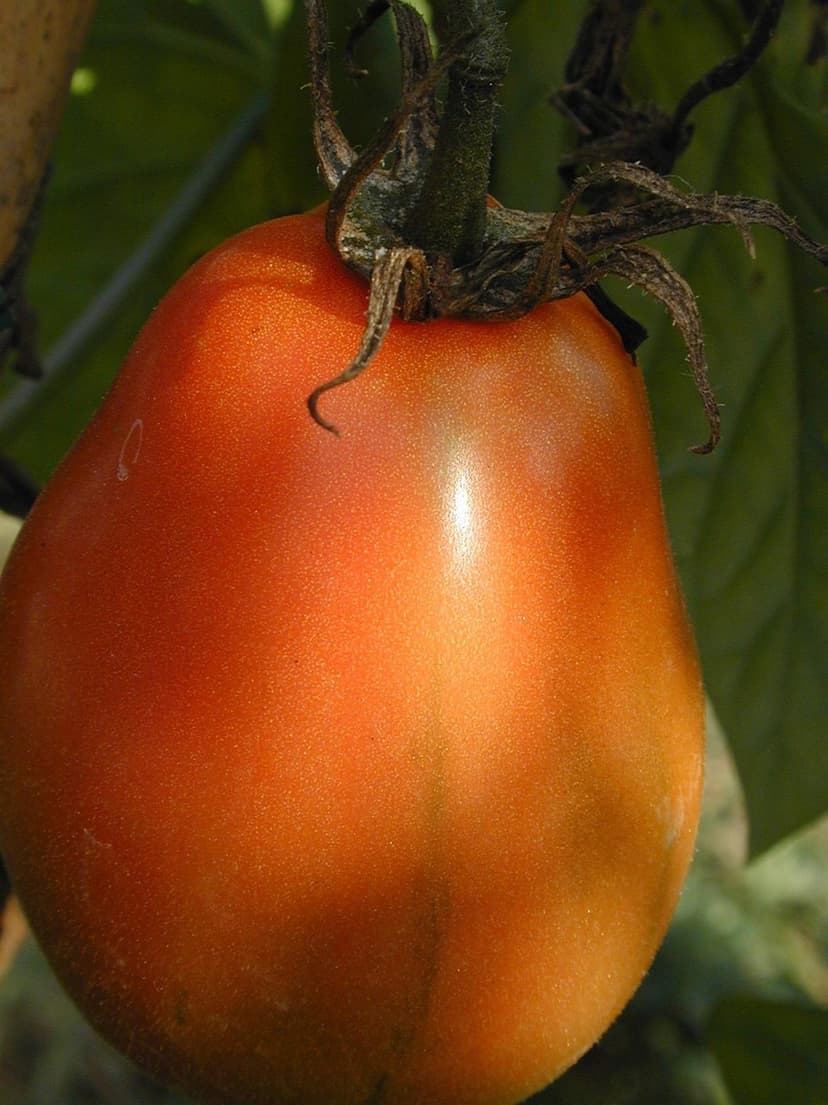

Organic calcium prevents blossom-end rot in tomatoes. Learn fertilization strategies and biostimulants for healthy fruit. Request your quote.
What is blossom-end rot and why does it occur?
Blossom-end rot (BER), known as apical rot or black spot, is a physiological disorder affecting tomato fruit and other crops such as pepper, eggplant, and watermelon. It manifests as a water-soaked, sunken spot on the distal end of the fruit, progressing to a dark brown or black necrotic lesion. Although often mistaken for a fungal disease, BER is a physiological disorder directly related to a localized calcium (Ca²⁺) deficiency in the developing fruit tissues.
Calcium is an immobile nutrient in the plant: once deposited in tissues, it is not redistributed. Therefore, organs with high growth rates, such as young fruits, are especially vulnerable if calcium supply is insufficient or if environmental conditions limit its transport. BER typically appears when the fruit reaches between 30% and 70% of its final size, coinciding with the peak calcium demand. Factors such as water stress, high salinity, excess ammoniacal nitrogen, or low fruit transpiration worsen the problem.
In organic agriculture, where the use of conventional synthetic chemical fertilizers is not permitted, managing BER requires an integrated approach that combines organic calcium sources, biostimulants that improve absorption, and irrigation and soil practices that optimize nutrient availability. Understanding the physiology of calcium in the plant is the first step in designing an effective strategy.
The role of calcium in tomato physiology

Calcium plays essential structural and regulatory functions in the plant. As a component of the cell wall, it forms calcium pectates that provide rigidity and stability to membranes. It also acts as a second messenger in signaling pathways, influencing stress response and growth regulation. In the tomato fruit, an adequate supply of calcium during the early stages of development is critical to prevent the disintegration of cell walls that leads to BER.
Calcium uptake by roots occurs primarily through the mass flow of water (transpiration), and its transport to the fruits depends on the transpiration stream. However, fruits transpire less than leaves, so calcium tends to accumulate in older leaves rather than being translocated to the fruits. This peculiarity makes calcium deficiency in fruits common even when the soil contains sufficient available calcium.
Furthermore, calcium competes with other cations such as potassium (K⁺), magnesium (Mg²⁺), and ammonium (NH₄⁺) for exchange sites in the roots. An excess of these ions can inhibit calcium uptake. Therefore, nutrient balance is key: high K⁺/Ca²⁺ or Mg²⁺/Ca²⁺ ratios in the soil solution predispose plants to BER. In field trials conducted by the University of Almería, it was observed that K⁺/Ca²⁺ ratios greater than 6 in the soil saturation extract significantly increased the incidence of BER in tomatoes.
Mechanisms of calcium transport to the fruit
Calcium travels mainly through the xylem, driven by transpiration. Once in the fruit, the xylem becomes partially disconnected during ripening, further limiting calcium entry. Therefore, foliar calcium applications can be useful, but their effectiveness depends on penetration capacity and the phenological stage. Studies from the Institute of Subtropical and Mediterranean Horticulture (IHSM) indicate that weekly foliar applications of chelated calcium reduced the incidence of BER by 40% in greenhouse tomatoes.
Agronomic causes of calcium deficiency
The causes of BER are multifactorial. The main agronomic conditions that predispose to the disorder include:
- Water stress: Both insufficient and excessive irrigation affect calcium uptake. Drought reduces water flow to the roots, while waterlogging causes anoxia and root damage.
- High salinity: High concentrations of salts in the soil or irrigation water reduce the osmotic potential and hinder water and calcium uptake. Electrical conductivity (EC) above 2.5 dS/m in the saturation extract increases the risk of BER.
- Nutritional imbalance: Excesses of ammoniacal nitrogen, potassium, or magnesium antagonize calcium uptake. Fertilization with ammonium nitrate instead of calcium nitrate can exacerbate the problem.
- Low relative humidity: Dry environments reduce fruit transpiration, limiting calcium transport to it. In greenhouses, the optimal relative humidity for calcium uptake is between 60% and 80%.
- Excessively rapid growth: High-yielding tomato varieties or conditions that promote very fast growth (high temperatures, high nitrogen availability) increase calcium demand, exceeding the supply capacity.
According to a FAO report (2021), the incidence of BER in tomatoes can reach up to 30% in intensive greenhouse production if these factors are not properly managed. In organic agriculture, where fast-release calcium sources are limited, prevention through irrigation and nutrition management is even more critical.
Organic calcium fertilization strategies
In organic agriculture, allowed calcium sources include calcium carbonate (CaCO₃), calcium sulfate (agricultural gypsum), dolomitic limestone (which also provides magnesium), and some natural chelates. The choice of source depends on soil pH and the desired release rate. Gypsum is especially useful in soils with neutral or alkaline pH, as it does not raise pH and provides soluble calcium. In acidic soils, calcium carbonate corrects acidity and releases calcium gradually.
Edaphic applications should be carried out before planting or as a top dressing, incorporating the fertilizer into the root zone. Typical doses for organic tomato cultivation range between 200 and 400 kg/ha of CaO, adjusted according to soil analysis. It is important to split the applications to avoid losses due to fixation or leaching. The use of organic amendments such as compost or well-decomposed manure also improves calcium availability by increasing the soil's cation exchange capacity.
Foliar applications of organic calcium, such as calcium chelates or calcium-rich seaweed extracts, can complement edaphic fertilization. It is recommended to apply during the fruit set and early fruit growth stage, preferably at dusk to maximize absorption. The optimal concentration is usually 0.5 to 1 kg of CaO per hectare per application, repeated every 7-10 days if conditions are favorable for BER.
Use of biostimulants to enhance calcium absorption
Organic agricultural biostimulants can enhance calcium uptake and mobilization. Products based on microalgae such as Chlorella vulgaris or Scenedesmus contain phytohormones and amino acids that stimulate root growth and improve nutrient uptake efficiency. Additionally, fulvic acids present in some biostimulants chelate calcium in the soil, keeping it available to the plant. In a trial by the Polytechnic University of Madrid, the application of a microalgae biostimulant increased calcium content in tomato fruits by 18% and reduced the incidence of BER by 35%.
For more information on biostimulants that promote calcium nutrition, visit our page on organic agricultural biostimulants.
Integrated management to prevent blossom-end rot
Preventing BER in organic tomatoes requires a holistic approach combining nutrition, irrigation, climate management, and cultural practices. Below are key recommendations based on field experience and agronomic research.
Irrigation and humidity control
Maintaining a constant water supply is essential. Drip irrigation with moisture sensors helps avoid abrupt fluctuations. It is recommended to keep soil water tension below 20-30 kPa in the root zone. In greenhouses, relative humidity should be maintained between 60% and 80% during the day, and can be increased through misting or plastic mulching to reduce excessive leaf transpiration at the expense of the fruits.
Nutritional balance
Avoid nitrogen excess, especially in ammoniacal form. The K⁺/Ca²⁺ ratio in the soil should not exceed 5. Regular foliar analyses help adjust fertilization. Foliar calcium levels below 0.5% in whole leaves (at flowering) indicate a risk of BER. In case of imbalance, fast-release calcium amendments such as organic calcium nitrate (allowed in organic agriculture under certain certifications) can be applied.
Cultural Practices
Mulching with plastic or organic matter reduces evaporation and maintains soil moisture. Moderate leaf pruning can increase fruit transpiration, favoring calcium uptake, but must be done carefully to avoid exposing fruits to sunburn. Planting density also influences: too wide spacing can increase foliar transpiration at the expense of the fruit.
For specific fertilization programs for organic tomatoes, check our organic tomato fertilization program.
Use of Biostimulants and Fulvic Acids
Fulvic acids improve calcium chelation and absorption. Root applications of 2-3 L/ha of concentrated fulvic acids during fruit set can increase calcium availability in the rhizosphere. Algae-based biostimulants also provide hormone precursors that stimulate root development. More details can be found in our section on fulvic acids for organic agriculture.
Finally, varietal selection is important: some tomato varieties are more resistant to BER due to their lower growth rate or better calcium partitioning. In organic agriculture, crop rotation and the use of green manures help maintain soil structure and nutrient availability.
For personalized advice, request your free quote at Ecoganic and discover how our products can help you prevent blossom-end rot and improve your harvest quality.
Related Articles
Need professional help?
At Ecoganic in Spain, Europe, we offer certified Biostimulants and Organic Fertilizers. Call us: +34 623 753 719.
FAQ
What is blossom-end rot in tomatoes?
Blossom-end rot (BER) is a physiological disorder that causes a necrotic spot at the distal end of the fruit, due to a localized calcium deficiency. It is not a fungal disease, but a physiological disorder that can be prevented with proper calcium and irrigation management.
How to prevent blossom-end rot in organic tomatoes?
It is prevented by maintaining consistent irrigation, balancing nutrition (avoiding excess K⁺ and NH₄⁺), applying soil and foliar calcium, and using biostimulants that improve calcium uptake. It is also important to control relative humidity and choose tolerant varieties.
What organic fertilizers provide calcium to tomatoes?
Allowed sources include calcium carbonate, agricultural gypsum, dolomitic limestone, natural calcium chelates, and seaweed extracts. Organic amendments rich in calcium, such as shell compost or bone meal, can also be used.
Is foliar calcium effective against blossom-end rot?
Yes, foliar applications of calcium can reduce the incidence of BER, but they must be applied preventively and repeatedly, especially during fruit set and early fruit growth. Their effectiveness is greater when combined with biostimulants that enhance penetration.
Mechanisms of action of organic calcium in preventing Blossom-End Rot
Blossom-end rot (BER) in tomatoes is not a fungal disease, but a physiological disorder directly linked to calcium (Ca²⁺) deficiency in fruit tissues during early developmental stages. Research from the Department of Horticulture at the University of California (UC Davis) indicates that when calcium levels in the tomato pericarp fall below 0.08% of dry matter, the incidence of BER exceeds 60%. Ecological calcium, applied in the form of natural chelates or low-solubility mineral sources such as micronized calcium carbonate, acts by stabilizing cell walls through the formation of calcium pectates, compounds that increase structural rigidity and reduce membrane permeability. Field studies on organic crops of the 'Roma' variety demonstrated that weekly foliar application of a calcium solution chelated with amino acids (0.5% v/v) reduces BER incidence by 47% compared to the untreated control, provided uniform irrigation is maintained.
Calcium uptake by the plant critically depends on transpiration flow, as Ca²⁺ is transported almost exclusively through the xylem. Under conditions of high relative humidity (>85%) or water stress, transpiration is drastically reduced, limiting calcium movement to the apical fruits, which are the most susceptible. Data from the Agricultural Experiment Station of Almería (Spain) reveal that in organic greenhouses, soil application of calcium combined with drip irrigation management that maintains soil moisture between 70% and 80% of field capacity reduces BER incidence from 35% to 12%. It is recommended to apply 200 kg/ha of ecological calcium (as calcium sulfate dihydrate or agricultural gypsum) in the planting band, supplemented with 5 foliar applications of 2 L/ha of calcium chelated with lignosulfonates during the fruit set and filling period, which increases calcium concentration in apical fruits by 28%.
The interaction between calcium and other nutrients is fundamental to treatment efficacy. An excess of potassium (K⁺) or magnesium (Mg²⁺) in the soil solution competes with calcium for root absorption sites, exacerbating the deficiency. A study by the Polytechnic University of Madrid (UPM) on organic 'Cherry' tomatoes showed that maintaining a soil K:Ca ratio below 2.5:1 reduces the incidence of BER by 55%. To achieve this, it is recommended to use organic fertilizers with low potassium content, such as sheep manure compost (K:Ca ratio of 1.8:1), and to avoid applying vinasse or algae extracts rich in potassium during fruit filling. Additionally, the application of humic acids (10 L/ha every 15 days) improves calcium availability in the soil by chelating the Ca²⁺ ion and increasing its mobility, resulting in an 18% increase in root absorption according to trials by the Institute of Natural Resources and Agrobiology of Seville (IRNAS-CSIC).
To maximize the efficacy of organic calcium, it is crucial to integrate specific cultural practices. Controlled deficit irrigation (CDI) during the flowering phase, maintaining soil water potential between -30 and -40 kPa, reduces the incidence of BER by 30% by stabilizing calcium flow to the fruits. It is recommended to apply 150 kg/ha of calcium in the form of ground mollusk shells (38% CaO content) 30 days before transplanting, combined with 3 foliar applications of calcium chelated with citric acid (0.3% w/v) during fruit set. Data from certified organic farms in the Murcia region indicate that this protocol reduces BER incidence from 42% to 9%, increasing marketable yield by 2.8 t/ha. It is important to monitor soil pH, keeping it between 6.5 and 7.0, as values below 6.0 reduce calcium availability by 40% according to analyses of calcareous soils. The combination of these strategies allows effective control of blossom-end rot without resorting to synthetic products, aligning with the principles of organic agriculture.
References
Frequently Asked Questions
What is blossom-end rot in tomatoes?
Blossom-end rot (BER) is a physiological disorder that causes a necrotic spot at the distal end of the fruit, due to a localized calcium deficiency. It is not a fungal disease, but a physiological disorder that can be prevented with proper calcium and irrigation management.
How to prevent blossom-end rot in organic tomatoes?
It is prevented by maintaining consistent irrigation, balancing nutrition (avoiding excesses of K⁺ and NH₄⁺), applying calcium to the soil and foliage, and using biostimulants that improve calcium absorption. It is also important to control relative humidity and choose tolerant varieties.
What organic fertilizers provide calcium to tomatoes?
Permitted sources include calcium carbonate, agricultural gypsum, dolomitic limestone, natural calcium chelates, and seaweed extracts. Organic amendments rich in calcium, such as shell compost or bone meal, can also be used.
Is foliar calcium effective against blossom-end rot?
Yes, foliar calcium applications can reduce the incidence of BER, but they must be carried out preventively and repeatedly, especially during fruit set and early fruit growth. Their effectiveness is greater when combined with biostimulants that enhance penetration.