Efficient fertilization in peppers: what it depends on
Adjusting fertilization in peppers is a decision that mixes agronomy, economics and regulation. Input prices change, environmental requirements are applied differently depending on the area, and the crop still needs sufficient nutrients to flower, set fruit and size the fruits. The underlying question is not how much fertilizer can be removed, but how much each plot really needs, at what moment and in what form. When that question is answered with data from the plot itself, there is sometimes room to improve nutrient efficiency; when it is not answered, cutting doses blindly only brings deficiencies, physiological disorders and yield losses.
Pepper (Capsicum annuum) is a demanding crop that responds poorly both to a lack and to an excess of nutrients. It is sensitive to irrigation management, to salinity and to imbalances between elements, so that the same fertilization guideline can fall short in one plot and be excessive in another. The type of soil or substrate, the organic matter, the quality of the irrigation water, the growing system (greenhouse or open field), the planting density, the variety, the expected length of the cycle and the production level being pursued all play a part. That is why universal recipes work poorly and it is better to start from a diagnosis of your own, with soil and plant analysis, split fertigation and a nutrient balance that takes into account everything that enters the plot and everything that leaves it.
This guide reviews the ideas that usually come up when talking about lowering fertilization: whether more fertilizer means a bigger harvest, whether reducing the dose harms yield and whether all nutrients are adjusted in the same way. It also explains how a gradual, verifiable reduction is set out, what role organic matter and biostimulants can play, and what should be checked with the technical adviser and with the certification body before modifying a programme. The aim is for the decision to rest on more efficient fertilization and on observations from the plot itself, not on assumptions.
Greenhouse and open field: two different scenarios
The same crop is managed differently depending on where it is produced. In a greenhouse, irrigation water is practically the only water reaching the soil or substrate, so the salts supplied tend to accumulate if conductivity and drainage are not controlled; fine-tuning irrigation and the nutrient solution allows much to be refined, but it also means mistakes show up sooner. In the open field, rain can leach nitrate nitrogen out of the root zone, temperature and radiation vary from one year to the next and crop demand changes with them, so fertilization plans need more room for correction during the season.
Whether the crop is in soil or in substrate also matters. In soil there is a reserve of nutrients, a retention capacity and biological activity that cushion part of the errors. In substrate that cushioning is smaller and monitoring the supply and drainage solution becomes the main tool. These differences explain why what works on one holding cannot simply be transferred to another.
More fertilizer does not always mean more harvest
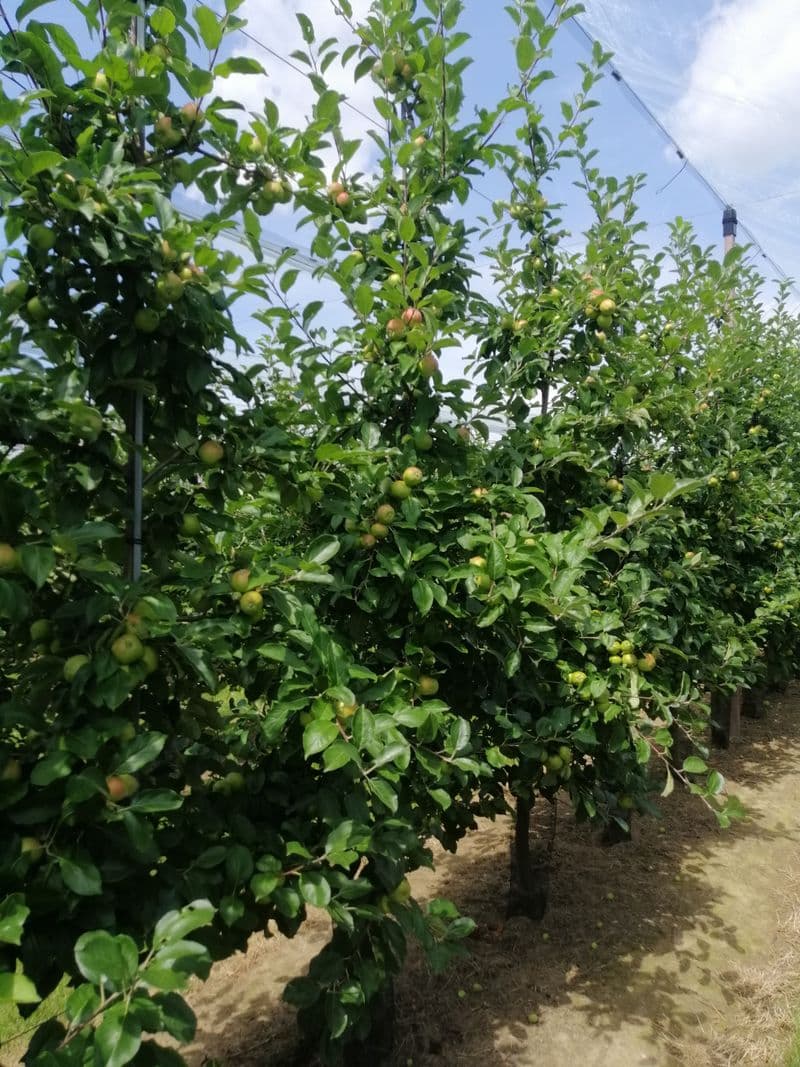
It is common to think that raising the fertilizer dose leads directly to raising production. In pepper, and especially with nitrogen in fertigation systems, the crop response has a limit: from a certain point on, each additional input stops translating into more fruits and becomes more vegetative mass, more salts in the soil and more nutrients that the crop does not use. Where that point lies cannot be stated in general terms. It depends on the soil, the water, the cycle and the reserves of the plot, and it is only known by observing the crop and measuring.
An excess of nitrogen, especially in the early stages, favours very leafy plants, with long internodes and soft tissues, which devote their energy to vegetative growth when what is sought is flowering and fruit set. Such a crop is usually more difficult to manage: there is more shading inside the plant, more humidity in the canopy and more work of pruning and aeration. In addition, nitrogen in nitric form moves with the soil water and can be washed below the root zone, so that part of what is applied is lost before the plant can take it up.
What matters is synchrony: that nutrient availability accompanies the demand of each stage. Pepper does not absorb everything at once; its demand grows gradually and changes throughout the cycle, with moments of greater requirement at rooting after transplanting, at flowering and fruit set and at fruit thickening. That is why the usual practice in fertigation consists of splitting the inputs, relying on soil analysis, monitoring the nutritional status of the plant and avoiding concentration peaks. Applying more does not replace applying well.
What an excess of nitrogen really costs
Beyond the expense of a fertilizer that is not used, the excess has agronomic and environmental costs. The salts coming from the fertilization or from the irrigation water can raise the salinity of the soil or the substrate and hinder the uptake of water and of other nutrients. Imbalances between nitrogen, potassium, calcium and magnesium also appear when one of them dominates in the nutrient solution. Certain fruit disorders, such as blossom-end rot, which is not a disease of infectious origin but a physiological disorder, are frequently associated with an irregular supply of calcium to the fruit, which can be influenced by irregular irrigation, by salinity and by imbalances between nutrients.
At the environmental level, the nitrates that escape from the root zone can reach aquifers and surface waters. That is why there are rules on nitrogen fertilization, which in areas declared vulnerable to nitrate pollution are set out in action programmes with their own conditions. What is required on each plot must be checked with the agricultural administration of the area or with the technical adviser, because it changes according to the territory. Keeping a record of what has been applied also makes it easier to comply with those conditions and to respond to the reviews of certification programmes or of buyers.
Reducing the dose: when it affects yield and when it does not
The opposite idea is also circulating: that any cut in fertilization will be paid for at harvest. The reality depends on the starting point. If the plot has been fertilized above what the crop can take up, there is room to adjust without harming production; if the programme is already tight, cutting back can indeed penalise. There is no way of knowing without a diagnosis, and that is why any reduction must be based on data: soil analysis, irrigation water analysis, crop monitoring and records of what has been applied and what has been harvested.
All nutrient sources should be counted, not only those entering through the irrigation head. The soil provides a reserve and mineralises organic matter during the cycle; irrigation water can carry nitrates, calcium, magnesium or other elements; residues of the previous crop, compost or manure applied before planting also release nutrients. If the fertilization plan ignores these inputs, the same thing ends up being supplied twice. Adjusting the programme means, to a large extent, no longer duplicating what the plot already offers.
The irrigation system determines how far refinement can go. With drip irrigation and fertigation, the nutrient solution can be modified at each irrigation according to demand, weather and crop status, which makes fine adjustment easier. With gravity irrigation, applications are coarser and less controllable, and cutting back without monitoring carries more risk. In both cases, the transition to lower inputs should be gradual and accompanied by leaf, soil or sap analysis, as advised by the agronomist.
There are also stages of the cycle in which reducing carries more risk. Establishment after transplanting, flowering and fruit set, and fruit enlargement are periods of high demand in which a stable supply should be maintained. If a cut is planned, it is usually made in the nutrients and phases where the diagnosis shows an excess, not linearly across the whole cycle. Tools that improve efficiency, such as splitting applications, matching supply to demand or using gradual-release sources permitted in the growing system, help to maintain supply when total amounts are fine-tuned.
How to adjust without compromising yield
A prudent procedure for reducing fertilizers in pepper follows ordered steps:
- Diagnose before transplanting. Soil or substrate analysis (nutrient availability, pH, salinity, organic matter and exchange capacity) and irrigation water analysis.
- Draw up a balance. Estimate what the crop removes, what the soil, water and organic amendments supply, and what may be lost through leaching or volatilisation.
- Split the applications. Distribute nitrogen and potassium across frequent, low-concentration irrigations, adjusted to the demand of each stage rather than to a fixed calendar.
- Monitor the crop. Combine leaf or sap analysis, measurement of the conductivity and pH of the solution, and regular observation of the plant.
- Change one factor at a time. Keep a comparison strip under the usual programme, so that any difference can be attributed to the change introduced.
- Keep records. Note applications, irrigations, observations and harvest so that the next season can be decided on your own data.
Taken together, these steps do not guarantee a specific result, but they make it possible to detect in time whether a cut is affecting the crop and to return to the previous programme before the damage is irreversible.
Crop signals and their limits
Observing the plant provides useful information: vigour, leaf colour, internode length, the balance between vegetative growth and fruit load, and the quality of what is harvested. However, many visual signals are ambiguous. Yellowing may be due to a lack of nitrogen, but also to root, irrigation or salinity problems; a defective fruit may have nutritional, water or climatic causes. Observation therefore guides, but analysis is what confirms, and the decision to cut back or reinforce a nutrient should not rest solely on the appearance of the plants.
Phosphorus and potassium are not adjusted in the same way as nitrogen
When nitrogen is reduced, it is tempting to cut phosphorus and potassium in the same proportion as well. There is no agronomic reason to do so automatically. Each nutrient behaves differently in the soil and fulfils a different function in the plant, and its adjustment responds to different criteria. Nitrogen is the nutrient that is lost most and the one most often supplied in excess, so it is usually the main candidate for adjustment; phosphorus and potassium require more caution.
Potassium is closely linked to fruit quality: size, firmness, colour and post-harvest storage depend in part on sufficient potassium nutrition during fruit set. Insufficient nutrition usually shows first in quality rather than in the number of fruits, and can go unnoticed until harvest. For this reason, during fruit set, potassium demand is usually high in relation to nitrogen demand, and the ratio between the two is adjusted to the stage instead of remaining fixed throughout the whole cycle. Reducing nitrogen does not oblige you to reduce potassium; what must be monitored is the balance between the two and with calcium and magnesium.
Phosphorus behaves differently: it moves little in the soil and tends to accumulate in plots that have been generously fertilized for years. It is usually applied at transplanting or before, so that it is available when the plant develops its root system. An excess of phosphorus can also interfere with the availability of micronutrients such as zinc or iron.
In summary, the reduction of fertilization is not uniform for all nutrients. Nitrogen is the one that usually offers the most room for optimisation, especially in systems with a risk of leaching; phosphorus and potassium are adjusted with analyses and with the demand of each stage; calcium, magnesium and micronutrients are monitored to avoid imbalances. An adequate balance matters more than a linear reduction.
The role of soil and plant analysis
To decide what can be adjusted, diagnosis is indispensable. Soil or substrate analysis reports the initial availability of nutrients, pH, salinity, organic matter and exchange capacity. With these data, a balance can be drawn up that takes into account inputs from fertilization, water and amendments, outputs through the harvest and losses through leaching or volatilisation. Foliar or sap analysis, for its part, shows the nutritional status of the plant at a specific moment and allows corrections to be made as you go. Reference values depend on the variety, the stage and the sampling method, so they are interpreted with the laboratory or with the technical adviser and are not copied from other people's tables.
Sampling matters as much as the analysis. An unrepresentative sample, taken on an atypical day or at an unusual point in the plot, leads to erroneous conclusions. It is advisable to repeat the sampling under the same conditions and at the same stages of each campaign, so that one year can be compared with another and it can be checked whether the changes introduced have had the expected effect.
Strategies for adjusting fertilization with judgement
Moving from «less dose» to «better efficiency» means changing approach. The strategy combines diagnosis, split fertigation, nutrient balance, water quality control and, where appropriate, gradual-release nutrient sources. None of these pieces works on its own and none guarantees the same result in every plot.
Split fertigation consists of supplying the nutrients dissolved in the irrigation water in small, frequent amounts, adjusted to demand. It reduces the concentration peaks that can damage roots and limits losses through leaching. In pepper, the usual starting point is moderate applications after transplanting, increasing them gradually towards flowering and fruit set and maintaining a stable supply during fruit swelling and harvest. The ratio between nitrogen, phosphorus and potassium in the nutrient solution is modified according to the stage and the results of the analyses; any reference ratio is a starting point, not a fixed target.
Water quality conditions a good part of the programme. Water with an appreciable content of bicarbonates, salts or nitrates modifies the pH of the solution, the availability of micronutrients and the amount of nitrogen that already arrives with the irrigation. Analysing the water at the start of the cycle and reviewing it if the source changes allows those inputs to be discounted and the pH to be corrected on a reasoned basis. In soilless cultivation, periodic measurement of conductivity and pH in the supply and in the drainage indicates whether salts are accumulating and whether the crop is taking up what is supplied.
Nutrient sources and synchrony with demand
The chemical form of the nutrient and its release rate influence how much is used. Nitric nitrogen is immediately available but leaches easily; ammoniacal nitrogen is better retained in the soil and is transformed into nitric nitrogen over time; organic sources release nutrients gradually as they mineralise, at a rate that depends on temperature, moisture and the biological activity of the soil. Combining fast-acting and gradual sources is one way of matching supply to crop demand.
There are also controlled-release fertilizers and nitrification stabilisers designed to reduce losses, but their use depends on the cultivation system. In organic production only permitted inputs may be used, and any fertilizer, amendment or biostimulant must be confirmed with the certification body before it is incorporated into the programme. In that context, gradual release is sought above all through well-stabilised organic matter, fertilizers of organic origin and good irrigation management.
Organic matter and soil structure
Organic matter contributes to nutritional efficiency in several ways: it improves soil structure, favours water and nutrient retention, sustains biological activity and releases nutrients gradually as it decomposes. Well-matured compost, composted manure, green manures and crop residues incorporated with judgement form part of that base. Rotation and tillage also count, as they influence the structure and aeration of the profile.
Compost and manure supply nutrients that must be discounted from the fertilization plan, and their composition varies greatly from one batch to another, so it is advisable to know it through analysis and to check with the certification body that the origin is permitted in organic production. A soil with organic matter, without compaction and with regular moisture offers better conditions for soil life, and that base is more reliable than entrusting the adjustment of fertilization to a single product.
Mistakes to avoid when cutting back on fertilization
- Reducing nitrogen, phosphorus and potassium equally without looking at the analyses.
- Changing several factors at once, so that afterwards it is not known what has influenced the result.
- Looking only at the quantity of harvest and not at fruit quality or its post-harvest keeping.
- Forgetting irrigation water and organic amendments when calculating what the crop already receives.
- Interpreting an analysis with reference values from another variety, another cultivation system or another stage.
- Incorporating a new product without reading the label or confirming, where applicable, that it is permitted in organic production.
Biostimulants: what they are and how they fit into the programme
Regulation (EU) 2019/1009 governs CE-marked fertilising products and includes plant biostimulants among them; its provisions have applied since July 2022. Under that standard, a plant biostimulant is a product whose function is to stimulate plant nutrition processes independently of its nutrient content, with the sole aim of improving one or more characteristics of the plant or its rhizosphere, including nutrient use efficiency, tolerance to abiotic stress or crop quality. This is a legal definition of the category and not a guarantee of effect for a specific product.
A biostimulant is not a fertilizer in the strict sense, nor is it a plant protection treatment. It does not replace fertilization and must not be used on its own to justify cutting back on fertilizer. Within a balanced nutrition programme, it can contribute to the overall vigour of the crop, and its practical value is assessed on each plot; it is not taken for granted. Products may be based on seaweed or microalgae extracts, amino acids, humic and fulvic substances or other components, and each has its own data sheet, label and conditions of use. Ecoganic offers biostimulants and organic fertilizers, and the composition and method of use of each product are set out in its data sheet and on its label.
How to incorporate them into the programme by stage
If you decide to include a biostimulant, it is best to do so methodically. Applications are usually planned at the times of greatest demand or greatest risk of stress for the crop: transplanting and rooting, vegetative development, flowering and fruit set, and fruit swelling. The product, the application route (foliar or through irrigation), the dose, the frequency and possible tank mixes are governed by the product label and by the technical adviser's recommendations. Foliar applications are avoided during the hours of peak radiation and heat, and compatibility with the other products in the tank mix must be checked before application.
To find out whether a biostimulant contributes anything on a specific plot, the most reliable approach is to test it in a comparison strip, managed identically to the rest, and record the differences in vigour, fruit quality and yield. Until such a check exists, fertilization is maintained according to the diagnosis and not according to the expectations placed in the product.
What to ask the supplier and what to check before use
- The data sheet and the label, with the composition, method of use, dose and precautions.
- The reference to the legislation applicable to the product, such as Regulation (EU) 2019/1009 when it is marketed as an EU fertilising product.
- If it is to be used in organic production, confirmation that it is permitted, which must always be obtained from the certification body.
- Storage conditions and compatibility with other products in the programme.
Conclusion: adjust methodically
Reducing fertilizers in pepper is not about applying less, but about applying better. If the plot receives more than the crop uses, there is room to adjust; if the programme is already finely tuned, cutting back carries risks. The difference is only discovered by measuring: soil, water, plant, inputs and yield.
A reasonable path starts with the diagnosis, deducts all nutrient inputs, splits the applications, treats nitrogen, phosphorus and potassium separately, looks after organic matter and water, and tests changes in a strip before extending them to the rest of the plot. Biostimulants can be one more piece of the programme, never a substitute for fertilizer, and every input must be checked against its label, with the technical adviser and, in organic production, with the certification body.
Each plot requires its own plan. A technician who knows the soil, the water and the growing system helps to translate these ideas into concrete decisions and to review them season after season with the data that accumulate.
Related articles
Do you need professional help?
At Ecoganic in Spain, Europe, we offer biostimulants and organic fertilizers. Call us: +34 623 753 719.
Request your free quote
Frequently asked questions
Is it possible to reduce fertilizers in pepper without losing yield?
It depends on the starting point. If the plot receives more nutrients than the crop can use, there is usually room to adjust; if the programme is already tight, cutting back may affect the harvest. The prudent approach is to decide on the basis of soil, water and plant analyses, make changes gradually, compare with a strip that keeps the usual programme and record the results from the plot itself.
Which nutrients allow more adjustment in pepper?
Nitrogen usually offers the most room, especially where there is a risk of leaching, because it is the nutrient most easily lost and the one most often supplied in excess. Potassium is closely linked to fruit quality and phosphorus tends to accumulate in the soil, so both are adjusted with analyses and according to the demand of each phenological stage, not in the same proportion as nitrogen.
Do biostimulants make it possible to reduce fertilization?
They should not be used to justify a cutback on their own. A biostimulant does not replace fertilization and is not a plant protection treatment; within a balanced programme it can contribute to the general vigour of the crop. Its value is assessed on each plot, for example with a comparison strip, and its use is governed by the product label.
Where should you start when adjusting pepper fertilization?
With diagnosis: soil or substrate analysis, irrigation water analysis and crop monitoring with foliar or sap analyses. With these data a nutrient balance is drawn up, the supply of nitrogen and potassium is split into fractions and adjusted to the demand of each stage. Changes should be gradual and based on data, not assumptions.
What role does soil organic matter play?
Organic matter improves soil structure, helps to retain water and nutrients and releases them gradually as it decomposes. Compost and composted manure also supply nutrients that must be deducted from the fertilization plan, and their composition varies between batches, so it is advisable to analyse them. In organic production, the origin of the amendments must be confirmed with the certification body.
What should be checked if the pepper is grown organically?
That every fertilizer, amendment or biostimulant is permitted in organic production, something that must be confirmed with the certification body before use. Regulation (EU) 2019/1009, applicable since July 2022, regulates EU fertilising products, including plant biostimulants, but the fact that a product complies with that regulation does not in itself mean that it is permitted in organic production.
Are there rules on the use of nitrogen fertilizers?
Yes, and they vary by territory. In areas declared vulnerable to nitrate pollution, action programmes with their own conditions apply. It is advisable to consult the agricultural administration for the area or the technical adviser on which conditions affect each plot.