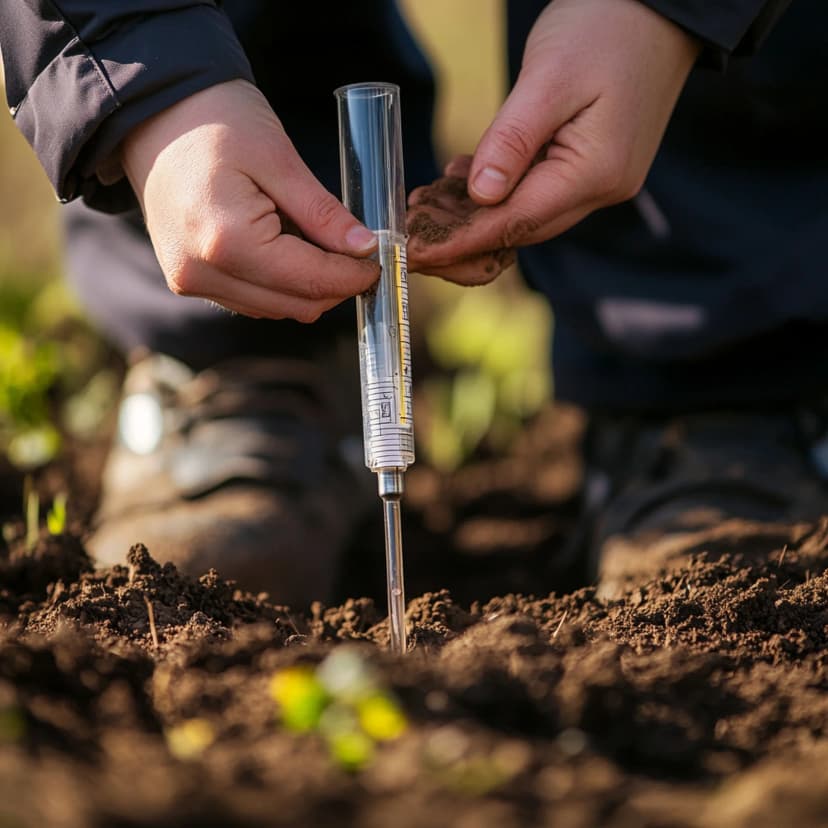

Discover how ammoniacal nitrogen promotes uniform bud break in organic vines. Optimise your crop with our solutions. Request your quote.
Introduction
Ammoniacal nitrogen is an essential component in the nutrition of organic vines, directly influencing uniform bud break in the plants. This element, when applied correctly, promotes balanced and healthy growth, which is crucial for maximising productivity in organic viticulture. With the growing interest in sustainable agricultural practices, understanding the role of ammoniacal nitrogen becomes fundamental for winegrowers seeking to optimise their yields without resorting to synthetic fertilisers.
Uniform bud break not only affects harvest quality but also improves the plants' resistance to adverse conditions. An adequate supply of ammoniacal nitrogen can contribute to better synchronisation of bud break, resulting in more homogeneous development of the grape clusters and, consequently, in more predictable and controlled production.
Importance of Nitrogen in the Vine

Nitrogen is one of the most important nutrients for plant growth, playing a key role in the synthesis of amino acids and proteins. In the case of the vine, nitrogen contributes to the development of leaves and vegetative structures that are vital for photosynthesis. An adequate supply of this nutrient promotes vigorous foliage growth, which is essential for the accumulation of energy reserves needed during fruit ripening.
In organic viticulture, ammoniacal nitrogen presents itself as an attractive option due to its rapid availability to plants. This type of nitrogen is absorbed in its ionised form, which allows plants to use it efficiently. In addition, its application can help correct nutritional deficiencies that may exist in the soil, favouring more balanced and uniform growth.
Role of Nitrogen in the Vegetative Phase
During the vegetative phase, ammoniacal nitrogen plays a crucial role in biomass development. Applications of ammoniacal nitrogen can increase the growth rate by 20-30% compared with its absence. This translates into a greater number of leaves and an increase in leaf area, which in turn enhances the photosynthetic capacity of the plant. This process is vital, since a greater production of photosynthates translates into better cluster formation and a larger fruit size.
Relationship between Nitrogen and Grape Quality
Grape quality is closely related to nitrogen nutrition. An adequate supply of ammoniacal nitrogen not only improves vegetative growth but also influences the accumulation of sugars and phenolic compounds in the grapes. These compounds are fundamental for producing quality wines. Under optimal conditions, the sugar concentration can increase by 15-25%, which improves the quality of the final wine. In addition, good nitrogen management can increase the concentration of anthocyanins, which are responsible for the colour and stability of the wine.
Effects of Ammoniacal Nitrogen
The effects of ammoniacal nitrogen on the vine are multiple and can be observed at various stages of growth. One of the main benefits is the improvement in budbreak and bud development. When applied at the right time, this type of nitrogen can stimulate an earlier start to budbreak, which contributes to an earlier and potentially higher harvest.
Furthermore, ammoniacal nitrogen can influence fruit quality. By promoting adequate vegetative growth, it contributes to the formation of more homogeneous bunches with a better distribution of sugars, which is essential for the production of high-quality wines. Agronomic studies have shown that the application of ammoniacal nitrogen at key stages of plant development can result in a significant increase in grape production.
Stimulation of Budbreak and Bud Development
The effects of ammoniacal nitrogen are particularly evident during the budbreak phase. The application of ammoniacal nitrogen can induce a advance in budbreak of up to 10 days compared with untreated plants. This advance can be crucial in regions where the growth window is short. In addition, ammoniacal nitrogen has been observed to increase the rate of bud formation by 15-20%, which can result in a greater number of bunches per plant.
Improvement in Stress Resistance
Ammoniacal nitrogen also contributes to the resistance of plants to stress factors, such as droughts or diseases. An adequate supply of nitrogen can improve the ability of plants to withstand adverse conditions, increasing the production of secondary metabolites that act as natural defences. Under water stress conditions, plants with a good supply of ammoniacal nitrogen can maintain a higher photosynthesis rate, thus favouring their growth and development.
Management of Ammoniacal Nitrogen
The proper management of ammoniacal nitrogen is crucial to maximising its benefits in the vine. Soil analysis is recommended to determine the specific nitrogen requirements of each plot. Application can be carried out through fertigation or by means of foliar applications, depending on the plant's development phase and environmental conditions.
It is important to adjust the doses of ammoniacal nitrogen according to the state of the plant and the climatic conditions. Generally, an initial application can be made at the start of budbreak, followed by additional applications during active growth. This approach allows winegrowers to maintain a nutritional balance that favours uniform budbreak and fruit development.
Fertigation as an Application Method
Fertigation is one of the most effective methods for applying ammoniacal nitrogen in the vine. This system not only allows a uniform distribution of nitrogen, but also reduces the risk of leaching. Under high humidity conditions, fertigation has been shown to allow more efficient use of nitrogen, reducing losses through runoff by 30-40%. Applications of ammoniacal nitrogen are recommended every 2-4 weeks during the plant's active growth phase.
Foliar Applications and their Efficiency
Foliar applications of ammoniacal nitrogen can be particularly effective in situations where the soil has limitations in the availability of this nutrient. Foliar application allows rapid absorption and can be carried out at critical moments, such as during the start of flowering. Under optimal conditions, foliar applications have been observed to increase the nitrogen concentration in the leaves by 50-60% compared with untreated plants.
Benefits of Uniform Budbreak
Uniform budbreak in the vine not only improves the quality and quantity of the harvest, but also makes crop management easier. Homogeneous growth allows for a more efficient harvest and reduces the possibility of disease, since all parts of the plant receive the light and air necessary for optimal development. This is especially relevant in high-humidity conditions, where plants may be more susceptible to pests and diseases.
In addition, uniform budbreak contributes to a better distribution of water and nutritional resources, since all parts of the plant grow at the same rate, avoiding internal competition for these resources. This translates into more efficient water use, a critical factor in sustainable agriculture, especially in regions where water stress is a constant challenge.
You may be interested in: Natural bioprotectants for crops.
Impact on Harvest and Profitability
Uniform budbreak also has a direct impact on the profitability of viticulture. Balanced growth of the bunches allows for a more homogeneous harvest, which facilitates picking and reduces operating costs. In economic terms, it has been estimated that the implementation of practices that favour uniform budbreak can increase yields by 15-20%, which translates into a significant increase in crop profitability.
You may be interested in: Certified organic fertilisers.
Reduction of Diseases and Pests
Uniform growth also helps to reduce the incidence of diseases and pests. Plants with homogeneous development have better air circulation and exposure to sunlight, which reduces humidity in the lower part of the plant, an environment favourable for the development of fungi and bacteria. This can result in a reduction of up to 30% in the use of fungicides and other chemical treatments, thus promoting more sustainable and environmentally friendly practices.
You may be interested in: Organic agricultural biostimulants.
Related articles
Do you need professional help?
At Ecoganic in Spain, Europe, we offer Biostimulants and Organic Fertilisers. Call us: +34 623 753 719.
Request your free quote
Conclusions
In conclusion, ammoniacal nitrogen plays a fundamental role in the uniform budbreak of organic vines. Its ability to stimulate balanced and healthy growth can make the difference in the quality and quantity of harvests. Growers who implement appropriate ammoniacal nitrogen management strategies will be better positioned to face the challenges of modern viticulture, guaranteeing sustainable and profitable production.
References
Frequently Asked Questions
What is ammoniacal nitrogen?
Ammoniacal nitrogen is a form of nitrogen found in the soil that plants can absorb quickly. It is essential for protein synthesis and plant growth.
How does ammoniacal nitrogen affect the vine?
Ammoniacal nitrogen improves budbreak and bud development in the vine, resulting in a more uniform, higher-quality harvest.
What is the best way to apply ammoniacal nitrogen to the vine?
It is recommended to apply ammoniacal nitrogen through fertigation or foliar applications, adjusting the doses according to the condition of the plant and environmental conditions.
What benefits does uniform budbreak bring to the vine?
Uniform budbreak improves harvest quality, makes crop management easier and reduces susceptibility to disease, resulting in more sustainable production.