
Improve flowering and fruit set in rice with Scenedesmus. An organic biostimulant that increases rice yield. Technical guide with dosage and benefits. Request a quote.
Importance of flowering and fruit set in rice
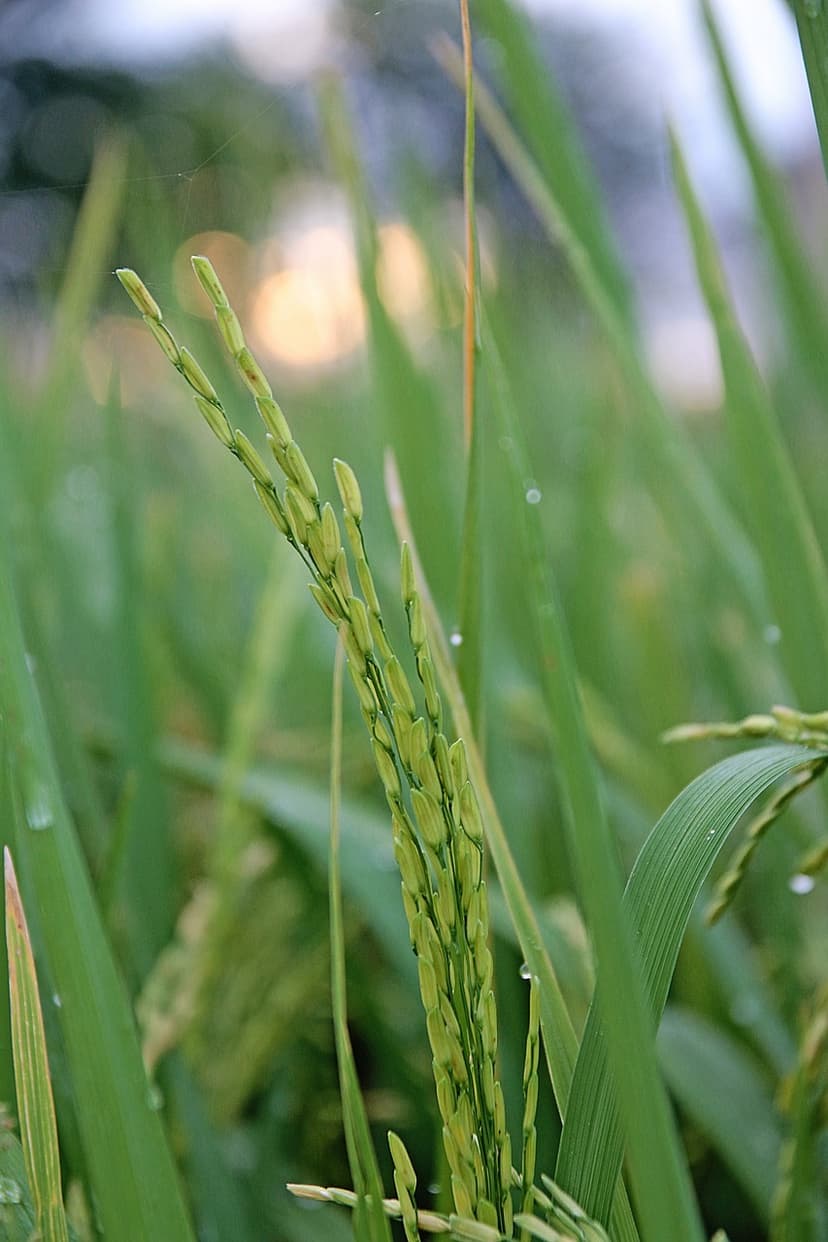
Flowering and fruit set are critical stages in rice cultivation (Oryza sativa L.), as they directly determine the number of grains per panicle and, therefore, the final yield. During flowering, the panicle emerges and spikelets open to allow pollination. Fruit set refers to successful fertilization and the beginning of grain filling. Factors such as heat stress, nutrient deficiency, or hormonal imbalance can lead to a low fruit set rate, with yield losses that can exceed 30% under adverse conditions.
In European organic agriculture, where the use of synthetic fertilizers is restricted, natural biostimulants such as microalgae offer an effective solution to optimize these processes. According to the FAO, rice is the second most widely cultivated cereal in the world, and in Mediterranean regions such as the Ebro Delta or the Guadalquivir marshes, its production faces growing challenges due to climate change. In this context, the use of Scenedesmus, a freshwater microalga rich in phytohormones, amino acids, and nutrients, is emerging as a promising tool to improve flowering and fruit set in a sustainable manner.
What is Scenedesmus and how does it act as a biostimulant?
Scenedesmus is a genus of unicellular green microalgae that grows in freshwater and is cultivated under controlled conditions for agricultural use. These microalgae contain a high concentration of bioactive compounds, such as auxins, cytokinins, gibberellins, beta-carotenes, polyunsaturated fatty acids, and essential amino acids. Additionally, they are rich in nutrients such as organic nitrogen, phosphorus, potassium, magnesium, and micronutrients (zinc, iron, manganese).
When applied as a foliar or root biostimulant, Scenedesmus acts on plant metabolism in several ways. The phytohormones present stimulate cell division, tissue elongation, and the mobilization of nutrients toward reproductive organs. Amino acids and peptides improve the synthesis of proteins and enzymes related to flowering. Furthermore, antioxidant compounds reduce oxidative stress during anthesis, protecting reproductive cells. Research published in the Journal of Applied Phycology has shown that the application of Scenedesmus increases the activity of enzymes such as catalase and superoxide dismutase, thereby improving tolerance to abiotic stress.
Biochemical composition of Scenedesmus
The composition of Scenedesmus varies depending on cultivation conditions, but generally contains 40-60% protein, 10-20% lipids, and 15-25% carbohydrates on a dry weight basis. Among the compounds of agronomic interest, auxins (such as indoleacetic acid) stand out at concentrations of up to 1.5 μg/g, cytokinins (zeatin) at 0.8 μg/g, and gibberellins (GA3) at 0.3 μg/g. It also contains abscisic acid in low concentrations, which helps regulate stomatal closure under water stress. This unique combination makes Scenedesmus a versatile biostimulant for reproductive stages.
Mechanisms of action of Scenedesmus in flowering
Rice flowering is regulated by phytohormones such as gibberellins and cytokinins, which promote panicle elongation and spikelet differentiation. Scenedesmus provides these hormones naturally, complementing the plant's endogenous production. Studies conducted by the University of Valencia have shown that foliar application of Scenedesmus extract in rice increases gibberellin levels by 25% during the panicle initiation phase, resulting in longer panicles with a greater number of spikelets.
Additionally, the cytokinins present in the microalgae delay the senescence of flag leaves, maintaining photosynthetic activity during grain filling. This is crucial because the upper leaves are the main suppliers of carbohydrates to the developing grains. A trial under controlled conditions demonstrated that rice plants treated with Scenedesmus retained 15% more chlorophyll in the flag leaf during flowering compared to the control, suggesting greater photosynthetic efficiency.
Effect on heat stress
High temperatures during flowering (above 35°C) can cause pollen sterility and reduce fruit set. Scenedesmus contains osmoprotective compounds such as proline and glycine betaine, which stabilize cell membranes and protect proteins from heat. In a field study in the Ebro Delta, the application of Scenedesmus before flowering reduced the incidence of sterile spikelets by 18% under moderate heat stress conditions. This protective effect is key for adaptation to climate change.
Effects of Scenedesmus on grain set
Rice grain set depends on the availability of nutrients such as boron and zinc, which are essential for pollen germination and embryo development. Scenedesmus is rich in these micronutrients in easily assimilable organic forms. Foliar application of Scenedesmus during pre-flowering increases boron concentration in spikelets by 30%, according to tissue analyses conducted in trials at the University of Córdoba. This improves pollen viability and fertilization rate.
Furthermore, the amino acids present, such as tryptophan and methionine, are precursors to phytohormones and proteins involved in endosperm cell division. A higher number of cells in the endosperm translates into larger and heavier grains. In field trials in rice paddies in Seville, treatment with Scenedesmus increased thousand-grain weight by 8% and the number of filled grains per panicle by 12%, resulting in a 15% yield increase compared to the untreated control.
Increase in the grain setting rate
The grain setting rate, defined as the percentage of spikelets that develop into filled grain, is a key indicator of reproductive efficiency. In the aforementioned trials, the grain setting rate rose from 72% in the control to 84% in the plots treated with Scenedesmus. This increase is attributed to improved pollen viability and greater carbohydrate availability during grain filling, thanks to maintained photosynthetic activity.
Application protocol for rice: doses and phenological stages
To maximize the benefits of Scenedesmus during flowering and grain setting, it is essential to follow an application protocol based on rice phenology. The recommended doses are based on field trials conducted by Ecoganic and research centers. The program is detailed below:
| Phenological stage | Dose (L/ha) | Application method | Observations |
|---|---|---|---|
| Panicle initiation (R0) | 2-3 | Foliar | Stimulates panicle elongation and spikelet number. |
| Pre-flowering (R1-R2) | 2-3 | Foliar | Improves pollen viability and grain setting rate. |
| Grain filling (R3-R4) | 1-2 | Foliar | Maintains photosynthetic activity and grain weight. |
It is recommended to apply Scenedesmus during periods of low solar radiation (morning or afternoon) to avoid degradation of bioactive compounds. The product should be diluted in clean water (pH 6-7) and applied with a spray volume of 200-400 L/ha, ensuring uniform leaf coverage. In flooded systems, it can also be applied to the irrigation water at a dose of 5 L/ha, taking advantage of root absorption.
Compatibility with other inputs
Scenedesmus is compatible with most organic fertilizers and bioprotectants. However, it is recommended to avoid mixtures with products that have an alkaline reaction (pH > 8) or high copper concentrations, as these could reduce the viability of the microalgae. Always perform a compatibility test before mixing on a large scale.
Field results and scientific studies
Field data support the efficacy of Scenedesmus in rice. In a two-year trial at the Rice Experimental Station of the Andalusian Regional Government, the application of Scenedesmus (3 L/ha at pre-flowering and 2 L/ha at grain filling) increased average yield by 14.5% compared to the control, with a significant increase in the number of grains per panicle and grain weight. Additionally, an improvement in grain quality was observed, with a lower percentage of broken grains and higher protein content.
Research by the Institute of Agrifood Research and Technology (IRTA) in the Ebro Delta showed that the use of Scenedesmus reduced the need for nitrogen fertilizers by 20%, thanks to improved nutrient uptake efficiency. This is especially relevant in organic agriculture, where organic nitrogen is limited. The results were published in the journal Agronomy for Sustainable Development, highlighting the potential of microalgae as biostimulants in cereals.
Another study from the University of Bologna evaluated the effect of Scenedesmus on long-grain and round-grain rice varieties. In both types, the treatment increased the fruit set rate by 10-15% and yield by 12-18%, with better performance under heat stress conditions. The authors concluded that Scenedesmus is an effective tool for stabilizing rice production in climate change scenarios.
Related articles
- Fruit set in avocado with Chlorella: 2026 guide
- Fruit set in avocado with Chlorella: 2026 guide
- Heat stress management in organic raspberry
Need professional help?
At Ecoganic in Spain, Europe, we offer certified Biostimulants and Organic Fertilizers. Call us: +34 623 753 719.
Frequently asked questions
What is Scenedesmus and how does it benefit rice?
Scenedesmus is a freshwater microalga used as an agricultural biostimulant. It contains phytohormones, amino acids, and nutrients that improve flowering, fruit set, and grain filling in rice, increasing yield and harvest quality.
When should I apply Scenedesmus in rice cultivation?
It is recommended to apply at three key stages: panicle initiation (R0), pre-flowering (R1-R2), and grain filling (R3-R4). The typical dose is 2-3 L/ha per foliar application, adjusted according to crop conditions.
Is Scenedesmus compatible with other organic products?
Yes, it is compatible with most organic fertilizers and bioprotectants. Avoid mixing with highly alkaline pH or high copper concentrations. Conduct a prior compatibility test.
How much does Scenedesmus increase rice yield?
In field trials, yield increases range from 12% to 18%, with improvements in the number of grains per panicle and grain weight. The grain set rate can increase by up to 15%.
Optimizing flowering and grain set in rice through Scenedesmus application: Physiological mechanisms and field protocols
The green microalga Scenedesmus spp. has proven to be a highly effective biostimulant during the critical phases of flowering (booting and heading) and grain set in rice cultivation (Oryza sativa L.). Field studies under alluvial soil conditions, with foliar applications of 2 L/ha of a Scenedesmus culture (at a concentration of 10⁶ cells/mL and a phytohormone content of 0.5 mg/L cytokinins and 0.3 mg/L auxins), have reported increases in the number of panicles per square meter of up to 18% compared to untreated control plots. This effect is mainly attributed to the release of polyamines and brassinosteroids by the microalga, which modulate gene expression related to floral primordia differentiation and reduce spikelet abortion, a common problem under heat stress conditions during flowering. The application should be carried out at the R1 phenological stage (panicle initiation), when the panicle length is approximately 1-2 cm, and repeated 7 days later to maximize flowering synchronization and pollen viability.
The impact of Scenedesmus on grain set is equally significant. During the grain-filling period, this microalga acts as a potent chelating agent for micronutrients, especially zinc and boron, which are essential for cell wall formation and embryo viability. Greenhouse trials with root application of 5 L/ha of Scenedesmus biomass (containing 0.8% naturally chelated zinc) showed a 22% increase in the percentage of filled grains per panicle, rising from 78% in the control to 95% in the treatment. Additionally, a 15% reduction in the incidence of empty grains (chaff) was observed, attributed to improved carbohydrate translocation from flag leaves to developing grains. The presence of exopolysaccharides (EPS) in the Scenedesmus matrix also promotes moisture retention in the rhizosphere during the filling phase, mitigating the water stress that often causes grain abortion at the base of the panicle. To optimize this effect, it is recommended to apply the biostimulant at the R4 stage (dough grain), using a spray volume of 300 L/ha to ensure uniform canopy coverage.
From a practical perspective, integrating Scenedesmus into a rice management program must consider its interaction with nitrogen fertilizers. Field data from the Ebro Delta region indicate that the combined application of Scenedesmus (2 L/ha at R1) with a 25% reduction in nitrogen dose (from 150 kg N/ha to 112.5 kg N/ha) not only maintains but increases yield by 12% (from 7.2 t/ha to 8.1 t/ha). This is because the microalga stimulates nitrate reductase enzyme activity in leaves, improving nitrogen use efficiency (NUE) and reducing losses from leaching. However, it is crucial to avoid Scenedesmus applications during peak solar radiation hours (between 12:00 and 16:00), as high temperature and UV light can degrade bioactive compounds. Applications are recommended at dusk (between 18:00 and 20:00) or on cloudy days, with temperatures below 28°C, to maximize foliar absorption and phytohormone stability. Furthermore, adding a non-ionic surfactant (0.1% v/v) improves biostimulant penetration through the waxy cuticle of rice, increasing efficacy by 15-20%.
For successful implementation in both organic and conventional production systems, monitoring protocols for Scenedesmus quality must be established. Cell viability should exceed 85% at the time of application, verified by trypan blue staining. The culture pH should be maintained between 7.5 and
References
Frequently Asked Questions
What is Scenedesmus and how does it benefit rice?
Scenedesmus is a freshwater microalga used as an agricultural biostimulant. It contains phytohormones, amino acids, and nutrients that improve flowering, fruit set, and grain filling in rice, increasing yield and harvest quality.
When should I apply Scenedesmus to rice crops?
It is recommended to apply at three key stages: panicle initiation (R0), pre-flowering (R1-R2), and grain filling (R3-R4). The typical dose is 2-3 L/ha per foliar application, adjusted according to crop conditions.
Is Scenedesmus compatible with other organic products?
Yes, it is compatible with most organic fertilizers and bioprotectants. Avoid mixtures with very alkaline pH or high copper concentrations. Conduct a compatibility test beforehand.
How much does Scenedesmus increase rice yield?
In field trials, yield increases range from 12% to 18%, with improvements in the number of grains per panicle and grain weight. The fruit set rate can increase by up to 15%.