Learn how to measure and optimise pulp firmness in bananas for export to Europe. Factors, methods and biostimulants. Request your free quote.
What is pulp firmness and why does it matter?
Pulp firmness in bananas is a critical quality indicator that determines the acceptance of the fruit in international markets, especially in the European Union. This parameter reflects the resistance of the pulp to deformation and is directly related to the stage of ripeness, cell integrity and the content of pectins and other structural polysaccharides. For Latin American exporters, understanding and controlling pulp firmness is essential to ensure that the bananas reach their destination in optimum condition, with an adequate shelf life and without losses due to over-ripening or mechanical damage.
In the context of European trade, firmness is not only a sensory attribute but an operational criterion that influences logistics, storage and the final presentation of the product. A banana that is too firm may indicate immaturity, which translates into uneven ripening and a poor eating experience. Conversely, excessively soft pulp suggests over-ripening, which reduces shelf life and increases the risk of rejection in quality controls. For this reason, the management of pulp firmness has become a priority for growers seeking to position themselves in the demanding European market.
Pulp firmness is also linked to the resistance of the fruit during transport and handling. A banana with adequate firmness tolerates impacts and compression better, minimising losses due to physical damage. In addition, this parameter is an indirect indicator of nutritional quality and of starch and sugar content, which makes it a useful tool for agronomists and crop advisers. In this article, we will explore in depth what determines pulp firmness, how it is measured, what commercial requirements exist in Europe and what agronomic strategies, including the use of biostimulants, can help to optimise it.
Factors affecting pulp firmness in plantain
Harvest age
Harvest age is one of the most decisive factors in the initial firmness of the pulp. In varieties such as Dominico-Hartón it has been observed that fruits harvested at later stages show greater initial firmness, but also a faster decline during ripening. For example, it has been observed that fruits harvested at 14 weeks do not reach a maturity satisfactory for the market, whereas those harvested at 16 weeks show a more balanced behaviour. This indicates that there is an optimal harvest window in which firmness is sufficient to withstand transport, but not so high that it prevents adequate ripening.
The determination of harvest age should be based on objective criteria such as calibre, peel colour and days after flowering. In practice, growers usually combine these indicators to make decisions. However, pulp firmness measured with a penetrometer can be a valuable complement, especially in lots where climatic conditions have been variable. A portable measuring tool allows harvest to be adjusted more precisely, reducing the risk of rejection due to immaturity or overripeness.
Variety and genetics
The plantain variety significantly influences pulp firmness. Varieties such as macho plantain or cooking plantain tend to have firmer pulp compared with dessert varieties such as Cavendish. This difference is due to cell wall composition and starch content, which varies between genotypes. For the European market, which mainly demands dessert bananas, the selection of varieties with adequate firmness is key. Breeding programmes seek to develop hybrids that combine good firmness with attractive flavour and aroma, which represents an opportunity for growers seeking to differentiate themselves.
Genetics also influences the fruit's response to storage conditions and post-harvest treatments. Some varieties are more susceptible to rapid softening, while others maintain their firmness for longer. Knowing the behaviour of each variety is essential for designing specific management strategies. In this sense, agronomic research and field experience are indispensable tools for growers who wish to maximise the quality of their product.
Nutrition and irrigation management
Mineral nutrition and irrigation play a crucial role in pulp firmness. Calcium is an essential nutrient for cell wall integrity, since it forms calcium pectates that increase rigidity. A calcium deficit can result in softer pulp and greater susceptibility to mechanical damage. On the other hand, an excess of nitrogen can accelerate vegetative growth to the detriment of fruit quality, indirectly affecting firmness. Therefore, a balanced fertilization programme, including calcium, potassium and other micronutrients, is essential to obtain fruits with optimal firmness.
Irrigation also influences firmness, especially under water stress conditions. A water deficit during fruit development can reduce cell size and turgor, which translates into less firm pulp. Conversely, excessive irrigation can dilute sugars and affect texture. Irrigation management must be careful, adjusting the water application rate according to the phenological stage and climatic conditions. The implementation of localized irrigation systems and the use of moisture sensors can help optimise water use and improve fruit quality.
Penetrometer and texture analyser
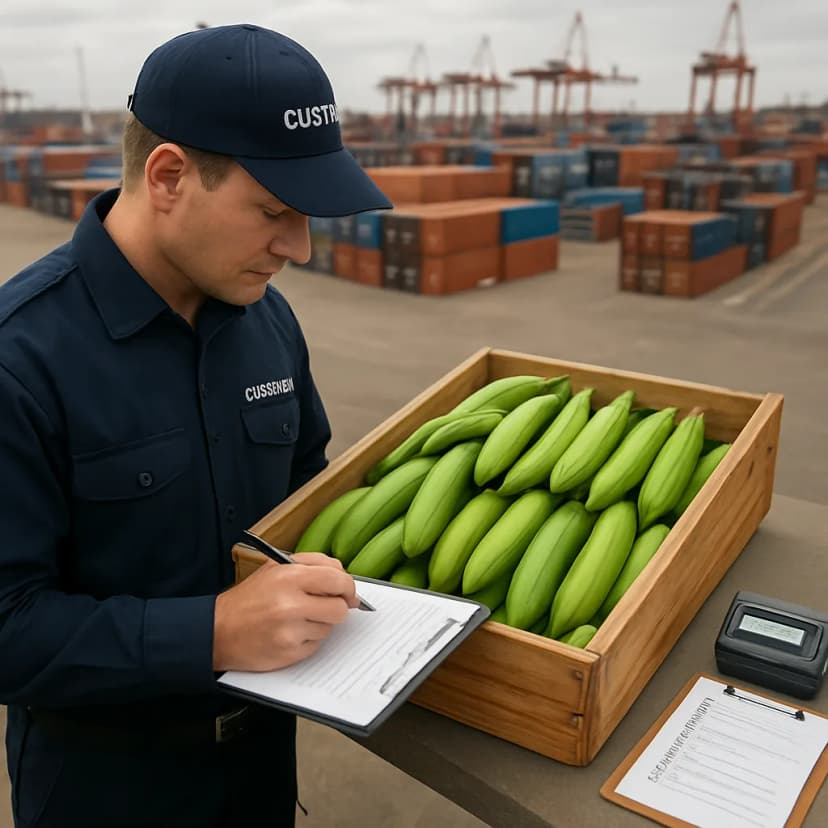
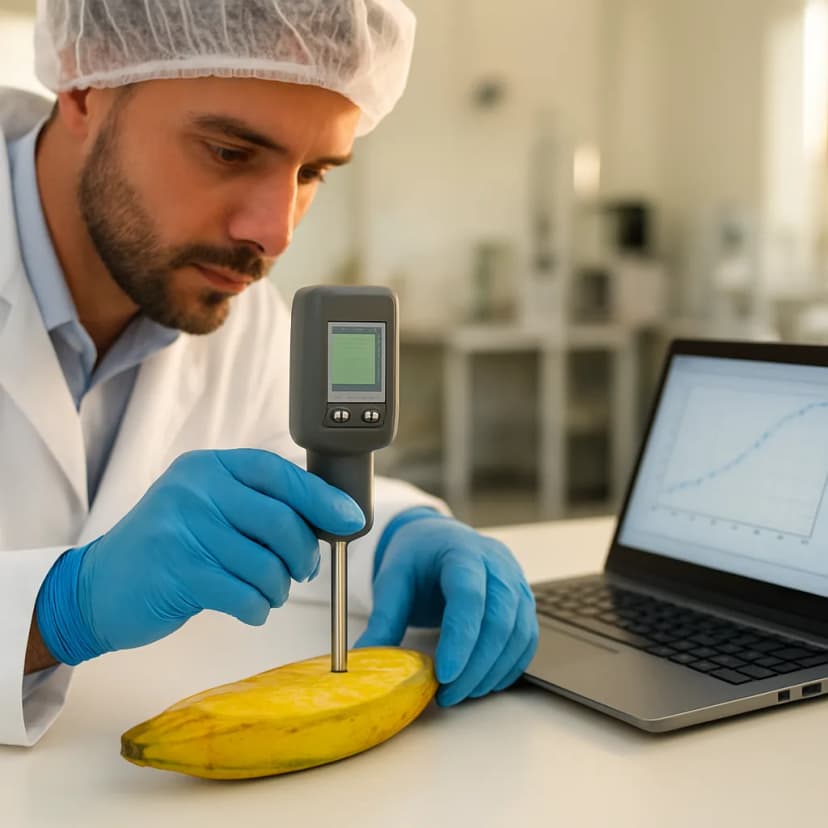
The measurement of pulp firmness is commonly carried out with a penetrometer or durometer, which applies a standardized force to the pulp and records the resistance. This method is simple, portable and widely used in the field and in packing houses. The results are expressed in units of force, such as kilograms or newtons, and allow lots to be compared and the evolution of maturity to be monitored. To obtain reliable measurements, it is important to standardize the procedure: a representative area of the fruit must be selected, generally in the centre of the pulp, and the force applied perpendicularly to the surface.
The texture analyser is a more sophisticated piece of equipment that allows more detailed texture analyses, such as firmness, cohesiveness and elasticity. Although it is more expensive and requires trained personnel, it is useful in research and in high-level quality control. Data obtained with a texture analyser can be correlated with consumer sensory acceptance, which allows quality thresholds to be established. However, for most growers, the penetrometer remains the most practical and accessible tool.
Interpretation of results
The interpretation of firmness values depends on the context and the objective. For banana, it has been observed that maximum compression force decreases significantly as the stage of ripeness advances. For example, a freshly harvested fruit may show a firmness of 15-20 N, while a ripe fruit may be in the range of 5-10 N. These values are indicative and vary according to the variety and the measurement method. What matters is to establish a baseline for each variety and growing condition, and to monitor the evolution over time.
In practice, pulp firmness is used to decide the harvest time, the storage duration and the scheduling of artificial ripening. For example, if export to Europe is intended, an initial firmness may be required that allows a 20-30 day transport to be withstood. In this case, harvesting must take place at a stage of physiological maturity that guarantees sufficient firmness, but not excessive firmness. Combining firmness with other parameters such as peel colour and starch content allows more precise decisions to be made.
Classification regulations
The European Union establishes marketing standards for fruit and vegetables, including banana, which define the minimum quality requirements. These standards focus on aspects such as size, appearance, sanitary condition and the absence of defects. Although no numerical firmness value is specified, it is required that the pulp is not fibrous and shows no internal blackening or tissue separation. In addition, for Extra and Class I categories, surface defects affecting appearance are not permitted, while Class II tolerates slight damage provided it does not compromise the pulp.
Pulp firmness is an operational criterion that importers and supermarket chains use to assess product quality. Although it is not explicitly regulated, a banana that is too soft will be rejected by the buyer, as it indicates overripeness and a limited shelf life. On the other hand, a fruit that is too firm may not ripen correctly, which also generates losses. Therefore, although no mandatory threshold exists, firmness is a determining factor in commercial acceptance.
Logistics and transport
Sea transport from Latin America to Europe can take several weeks, during which temperature and humidity must be carefully controlled. Pulp firmness is an indicator of the fruit's ability to withstand these conditions. A banana with adequate firmness tolerates temperature variations and impacts during loading and unloading better. For this reason, exporters usually measure firmness at the point of origin and at the destination to ensure that the product meets the buyer's expectations.
The implementation of real-time monitoring systems, such as temperature and humidity sensors, together with firmness measurement, allows transport and storage conditions to be adjusted. For example, if a rapid drop in firmness is detected, the cold chain can be accelerated or the transit time reduced. This information is valuable for importers, who can plan distribution and artificial ripening more efficiently.
Nutrition management with calcium and potassium
Calcium is a key nutrient for pulp firmness, as it strengthens cell walls. A fertilization programme that includes calcium, preferably in the form of chelates or amendments, can improve fruit firmness. Potassium, for its part, regulates osmotic pressure and cell turgor, contributing to a firmer texture. However, an excess of potassium can interfere with calcium uptake, so it is important to maintain an adequate balance. Soil and foliar tissue analyses are essential tools for adjusting nutrient doses.
Calcium application can be carried out via foliar or root routes. The foliar route is effective in early stages of fruit development, while the root route ensures continuous availability. In banana, foliar calcium applications are recommended during fruit filling, combined with adequate irrigation to facilitate uptake. The use of fulvic acids can improve the mobility of calcium in the plant and its incorporation into tissues, as explained in the article on fulvic acids for organic farming.
Irrigation management and water stress
Water stress during fruit development can negatively affect pulp firmness. A water deficit reduces cell turgor and can cause premature ripening. It is therefore essential to maintain a constant and adequate water supply, especially during the growth and fruit-filling stages. The use of moisture sensors and drip irrigation systems can help optimise water use and avoid fluctuations that affect quality.
On the other hand, excess water can also be harmful, as it can dilute sugars and increase susceptibility to disease. Integrated irrigation management, which takes climatic conditions and soil characteristics into account, is essential. In this sense, incorporating organic matter into the soil improves water retention and structure, as detailed in the article on organic matter for clay soil.
Use of biostimulants
Agricultural biostimulants can help improve pulp firmness by stimulating the synthesis of structural compounds and stress tolerance. For example, microalgae extracts, such as Chlorella and Scenedesmus, contain phytohormones, amino acids and polysaccharides that can strengthen cell walls and improve turgor. These products, available in the Ecoganic biostimulant technology, are applied via foliar or root application and can be integrated into organic fertilization programmes.
The application of biostimulants at key moments, such as flowering and fruit filling, can improve banana quality. In particular, it has been observed that the application of microalgae-based biostimulants improves fruit set and fruit development, which translates into greater firmness. These effects are due to the stimulation of metabolic activity and improved nutrient uptake. To obtain the best results, it is important to follow the manufacturer's recommendations and adapt the doses to the specific conditions of the crop.
Mechanisms of action
Biostimulants act on plant physiology, influencing hormone synthesis, enzymatic activity and gene expression. In the case of pulp firmness, biostimulants can stimulate the production of pectins and other cell wall components, as well as the activity of enzymes that regulate the degradation of these compounds. For example, seaweed extracts contain cytokinins and auxins that promote cell division and the formation of firmer tissues.
In addition, biostimulants can improve tolerance to abiotic stress, such as water or heat stress, which negatively affect firmness. By reducing the effects of stress, biostimulants help maintain cell integrity and turgor. In this sense, products based on freshwater unicellular algae, such as those developed by Ecoganic, have shown promising results in improving fruit quality. The application of these products in banana can be an effective strategy to improve firmness and, consequently, acceptance in the European market.
Field results
However, it is important to note that results may vary depending on the variety, climatic conditions and agronomic management. Therefore, it is recommended to carry out trials in small plots before implementing a large-scale strategy.
The integration of biostimulants with other practices, such as balanced fertilization and irrigation management, can enhance the effects. For example, combining biostimulants with certified organic fertilizers ensures an adequate supply of nutrients, while biostimulants improve uptake and assimilation efficiency. This synergy is key to obtaining high-quality fruit, with adequate firmness and a prolonged shelf life.
Practical recommendations
To improve pulp firmness in banana, it is recommended to implement a comprehensive programme that includes the following practices:
- Regular monitoring: Measure pulp firmness at different stages of development and post-harvest to adjust management.
- Balanced fertilization: Ensure an adequate supply of calcium, potassium and micronutrients, preferably with organic products.
- Application of biostimulants: Use microalgae-based biostimulants or algae extracts at key moments of the crop cycle.
- Irrigation management: Maintain constant soil moisture, avoiding both water deficit and excess.
- Pest and disease control: Prevent damage that could affect fruit integrity and firmness.
These practices, combined with good post-harvest management, will allow bananas with optimal firmness for the European market to be obtained. In addition, the implementation of these strategies contributes to crop sustainability, reducing the use of chemical inputs and improving soil health. For more information on specific fertilization programmes, see the fertilization programme for banana.
Related articles
- Post-harvest checklist for banana: ready to export?
- Microalgae for fruit set and heat stress in grapevine
- Algae biostimulants for fruit set in hedgerow olive
Do you need professional help?
At Ecoganic in Spain and Europe, we offer certified biostimulants and organic fertilizers. Call us: +34 623 753 719.
Request your free quote
How is pulp firmness measured in banana?
Pulp firmness is measured with a penetrometer or durometer, which applies a standardised force to the pulp and records the resistance. A representative area of the fruit is selected, generally in the centre, and the force is applied perpendicularly. The results are expressed in units of force, such as newtons or kilograms. It is important to standardise the procedure to obtain comparable measurements.
What factors influence pulp firmness?
Pulp firmness is influenced by harvest age, variety, nutrient management, irrigation and storage conditions. A calcium deficiency or an excess of nitrogen can reduce firmness, while adequate irrigation and balanced fertilization improve it. In addition, water stress and extreme temperatures can negatively affect fruit texture.
What is the appropriate firmness for export to Europe?
There is no single firmness value for export to Europe, as it depends on the variety and transport time. However, harvesting at a stage of physiological maturity that guarantees sufficient firmness to withstand transit, but not so high that it prevents proper ripening, is recommended. In general, a firmness of 10-15 N at the harvest point may be suitable for long journeys, but it is necessary to adjust according to the specific conditions.
Can biostimulants improve pulp firmness?
Yes, biostimulants based on microalgae or algae extracts can improve pulp firmness by stimulating the synthesis of cell wall components and improving stress tolerance. However, results may vary, so testing under local conditions is recommended.