What is transplant stress in tomato?
Transplant stress in tomato is the set of physiological disturbances that the seedling undergoes when it is removed from the controlled conditions of the seedbed and established in the field or greenhouse. This abrupt change of environment — temperature, relative humidity, radiation, water and nutrient availability — causes a temporary reduction in water uptake, a drop in photosynthesis and a halt in growth that can delay the onset of production and reduce commercial yield. In Latin America, the problem is aggravated under greenhouse conditions with high temperatures, in dry-season transplanting or in soils with poor structure, where the plant takes longer to emit new roots and is left exposed to dehydration and soil pathogens.
The agronomic priority is to achieve an active root ball and rapid emission of new white roots. When the root system is re-established quickly, the plant recovers turgor, resumes leaf expansion and can maintain the planned harvest schedule. Conversely, a poorly executed transplant lengthens the vegetative standstill, facilitates the entry of pathogens and forces emergency nutritional corrections that increase the cost of the cycle. This article addresses, from a technical and practical perspective, how to reduce transplant stress in tomato and how to promote rapid rooting through the management of the root ball, irrigation, transplant timing and the use of biostimulants and organic fertilisers.
Physiology of stress and rooting
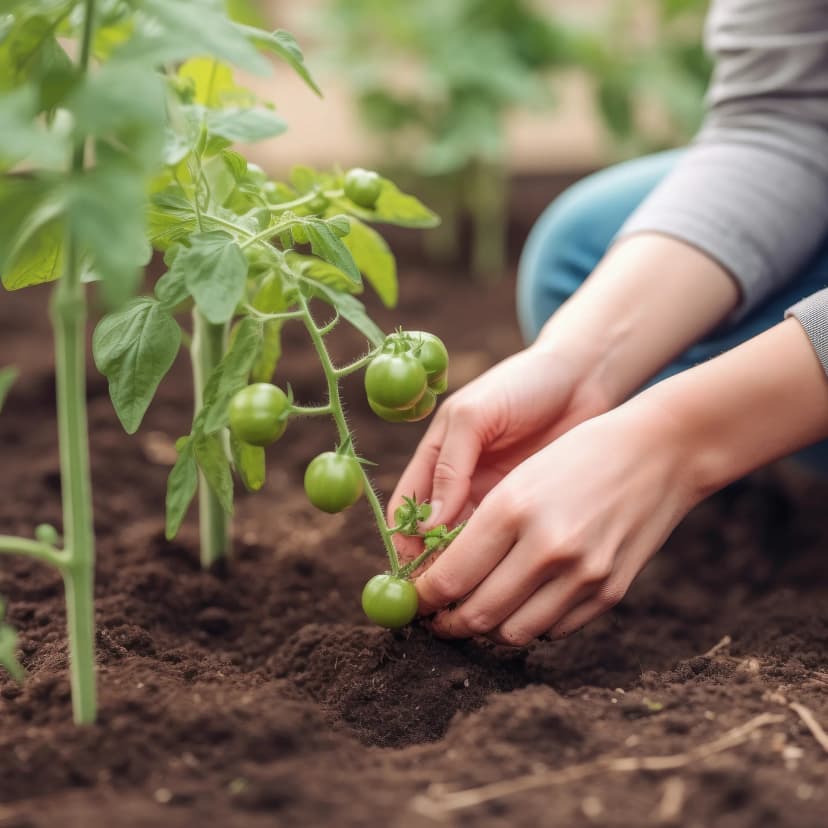
During transplanting, the seedling experiences an imbalance between the water demand of the aerial part and the uptake capacity of a damaged root system. The fine roots and root hairs, responsible for most of the uptake, break or dehydrate, and the plant closes its stomata to reduce water loss, which in turn limits CO2 entry and slows photosynthesis. In parallel, hormonal signals — ethylene, abscisic acid and auxins — are activated that modulate the stress response and the initiation of new roots. The speed with which water balance is restored depends on the quality of the root ball, soil moisture, root temperature and nutrient availability in the root zone.
Rapid rooting is a process that combines the emission of adventitious roots and the recovery of the activity of existing roots. Auxins play a central role in the formation of root primordia, while the carbohydrates and amino acids available in the plant sustain initial growth. Therefore, a well-hardened seedling, with sufficient reserves and without excess vigour, usually roots better than a large, soft seedling. In addition, the presence of beneficial microorganisms in the rhizosphere — such as mycorrhizal fungi or plant growth-promoting bacteria — can favour soil exploration and the uptake of phosphorus and micronutrients, although their effect depends on the strain, the dose and the edaphic conditions.
Soil temperature is a decisive factor: below a certain threshold, root activity slows down and rooting is delayed. In tropical and subtropical areas, early-morning transplanting takes advantage of the lower evaporative demand and reduces dehydration. In cold or compacted soils, on the other hand, it is advisable to wait until the temperature stabilises or to use mulches that regulate it. Soil texture and structure also condition establishment: sandy soils drain quickly but retain little water, while clay soils can become waterlogged and suffocate the roots if irrigation is excessive.
Pre-transplant management: hardening and root ball
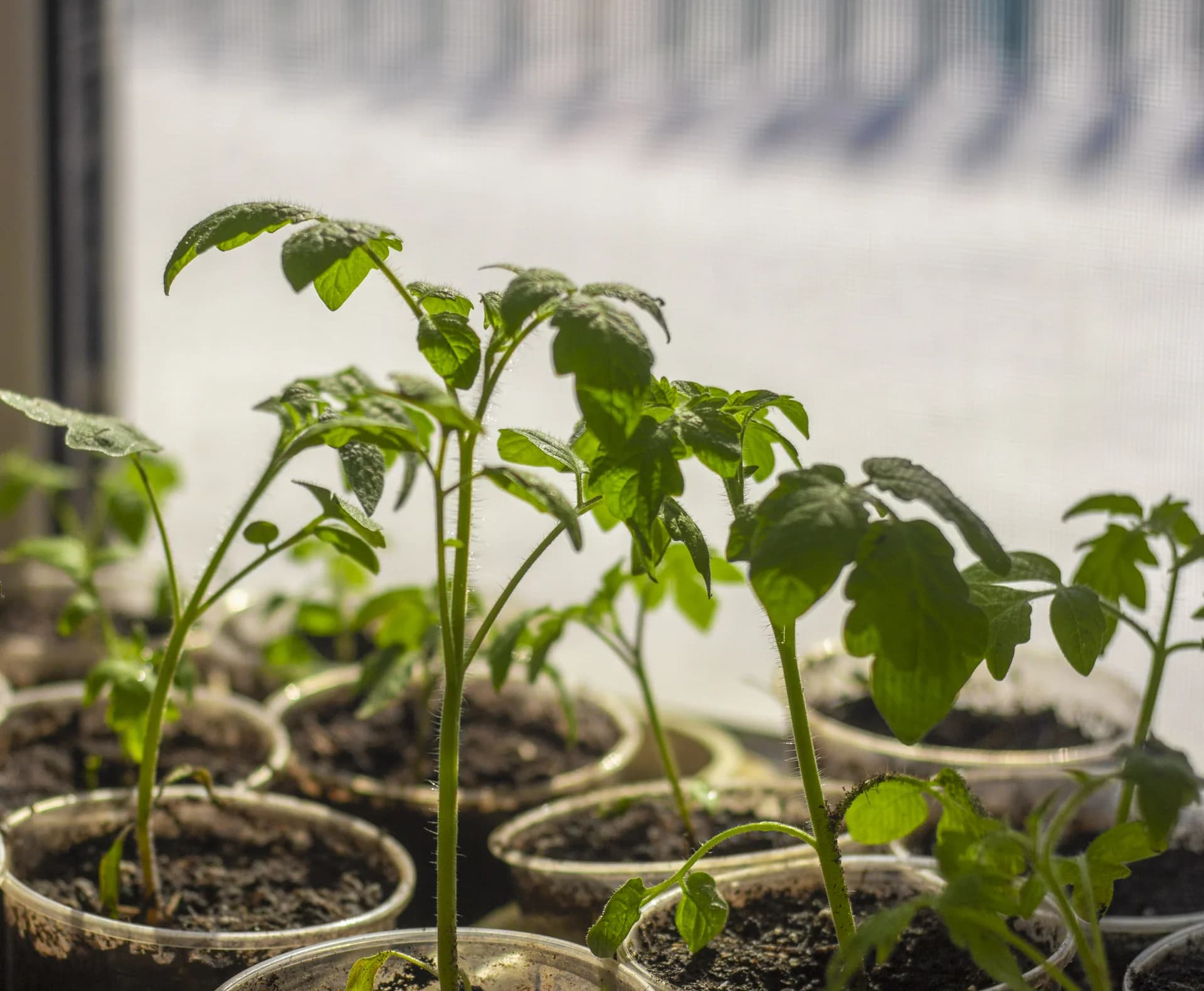
Hardening is a key practice for reducing transplant stress. It consists of gradually reducing irrigation for approximately one week before transplanting, so that the seedling limits its excessive growth, strengthens its tissues and stimulates subsequent root exploration. Excessive hardening, however, can dehydrate the root ball and cause plant losses; it must therefore be adjusted to the substrate texture and the temperature of the seedbed. The plant should be transplanted with about four true leaves and a height of 10 to 15 cm, preferably in the morning, and the seedbed should be watered 2 to 3 hours beforehand so that the root ball arrives hydrated but not saturated.
The quality of the root ball is decisive. A well-formed root ball maintains root integrity and preserves moisture during transplanting. Before transplanting, it is advisable to check the moisture of the root ball — neither dry nor waterlogged —, the soil temperature and the state of the roots: white, active roots indicate a healthy seedling, whereas brown or coiled roots suggest management problems in the seedbed. It is also useful to check for the presence of seedlings with excessively thin stems or with symptoms of etiolation, which usually root worse and are more sensitive to wind and radiation.
The timing of transplanting influences rooting. In rooted tomato cuttings, transplanting between 20 and 30 days from the start of rooting has produced wider plants, with greater leaf area and thicker stems than those grown from seed, according to research by INIFAP. Delaying transplanting weakens plant morphology, although it does not necessarily reduce yield per plant. In the case of older seedlings, a study by UNCuyo observed greater root volume, stem diameter and leaf area, as well as a reduction in the days to the start of harvest and an increase in average yield compared with conventional seedlings. These results reinforce the idea that the physiological age and quality of the seedling should form part of the nursery protocol.
Techniques for rapid rooting
Irrigation after transplanting is one of the factors that most conditions rooting. Both severe deficit and waterlogging should be avoided. The practical aim is to maintain uniform moisture in the root bulb, with short, frequent pulses during the first days, adjusted to radiation, temperature and substrate texture. A trial with 40-day-old tomato seedlings found that an irrigation depth equivalent to 1.6 times the tank evaporation produced the greatest root length and fresh weight, while the most deficit treatment was the least effective. This suggests that, under the conditions of the trial, a generous but controlled water supply favours initial root development.
The application of biostimulants can complement irrigation management. Seaweed extracts, amino acids and fulvic acids are associated with an improvement in the plant's antioxidant response and with greater root development, although the effect depends on the dose, the timing of application and the growing conditions. In tomato, root application of a biostimulant based on natural extracts at the time of transplanting, followed by a foliar application a few days later, can help maintain turgor and stimulate the emission of new roots. However, excessive nitrogen doses should be avoided at this stage, as they can favour vegetative growth to the detriment of rooting.
The use of mycorrhizae and rhizobacteria is another tool for improving establishment. These microorganisms can increase the absorption surface of the roots and improve tolerance to water stress, but their effectiveness depends on compatibility with the crop, the dose and the soil conditions. In soils with a low organic matter content, the application of compost or fulvic acids can improve structure and water retention, creating a more favourable environment for new roots. In greenhouses, temporary shading and wind protection reduce dehydration during the first days.
Biostimulants and nutrition for establishment
Nutrition at the time of transplanting should be moderate. An excess of fertiliser, especially nitrogen, can increase the electrical conductivity of the soil solution and cause phytotoxicity in young roots. Instead, it is advisable to supply phosphorus, calcium and chelated micronutrients that favour root development and cell membrane stability. Certified organic fertilisers, such as those based on organic matter and microorganisms, release nutrients gradually and improve soil health in the medium term. The choice of product must comply with the regulations applicable in each country; in the European Union, biostimulants and fertilisers must comply with Regulation (EU) 2019/1009, while in Latin America regulations vary from country to country.
Microalgae biostimulants and seaweed extracts contain phytohormones, polysaccharides and amino acids that can improve the plant's response to abiotic stress. Their application at transplanting, via the root, and a second foliar application 7-10 days later can favour recovery. However, it is important to remember that these products do not replace proper management of irrigation and the root ball; they are complements that help the plant overcome stress, but they do not correct basic errors. The dose and timing must be adjusted according to the phenological stage and climatic conditions.
Foliar nutrient uptake is limited in the first hours after transplanting, since stomata may be closed. For this reason, foliar applications should be carried out when the plant has regained turgor, preferably in the early morning or at dusk. Amino acids and seaweed extracts applied foliarly can be absorbed and used by the plant to synthesise proteins and maintain metabolic activity during stress. Nevertheless, efficacy depends on the formulation and on the adhesion of the product to the leaf surface.
Common mistakes and comparison with conventional methods
Among the most common mistakes in tomato transplanting are: transplanting with a broken or crumbled root ball, over-watering immediately after transplanting, exposing unhardened seedlings to full radiation, and not checking soil temperature before transplanting. These mistakes increase the vegetative standstill and favour the appearance of diseases. Comparison with conventional methods is inevitable: while chemical starter fertilisation can supply nutrients immediately, it usually increases salinity and does not improve soil structure. Organic fertilisers and biostimulants, on the other hand, act more gradually and sustainably, improving soil organic matter and microbiota. The choice depends on the production system and on sustainability objectives, but in both cases the management of irrigation and the root ball remains the critical factor.
Comparison with the use of synthetic rooting agents is also relevant. Conventional rooting agents based on synthetic auxins can stimulate root formation, but their excessive use can have negative effects on subsequent development. Natural biostimulants, such as seaweed extracts, offer a gentler alternative compatible with organic farming, although their effect is more modulated and depends on conditions. In any case, the decision must be based on an assessment of the state of the crop and on technical recommendations, avoiding expectations of immediate results.
Success indicators and monitoring
To evaluate the success of transplanting and rooting, it is advisable to record a series of indicators: survival percentage at 7 days, appearance of white roots, relative growth at 14 days, electrical conductivity of the drainage, days to the first truss and marketable yield. These data make it possible to adjust practices in the following season and to compare the effectiveness of different strategies. In the greenhouse, monitoring substrate moisture and root temperature helps to prevent waterlogging or cold problems. Visual observation of leaf turgidity and colour complements the numerical data.
The timing of biostimulant application should be decided on the basis of these indicators. If, after transplanting, slow recovery of turgidity and an absence of new roots are observed, an additional application of root biostimulant may be useful. If, on the other hand, the plant shows excessive, soft growth, nitrogen fertilisation should be reduced and soil aeration increased. The key is to adapt management to the plant's response, avoiding fixed recipes.
Related articles
Do you need professional help?
At Ecoganic in Spain, Europe, we offer organic Biostimulants and Fertilizers. Call us: +34 623 753 719.
Request your free quote
Frequently asked questions about transplant stress in tomato
How long does transplant stress last in tomato?
The duration depends on climatic conditions, irrigation management and the quality of the root ball. Under favourable conditions, the plant can recover turgidity within a few hours and resume growth within a few days. In situations of high evaporative demand or cold soil, the vegetative standstill may last longer. Monitoring turgidity and the appearance of white roots makes it possible to estimate the progression.
Which irrigation is better after transplanting?
Irrigation should maintain uniform moisture in the root bulb, avoiding both deficit and waterlogging. Short, frequent pulses are recommended during the first days, adjusted to radiation, temperature and soil texture. In sandy soils, irrigations should be more frequent; in clay soils, they should be spaced out to avoid root asphyxia. Observing drainage and root ball moisture helps to adjust the frequency.
When should a biostimulant for rooting be applied?
Root application at the time of transplanting, followed by a foliar application at 7-10 days, is a common schedule. However, the optimal timing depends on the state of the plant and on environmental conditions. If the plant shows signs of water stress, it is advisable to wait until it recovers turgidity before applying foliar products. The dose should be adjusted according to the manufacturer's instructions and the conditions of the crop.
What mistakes are most frequently made when transplanting tomato?
The most common mistakes include transplanting with a broken root ball, over-watering after transplanting, not hardening off the seedlings before exposing them to the field and not checking soil temperature. These mistakes increase stress and delay rooting. It is also common to apply excessive nitrogen fertilisers, which can cause soft growth and greater sensitivity to pathogens.
How does seedling age influence rooting?
The physiological age of the seedling influences root volume and earliness. Older seedlings may present greater root volume and stem diameter, which can translate into a reduction in the days to harvest. However, excessive age can weaken plant morphology. The optimum point depends on the cultivar and on the conditions of the nursery, so it is advisable to adjust the sowing and transplanting schedule.
Conclusion
Transplant stress in tomatoes is a complex phenomenon that can be mitigated through careful management of the root ball, irrigation and nutrition. Progressive hardening off, choosing the time of day, checking soil moisture and temperature, and the use of organic biostimulants and fertilisers are tools that contribute to rapid rooting and successful establishment. The key lies in adapting practices to local conditions and monitoring success indicators in order to make informed decisions. With a technical and sustainable approach, it is possible to reduce the growth check and maintain the productive potential of the crop.