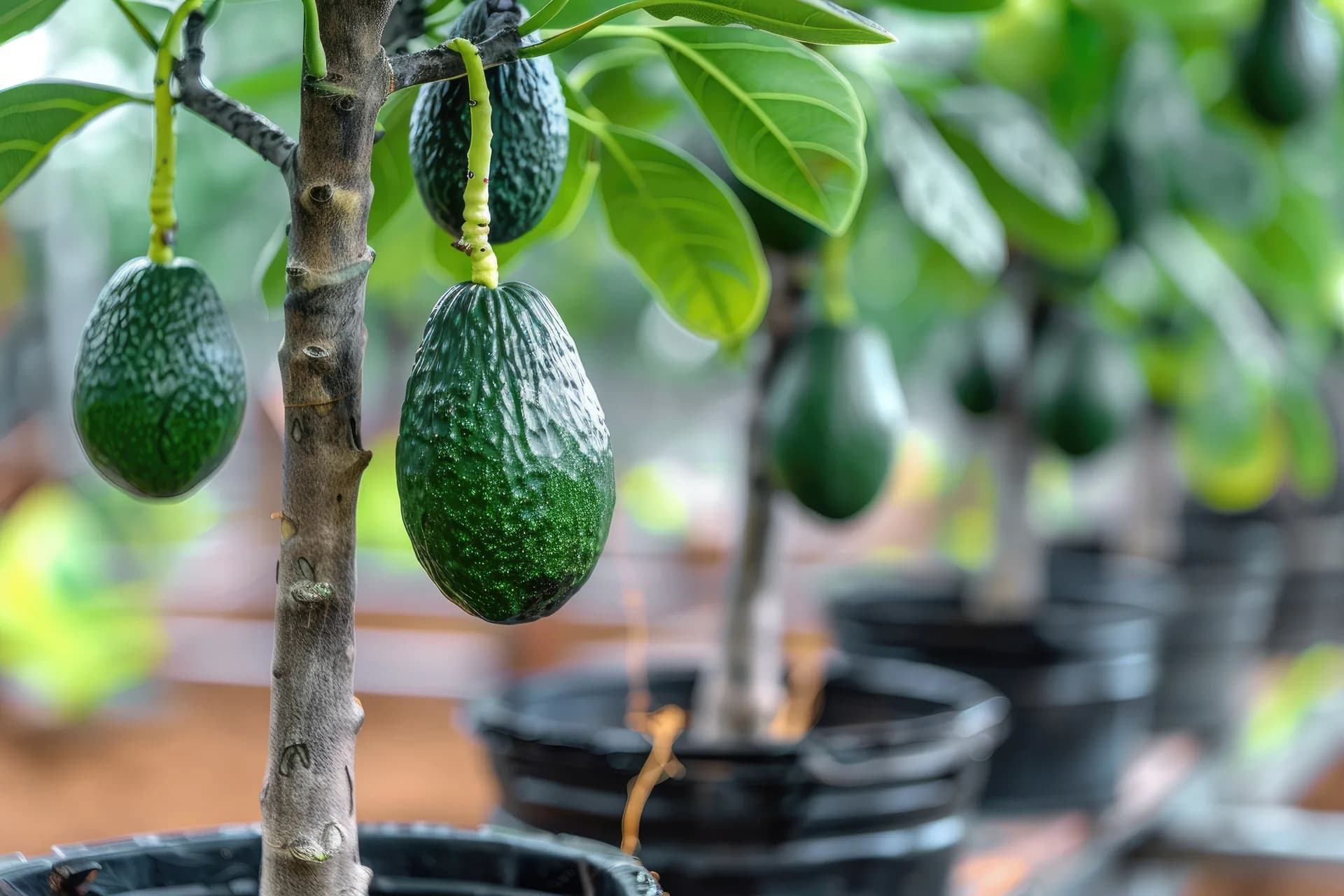
Why isn't your avocado rooting? Main causes
The avocado (Persea americana) is a species that is not particularly easy to propagate vegetatively by cutting. When the avocado does not root, the explanation usually lies in water loss from the cutting before roots form, in tissues that are too lignified, or in a lack of reserves and suitable hormonal conditions. Mature branches respond worse than young or etiolated shoots, and environmental factors such as relative humidity and temperature have a decisive influence on the outcome.
Many people try to reproduce an avocado from branches of a mature tree, hoping to obtain the same variety. However, the cutting loses water quickly, dehydrates and dies before emitting roots. Even when synthetic auxins are applied, the response may be limited and depends on the physiological state of the material and on environmental conditions. In commercial production, grafting onto seedling rootstocks is usually more reliable than trying to root cuttings.
The difficulty of rooting is not a defect of the plant, but a physiological characteristic. The avocado has a shallow root system that is sensitive to lack of oxygen, which conditions substrate and irrigation management from the first day. Understanding these limitations is the first step towards making good decisions, whether to obtain a domestic plant or to establish a commercial plantation.
Signs that the problem lies in the starting material
Before blaming the substrate, the irrigation or a product, it is worth looking at the material itself. There are signs that anticipate failure from the moment of cutting and that no subsequent adjustment usually compensates for:
- Very thick branches, with already cracked bark or a woody appearance, with little capacity for regeneration.
- Wilted, yellowish leaves or leaves with dry edges at the time of preparing the cutting.
- Base of the stem darkened, soft or with a strange smell after cutting.
- Material that has spent a long time out of water or at high temperature before reaching the propagation site.
- Shoots of unknown origin, with no information about the condition of the tree from which they were taken.
When several of these signs occur at the same time, the sensible thing is to discard the material and start with better material, instead of trying to rescue what is already weakened.
Typical mistakes that prevent rooting
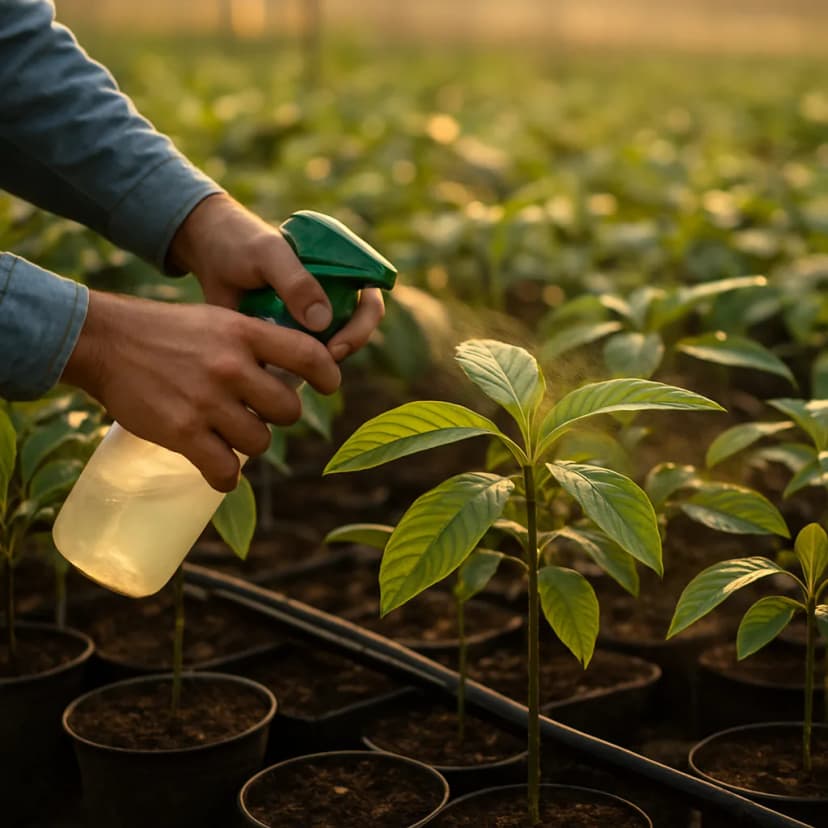
When avocado fails to root, one of the most frequent mistakes behind it is using branches that are too thick or lignified. Old tissues have a lower capacity for regeneration and accumulate fewer reserves available for forming roots. Cuttings should come from young shoots, preferably semi-hardwood, and with several viable buds. Etiolation, that is, the growth of shoots in partial darkness, can improve the chances, since etiolated tissues are softer and usually respond better to root induction.
Another common mistake is a poorly prepared cut. A clean, oblique cut made with a disinfected tool favours water uptake and the hormonal response. If the cut is made with blunt scissors or is left to dry too long, the cutting loses viability. Failing to monitor moisture is also a mistake: a waterlogged substrate reduces the available oxygen and encourages rots, while a dry environment dehydrates the cutting.
Excessive use of rooting hormones can damage the tissue. Synthetic auxins are usually used and can help, but they do not compensate for an old cutting, a poor cut or a saturated substrate. An excessive concentration can cause toxicity and necrosis at the base. It is essential to follow the product label and to check with the technician which products are suitable and are approved in your production system.
Lack of ventilation is another critical factor. A closed bag without air renewal generates excessive condensation and encourages the appearance of mould and rots at the base. Humidity must be high, but with air exchange. Likewise, direct exposure to the sun can raise the temperature and dehydrate the cutting; indirect light and stable temperatures are recommended.
Routine mistakes that seem harmless
In addition to technical failures, there are habits that ruin many attempts without anyone noticing. Pulling out the cutting to see whether it has roots yet breaks the first root emissions. Moving the cuttings every day causes fluctuations in light and temperature. Spraying cold water on weakened material or always watering at the same time, without checking the actual moisture, ends up causing waterlogging in some containers and dryness in others.
Another frequent habit is reusing trays, pots or tools without cleaning them between batches. Remains of substrate and previous plant material can carry problems from one attempt to the next. Cleaning and disinfecting propagation material between batches is a simple task that prevents repeating failures that seem inexplicable.
Substrate, irrigation and temperature: keys to success
The ideal substrate for avocado rooting must be very airy and free-draining. A mix in which coconut fibre provides structure and moisture retention, and perlite improves porosity and drainage, offers good moisture without waterlogging; the most suitable proportion depends on the specific material and can be checked with the supplier or the nursery. Heavy or clayey soil should never be used, as it reduces the oxygenation of the roots.
Irrigation should be frequent but in small volumes. Avocado has shallow roots and is sensitive to both drought and salinity. Keeping the substrate slightly moist, without saturation, is essential: excess water displaces oxygen and encourages rotting at the base of the cutting. Watering with good-quality, low-salt water is recommended, and the substrate should be allowed to aerate between waterings.
Temperature and ambient humidity are decisive. Avocado requires gentle, stable warmth, indirect light and high relative humidity. A dry environment dehydrates the cutting, while excessive humidity without ventilation encourages mould. Using a propagator with humidity control or a perforated bag can help, always with air renewal. The important thing is not to chase an exact value, but to avoid abrupt changes between day and night.
Water quality also has an influence. Avocado is sensitive to salinity and chlorine. If the irrigation water has high electrical conductivity, it is advisable to mix it with water of better quality or to use rainwater. The accumulation of salts in the substrate can damage the incipient roots and slow down rooting. Periodic leaching with low-salinity water helps to avoid this problem.
How to check moisture without causing damage
A simple way to tell whether watering is needed is to lift the container carefully and feel its weight, or to insert a clean finger into the top of the substrate to assess moisture without touching the base of the cutting. Watering only when the substrate calls for it, and not by calendar, reduces both the risk of waterlogging and the risk of drought. Containers with good drainage and unobstructed holes are as important as the substrate itself.
Grafting vs. cuttings: what to check before deciding
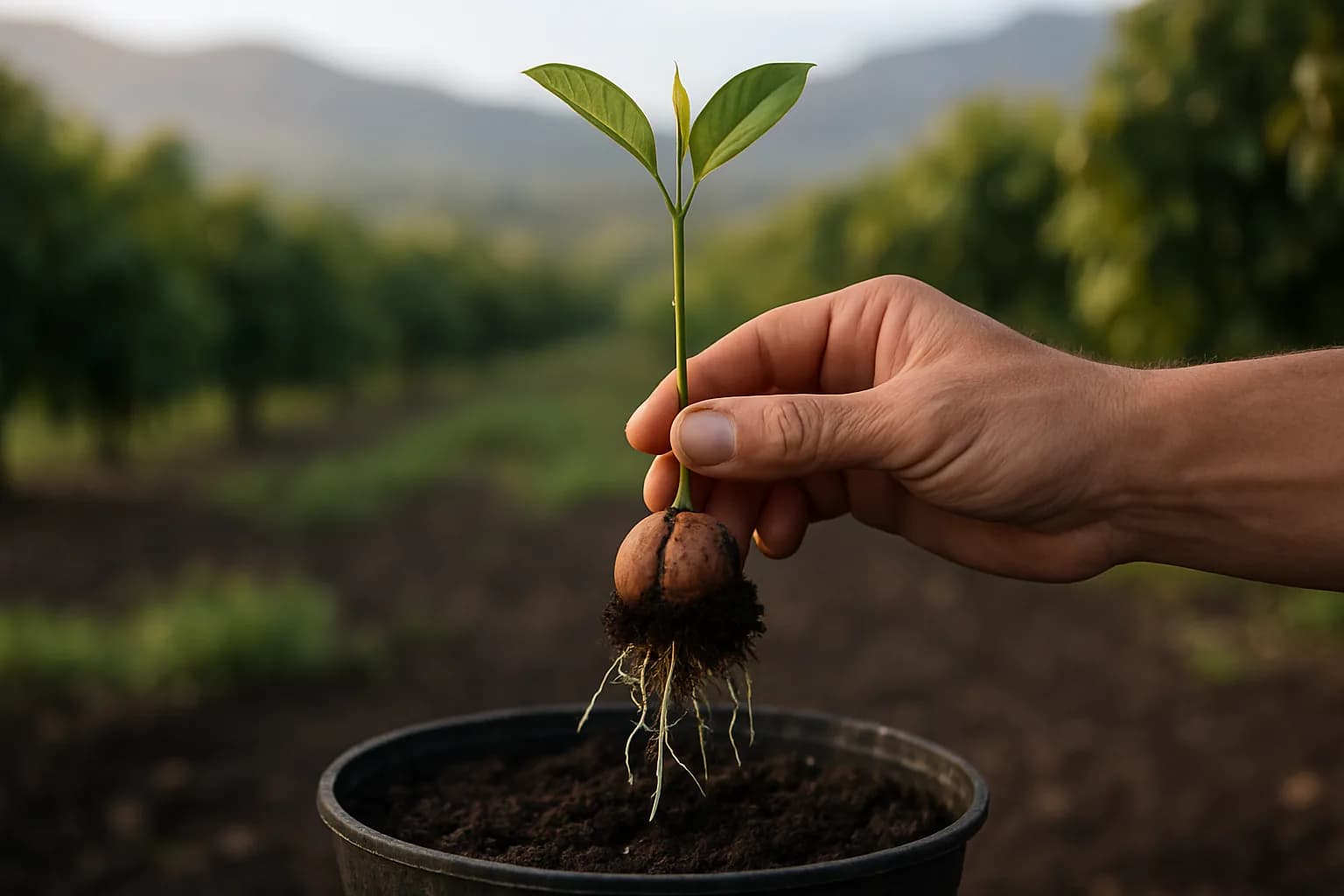
Before deciding between grafting and cuttings, it is essential to clarify the objective. If a domestic plant is sought, germinating the stone is a simple and viable option. The seed germinates easily, but the resulting tree does not necessarily retain the variety it comes from and may take a long time to produce. In addition, a seed-grown plant usually has greater vigour and stature, which can be an advantage in gardening.
For commercial production, grafting onto seedling rootstocks is standard practice. It allows a uniform variety to be obtained and makes use of the advantages of the rootstock, such as adaptation to the soil or tolerance to salinity. Rootstocks of different origins exist, each with its own characteristics, and their choice should be based on local soil and water conditions and on the advice of the nursery or the technician.
If cuttings are chosen, the viability of the plant material should be checked. The cuttings should come from young shoots, with healthy buds and no symptoms of health problems. Rooting of cuttings should be carried out under controlled humidity and temperature conditions, with auxins if considered necessary. Even so, success can be low and variable, and a plantation should not be planned on that expectation.
Qualitative comparison of the options
To decide with judgement, it is useful to place the alternatives side by side:
- Seed germination: it is the simplest and cheapest route, but it produces variable plants that may take time to fruit; it suits domestic use, not a plantation seeking uniformity.
- Grafting onto a seedling rootstock: it is the most widespread method in commercial production because of its uniformity; it requires quality material, clean tools and a certain skill, or the purchase of already grafted plants.
- Cuttings with synthetic auxins: it preserves the identity of the mother plant, but it is the most demanding option in terms of humidity and environmental control, and the one that gives the most variable results in avocado.
- Plant from a specialised nursery: it reduces the risk in the most delicate phase and offers guarantees of varietal identity and health, in exchange for a higher initial cost.
In plantations intended for sale, the use of grafted and certified plants is especially important. The traceability and health of the plant material are requirements increasingly valued by those who buy fruit. Home-made cuttings offer no health or varietal identity guarantees, which can compromise future profitability.
Biostimulation and nutrition for healthy rooting
Once the cutting has emitted roots or the grafted plant has established, biostimulation can contribute to a more balanced root development. Organic agricultural biostimulants, such as microalgae extracts, contain bioactive compounds that can contribute to root growth. However, their effect depends on the physiological state of the plant and on agronomic conditions, and results vary according to the crop, the soil, the water and the management.
Balanced nutrition is key for avocado. This crop requires an adequate supply of nitrogen, phosphorus, potassium, calcium and magnesium, as well as micronutrients such as zinc, boron and iron. Deficiencies of some micronutrients are common in avocado and can affect the growth of shoots and roots. Leaf and soil analysis allow fertilisation to be adjusted and imbalances to be avoided, and their interpretation is the responsibility of the technician.
Certified organic fertilisers provide organic matter and can contribute to improving the biological activity of the soil. Organic matter favours structure, water retention and nutrient availability. Fulvic acids can contribute to nutrient absorption and root development. In soils with salinity or pH problems, organic amendments can help to improve conditions, always based on an analysis and with technical guidance.
Foliar nutrient absorption is a complementary tool at times of high demand or when roots have difficulty absorbing. Micronutrients can be applied foliarly to correct specific deficiencies. It should be remembered that biostimulation does not replace proper management of irrigation, the substrate and the health of the plant material.
When it makes no sense to add products
If the avocado does not root because the cutting arrived dehydrated, the cut is poorly made or the substrate remains saturated, adding a biostimulant will not correct the origin of the problem. The prudent approach is to resolve the basics first: quality material, drainage, stable humidity and a suitable environment. Only afterwards does it make sense to consider a complementary product, following the dose and timing in the technical data sheet and recording what was applied and when, so that it can be assessed whether it contributed anything.
Plant material and destination markets in Europe and Latin America
The problem of avocado rooting goes beyond the domestic sphere and has commercial implications. Those who plant to sell fruit face demanding markets, both in Europe and in Latin America, where traceability, the health of the plant material and the identity of the variety are usually valued. The specific requirements vary according to the destination and the buyer, so it is advisable to verify the current requirements with the technician and with the relevant body in each case.
In this context, the quality of the plant material is a critical factor. The grafted and certified plant offers greater guarantees of health and varietal uniformity than home-made cuttings. For plantations intended for commercialisation, investing in quality material and in appropriate agronomic management can make the difference in medium-term competitiveness.
The expansion of avocado cultivation has led to the occupation of soils with various limitations, such as salinity, extreme pH or drainage problems. In these cases, the choice of rootstock and irrigation management are decisive for the success of the plantation. Biostimulation and balanced nutrition can contribute to tolerance to abiotic stress, but they do not replace fundamental agronomic practices.
Sustainability is a cross-cutting axis. Reducing the use of synthetic inputs and resorting to inputs permitted in organic production are trends observed in both markets. Microalgae biostimulants and organic fertilisers can contribute to a more balanced management of the crop, provided they are used with technical judgement and evaluated on the plot itself before being generalised.
How to diagnose and correct an avocado cutting that is not rooting
When an avocado cutting has gone weeks without emitting roots, the first thing is to stop intervening blindly and to observe methodically. Many growers change the substrate, raise the temperature and apply new products at the same time, so they never find out what went wrong. The practical approach is to isolate a single variable per attempt and to keep a control batch unchanged, even if it is small. That way you learn what worked under your own conditions and you do not depend on general recipes that rarely fit a specific climate or plant material.
Before touching anything, it is worth reviewing the condition of the starting material. A cutting that already arrived wilted, with a darkened base or with yellowish leaves will hardly root no matter how much the environment is adjusted. Check that the cut is clean and recent, that the base shows no soft areas or strange odours and that the stem remains firm. If the material came from a branch that was too soft or too woody, the problem lies in the origin and not in the subsequent handling. Always ask yourself where the cutting came from and under what conditions it travelled before reaching your propagation bench.
The environment is the second point to review, but without becoming obsessed with exact values. What matters is stability: a humidity that does not swing between extremes, a temperature that does not drop suddenly at night and a soft light that does not dry out the material. The most frequent mistakes are the temptation to water excessively to compensate for the lack of roots, the use of substrates that retain too much water and direct exposure to the sun. Also avoid handling the cuttings daily to check whether they already have roots, because every movement breaks the first emissions and delays the process.
- Check the base of the cutting before blaming the substrate or the product applied.
- Keep a control batch unchanged to compare results with judgement.
- Avoid mixing several corrections at once: isolate one variable per attempt.
- Do not water by routine: check the actual humidity before adding water.
- Ask about the origin and condition of the material before buying or reusing it.
- Note dates, conditions and changes in a notebook so you can compare one attempt with the next.
Finally, distinguish between a cutting that is not rooting and one that is rooting slowly. Patience is part of the craft, but it must be accompanied by clear signals: if the stem is still green and firm, the process may be under way even if no roots are visible. If the base darkens, moulds appear or the material loses turgidity, you must act. In that case, the sensible thing is to discard the affected batch, clean the propagation space and start again with fresh material, rather than persisting with exhausted cuttings. Recording what you did in each attempt will give you more information than any generic advice, and if the avocado repeatedly fails to root it is worth consulting the technician before continuing to lose material.
Related articles
Do you need professional help?
At Ecoganic we offer biostimulants and organic fertilisers. Contact our technical team to assess your case.
Request your free quote
Frequently asked questions about avocado rooting
Why does rooting of avocado cuttings fail?
Most commonly, the cutting loses water before forming roots, has tissues that are too lignified, or lacks reserves and suitable hormonal conditions. Mature branches usually respond worse than young or etiolated shoots. In addition, a waterlogged substrate or a dry environment can hinder the process, so it is advisable to start with juvenile material and maintain stable humidity.
Is it better to germinate the stone or take a cutting?
If a houseplant is the goal, germinating the stone is simpler and usually yields more plants. However, the resulting tree does not necessarily retain the commercial variety and may take a long time to produce. For commercial production, grafting onto seedling rootstocks is the usual practice because of its reliability and uniformity, and cuttings remain an option with more variable results.
What substrate and irrigation does an avocado cutting need?
It needs a very airy, free-draining substrate, for example a mix in which coconut fibre provides retention and perlite provides porosity. Irrigation should be frequent but in small volumes, keeping the substrate moist without waterlogging it. Excess water reduces oxygen and encourages rots, and water quality also matters because avocado is sensitive to salts and chlorine.
Are rooting hormones useful on avocado?
Synthetic auxins are usually used, but they do not compensate for an old cutting, a poorly prepared cut or a saturated substrate. An excessive concentration can damage the tissue at the base. It is advisable to follow the product label, check with the technician that it is suitable for your production system, and accept that, even with hormones, the response depends on the physiological state of the cutting.
When should avocado be grafted?
In commercial production, grafting onto seedling rootstocks is usually more reliable than trying to root cuttings. It allows a uniform variety to be obtained and makes use of the advantages of the chosen rootstock. The right time depends on the area and the condition of the plant, and generally one waits until the rootstock has reached an appropriate thickness, something the nursery or the technician will be better able to judge than a general rule.
How can rooting be improved with biostimulants?
Biostimulants made from microalgae or fulvic acids can contribute to root development once the plant has begun to emit roots. Their effect is complementary and depends on agronomic conditions, so they do not replace healthy material or good management. Balanced nutrition and well-adjusted irrigation are the basis of a healthy root system, and the dose and timing should be those indicated on the technical data sheet.
How do I know whether a cutting is rooting slowly or failing?
A cutting that remains green, firm and with a clean base may be progressing even if no roots are visible yet. If the base darkens, softens, moulds appear or the material loses turgidity, the process has most likely failed. In that case it is advisable to discard the affected batch, clean the propagation area and start again with fresh material.
At Ecoganic we have biostimulation and organic nutrition solutions to support the development of your crops. If you want to assess the rooting and health of your avocado plantation, request your free quote and our technical team will advise you.