

Learn how to manage Phytophthora in organic avocado with sustainable strategies: biostimulants, biological control, soil management, and prevention. Optimize your crop.
Introduction
Phytophthora in organic avocado represents one of the greatest phytosanitary challenges for growers of this crop in Latin America. Phytophthora cinnamomi, a soil oomycete, causes root rot that leads to progressive tree death. In organic production systems, where the use of synthetic fungicides is restricted, integrated management based on prevention, biological control and biostimulants becomes essential. This article presents technical and practical strategies to sustainably control this disease, supported by recent research and field experience.
Avocado (Persea americana) is a high-value crop in countries such as Mexico, Colombia, Peru, and Chile. The disease caused by Phytophthora can reduce production by up to 30% if not properly managed. In organic agriculture, the key lies in strengthening soil health and the plant's natural resistance through organic agricultural biostimulants and cultural practices. Below, the fundamental aspects for successful management are detailed.
The global incidence of Phytophthora cinnamomi in avocado is estimated at 15-20% in commercial orchards, but in systems with poor management it can exceed 50%. In Mexico, the world's leading producer with over 2.4 million tons annually, economic losses from this disease reach 150 million dollars each year. In Colombia, studies by the ICA report that 35% of plantations show symptoms of root rot to some degree. These data underscore the urgency of implementing effective and sustainable strategies.
Symptoms and cycle of Phytophthora cinnamomi in avocado
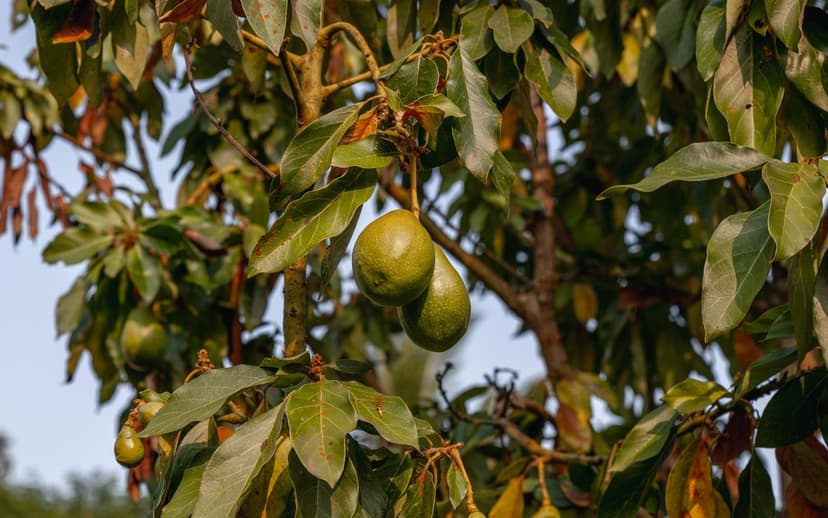
Phytophthora cinnamomi attacks the fine roots of avocado, causing necrosis and loss of functionality. Early symptoms include small leaves, chlorosis, and wilting in terminal shoots. As the disease progresses, branches dry out and the tree may collapse. In the root system, roots become dark and brittle, with a characteristic musty odor. Early diagnosis is crucial for implementing control measures.
The pathogen's life cycle includes motile zoospores that swim in soil water and cysts that germinate upon contact with roots. Conditions of high humidity and temperatures between 20-25°C favor its reproduction. The pathogen can survive in the soil for years through chlamydospores, making prevention and soil management priorities. According to the FAO, integrated management of root diseases requires a holistic approach combining genetic resistance, cultural practices, and biological control (FAO, Agroecology).
Infection mechanisms at the cellular level
The infection process of Phytophthora cinnamomi begins when zoospores, attracted by root exudates such as amino acids and sugars, encyst on the surface of young roots. Cyst germination produces a germ tube that directly penetrates the root epidermis through mechanical pressure and hydrolytic enzymes such as cellulases and pectinases. Once inside, the pathogen develops in the intercellular space of the cortex, secreting elicitors that suppress the plant's defenses. Studies from the University of California Riverside show that the expression of defense genes such as PR-1 and PDF1.2 is reduced by up to 60% in infected roots during the first 48 hours.
Zoosporangium production on the surface of infected roots occurs when soil moisture exceeds 85% of field capacity. Each zoosporangium releases between 20 and 40 biflagellate zoospores that can travel up to 5 cm in free soil water. Under optimal temperature (22°C) and moisture conditions, the complete cycle from infection to new sporulation is completed in 5-7 days, allowing multiple infection cycles during a rainy season. Research from INIA Chile documents that a single infected root can produce up to 10,000 zoospores in one week, explaining the rapid spread in orchards with flood irrigation.
Differential diagnosis in the field
Visual diagnosis of Phytophthora can be confused with other issues such as nutritional deficiencies or nematode damage. For accurate identification, laboratory tests are recommended, such as isolation on selective media (PARPH or V8-agar with antibiotics) or molecular techniques like real-time PCR. The National University of Colombia has developed a rapid diagnostic protocol using LAMP (Loop-mediated Isothermal Amplification) that detects the pathogen in soil samples in less than 2 hours with 95% sensitivity. In the field, a practical test involves placing symptomatic root segments in distilled water at 20°C for 24-48 hours; the appearance of zoosporangia under a microscope confirms the presence of the pathogen.
Aerial symptoms usually appear when more than 30% of the root system is damaged. In early stages, interveinal chlorosis in mature leaves is a common indicator, followed by marginal necrosis. Progressive defoliation from the base to the apex of the tree is characteristic, and in severe cases, the tree may die within 6-12 months. In varieties such as Hass, fruit production is reduced by 40-60% in trees with moderate infection, and the fruits are smaller with lower oil content. A 2022 study in Michoacán, Mexico, found that infected trees produced fruits with 18% less dry matter compared to healthy trees.
Related articles
Need professional help?
At Ecoganic in Spain, Europe, we offer certified Biostimulants and Organic Fertilizers. Call us: +34 623 753 719.
Factors Favoring the Disease
Several factors predispose avocado to Phytophthora attack. Soils with poor drainage, compaction, or low organic matter are more prone. Excessive irrigation or heavy rainfall creates anaerobic conditions that stress roots and facilitate infection. Additionally, the use of susceptible rootstocks and the presence of plant-parasitic nematodes can worsen the problem. In organic systems, management must focus on correcting these factors.
Soil temperature also plays a role: above 30°C, pathogen activity decreases, while between 15-25°C is optimal. Therefore, in tropical and subtropical regions, the disease is more severe during rainy seasons. The use of cover crops and the incorporation of organic matter improve soil structure and reduce water stress. A study from the University of California indicates that soils with high organic carbon content have a lower incidence of root rot.
Interaction with Nematodes and Other Pathogens
The presence of plant-parasitic nematodes such as Meloidogyne incognita (root-knot nematode) and Pratylenchus penetrans (lesion nematode) significantly increases the severity of Phytophthora. Research from CATIE in Costa Rica showed that co-infection with nematodes increases mortality in young trees by 40% compared to infection by Phytophthora alone. Nematodes cause wounds on roots that facilitate the entry of the oomycete, in addition to suppressing plant defenses through the secretion of effector proteins. In soils with high nematode populations (>500 individuals/100 g of soil), the incidence of root rot can double.
Soil compaction is another critical factor. In soils with a bulk density greater than 1.4 g/cm³, porosity drops below 10%, limiting oxygen diffusion to the roots. Roots in hypoxic conditions produce ethanol and other toxic metabolites that weaken cellular defenses. A study from the University of Chile found that in compacted soils, the Phytophthora infection rate was 3.5 times higher than in soils with good structure. Effective soil depth also matters: soils with less than 60 cm of useful depth present a higher risk, as roots concentrate in the surface layer where moisture is more variable.
Impact of Irrigation Management
Drip irrigation, although efficient in water use, can create zones of constant moisture around the wetting bulb that favor pathogen sporulation. Studies in Israel show that Phytophthora incidence is 25% lower with micro-sprinkler irrigation than with drip irrigation, due to a more uniform moisture distribution. Irrigation frequency is also decisive: frequent, light irrigations keep the soil surface constantly moist, ideal for zoospore germination. It is recommended to space out irrigations to allow the soil to dry between events, maintaining moisture between 60-70% of field capacity.
Irrigation water quality is another factor. Water with high salinity (EC > 1.5 dS/m) or high sodium content (SAR > 6) can stress roots and increase susceptibility. In regions with hard water, the application of fulvic acids can help chelate cations and improve nutrient uptake. A study from the University of California Davis determined that the use of water with residual chlorine (>2 ppm) reduces zoospore viability by 70%, but can affect beneficial microbiota.
Frequently Asked Questions
How to identify Phytophthora in avocado at an early stage?
Early signs include small, chlorotic leaves, wilting in young branches, and reduced growth. When checking roots, necrosis and dark coloration are observed. It is recommended to perform laboratory analysis to confirm the presence of the pathogen, especially in new plantings.
Which avocado rootstocks are resistant to Phytophthora?
The most commonly used rootstocks are 'Duke 7', 'Toronjil', and 'Martin Grande'. However, resistance is not absolute and depends on soil conditions. In areas with high pathogen pressure, it is recommended to combine tolerant rootstocks with integrated management.
What are the most effective biostimulants against Phytophthora?
Biostimulants based on Trichoderma, Bacillus, mycorrhizae, and seaweed extracts have shown positive results. Humic and fulvic acids also improve soil structure and microbial activity. Application should be preventive and periodic.
Can potassium phosphite be used in organic agriculture?
Potassium phosphite is allowed in some countries as a biostimulant and fungicide in organic agriculture, but local regulations must be verified. It is recommended for use as part of an integrated program, not as a standalone solution.