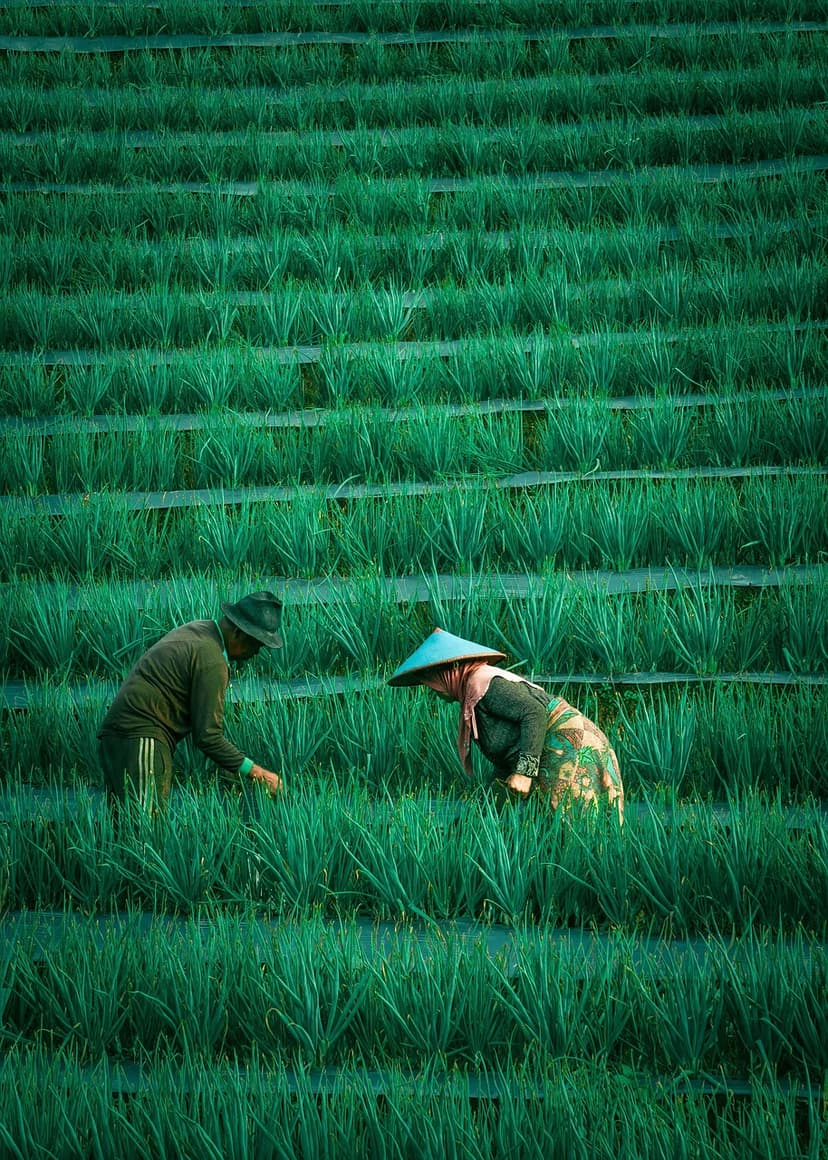

Learn how to boost the soil microbiome with organic matter in greenhouse pepper cultivation. Improve yield and quality. Request your free quote at.
Introduction
Greenhouse pepper cultivation is one of the most demanding in terms of nutritional and sanitary management. In this system, organic matter and the soil microbiome play a fundamental role in maintaining productivity and fruit quality over extended cycles. However, many growers underestimate their importance, focusing solely on chemical fertilization. This article explores how organic matter and beneficial microorganisms can transform soil health and, consequently, pepper yield.
Pepper (Capsicum annuum) is sensitive to stress conditions, such as salinity, waterlogging, or high temperatures, which are common in greenhouses. A soil with good structure and high biological activity is more resilient. The incorporation of compost, worm castings, and other organic amendments not only provides nutrients but also stimulates a diverse microbial community that improves nutrient availability, produces phytohormones, and protects against soil-borne pathogens. In this context, organic agricultural biostimulants become strategic allies to enhance these effects.
Importance of organic matter in greenhouses

Organic matter is the heart of soil fertility. In greenhouses, where intensification is high and rotation is limited, its role becomes critical. It supplies essential nutrients such as nitrogen, phosphorus, and sulfur, improves water retention capacity, and promotes the formation of stable aggregates, which reduces compaction and enhances aeration. Furthermore, it acts as a carbon reservoir, contributing to climate change mitigation.
The optimal organic matter content in greenhouse soils should be between 3% and 5%, but many intensively cultivated soils show values below 2%. This degradation is due to excessive tillage, the use of synthetic fertilizers, and the lack of organic inputs. Restoring these levels requires a medium-term management plan, including the regular application of organic amendments and the reduction of practices that accelerate mineralization.
Types of organic amendments
There are various sources of organic matter, each with particular characteristics. Mature compost is a balanced, stable option rich in beneficial microorganisms. Vermicompost stands out for its high concentration of plant-available nutrients and humic substances. Green manures, such as mustard or oats, can be incorporated between cycles to improve soil structure. Composted manures are also used, although ensuring their maturity is crucial to avoid phytotoxicity and pathogens.
The quality of organic matter is as important as the quantity. The C/N ratio, the degree of humification, and the presence of bioactive compounds determine its effect on the microbiome. For example, materials with a high C/N ratio can temporarily immobilize nitrogen, while highly humified ones release nutrients slowly. It is advisable to analyze the soil and the amendments to adjust application rates and avoid imbalances.
Soil microbiome: key players
The soil microbiome is a complex community of bacteria, fungi, actinomycetes, protozoa, and nematodes that interact with each other and with plant roots. These microorganisms perform vital functions: decomposition of organic matter, nutrient cycling, biocontrol of pathogens, production of phytohormones, and improvement of soil structure. In pepper cultivation, a diverse microbiome is associated with greater resistance to diseases such as Phytophthora capsici or Fusarium.
Plant growth-promoting rhizobacteria (PGPR), such as Bacillus and Pseudomonas, colonize the rhizosphere and stimulate root development. Arbuscular mycorrhizal fungi (AMF) form symbioses with roots, expanding the absorption surface for water and nutrients, especially phosphorus. These microorganisms are particularly valuable in soils with low nutrient availability or under stress conditions.
Factors affecting the microbiome
Agricultural practices have a direct impact on the microbiome. Intensive use of synthetic fertilizers can reduce microbial diversity, favoring opportunistic organisms. Broad-spectrum pesticides, although not always lethal, can disrupt trophic networks. Frequent tillage destroys soil aggregates and exposes organic matter to rapid mineralization, reducing the habitat for microorganisms.
On the other hand, excessive or deficient irrigation, temperature, and pH also condition microbial activity. Each species has an optimal range of conditions. For example, fungi prefer slightly acidic pH, while many bacteria thrive at neutral pH. Maintaining a balance is key to promoting a functional community.
Strategies to enhance the microbiome
To make the most of the microbiome's benefits, strategies that strengthen it must be implemented. The first is the regular application of high-quality organic matter, which acts as a substrate and carbon source for microorganisms. It is recommended to incorporate compost or humus before planting, at a rate of 3-5 kg/m², depending on the soil analysis.
Another strategy is inoculation with beneficial microorganisms. Commercial products containing specific strains of PGPR, AMF, or Trichoderma are available. These bioinoculants can be applied to the soil, to the seed, or through fertigation. It is essential to choose strains compatible with greenhouse conditions and with other products used.
Crop rotation, although limited in the greenhouse, can include species that promote microbial diversity, such as brassicas or legumes. Cover crops, sown during fallow periods, protect the soil and contribute biomass. Additionally, reduced tillage and the use of organic mulches help conserve soil structure and biological activity.
Irrigation and fertilization management
Irrigation should be adjusted to the needs of the crop and the soil, avoiding waterlogging that causes anoxia and death of aerobic microorganisms. The use of moisture sensors can optimize irrigation. Regarding fertilization, it is preferable to use organic or slow-release sources that feed both the plant and the microorganisms. Excessive fertilization with mineral nitrogen can inhibit biological fixation and reduce diversity.
The incorporation of fulvic acids for organic agriculture is a recommended practice, since these compounds act as natural chelating agents, improving nutrient uptake and stimulating microbial activity. They can be applied foliarly or to the soil, at doses of 1-2 L/ha, during critical crop stages.
Biostimulants and organic matter: synergy
Biostimulants are products that, when applied to plants or soil, improve nutritional efficiency, stress tolerance, and crop quality. Their combination with organic matter can enhance the effects of the microbiome. For example, seaweed extracts, such as those from Scenedesmus developed by Ecoganic, contain phytohormones and polysaccharides that stimulate root growth and microbial activity.
Biostimulants with amino acids and peptides provide precursors for the synthesis of proteins and enzymes, improving the plant's response to stress. In turn, organic matter provides the necessary substrate for microorganisms to produce these substances. This synergy translates into a more robust and productive system.
In field trials conducted on pepper crops, the combined application of compost and a microalgae-based biostimulant increased yield by 15% compared to the untreated control. Additionally, greater fruit firmness and a reduced incidence of root rots were observed. These results support the integration of organic and biotechnological strategies.
Mechanisms of action
Biostimulants act at the molecular level, modulating metabolic pathways related to defense and growth. For example, brassinosteroids present in some seaweed extracts activate the synthesis of heat shock proteins, protecting the plant from high temperatures. In the soil, polysaccharides stimulate the formation of aggregates and the activity of beneficial microorganisms.
The application of micronutrients for organic crops such as zinc and manganese, together with organic matter, can correct deficiencies that limit enzymatic activity and photosynthesis. These elements are cofactors of antioxidant enzymes that protect the plant from oxidative stress. Thus, balanced nutrition and biostimulation work together.
Integrated fertility management
A comprehensive approach to fertility management in greenhouse pepper must combine organic matter, the microbiome, and biostimulants. This involves planning applications throughout the cycle, considering the crop's phenological stages. During transplanting, establishing a healthy root system is crucial; for this purpose, a root biostimulant can be applied along with irrigation.
During the vegetative phase, the supply of nitrogen and potassium must be balanced. Organic matter releases nutrients gradually, reducing the risk of leaching. During flowering and fruit set, the demand for phosphorus and calcium increases; fulvic acids and biostimulants based on algae can improve the mobilization of these nutrients.
It is advisable to conduct soil and sap analyses to adjust dosages. Microbiological analyses, although less common, can provide information on the activity and diversity of the microbiome. At Ecoganic, we offer technical advisory services to design personalized fertilization programs, based on the principles of sustainable agriculture.
Fertilization programs with biostimulants
Greenhouse crops with biostimulants require specific management. A typical program might include the application of an algae-based biostimulant every 15 days, together with fertigation. The recommended dosage is 2-3 L/ha, depending on the stage. To improve soil health, a product with beneficial microorganisms can be applied at the beginning and middle of the cycle.
The integration of certified organic fertilizers is key to maintaining organic certification if the grower holds it. Ecoganic offers a line of fertilizers that comply with European and American regulations. These products, combined with organic matter, ensure complete and sustainable nutrition.
Field results demonstrate that growers who adopt these practices obtain more uniform harvests, with better size and color. They also reduce dependence on external inputs and improve long-term profitability. Soil health is an investment that pays off over time.
Related articles
Need professional help?
At Ecoganic in Spain, Europe, we offer certified Biostimulants and Organic Fertilizers. Call us: +34 623 753 719.
Frequently Asked Questions (FAQ)
How much organic matter does a greenhouse pepper soil need?
The optimal organic matter content in greenhouse soils for pepper is between 3% and 5%. If soil tests indicate lower values, regular applications of compost or humus should be made. A rate of 3-5 kg/m² before planting is a starting point, adjusted according to the soil test.
Which microorganisms are most beneficial for pepper?
Bacteria of the genus Bacillus and Pseudomonas are known for promoting growth and suppressing pathogens. Arbuscular mycorrhizal fungi, such as Glomus, improve phosphorus uptake. Fungi of the genus Trichoderma are also useful for biocontrol of soil-borne diseases.
How can I increase microbial activity in my soil?
Incorporate quality organic matter, avoid excessive use of pesticides and synthetic fertilizers, and maintain adequate moisture. Inoculation with biofertilizers containing beneficial microorganisms is also effective. Additionally, rotation with cover crops promotes microbial diversity.
Can biostimulants replace organic matter?
No, biostimulants complement the action of organic matter, but they do not replace it. Organic matter is the foundation of fertility and the habitat of microorganisms. Biostimulants enhance the plant's physiological processes and microbial activity, but they do not provide the structure or the nutrient reserve that organic matter supplies.
Organic matter and microbiome in greenhouse pepper: Keys to a living and productive soil
Greenhouse pepper cultivation under organic or regenerative management depends critically on soil health, and this, in turn, is determined by the interaction between organic matter (OM) and the soil microbiome. Under intensive protected agriculture conditions, the mineralization rate of organic matter accelerates due to high temperatures and constant humidity, which can deplete carbon reserves in just 3-5 cropping cycles if not properly managed. Recent studies indicate that a soil with less than 2% organic matter loses up to 40% of its water and nutrient retention capacity, directly affecting the uptake of calcium and potassium, essential elements for the firmness and quality of pepper fruit. Therefore, maintaining optimal OM levels (between 3.5% and 5% in greenhouse sandy-loam soils) is not an option, but a requirement to ensure the long-term sustainability of the system.
The soil microbiome acts as a biological engine that transforms organic matter into assimilable nutrients. In greenhouse soils under conventional management, bacterial and fungal diversity is drastically reduced, with a fungi/bacteria ratio dropping below 0.5, which favors pathogens such as Phytophthora capsici or Fusarium. However, when incorporating organic amendments rich in labile carbon (such as compost from plant residues or vermicompost) at rates of 8-10 tons per hectare, a 25-30% increase in total microbial biomass has been observed in just 60 days. This microbial activity translates into greater production of organic acids and siderophores, which solubilize fixed phosphorus (up to 45 additional ppm available) and chelate micronutrients such as zinc and iron, improving pepper nutrition without the need for highly soluble synthetic fertilizers.
The strategic application of organic matter must consider the C/N ratio and the stability of the material. For a pepper crop in an autumn-winter cycle, it is recommended to incorporate compost with a C/N ratio between 15:1 and 20:1, since a higher ratio (greater than 30:1) can immobilize nitrogen during the first 4-6 weeks, causing temporary deficiencies that reduce fruit set. On the other hand, the use of microbial biofertilizers (such as plant growth-promoting rhizobacteria, Bacillus spp. and Trichoderma spp.) together with organic matter has been shown to increase nitrogen use efficiency by 18-22%, reducing losses from nitrate leaching. In comparative trials, the combined treatment of compost + microbial inoculant achieved a marketable yield of 9.2 kg/m² compared to 7.8 kg/m² in the control without inoculant, with a 15% increase in average fruit weight and greater uniformity in extra-grade size.
To maximize the benefit of the microbiome in pepper cultivation, it is recommended to implement integrated management that includes: (1) the application of organic matter in localized bands at 15-20 cm depth, avoiding surface incorporation that favors ammonium volatilization; (2) maintaining soil moisture between 60% and 70% of field capacity, since microbial activity is reduced by 50% below 40% moisture; (3) the rotation of organic sources (sheep manure compost, shredded pruning residues, and vermicompost leachate) to diversify the energy substrates of the microbiome; and (4) reduced tillage, using cover crops or organic mulching, which protects soil structure and increases arbuscular mycorrhizal colonization by up to 30%. These practices not only improve fertility but also increase the system's resilience to saline or thermal stress, common in greenhouses in southeastern Spain. Periodic monitoring of microbial respiration (CO2 released per gram of soil) can serve as an early indicator of soil health, with target values above 5 mg CO2/g soil/day for optimal system functioning.
References
Frequently Asked Questions
How much organic matter does a greenhouse soil need for pepper?
The optimal organic matter content in greenhouse soils for pepper is between 3% and 5%. If soil tests indicate lower values, regular applications of compost or humus should be made. A rate of 3-5 kg/m² before planting is a starting point, adjusting according to the soil test.
Which microorganisms are most beneficial for pepper?
Bacteria from the Bacillus and Pseudomonas genera are known for promoting growth and suppressing pathogens. Arbuscular mycorrhizal fungi, such as Glomus, improve phosphorus uptake. Fungi from the Trichoderma genus are also useful for the biocontrol of soil-borne diseases.
How can I increase microbial activity in my soil?
Incorporate high-quality organic matter, avoid excessive use of pesticides and synthetic fertilizers, and maintain adequate moisture. Inoculation with biofertilizers containing beneficial microorganisms is also effective. Additionally, rotation with cover crops promotes microbial diversity.
Can biostimulants replace organic matter?
No, biostimulants complement the action of organic matter but do not replace it. Organic matter is the foundation of fertility and the habitat for microorganisms. Biostimulants enhance the plant's physiological processes and microbial activity, but they do not provide the structure or nutrient reserve that organic matter supplies.