
What is sunscald in tomatoes?
Sunscald (sunscald) is a physiological disorder that affects tomato fruits exposed to intense solar radiation and high temperatures. It manifests as whitish or yellowish areas on the fruit epidermis, which subsequently become necrotic and may be colonized by secondary pathogens. This damage significantly reduces commercial quality and postharvest shelf life. Managing sunscald in tomatoes with biostimulants has become a key strategy for growers seeking to mitigate this problem without resorting to synthetic chemical products.
Cellular damage begins when fruit temperature exceeds 40°C, causing protein denaturation and membrane lipid peroxidation. Studies have shown that exposure to UV-B radiation (280-315 nm) combined with temperatures above 35°C can reduce net photosynthesis by 40-60%, while sunscald incidence increases linearly with light intensity above 800 µmol/m²/s. The estimated economic loss in tomato crops under heat stress conditions can reach up to 30% of total production in Mediterranean and subtropical regions.
Causes and risk factors
Sunscald occurs when fruits are directly exposed to the sun, especially after cloudy periods or when foliage is insufficient. Temperatures above 32°C and high UV radiation are the main triggers. Factors such as excessive pruning, plant orientation, planting density, and irrigation management influence incidence. Tomato varieties with less foliar cover or thinner-skinned fruits are more susceptible. Water stress also exacerbates the problem, as it reduces the fruit's transpiration and cooling capacity.
Physiological mechanisms of damage
When fruit temperature exceeds 35°C, a progressive deactivation of antioxidant enzymes such as superoxide dismutase (SOD) and catalase (CAT) occurs, with documented reductions of 50-70% in their activity after 4 hours of exposure to 38°C. This generates an accumulation of reactive oxygen species (ROS), mainly superoxide radicals and hydrogen peroxide, which oxidize the polyunsaturated fatty acids of thylakoid membranes. The loss of membrane integrity is reflected in a 15-25% increase in electrolyte conductivity in affected fruits, measurable through ion leakage tests.
Varietal and environmental factors
Varieties such as 'Roma' and 'San Marzano' show an incidence 2.5 times higher than modern hybrids like 'BHN 589' or 'Florida 47', due to their lower trichome density and thinner cuticle (30-40 µm versus 50-60 µm). Row orientation is also critical: east-west rows at mid-latitudes expose fruits on the south side to 3-4 additional hours of direct radiation. A 2022 study in Almería showed that planting densities of 2.5 plants/m² reduce sunscald incidence by 40% compared to 3.5 plants/m², by improving natural shading.
Preventive management strategies
Canopy management
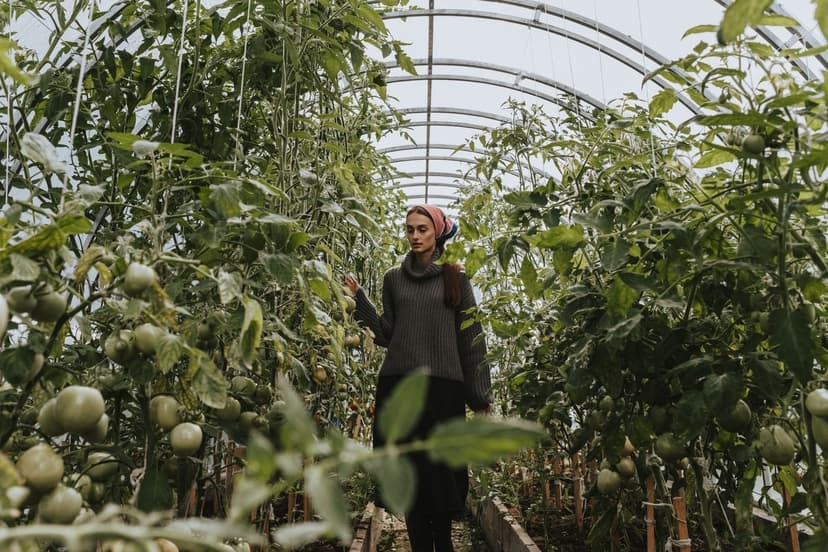
Maintaining adequate foliage that shades the fruits is the first line of defense. Practices such as moderate pruning, the use of trellises, and planting density management help avoid direct exposure. In greenhouse settings, the use of shade nets can reduce incident radiation.
Pruning should be limited to removing basal shoots and senescent leaves below the first cluster, maintaining at least 12-15 functional leaves per plant to ensure a leaf area index (LAI) of 3.5-4.5. The use of shade nets with 30-40% shading reduces fruit temperature by 4-6°C during peak hours, according to trials in Murcia greenhouses. Orienting cultivation beds in a north-south direction minimizes direct midday sun exposure on both sides of the row.
Irrigation and balanced nutrition
Uniform irrigation and balanced nutrition, especially with calcium and potassium, strengthen the cell wall and improve stress tolerance. Calcium is particularly important for cell membrane integrity, and its deficiency can aggravate sunscald.
The application of calcium in the form of calcium nitrate (Ca(NO₃)₂) at rates of 150-200 kg/ha during the fruit filling stage increases calcium content in the cell wall by 20-30%, reducing the incidence of sunscald by 35% according to studies in California. Potassium, applied as K₂O at 300-400 kg/ha, regulates stomatal opening and maintains cell turgor; a K:Ca ratio of 2:1 in the nutrient solution optimizes resistance to heat stress. Drip irrigation with daily frequency (2-3 events) maintains soil moisture at 80-90% of field capacity, avoiding the water stress that predisposes plants to solar damage.
Biostimulants to mitigate sunscald
Biostimulants offer an effective tool within sunscald management in tomato with biostimulants. These products, based on seaweed extracts, amino acids, beneficial microorganisms, and other natural compounds, act on plant physiology to improve its response to abiotic stress.
Seaweed extracts
Extracts of Ascophyllum nodosum are rich in phytohormones such as cytokinins, auxins, and abscisic acid, which stimulate the production of antioxidants and osmoprotective compounds. Applied foliarly, they reduce oxidative damage and improve cell membrane stability under heat stress.
Field studies in Brazil demonstrated that the application of A. nodosum extract at 0.5% (v/v) every 10 days reduced sunscald incidence by 45% in saladette tomato varieties, with an 18% increase in total phenolic content and a 22% increase in ascorbate peroxidase (APX) enzyme activity. The cytokinins present (mainly zeatin and dihydrozeatin) at concentrations of 50-100 ppm activate the expression of genes encoding heat shock proteins (HSP70 and HSP90), which protect protein folding during stress. It is recommended to apply 2-3 L/ha in 300-400 L of water, starting when fruits reach 2-3 cm in diameter.
Amino acids and peptides
The application of amino acids such as proline and glycine betaine acts as compatible osmolytes, helping to maintain cellular water balance. They also participate in the synthesis of heat shock proteins (HSP) that protect cellular proteins from heat damage.
Proline accumulates naturally in tomato tissues under heat stress, reaching concentrations of 5-8 µmol/g fresh weight, but exogenous application at doses of 1-2 g/L increases these levels to 12-15 µmol/g, improving cell membrane stability by 30% as measured by the electrolyte leakage index. Glycine betaine, applied at 500-1000 ppm, protects the Rubisco enzyme from thermal denaturation, maintaining the photosynthetic rate at 85% of the optimal value under temperatures of 38°C. A greenhouse study in Mexico showed that the combined application of proline (1.5 g/L) and glycine betaine (0.5 g/L) reduced the incidence of sunscald by 55% and increased marketable yield by 20%.
Beneficial microorganisms
Mycorrhizal fungi and plant growth-promoting rhizobacteria (PGPR) improve nutrient and water uptake, and stimulate the production of phenolic compounds and antioxidants in the plant. This strengthens the defense against abiotic stress.
Inoculation with Glomus intraradices (arbuscular mycorrhizal fungus) at a rate of 1000 spores/plant increases phosphorus and zinc uptake by 40-60%, nutrients essential for the synthesis of antioxidants such as glutathione. PGPR such as Bacillus subtilis and Pseudomonas fluorescens produce siderophores and indoleacetic acid (IAA) that stimulate root growth and the production of phenolic compounds. In field trials in Chile, the application of a mixture of B. subtilis (10⁸ CFU/mL) and G. intraradices reduced the incidence of sunscald by 40% and improved lycopene content by 15%
Frequently Asked Questions
What is sunscald in tomato?
It is a physiological disorder caused by direct exposure to intense solar radiation and high temperatures, which produces whitish spots and necrosis on the fruits.
How do biostimulants help prevent sunscald?
Biostimulants improve stress tolerance by stimulating antioxidants, osmoprotectants, and heat shock proteins, in addition to strengthening cell walls.
When should I apply biostimulants for sunscald?
It is recommended to apply preventively before temperatures exceed 28°C, and to repeat every 7-14 days during stress conditions.
What type of biostimulants are most effective?
Seaweed extracts, amino acids such as proline, beneficial microorganisms, and silicon-rich compounds have shown good results in mitigating sunscald.