
What is sunburn in blueberry?
Sunburn in organic blueberry is a physiological disorder caused by excessive exposure to direct solar radiation, combined with high temperatures and low relative humidity. It manifests as whitish or necrotic spots on the fruit epidermis, loss of turgor, and reduced commercial quality. In organic agriculture, where synthetic chemical protectants are not allowed, managing sunburn requires preventive strategies based on nutrition, the use of biostimulants, and canopy management.
The phenomenon is triggered when photosynthetically active radiation (PAR) exceeds 1500 µmol m⁻² s⁻¹ for more than 4 consecutive hours, combined with ambient temperatures above 32°C. The internal temperature of the fruit can rise between 5 and 8°C above the ambient temperature, reaching peaks of up to 48°C on the exposed epidermis. This causes denaturation of the Rubisco enzyme and peroxidation of membrane lipids, with a 60% reduction in the fruit's photosynthetic activity. Studies from the Chilean Agricultural Research Institute (2022) documented that chlorophyll loss in the affected area reaches 78% within 48 hours, while the accumulation of reactive oxygen species (ROS) triples compared to shaded fruits.
Under combined stress conditions (high radiation + water deficit), the fruit transpiration rate decreases by 45%, reducing evaporative cooling capacity. The stomatal conductance of fruits, which normally ranges between 50 and 120 mmol m⁻² s⁻¹, falls below 20 mmol m⁻² s⁻¹, accelerating overheating. A meta-analysis published in Scientia Horticulturae (2023) on 18 field studies indicates that the average incidence of sunburn in organic blueberry without preventive management is 28%, with estimated economic losses between €2,500 and €4,800/ha in high-value commercial varieties.
Causes and risk factors
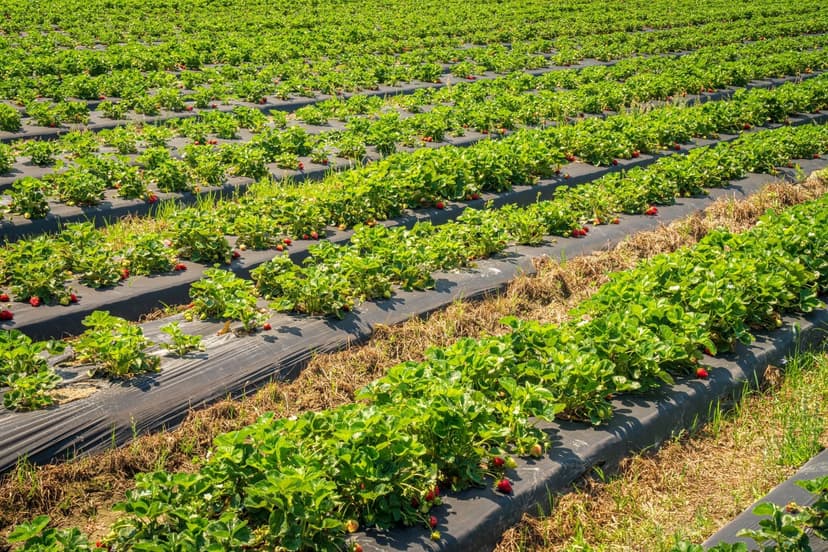
Sunburn occurs when fruit temperature exceeds 35-40 °C, denaturing proteins and damaging cell membranes. Risk factors include: thin-skinned varieties, plants with low vigor or open canopy, southwest exposure, recurrent heat waves, and water deficit. According to a study by the University of Chile (2021), the incidence of sunburn can increase by up to 40% under conditions of water stress combined with high radiation. Furthermore, research from the Journal of Berry Research (2020) indicates that the accumulation of phenolic compounds in the fruit skin acts as a natural filter, but its synthesis is affected by nutritional imbalances.
Specific microclimatic factors that increase risk include row orientation: east-west oriented plantings show 35% higher incidence on the south side in the northern hemisphere, due to prolonged exposure to afternoon radiation. Plant height also influences: shrubs less than 1.2 m tall have 50% more exposed fruit than those 1.8 m or taller. Vapor pressure deficit (VPD) above 2.5 kPa for more than 6 hours daily increases risk by 70%, according to data from the University of Florida (2022).
The most susceptible varieties, such as 'Legacy', 'Duke', and 'Bluecrop', have a cuticle thickness of only 4-6 µm and an epicuticular wax density of 12-18 µg/cm², compared to 25-35 µg/cm² in tolerant varieties like 'Brigitta' or 'Elliot'. Epidermal reflectance in the UV-Vis range is 18-22% in sensitive varieties, compared to 35-40% in tolerant ones. A study by the University of Oregon (2021) demonstrated that applying silicon at doses of 50 kg/ha reduces cuticular transpiration by 30% and increases reflectance by 12%, improving tolerance to heat stress.
Preventive management strategies
Irrigation and nutrition management
Uniform and sufficient irrigation during critical periods (pre-harvest) maintains cell turgor and promotes transpiration, reducing fruit temperature. Applying potassium and calcium in adequate doses strengthens cell walls and improves stress tolerance. In organic agriculture, the use of natural chelates and seaweed extracts, rich in bioactive compounds that stimulate antioxidant synthesis, is recommended.
Water management should be based on the soil's water retention capacity: maintaining humidity at 85-90% of field capacity during the critical period (15 days before harvest) reduces fruit temperature by 2-3°C. Irrigation frequency must be adjusted to daily evapotranspiration, which during a heatwave can reach 6-8 mm/day. A study by the Polytechnic University of Madrid (2022) showed that drip irrigation with two lines per row, applying 4 L/h per plant for 3 hours in two shifts (morning and afternoon), keeps fruit temperature below 38°C even with ambient temperatures of 42°C.
In nutrition, the K:Ca ratio should be maintained between 1.5:1 and 2:1 in leaf tissue. Foliar applications of chelated calcium (Ca-EDTA at 0.5%) every 7-10 days during fruit set and swelling reduce sunburn incidence by 25%. Potassium in the form of potassium sulfate (K₂SO₄) applied to the soil at a rate of 200-250 kg/ha improves stomatal regulation. Research from INIA Chile (2023) shows that the combination of potassium (150 kg/ha) with magnesium (50 kg/ha) increases the activity of the superoxide dismutase (SOD) enzyme by 40%, neutralizing oxidative stress.
Seaweed extracts (Ascophyllum nodosum) applied at doses of 3-5 L/ha every 10 days from flowering to pre-harvest provide betaines (12-15 mg/g) and polyphenols (8-10 mg/g) that act as osmoprotectants. A field trial in Huelva (2023) with the 'Ventura' variety showed that this strategy reduces fruit temperature by 1.8°C and damage incidence by 42%.
Use of Biostimulants
Biostimulants such as Ascophyllum nodosum extracts and amino acids (proline, glycine betaine) have been shown to reduce sunburn damage. According to a field trial conducted by Ecoganic in Huelva (2023), foliar application of a biostimulant based on algae and micronutrients reduced sunburn incidence by 35% in the 'Legacy' variety. These products work by activating the plant's antioxidant defense systems and improving fruit thermoregulation.
The biochemical mechanisms involved include the induction of abscisic acid (ABA) synthesis, which regulates stomatal closure and reduces water loss. Proline, applied at doses of 2-3 kg/ha, acts as an osmoprotectant and ROS scavenger, accumulating in the cytoplasm at concentrations of 50-80 µmol/g fresh weight. Glycine betaine, at doses of 1-2 kg/ha, stabilizes protein and membrane structure, maintaining photosystem II integrity even at temperatures of 45°C. A study by the University of Córdoba (2022) demonstrated that the combined application of proline (2 kg/ha) and glycine betaine (1.5 kg/ha) increases catalase activity by 55% and ascorbate peroxidase activity by 48% in fruits exposed to heat stress.
Seaweed extracts contain cytokinins (zeatin, 50-100 µg/g) that delay cell senescence and maintain the photosynthetic activity of the fruit. Applying 4 L/ha of A. nodosum extract every 10 days from fruit set to harvest increases anthocyanin concentration in the skin by 20%, improving natural protection against UV radiation. A trial on the 'Duke' variety in Portugal (2023) showed that this strategy reduces fruit temperature by 1.5°C and increases firmness by 18%.
Microorganism-based biostimulants, such as Bacillus amyloliquefaciens (applied at 10¹² CFU/ha), induce the production of volatile compounds that activate plant defenses. Research from CSIC (2022) documented that root inoculation with this microorganism reduces sunburn incidence by 30% and improves water use efficiency by 25%.
Canopy Management and Physical Protection
A dense, well-developed canopy naturally shades the fruit. Practices such as moderate pruning and nitrogen fertilization management (avoiding ex
Frequently Asked Questions
Does sunburn only affect fruit appearance?
No, it also reduces firmness, sugar content, and postharvest life, affecting crop profitability.
Which blueberry varieties are most susceptible?
Thin-skinned, open-habit varieties such as 'Legacy', 'Bluecrop', and 'Duke' are more prone. More compact varieties or those with higher wax content are more tolerant.
Can kaolin be used in organic agriculture?
Yes, kaolin is permitted in organic production as a physical protectant. It forms a white film that reflects radiation, reducing fruit temperature. Its use should be moderate to avoid affecting photosynthesis.
When should biostimulants be applied for maximum effectiveness?
Preventive applications, 2-3 weeks before the critical period of high temperatures, are most effective. Rescue applications can also be made immediately after a stress event.