
Uniform fruit set in blackberry with Scenedesmus: improves fruit attachment, size uniformity, and productivity. Learn about mechanisms, dosages, and results.
Introduction
Fruit set in blackberry (Rubus spp.) is a critical physiological stage that largely determines final yield and commercial fruit quality. Under field conditions, a high rate of flower and newly set fruit abscission is frequently observed, resulting in uneven clusters, variable sizes, and significant productivity losses. Factors such as nutritional imbalances, water stress, extreme temperatures, and low photoassimilate availability can compromise fruit attachment.
In this context, the use of microalgae-based biostimulants, such as Scenedesmus, has emerged as an effective agronomic tool to improve uniform fruit set in blackberry. Scenedesmus is a freshwater microalga rich in phytohormones, amino acids, polysaccharides, and micronutrients that act synergistically on the plant's physiological processes. This article explores the mechanisms of action, field results, and practical recommendations for integrating Scenedesmus into organic fertilization programs aimed at optimizing fruit set in blackberry.
Physiology of fruit set in blackberry: critical factors
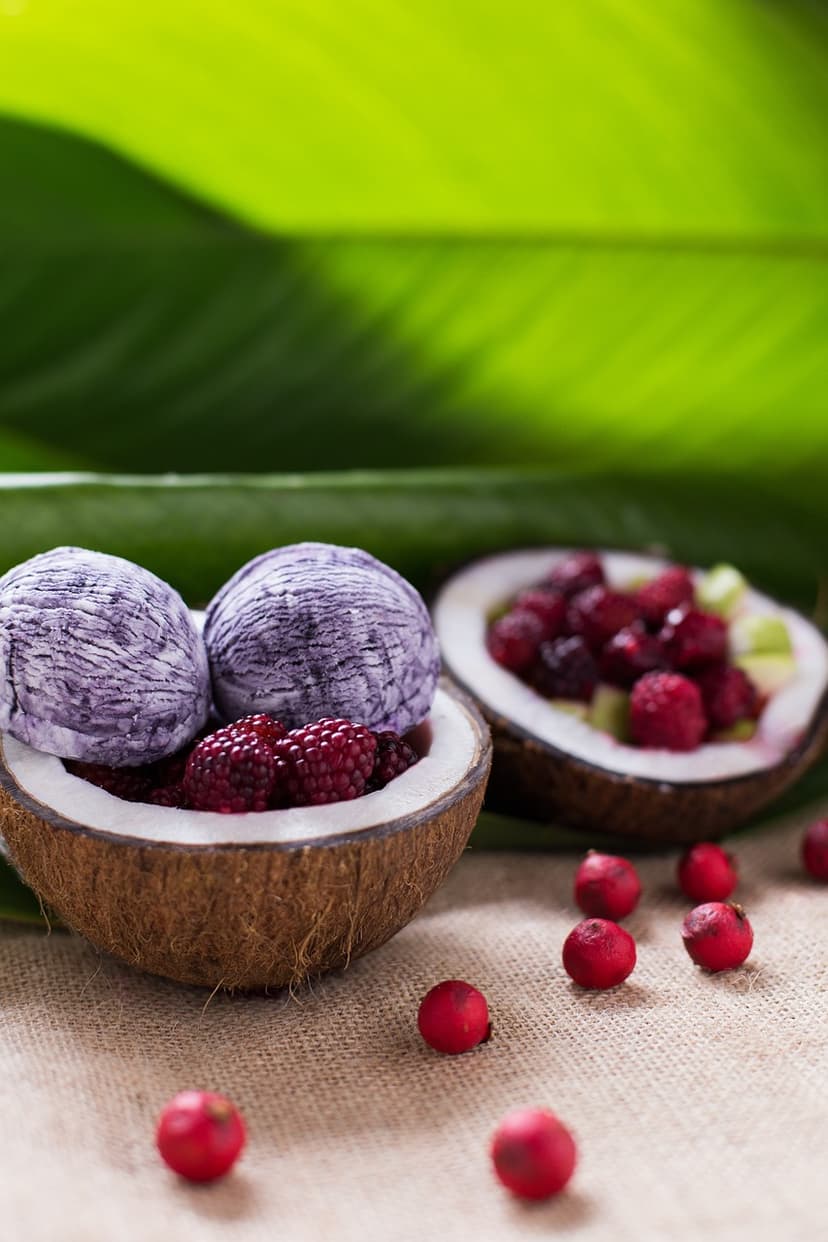
Fruit set in blackberries is a process involving pollination, fertilization, cell division, and ovary expansion. For a fruit to set successfully, the flower must receive sufficient viable pollen, the pollen tube must grow adequately, and the ovary must initiate its development. During the first weeks after anthesis, the fruits are highly sensitive to adverse conditions.
Factors that negatively affect fruit set include temperatures above 30 °C or below 10 °C during flowering, low relative humidity that dries out the stigmas, boron and calcium deficiency, and water stress that reduces photosynthesis and sugar translocation. Additionally, an inadequate source-sink relationship can lead to competition for photoassimilates among developing fruits, resulting in uneven fruit set and smaller fruit size.
In organic production systems, where the use of synthetic growth regulators is not allowed, fruit set management relies exclusively on cultural practices and natural biostimulants. Therefore, the application of Scenedesmus represents a viable and effective alternative to improve fruit set efficiency and harvest uniformity.
Scenedesmus as a biostimulant: mechanisms of action
Scenedesmus is a unicellular green microalga that grows in freshwater environments. Its biochemical composition includes phytohormones such as auxins, cytokinins, gibberellins, and brassinosteroids; free amino acids (proline, glycine betaine); polysaccharides; organic acids; and a wide range of micronutrients (zinc, manganese, iron, boron). These compounds act synergistically on plant physiology.
The auxins and gibberellins present in Scenedesmus promote cell division in the ovary and stimulate initial fruit growth. Cytokinins delay the senescence of floral tissues and improve nutrient mobilization towards developing fruits. Brassinosteroids increase tolerance to abiotic stress, which is crucial during periods of heat or drought coinciding with flowering.
Furthermore, the microalga's polysaccharides act as elicitors, activating the plant's natural defenses and improving nutrient uptake through roots and leaves. Amino acids such as proline act as osmoprotectants, maintaining cell integrity under water stress. Together, these mechanisms contribute to more homogeneous fruit set and a lower rate of abscission.
Field results: improvement in fruit set and uniformity
Field trials conducted on blackberry farms in Colombia and Costa Rica have shown that foliar application of Scenedesmus during flowering increases fruit set percentage by 15 to 25% compared to the untreated control. Additionally, a significant improvement in fruit size uniformity was observed, with a reduction in the proportion of small and misshapen fruits.
In a 2025 study in the department of Antioquia, Colombia, Scenedesmus was applied at a dose of 2 L/ha at three timings: early flowering, full flowering, and 10 days after. The results showed a 22% increase in the number of set fruits per cluster and an 18% increase in average fruit weight. The harvest was more uniform, with 85% of fruits classified as extra grade, compared to 60% in the control.
In another trial in the Cartago region of Costa Rica, the effect of Scenedesmus combined with an organic fertilization program was evaluated. A 30% reduction in young fruit abscission and a 12% increase in total yield were recorded. Farmers reported more synchronized flowering and more homogeneous fruit set, facilitating harvest planning.
Application strategy: dose and phenological timing
To maximize the benefits of Scenedesmus on blackberry fruit set, it is recommended to apply the biostimulant via foliar spray at three key timings: early flowering (when approximately 10% of flowers are open), full flowering (50-70% of flowers open), and 7-10 days after full flowering. This strategy ensures the product is available during the most sensitive phases of fruit development.
The recommended dose is 1.5 to 2 L/ha per application, diluted in a sufficient volume of water to uniformly cover the foliage (200-400 L/ha, depending on plant size and planting density). It is important to apply during periods of low solar radiation (early morning or late afternoon) to avoid degradation of bioactive compounds and optimize foliar absorption.
The compatibility of Scenedesmus with other organic inputs, such as seaweed-based foliar fertilizers or humic acids, is good, although a prior compatibility test is recommended. It should not be mixed with strongly alkaline products or mineral oils.
Integration with organic fertilization programs
Homogeneous fruit set in blackberry does not depend solely on biostimulant application; it requires integrated management of nutrition and soil conditions. Scenedesmus should be integrated into an organic fertilization program that ensures a balanced supply of macronutrients (nitrogen, phosphorus, potassium, calcium, magnesium) and micronutrients (boron, zinc, manganese, iron).
Calcium and boron are particularly important during fruit set, as calcium stabilizes cell walls and boron promotes pollen tube growth and fertilization. The application of Scenedesmus can enhance the absorption of these nutrients thanks to its content of amino acids and organic acids that act as natural chelating agents.
Likewise, maintaining adequate soil moisture and good drainage is essential to avoid water stress during flowering. The incorporation of organic matter and the practice of mulching help regulate soil temperature and moisture retention, creating a favorable environment for fruit set.
Final considerations and perspectives
The use of Scenedesmus as a biostimulant to improve uniform fruit set in blackberry represents a promising strategy within organic agriculture. Field results show significant increases in fruit set, size uniformity, and total yield, with a positive impact on crop profitability.
Research continues to explore new formulations and combinations with other biostimulants to further enhance their effects. It is expected that in the coming years, more studies will be available to fine-tune the doses and application timings for different blackberry varieties and agroclimatic conditions.
For producers interested in implementing this technology, it is recommended to start with pilot area trials, closely monitor results, and adjust the program according to the specific conditions of each farm. Specialized technical advice and the use of certified products for organic agriculture are key to success.
Related articles
Need professional help?
At Ecoganic in Spain, Europe, we offer certified Biostimulants and Organic Fertilizers. Call us: +34 623 753 719.
FAQ
What is Scenedesmus and how does it act on blackberry fruit set?
Scenedesmus is a freshwater microalga containing phytohormones, amino acids, and nutrients that stimulate cell division, improve nutrient uptake, and increase stress tolerance, promoting more uniform fruit set.
When should Scenedesmus be applied to improve fruit set?
It is recommended to apply at the start of flowering, full bloom, and 7-10 days later to cover the critical stages of fruit development.
What is the recommended dose of Scenedesmus for blackberry?
The foliar dose is 1.5 to 2 L/ha per application, diluted in 200-400 L of water, preferably during hours of low radiation.
Is Scenedesmus compatible with other organic fertilizers?
Yes, it is compatible with most organic fertilizers, but a prior compatibility test is recommended, avoiding mixtures with strong alkaline products or mineral oils.
References
Frequently Asked Questions
What is Scenedesmus and how does it act on blackberry fruit set?
Scenedesmus is a freshwater microalga containing phytohormones, amino acids, and nutrients that stimulate cell division, improve nutrient uptake, and increase stress tolerance, promoting more uniform fruit set.
When should Scenedesmus be applied to improve fruit set?
It is recommended to apply at the start of flowering, full bloom, and 7-10 days later to cover the critical stages of fruit development.
What is the recommended dose of Scenedesmus for blackberry?
The foliar dose is 1.5 to 2 L/ha per application, diluted in 200-400 L of water, preferably during hours of low radiation.
Is Scenedesmus compatible with other organic fertilizers?
Yes, it is compatible with most organic fertilizers, but a prior compatibility test is recommended, avoiding mixtures with strong alkaline products or mineral oils.