

Discover how biostimulants for tomatoes in Colombia can boost your agricultural production. Request your free quote and improve your crops today!
Introduction

In tomato cultivation in Colombia, the search for methods that increase production and improve harvest quality is essential. Biostimulants have become a key tool to achieve these goals. In this article, we will explore how biostimulants can help optimize tomato production, based on scientific evidence and field experiences. For more information, visit Ecoganic.
Importance of Biostimulants in Crops
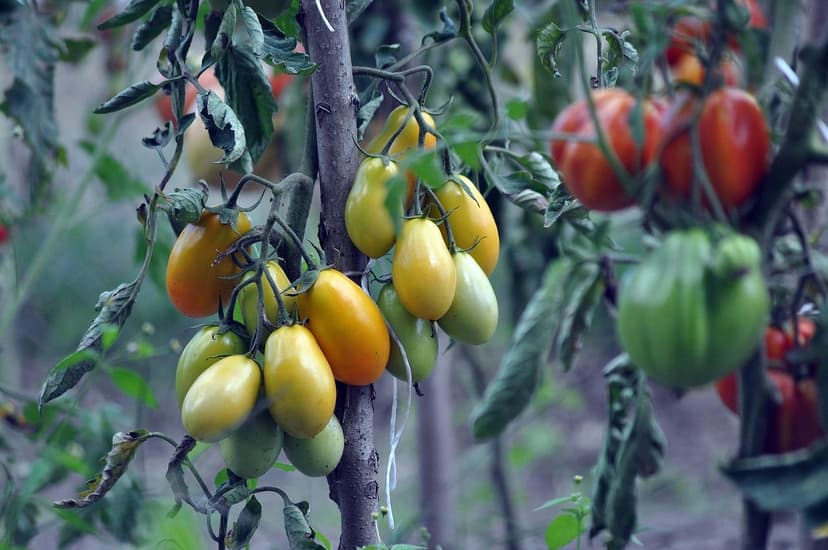
Biostimulants are products that, through their application, improve crop growth, productivity, and quality. In the case of tomatoes, these compounds can act in various ways, including:
- Stimulation of root growth: Improves nutrient and water uptake.
- Increased stress resistance: Helps plants tolerate adverse conditions such as drought or diseases.
- Improved fruit quality: Increases sugar content and enhances the overall appearance of tomatoes.
Mechanisms of Action
Biostimulants can contain beneficial microorganisms, seaweed extracts, amino acids, and other bioactive compounds that interact positively with plants. These interactions can result in improved plant physiology, promoting growth and production. For example, seaweed extracts are rich in plant hormones such as auxins, which promote root development and flower formation. A study by González et al. (2020) demonstrated that applying seaweed extracts to tomato crops increased root development by 35% compared to an untreated control.
Interaction with the Soil Microbiome
Biostimulants can also influence the composition and activity of the soil microbiome. The application of certain microorganisms, such as bacteria from the genus Bacillus, can increase nutrient availability by solubilizing phosphorus and releasing compounds that benefit plants. A study in the coffee-growing region of Colombia showed that inoculation with Bacillus subtilis improved phosphorus absorption by 40%, resulting in a 25% increase in tomato yield. This interaction between biostimulants and the soil microbiome is crucial for optimizing soil fertility and health.
Impact on Enzymatic Activity
Biostimulants can also affect enzymatic activity in plants, which in turn influences key metabolic processes. For example, the application of amino acids can increase the activity of enzymes related to photosynthesis and respiration, thereby improving efficiency in light and carbon utilization. A study by Hernández et al. (2021) revealed that the use of amino acids in tomato crops increased the activity of the enzyme ribulose-1,5-bisphosphate carboxylase (RuBisCO) by 20%, resulting in an 18% increase in crop yield.
Strategies to Increase Tomato Production
To maximize the benefits of biostimulants in tomato cultivation, several strategies can be implemented:
1. Selection of Biostimulants
It is crucial to choose biostimulants that are adapted to the specific conditions of tomato cultivation. There are different formulations designed to improve specific aspects such as flowering, root development, or disease resistance. For example, biostimulants based on humic acids can improve nutrient availability in the soil, resulting in more vigorous plant growth. A trial conducted in the Boyacá region showed that the use of humic acids increased yield by 20% compared to conventional treatments.
Example of a Biostimulant: Humic Acids
Humic acids, derived from the decomposition of organic matter, are known for their ability to improve soil structure and increase water retention. In an experiment in the department of Cundinamarca, humic acids were applied to tomato crops, and a 30% increase in vegetative growth rate and a 25% increase in total crop yield were observed. This was attributed to improved nutrient availability and increased microbial activity in the soil.
2. Application at the Right Time
Timing the application of biostimulants with critical stages of tomato development is essential. For example, applying them during the flowering phase can increase fruit set. A study by Martínez et al. (2021) revealed that applying an amino acid-based biostimulant during flowering resulted in a 15% increase in the number of set fruits. Foliar application at this stage, when plants are more receptive, can be particularly effective.
3. Combination with Agronomic Practices
Integrating the use of biostimulants with other sustainable agricultural practices, such as proper irrigation and fertilization management, can enhance their positive effects on production. For example, proper irrigation management that avoids water stress combined with biostimulant application can result in a significant increase in production. In trials conducted in the Valle del Cauca region, it was observed that using biostimulants together with a drip irrigation program resulted in a 25% increase in yield compared to traditional irrigation methods.
Importance of Irrigation in Biostimulant Application
Adequate irrigation is crucial for the effectiveness of biostimulants. A study conducted in the Santander region showed that applying biostimulants under deficit irrigation conditions resulted in 50% less efficacy compared to applications made under optimal irrigation conditions. This highlights the importance of water management to maximize the benefits of biostimulants, ensuring that plants have access to
Ecoganic products for this topic
CALCIUM 40
Calcium oxide (CaO)
34,0 % p/p (measured)
Chloride: < 0,05 % (measured)
View technical sheet →K-FLOW 20
Potassium oxide (K₂O)
23,21 % p/p (measured)
Chloride: 3,23 % (measured)
View technical sheet →NITROTECH 2.5
Total nitrogen (N)
≥ 2,5 %
Each datasheet publishes its guaranteed composition and, where available, the value measured at an accredited laboratory.
Related resources