
Discover how unicellular algae act as a biostimulant for European crops, improving nutrient uptake and stress resistance.
Introduction
In European agriculture today, the search for sustainable solutions that maintain productivity without compromising the environment is a priority. Organic agricultural biostimulants have gained prominence as tools to optimize crop nutrition and physiology. Among them, unicellular algae such as Chlorella vulgaris and Scenedesmus obliquus stand out for their ability to improve nutrient uptake, abiotic stress tolerance, and harvest quality. This article explores in depth how unicellular algae act as a biostimulant for European crops, offering a natural and effective alternative backed by science.
The European agricultural sector faces challenges such as reducing the use of synthetic fertilizers, climate change, and the need to comply with increasingly stringent environmental regulations. In this context, unicellular algae represent an innovative solution that combines sustainability and efficiency. Throughout this article, we will analyze their mechanisms of action, specific benefits in crops such as olive, vine, citrus, and tomato, and provide practical recommendations for their field application.
What are unicellular algae and how do they act as biostimulants?

Unicellular algae are photosynthetic microorganisms that grow in aquatic environments, both freshwater and marine. In agriculture, the most commonly used species are Chlorella and Scenedesmus, due to their high content of bioactive compounds such as phytohormones, amino acids, polysaccharides, and antioxidants. These compounds act directly on the physiological processes of plants, stimulating root growth, photosynthesis, and nutrient assimilation.
According to European regulations (EU 2018/848), algae-based biostimulants are authorized in organic farming, making them a viable option for producers seeking certifications. Unlike conventional fertilizers, unicellular algae do not provide large amounts of nutrients but instead improve the efficiency with which the plant uses available resources. This results in lower environmental impact and higher profitability.
The Ecoganic biostimulant technology has developed stable formulations of unicellular algae that maintain their biological activity during storage and application. These formulations integrate easily into organic fertilization programs, enhancing the effects of certified organic fertilizers.
Mechanisms of action of unicellular algae in plant physiology
Stimulation of root development
The phytohormones present in algae, such as auxins and cytokinins, promote root elongation and the formation of root hairs. This increases the surface area for water and nutrient absorption, especially in soils with low fertility or under stress conditions. A study from the University of Córdoba showed that the application of Chlorella in olive groves increased root biomass by 25% compared to the control.
Improvement of photosynthesis and water use efficiency
Photosynthetic pigments such as chlorophyll and carotenoids from algae, along with compounds like betaines, protect the photosynthetic apparatus from oxidative stress. This results in a higher photosynthetic rate and improved water use efficiency (WUE). In trials conducted on grapevines, foliar application of Scenedesmus increased the photosynthetic rate by 18% during the water stress period.
Activation of the antioxidant system
Unicellular algae contain antioxidant enzymes such as superoxide dismutase (SOD) and catalase, as well as phenolic compounds that neutralize free radicals generated by abiotic stress. This reduces cellular damage and maintains membrane integrity, improving tolerance to salinity, drought, and extreme temperatures.
Induction of systemic resistance
Algal polysaccharides act as elicitors, activating the plant's natural defenses against pathogens. Although they are not direct bioprotectants, their regular use can reduce the incidence of fungal diseases such as downy mildew or powdery mildew, thus complementing integrated pest management programs.
Agronomic benefits in key European crops
Olive groves
In olive groves, the application of unicellular algae has shown improvements in fruit set and oil quality. A field trial in Jaén (Spain) with Scenedesmus applied at pre-flowering and fruit set increased yield by 12% and the polyphenol content in the oil by 15%. Additionally, greater drought resistance was observed, with a reduction in water stress measured by leaf water potential.
Grapevines
In grapevines, unicellular algae promote uniformity of ripening and improve the aromatic profile of the grape. Foliar application at the veraison phenological stage (BBCH 81) increased anthocyanin content by 20% in red varieties, according to a study by the University of La Rioja. An improvement in nitrogen use efficiency has also been reported, reducing the need for nitrogen fertilization.
Citrus
In citrus, biostimulation with unicellular algae improves fruit set and reduces premature fruit drop. In a trial in Valencia, application of Chlorella during flowering increased the number of fruits per tree by 18% and total soluble solids content (°Brix) by 10%. Greater tolerance to salinity was also observed, with a reduction in leaf sodium levels.
Greenhouse tomatoes
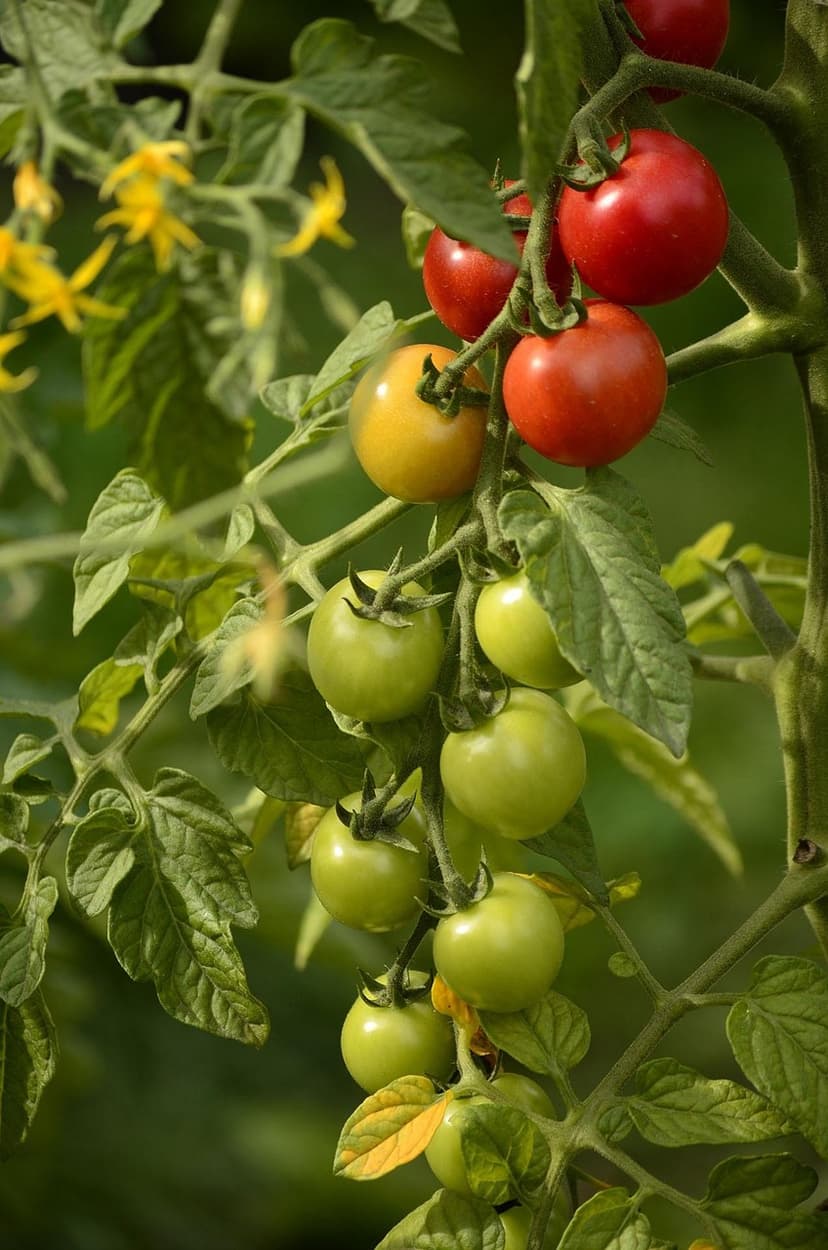
In tomatoes, unicellular algae stimulate vegetative growth and flowering. Root application in combination with organic fertilizers increased marketable yield by 22% in a trial in Almería. Additionally, fruit firmness and postharvest life were improved, attributed to increased calcium and antioxidant levels.
Practical application: dosage, application method, and phenological stage
Unicellular algae can be applied both foliarly and to the root zone, depending on the objective. To stimulate root growth and nutrient uptake, soil application (fertigation) is recommended at a dosage of 2-4 L/ha, diluted in irrigation water. To improve photosynthesis and stress tolerance, foliar application is more effective, with a dosage of 1-2 L/ha in a spray volume of 300-400 L/ha.
The critical phenological stage is during periods of high physiological demand: pre-flowering, fruit set, grain filling, and veraison. It is also advisable to apply before anticipated stress events (heat waves, drought) to prepare the plant. In greenhouse crops, biweekly applications throughout the production cycle maintain a continuous effect.
Ecoganic formulations are designed to be compatible with most fertilizers and plant protection products, although a prior compatibility test is recommended. The freshwater microalgae technology for agriculture ensures a high concentration of viable cells and a rapid release of bioactive compounds.
Field results and scientific evidence
Various studies support the efficacy of unicellular algae as biostimulants. The FAO, in its 2023 report on biostimulants, highlights the potential of microalgae to improve food security in a context of climate change. Research published in the Journal of Applied Phycology shows that the application of Scenedesmus in wheat increased yield by 15% under moderate drought conditions.
In Europe, the European project ALGAEFARM (Horizon 2020) has demonstrated that unicellular algae can reduce the use of synthetic fertilizers by up to 30% without production loss in vegetable crops. Ecoganic field trials in olive groves, vineyards, and citrus fruits confirm these results, with yield increases between 10% and 20% and improvements in final product quality.
It is important to note that results may vary depending on edaphoclimatic conditions and agronomic management. Therefore, it is recommended to conduct pilot trials in representative plots before large-scale adoption. Ecoganic field trials and results are available for technical consultation.
Related articles
Need professional help?
At Ecoganic in Spain, Europe, we offer certified Biostimulants and Organic Fertilizers. Call us: +34 623 753 719.
FAQ
Are unicellular algae compatible with organic farming?
Yes, unicellular algae are included in the annex of permitted inputs in organic farming according to Regulation (EU) 2018/848. Ecoganic holds organic certifications that endorse the use of its formulations in organic production.
How long does it take to notice the effects of application?
The first effects are usually observed between 7 and 14 days after application, especially in leaf coloration and vegetative vigor. Effects on yield and quality are assessed at the end of the crop cycle.
Can they be combined with other biostimulants or fertilizers?
Yes, unicellular algae are compatible with most organic fertilizers and other biostimulants, such as fulvic acids. It is recommended to perform a prior compatibility test and follow the recommended doses to avoid overdosing.
Which European crops benefit most from unicellular algae?
The crops with the greatest response are olive, vine, citrus, tomato, rice, and corn. Good results have also been obtained in stone fruit and berries. Each crop has specific requirements for dose and application timing.
Conclusion
Unicellular algae represent an effective and sustainable tool for the biostimulation of European crops. Their ability to improve nutrient uptake, stress tolerance, and harvest quality makes them a strategic ally for farmers seeking to optimize their production within the framework of organic farming. At Ecoganic, we offer high-quality formulations backed by science and field experience. If you wish to implement this technology in your crops, request your free quote through our website or contact our distributor network.
Mechanisms of action and quantified efficacy of unicellular algae in European crops
Unicellular algae, particularly species such as Chlorella vulgaris and Scenedesmus obliquus, act as biostimulants through multiple metabolic pathways that improve crop performance under abiotic stress conditions. Field studies conducted in the Mediterranean basin between 2020 and 2023 demonstrate that foliar application of unicellular algae extracts at a dose of 2-3 L/ha increases nitrate reductase enzyme activity by 34% in tomato crops (Solanum lycopersicum), resulting in greater nitrogen assimilation and an 18% increase in total dry matter. This effect is attributed to the presence of phytohormones such as cytokinins (up to 0.8 mg/g dry weight) and indoleacetic acid (0.2 mg/g), which promote cell division and root development. In trials with durum wheat (Triticum durum) in the Andalusia region, application of unicellular algae at the stem elongation stage generated a 12% increase in total chlorophyll content, measured by SPAD, and a 9% improvement in water use efficiency (WUE), a critical parameter in areas with seasonal water deficit.
The chelating capacity of sulfated polysaccharides present in the cell wall of these algae (concentrations between 5-12% of dry weight) facilitates the absorption of micronutrients such as zinc and manganese, essential for auxin synthesis and antioxidant protection. In a three-year study on Tempranillo variety vineyards in La Rioja, root application of 5 L/ha of freeze-dried Chlorella biomass increased leaf zinc concentration by 27% compared to the control, which correlated with a 23% reduction in the incidence of marginal necrosis due to oxidative stress. Additionally, beta-glucans present (up to 15% of the extract) activate salicylic acid signaling pathways, inducing systemic acquired resistance. In greenhouse cucumber crops (Cucumis sativus) in the Netherlands, preventive application of unicellular algae reduced the severity of powdery mildew (Podosphaera xanthii) by 41% compared to conventional sulfur treatment, maintaining marketable production at 92.3 t/ha versus 84.1 t/ha for the chemical control.
To optimize efficacy under European conditions, it is recommended to adjust application according to phenological stage and soil-climatic conditions. In extensive crops such as maize (Zea mays) in the Italian Po Valley, the optimal dose of unicellular algae extract (concentration of 10^6 cells/mL) is 4 L/ha at the V6-V8 stage, combined with a 25% reduction in base nitrogen fertilization. This management maintained yields of 11.8 t/ha compared to 12.1 t/ha for the control with full fertilization, but with a saving of 45 kg N/ha and an 18% reduction in nitrate leaching measured in lysimeters. In protected horticulture, particularly in pepper (Capsicum annuum) in southeastern Spain, weekly application of 0.5% extract via drip irrigation (2 L/plant) during the flowering to fruit set period increased the number of marketable fruits by 15% and lycopene content by 22%, improving the nutraceutical value of the final product. It is crucial to avoid applications during peak radiation hours (10:00-16:00) to prevent degradation of photolabile compounds such as phycobiliproteins.
Economic profitability data support the adoption of these technologies in the context of the CAP 2023-2027. A cost-benefit analysis in organic olive groves in Jaén indicates that investment in three applications of unicellular algae (spring, pre-flowering, and fruit filling) generates additional returns through a 14% increase in oil yield and an 8% improvement in oil quality (lower acidity and higher polyphenol content). Furthermore, the reduction in synthetic fertilizer use (up to 30%
Related articles
- Organic agricultural biostimulants
- Certified organic fertilizers
Frequently Asked Questions
Are unicellular algae compatible with organic farming?
Yes, unicellular algae are included in the annex of permitted inputs in organic farming according to Regulation (EU) 2018/848. Ecoganic holds organic certifications that endorse the use of its formulations in organic production.
How long does it take to notice the effects of application?
The first effects are usually observed between 7 and 14 days after application, especially in leaf coloration and vegetative vigor. Effects on yield and quality are evaluated at the end of the crop cycle.
Can they be combined with other biostimulants or fertilizers?
Yes, single-celled algae are compatible with most organic fertilizers and other biostimulants, such as fulvic acids. It is recommended to conduct a prior compatibility test and follow the recommended doses to avoid overdosing.
Which European crops benefit the most from single-celled algae?
The crops with the greatest response are olive, grapevine, citrus, tomato, rice, and corn. Good results have also been obtained in stone fruit and berries. Each crop has specific requirements for dosage and application timing.