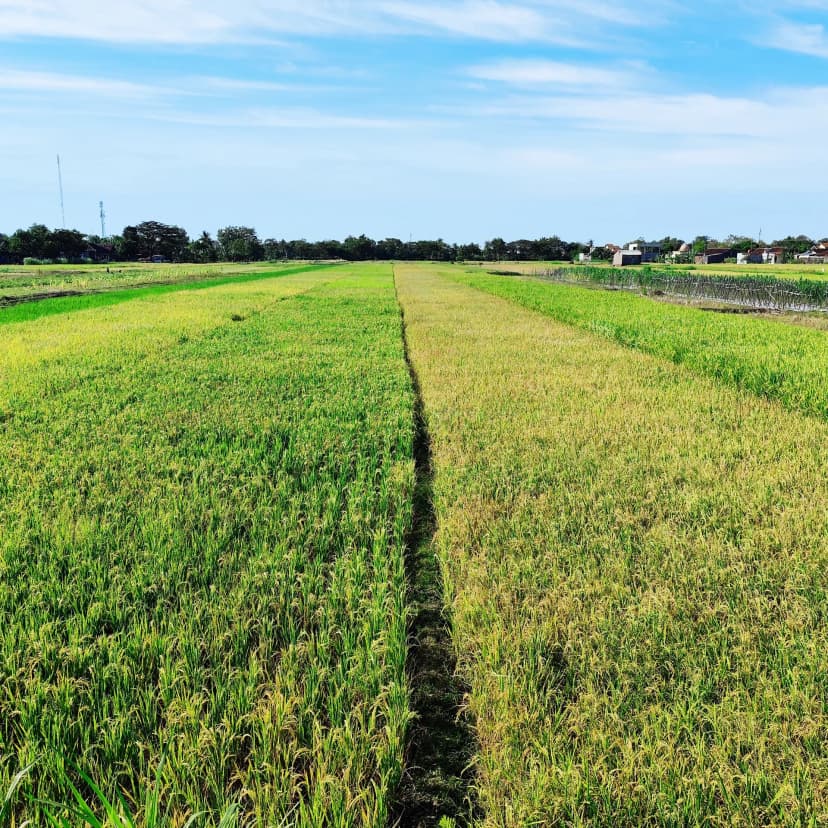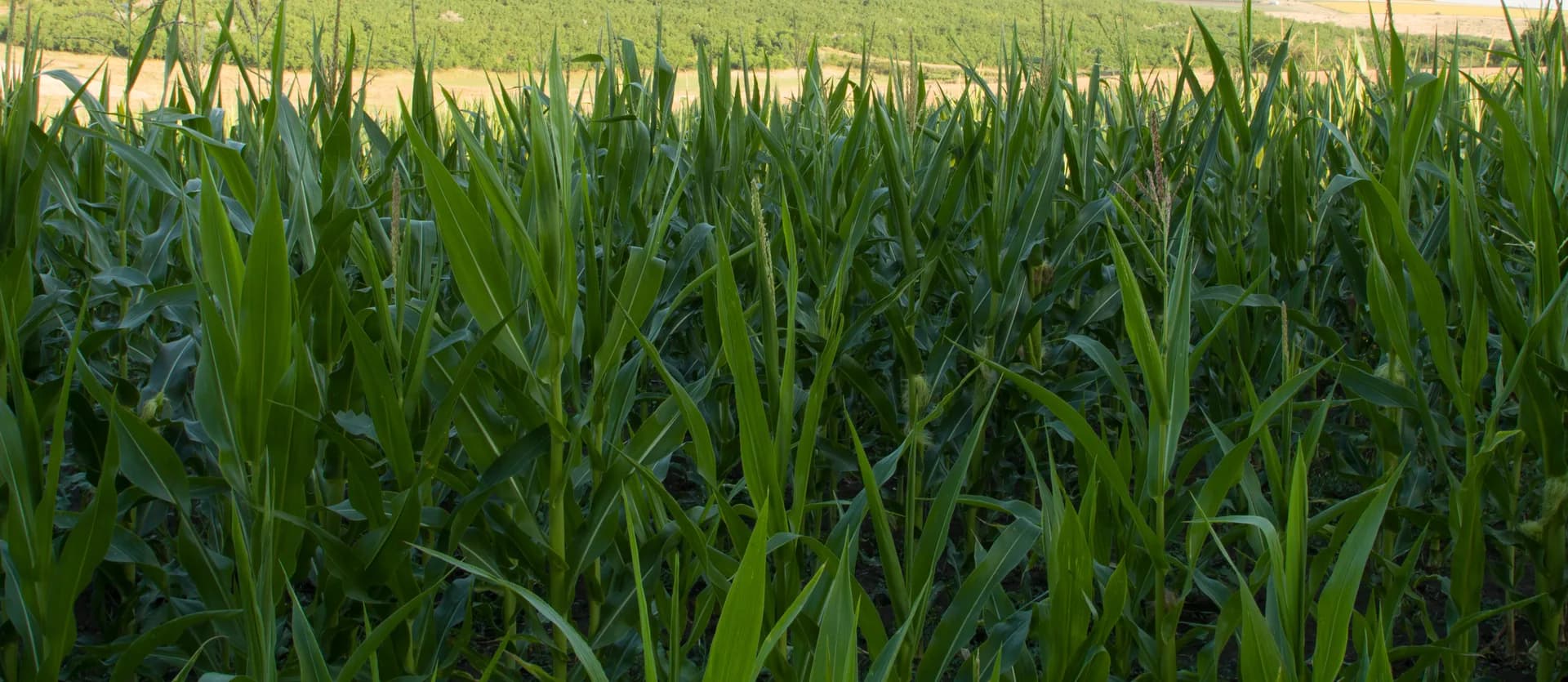

A guide to setting up an ammoniacal nitrogen trial in organic rice: field design, application timings, record-keeping and evaluation of results.
Fundamentals of ammoniacal nitrogen in organic rice
Ammoniacal nitrogen in organic rice is a central topic for anyone who wants to maintain paddy productivity without resorting to synthetic fertilisers. Rice is a crop adapted to flooded soils, where oxygen is scarce and nitrate forms of nitrogen are easily lost through denitrification. In this context, ammonium is a more stable and plant-available source of nitrogen, provided it is managed with judgement and the specific conditions of each field are known.
Organic production restricts the use of synthetic fertilisers and requires that nitrogen sources come from organic or mineral materials permitted by the organic production regulations applicable in each territory. Before including any input in a trial or in the fertilisation programme, it is advisable to confirm with the certification body that it is permitted. Organic materials, such as mature compost, composted manure, plant residues, food industry by-products or seaweed extracts, can supply nitrogen that eventually becomes ammonium, but their release is gradual and depends on microbial activity, temperature and moisture.
That is why it is not enough to read the nitrogen content on the label: you need to understand when and at what rate it will be available to the crop. A very stable material may take time to release nitrogen and arrive late for the peak demand of rice, while a faster one may be lost if applied at the wrong time. This guide proposes a method for setting up, managing and evaluating a field trial with ammoniacal nitrogen, from site selection to data interpretation. It does not describe results from any specific field, but rather criteria so that each grower or adviser can design their own comparison and draw their own conclusions.
Why ammonium dominates in flooded soil
When a soil is flooded, water displaces the air from the pores and the soil shifts to reducing conditions. Under these conditions ammonium accumulates and remains held in the soil exchange complex, while nitrate, if it forms in the thin surface layer that retains some oxygen, can move down into the oxygen-free zone and be lost as gas. This dynamic explains why flooded rice is traditionally regarded as a crop that feeds mainly on ammonium.
At the same time, ammonium is not free from losses. In the floodwater, with high pH and high temperatures, part of it can volatilise as ammonia, especially if the material remains on the surface and is not incorporated. Understanding this dual behaviour, stable in the soil but vulnerable in the water, is the basis for deciding how and when to apply and for subsequently interpreting what is observed in the field.
What is worth clarifying before starting
Before setting up any comparison, it is useful to answer a few simple questions that organise the work and prevent improvisation during the season:
- What the specific objective is: adjusting the rate, comparing nitrogen sources, assessing the timing of application or evaluating a biostimulant.
- What history the field has in terms of fertilisation, rotation, organic matter applied and previous water management problems.
- Which variety and which establishment system are used, because they condition nitrogen demand throughout the season.
- What resources are available for measuring and recording: staff, time, sampling equipment and access to a trusted laboratory.
- Who advises on the approach and the interpretation, so that decisions do not depend on a single person or on a one-off impression.
Design of the ammoniacal nitrogen trial in organic rice

A well-designed plot trial is the foundation for obtaining reliable conclusions on ammoniacal nitrogen management in organic rice. Before applying any treatment, the objectives must be defined, homogeneous plots selected and a design established that allows the effect of the treatments to be separated from other sources of variation, such as soil texture, levelling or water access.
Plot selection and homogeneity
The experimental plots must be representative of the commercial rice field. It is advisable to choose an area with a history of organic management and without marked differences in texture, soil depth or flooding level. Land levelling is critical in rice, because small differences in the water layer affect oxygen availability and nitrogen transformation. It is recommended to organise the design in randomised blocks, with several replicates per treatment, in order to distribute spatial variability among all the treatments; the more replicates, the more reliable the comparison will be, and the agronomist can advise how many are reasonable according to the variability of the land.
It is worth drawing a sketch of the plot and marking each unit with permanent markers that withstand water and field operations. In rice there is a detail specific to the crop: water circulates between paddy fields and can carry product from one unit to another. It is therefore useful to separate the units with well-formed bunds or borders and, where possible, to give each one its own water inlet and outlet. Without this separation, one treatment can contaminate its neighbour and the comparison loses value.
Before sowing or transplanting, a complete soil analysis should be carried out including organic matter, total nitrogen, ammoniacal and nitric nitrogen, phosphorus, potassium, pH, electrical conductivity and texture. These data allow the results to be better understood and the adjustment of doses to be justified. In flooded rice fields, the soil redox potential is a parameter of great interest, because it conditions the processes of nitrification and denitrification; if it cannot be measured, it is at least worth recording how the water layer is managed throughout the cycle.
Treatments and doses
The trial must include a control with no additional nitrogen input and several treatments with increasing levels of ammoniacal nitrogen. Since in organic production no synthetic mineral sources are available, the doses are expressed in terms of the total nitrogen supplied by the permitted organic material. The range to be tested depends on soil fertility, the potential of the variety and the cropping system, and must be set with the agronomist and with the information from the technical data sheet of each product, never on the basis of general recipes.
It is important that all treatments receive a common base of phosphorus, potassium and micronutrients, so that the differences observed are mainly due to nitrogen. It is also very informative to include a reference treatment that reproduces the holding's usual management, because it allows the alternatives to be compared with what the producer already does. If a biostimulant is to be assessed, a treatment combining it with an intermediate nitrogen level is added, together with another using it alone, so that the effect can be attributed to each component. Randomisation of the treatments within each block is essential to avoid bias.
Response variables
The variables measured must cover agronomic and physiological aspects, and must be defined before starting so that they are always measured in the same way. Among the most useful are:
- Plant height and number of tillers per unit area at fixed points in the cycle.
- Number of panicles, filled grains per panicle and grain weight at harvest.
- Grain yield of each unit, with moisture corrected to a common value.
- Harvest index and nitrogen content in the grain and in the straw.
- Leaf colour, always assessed with the same method and on the same reference leaves.
- Evolution of ammoniacal nitrogen in the topsoil, through periodic sampling.
To assess nitrogen efficiency, the apparent fertiliser recovery can be calculated by comparing the uptake of the fertilised units with that of the control. It is also worth observing the general health status of the crop: very luxuriant growth due to excess nitrogen usually leaves the plant more delicate and more prone to lodging, and any incidence must be discussed with the agronomist. In organic rice, fertilisation must seek a balance that avoids both deficiency and excess.
Phenological stages and application routes
The timing of ammoniacal nitrogen application is as important as the dose. Rice passes through phases with different requirements, and poorly synchronised application can result in losses through volatilisation, denitrification or washing away with the water. To decide well, it is advisable to know the real stage of the crop in each plot, not just the calendar date.
Establishment phase
At transplanting or in direct sowing, rice needs an initial supply of nitrogen to encourage rooting and subsequent tillering. However, in flooded soils ammonium can volatilise if left on the surface without being incorporated. For this reason it is usually recommended to apply the material at the time of land preparation or to incorporate it lightly into the soil before flooding. Slow-release organic materials can be applied in that preparation phase or in the floodwater, always following the instructions in the product's technical data sheet.
Tillering and panicle initiation
Tillering is a critical phase for determining the number of panicles. An adequate supply of ammoniacal nitrogen during this period encourages the formation of productive tillers. Application is planned at the start of tillering, when the plant already has several formed leaves and active roots, and must be adjusted to the state of the crop and the technician's judgement. In flooded paddy fields, ammonium is the predominant form of available nitrogen and the roots absorb it actively. Excessive inputs that cause disproportionate vegetative growth and increase the risk of lodging should be avoided.
Panicle formation and grain filling
During panicle formation the nitrogen demand is lower than at tillering, but a moderate supply is still needed to maintain the photosynthetic activity of the upper leaves, which feed grain filling. Excess nitrogen at this stage can delay ripening and leave the crop more susceptible to health problems. In organic production it is preferable to split the input and use organic sources that release nitrogen gradually, always checking the state of the leaves before deciding on a further application.
Water management around application
The water layer determines what happens to the ammonium. Drainage, overflow or very abundant water inflows shortly after application should be avoided, because they can wash the material away and distort the comparison between treatments. Likewise, a very shallow, warm water layer with the product on the surface encourages volatilisation losses. Recording the water level at each application and keeping it as stable as possible between units is one of the most profitable decisions in the whole protocol.
Application routes: root and foliar
The root route is the main one for ammoniacal nitrogen, since rice roots are adapted to absorbing ammonium under flooded conditions. Organic fertilisers are applied to the soil or to the floodwater. The foliar route can complement nutrition at times of high demand or when the roots have difficulty absorbing, but it does not replace basal fertilisation. Biostimulants made from microalgae can be applied foliarly and can contribute to photosynthetic efficiency and tolerance to abiotic stress, always at the dose and timing indicated in the product's technical data sheet.
Interaction with microalgae and organic matter
The biological activity of the soil is a determining factor in the availability of ammoniacal nitrogen. In organic rice fields, organic matter and microorganisms regulate the mineralisation and transformation of nitrogen, and any trial should take them into account when interpreting the data.
Role of microalgae
Microalgae are organisms rich in organic nitrogen and in bioactive compounds. Products made from them can be applied to the soil, to the floodwater or to the leaves, according to the formulation indicated in the technical data sheet. They can help to stimulate microbial activity and, with it, to make the release of ammonium more gradual, as well as providing organic matter that is easily decomposed. Their effect, however, depends on the soil, the water, the variety and the management; they do not replace basal fertilisation nor do they guarantee a specific result, and for this reason they should be assessed within a comparison with a control.
Organic matter and mineralisation
Soil organic matter is the main reserve of nitrogen in organic production. Its mineralisation releases ammonium, which can be taken up by the rice or transformed into nitrate by nitrifying microorganisms. In flooded soils, nitrification is limited to the oxidised surface layer, while ammonium predominates in the rest of the profile. It is therefore essential to maintain adequate levels of organic matter and to favour the activity of soil microorganisms, for example by incorporating crop residues in an orderly manner and avoiding an excess of fresh material just before flooding.
A practical aspect that is often overlooked is the timing of the incorporation of straw and other residues. If very fresh material is buried shortly before flooding, decomposition consumes oxygen and can immobilise part of the available nitrogen for a time. Recording when and how each residue was incorporated helps to explain differences in behaviour between plots that, on paper, received the same.
Synergies with biostimulants
Microalgae biostimulants can contribute to nitrogen uptake by favouring root development and the activity of processes related to nutrient metabolism. Likewise, some of their components can help the plant to tolerate abiotic stress better, such as heat or water salinity. These possible synergies should not be taken for granted: they depend on each situation and are only confirmed by comparing treatments under the same conditions.
How to attribute an effect: the role of the control
When a fertiliser and a biostimulant are combined, the only way to know what each one has contributed is to have all the comparisons: a control with neither of the two, a unit with only the fertiliser, another with only the biostimulant and another with both. Without that structure, an observed improvement may be due to the fertiliser, to the biostimulant, to an interaction between the two or simply to a more fertile area of the plot. Setting out the complete design costs a little more space, but it avoids conclusions that do not hold up.
Evaluation of results and adjustment of management
Once the cycle has ended, analysis of the data allows practical conclusions to be drawn on the management of ammoniacal nitrogen in organic rice. The quality of these conclusions depends almost entirely on the quality of the records kept during the season.
Record-keeping and field notebook
Everything that happens in the plot must be noted with the date: applications, irrigation and changes in water depth, operations, incidents and plant observations. It is useful to accompany the notes with photographs always taken from the same point and with the same orientation. When someone reviews the result months later, that notebook will be the only way to distinguish a real effect from a coincidence of management.
Statistical analysis
The data must be subjected to an analysis of variance to determine whether there are differences between treatments that go beyond natural variability. It is important to check the assumptions of the model and, if necessary, apply transformations or seek help from a technician with experience in statistics. A means comparison test then helps to identify which dose, sources or application timings really differ from the others and which are equivalent to each other.
Agronomic interpretation
Beyond statistical significance, the results must be interpreted in agronomic and economic terms. A yield improvement must justify the cost of the fertiliser and its application, and the nitrogen use efficiency and the possible environmental impact of excesses must also be considered. If a difference is small and is not repeated between blocks, the prudent course is to treat it as a trend that will or will not be confirmed in another season, not as a closed conclusion.
Adjustment of doses and timings
With the results of the trial, the dose and timing can be adjusted to local conditions. If it is observed that high levels do not improve yield, it is preferable to reduce the amount and avoid risks of losses and water contamination. Likewise, if an application timing has given a better result, the input can be concentrated there. A single season is rarely enough: repeating the comparison under different conditions is the best tool for fine-tuning management safely.
To complement the information, you can consult the Ecoganic trials section and the page on organic rice cultivation.
Common mistakes and practical criteria in trial management
Day-to-day trial management tends to fail more because of operational carelessness than because of poor agronomic design. One of the most common mistakes is treating the plots unevenly without realising it: irrigating some before others, treading on the trellis in a particular area, or letting the wind tilt the application to one side. Before starting, it is advisable to establish a work route and always repeat it in the same order, so that any difference between plots can be attributed to the treatment and not to the routine of the person managing the trial. If the operator changes mid-season, the route must be explained with the same precision as the dose.
Another common mistake is confusing the convenience of the application with its quality. Applying when the water is too cold, when heavy rain is forecast or during the hottest central hours of the day can alter the behaviour of ammoniacal nitrogen and reduce the value of the data. The practical decision is simple: if conditions are not reasonably stable, the application is postponed and the reason is recorded. A justified delay is preferable to a forced application that contaminates the reading of the results. What is not recorded does not exist when it comes to interpretation.
The temptation to tamper with the trial halfway through is another frequent risk. Adding a complementary product, changing the dose for a plot because it looks like it is lacking, or boosting the fertilisation of a specific area breaks the comparison and renders the work meaningless. The rule is to keep to the agreed plan and, if a doubt arises, resolve it in the field notebook rather than in the plot. Before any intervention, it is worth asking whether that action affects all the units equally; if the answer is no, it probably should not be done.
- Check the condition of the water and the soil before each application, not only at the start of the trial.
- Record the time, the conditions and who applies, so that any anomaly can be explained afterwards.
- Avoid mixing the trial with other trials or management changes being carried out on the same farm.
- Check the application equipment before use: a blocked nozzle distributes unevenly without being noticeable to the naked eye.
- Physically separate the tools and equipment for each treatment so that residues are not carried between plots.
- Consult the technician about any symptom that cannot be interpreted, rather than correcting it on your own in a single unit.
Finally, one must resist interpreting the trial on the basis of isolated visual impressions. A more intense green in a plot at a given moment confirms nothing on its own, and neither does a difference that appears and disappears. The practical approach is to observe systematically, with the same criteria and at the same points, and let the season as a whole speak. If a doubt arises about what to check, the useful question is always the same: could another person repeat this observation tomorrow and see the same thing? If the answer is not clear, it is advisable to refine the method before drawing conclusions.
Related articles
Do you need professional help?
At Ecoganic we offer biostimulants and organic fertilisers. Contact our technical team to assess your case.
Request your free quote
Frequently asked questions
What is ammoniacal nitrogen and why is it important in organic rice?
Ammoniacal nitrogen is the form of nitrogen that plants absorb as the ammonium ion. In a flooded paddy field, ammonium is usually more stable than nitrate, which tends to be lost through denitrification when oxygen is lacking. In addition, many organic sources release nitrogen that ends up in the form of ammonium, so understanding its behaviour helps to decide when and how to supply it.
How is an ammoniacal nitrogen trial in rice designed?
Plots that are as homogeneous as possible are chosen, the treatments are organised in randomised blocks with replications, and a control with no additional nitrogen supply is included. All treatments should receive the same base of the other nutrients, so that the differences are due to nitrogen. The yield, plant and soil variables are then recorded, and the data are analysed with an appropriate statistical method.
What is the best time to apply ammoniacal nitrogen in rice?
There is no single valid time, because it depends on the variety, the sowing system, the soil and the climate. The stages usually taken into account are establishment, tillering and the period before and after panicle formation. In general, it is recommended to split the supply and to rely on the product data sheet and the technician's judgement to adjust the dose and the timing.
How do microalgae interact with ammoniacal nitrogen?
Products made with microalgae can help to stimulate the microbial activity of the soil and to make the release of organic nitrogen more gradual. They can also contribute to nutritional efficiency and to the crop's tolerance to abiotic stress. Their effect depends on the soil, the water and the management, so it is advisable to verify it with a treatment of their own and a control before generalising.
What records should be kept during the trial?
It is advisable to note the date and the conditions of each application, who carries it out, the state of the water layer and any incident in the crop. Plant observations are also recorded at the same points and using the same criteria throughout the cycle. An orderly field notebook makes it possible to explain afterwards any unexpected difference between plots.
What mistakes are most common when setting up the trial?
The most common are treating the plots unevenly without realising it, modifying a treatment halfway through the cycle and applying when conditions are not stable. It is also common to interpret the result from isolated visual impressions rather than from repeatable measurements. Defining a fixed work route and keeping to the agreed plan reduces a good part of these problems.