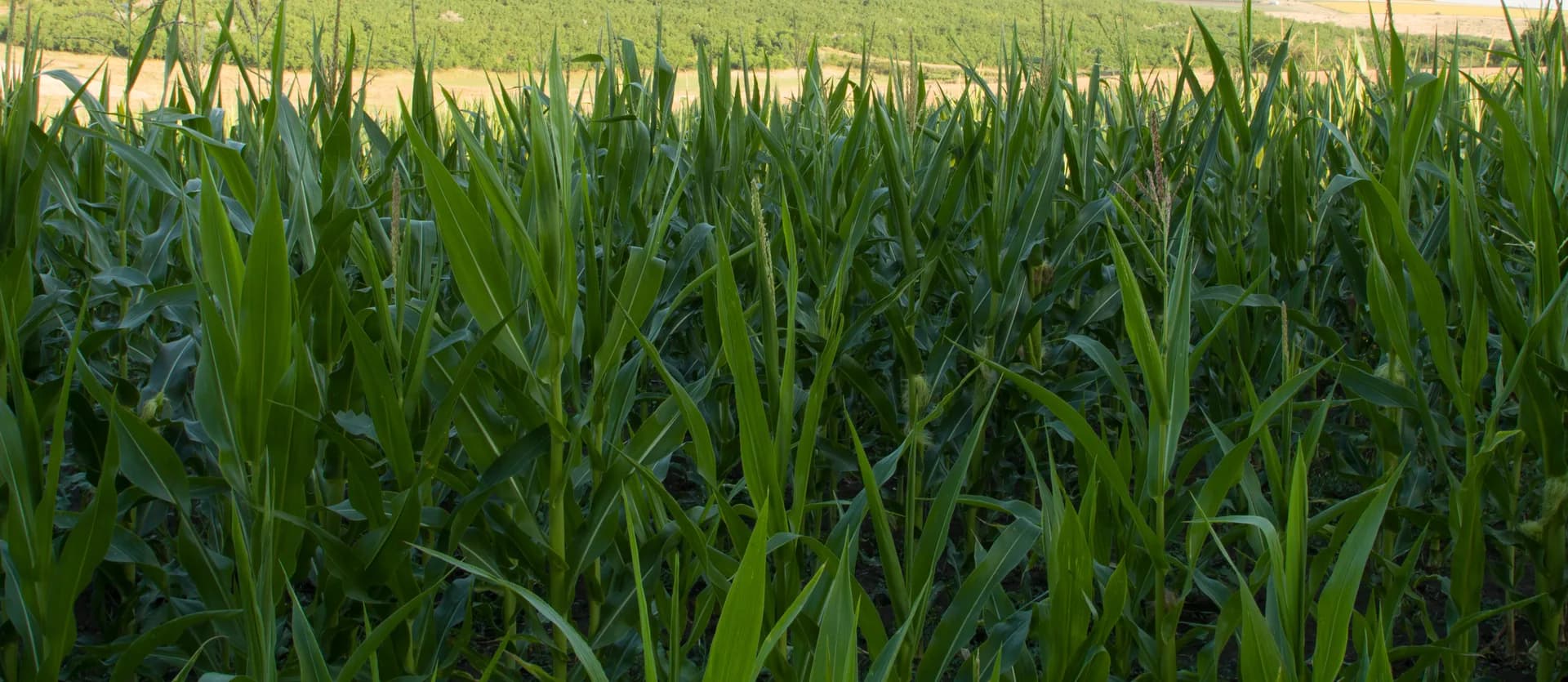
Learn how to manage salts in organic table grapes: natural strategies, biostimulants and soil management to improve quality and yield. Request information.
What is salt stress in organic table grapes?
Salt stress is a physiological condition that affects the vine (Vitis vinifera) when the concentration of soluble salts in the soil solution exceeds tolerable levels. In organic table grapes, this phenomenon becomes a critical challenge, since the restrictions of Regulation (EC) 2018/848 limit the use of certain synthetic chemical products traditionally used to mitigate its effects. Salinity alters the osmotic potential of the soil, hindering the uptake of water and nutrients by the roots, which translates into reduced vegetative growth, poorer fruit set and losses in commercial quality.
In agronomic terms, salt stress initially manifests with symptoms such as chlorosis in young leaves, necrosis at leaf margins and premature leaf drop. At the production level, berries may show smaller size, lower sugar accumulation and higher acidity, directly affecting the commercial value of the bunch. For the organic grower, salt management is not only a question of crop survival, but of profitability and long-term sustainability.
The vine is a moderately salt-tolerant species, with electrical conductivity (EC) thresholds in the saturation extract ranging between 1.5 and 2.5 dS/m, depending on the rootstock and variety. However, in arid and semi-arid regions of Latin America, such as northern Mexico, Peru or Chile, EC levels in soil and irrigation water can easily exceed these values, especially in systems with drip irrigation and high evaporation. For this reason, salt management in organic table grapes requires a comprehensive approach that combines cultural practices, soil management and the use of natural biostimulants.
The importance of addressing this problem lies in the fact that salinity not only affects the current crop, but progressively degrades soil structure, reducing its infiltration capacity and aeration. In the long term, a saline soil becomes a sodic soil, with problems of clay dispersion and surface crusting, which further hinders crop establishment. Therefore, salt management is an investment in the health of the agroecosystem.
Causes and sources of salt accumulation
Irrigation water quality
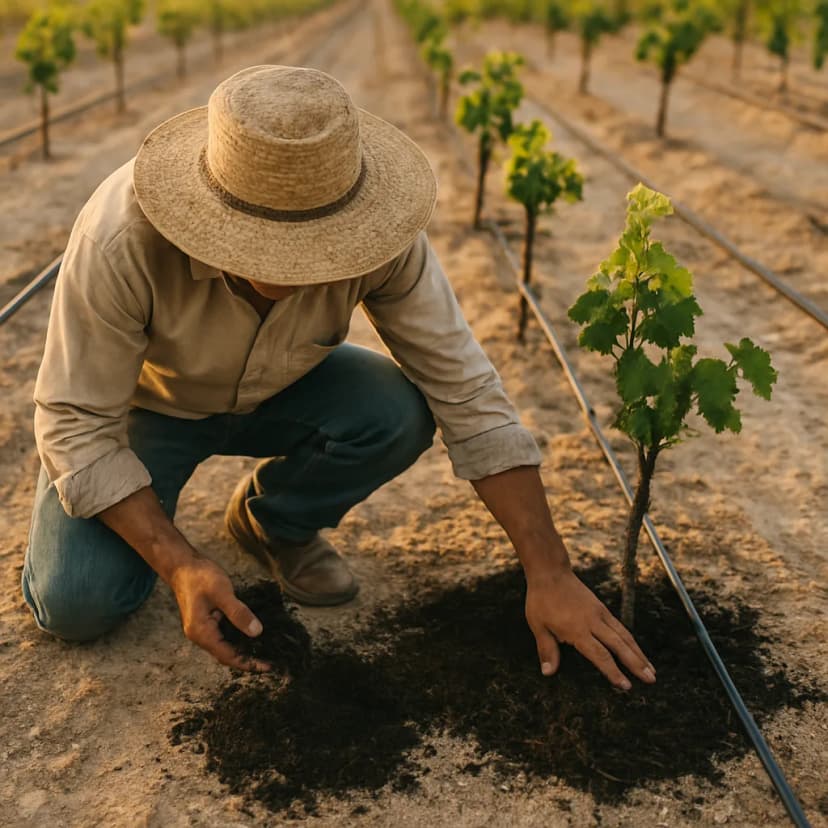
Irrigation water is the main source of salts in most agricultural systems. In regions where groundwater or surface water has high contents of chlorides, sulphates, bicarbonates and sodium, every irrigation event adds a salt load that, if not managed properly, accumulates in the soil profile. The electrical conductivity of the water (ECw) is a key indicator: values above 0.7 dS/m already represent a risk for sensitive crops such as grapevines. In addition, the sodium adsorption ratio (SAR) of the water determines the risk of soil sodification, which is even more difficult to correct than salinity itself.
In organic table grapes, the use of saline water is not an option, but in many regions the grower has no alternative. It is therefore essential to implement leaching strategies and constant monitoring. Water quality also varies seasonally; for example, in times of drought, aquifers tend to concentrate salts, worsening the situation. Periodic analysis of irrigation water is a fundamental practice for adjusting management.
Inadequate fertilization
The excessive use of conventional chemical fertilizers, especially those with a high salinity index such as potassium chloride (KCl) or ammonium sulphate, contributes directly to the accumulation of salts in the soil. In organic farming, the aim is to minimise the use of external inputs, but when organic fertilizers such as compost or manure are applied, it is important to check their salt content, since some materials may be rich in sodium or chlorides. Responsible fertilization management is key to avoiding unnecessary salt inputs.
Choosing nutrient sources with a low salinity index, such as certified organic fertilizers, is a preventive strategy. For example, biostimulants based on microalgae, such as those developed by Ecoganic, not only supply nutrients in a balanced way, but also contain bioactive compounds that help the plant tolerate salt stress.
Climatic conditions and irrigation management
In arid and semi-arid climates, high evaporation and low rainfall cause salts to concentrate at the soil surface, especially when irrigation is insufficient or poorly distributed. Drip irrigation, although efficient, can create a salt front in the wetting bulb if adequate leaching volumes are not applied. In addition, the lack of natural drainage or the presence of shallow water tables aggravate the problem, since they prevent salts from being leached out of the profile.
Irrigation management is a powerful tool: applying excess water in a controlled manner can leach salts below the root zone. However, in organic systems, water is a valuable resource, so the need for leaching must be balanced with water conservation. The use of moisture sensors and irrigation scheduling based on climatic demand are recommended practices.
Improving drainage and leaching
The first step in salt management is to ensure good soil drainage. In soils with compaction problems or impermeable layers, subsoiling or subsurface drainage is necessary. Installing lateral drains can be costly, but in the long term it is a profitable investment. Leaching consists of applying excess water to dissolve and move salts out of the root profile. The amount of water required depends on the initial soil salinity and on the quality of the irrigation water; in general, it is recommended to apply 10-20% additional water at each irrigation if the water EC is low.
In organic table grapes, leaching should be planned at strategic times, such as before budbreak or after harvest, so as not to interfere with crop development. In addition, it is important to monitor the depth of the salts through soil sampling in order to adjust the frequency and intensity of leaching.
Use of organic amendments
Organic amendments, such as compost, well-decomposed manure or humic and fulvic acids, improve soil structure, increase its cation exchange capacity (CEC) and favour microbial activity. A soil with good structure allows better drainage and prevents the accumulation of salts at the surface. In addition, organic matter acts as a buffer, reducing the toxicity of certain ions, such as sodium, by forming stable complexes.
The application of fulvic acids, for example, can chelate cations and improve nutrient uptake, counteracting the effects of salt stress. At Ecoganic, we recommend incorporating organic amendments into the soil before planting and periodically during the crop cycle. The typical compost dose ranges between 20 and 40 t/ha, depending on the organic matter content of the soil.
Selection of tolerant rootstocks
In regions with salinity problems, the choice of rootstock is crucial. There are grapevine rootstocks with varying tolerance to salinity, such as some hybrids of Vitis berlandieri and Vitis rupestris, which can tolerate EC of up to 4 dS/m. Selecting a suitable rootstock can make the difference between a productive crop and one that fails. In organic systems, where chemical products cannot be used to correct salinity, genetics is a fundamental preventive tool.
It is important to seek advice from specialised nurseries and to test different rootstocks under local conditions before adopting them on a large scale. In addition, planting density and canopy management can influence tolerance to salt stress.
Cultivation practices: mulching and vegetation management
Mulching with organic materials, such as straw or pruning residues, reduces evaporation of water from the soil, which lowers the concentration of salts at the surface. In addition, mulching maintains a more stable soil temperature, favouring root activity. The management of spontaneous vegetation between the rows is also relevant: cover crops can help to extract salts from the soil, but they must be managed so as not to compete with the vine for water and nutrients.
Under saline conditions, it is recommended to maintain a controlled cover crop or a bare soil with mulch, depending on the climate and the irrigation system. Pruning and cluster thinning can also help to reduce water and nutrient demand, alleviating plant stress.
Mechanisms of action of biostimulants against salinity
Agricultural biostimulants, such as microalgae extracts, humic and fulvic acids, and amino acids, are effective tools for mitigating the effects of salt stress in various crops. These products act at the physiological level, improving the plant's tolerance to osmotic and ionic stress. For example, microalgae-based biostimulants, such as Chlorella and Scenedesmus, contain phytohormones, betaines and polysaccharides that stimulate the synthesis of osmoprotectants and antioxidants in the plant.
The application of biostimulants in organic table grapes can be carried out both by foliar application and via the roots. Foliar uptake of nutrients and bioactive compounds is rapid and efficient, especially when the plant is under stress. Via the roots, biostimulants improve the development of lateral roots and absorbent hairs, increasing the soil exploration surface and the capacity to absorb water and nutrients despite osmotic pressure.
Fulvic acids, for their part, act as natural chelating agents, keeping nutrients in available forms and reducing the toxicity of ions such as sodium. In addition, they improve soil structure and microbial activity, favouring the degradation of salts and the release of nutrients.
Application of biostimulants in grapevine: doses and key timings
In organic table grapes, the application of biostimulants should be integrated into a management programme that takes into account the critical phenological stages. For example, a foliar application of microalgae-based biostimulant at budbreak can help the plant to overcome initial stress and to establish good vegetative growth. Another application during flowering can improve fruit set, and an application at veraison can enhance sugar accumulation and berry quality.
The recommended doses vary according to the product and its concentration, but in general it is recommended to apply between 2 and 5 L/ha per foliar application, diluted in 500-1000 L of water. For root applications, doses of 10-20 L/ha can be used, injected into the irrigation system. It is important to follow the manufacturer's instructions and to carry out trials on small areas before widespread application.
Biostimulants and reduction of chemical fertilizers
One of the most notable benefits of biostimulants is their capacity to improve nutrient uptake efficiency, which allows the doses of chemical fertilizers to be reduced without sacrificing yield. Under saline conditions, nutrient uptake is limited, so the use of biostimulants can compensate for this limitation.
This reduction not only has economic benefits but also environmental ones, since it decreases the risk of nitrate leaching and contamination of aquifers. In certified organic agriculture, the use of biostimulants is permitted and is well regarded, as it contributes to the principles of sustainability and reduction of external inputs.
Importance of organic matter and soil microbiota
Soil organic matter is an essential component in salinity management. It acts as a reservoir of nutrients, improves water retention and promotes the formation of stable aggregates, which facilitates drainage and the leaching of salts. In addition, organic matter is the food of the soil microbiota, which plays a crucial role in nutrient cycling and in the production of substances that help plants to tolerate stress.
Beneficial microorganisms, such as mycorrhizae and plant growth-promoting rhizobacteria (PGPR), can improve the tolerance of grapevines to salinity. Mycorrhizae, for example, extend the hyphal network in the soil, increasing water and nutrient uptake, and produce glomalin, a glycoprotein that improves soil structure. In saline soils, the presence of mycorrhizae can reduce sodium uptake and increase potassium uptake, improving the plant's ionic balance.
To promote microbial activity, it is essential to maintain an adequate level of organic matter in the soil through the regular application of compost, green manures or cover crops. Specific microbial inoculants can also be applied, such as those offered by Ecoganic, which contain selected strains of beneficial bacteria and fungi.
Amendments for saline soils: gypsum and sulphur
In soils with sodium problems (sodic soils), the application of gypsum (calcium sulphate) is a common practice to displace exchangeable sodium and improve soil structure. Calcium replaces sodium at exchange sites, and the released sodium can be leached with irrigation water. The gypsum rate depends on the exchangeable sodium content and soil texture, but typically ranges between 2 and 10 t/ha.
In organic farming, gypsum is permitted as an amendment, provided it is of natural origin. Another option is the use of elemental sulphur, which oxidises in the soil to sulphuric acid, reducing pH and solubilising the calcium present in the soil. However, sulphur must be used with caution in already acidic soils, and its effect is slower than that of gypsum.
The application of amendments must be accompanied by good irrigation management to ensure the leaching of the displaced sodium. In soils with poor drainage, drainage must first be improved before applying gypsum.
Soil and water analysis
Regular monitoring of soil and irrigation water salinity is essential for effective management. Soil analysis is recommended at least once a year, sampling at different depths (0-20, 20-40, 40-60 cm) to assess the distribution of salts in the profile. The electrical conductivity of the saturation extract (ECe) is the parameter most widely used to quantify soil salinity. ECe values above 2 dS/m are already considered moderately saline and can affect grapevines.
Irrigation water analysis should include EC, pH, and the concentrations of specific ions such as sodium, chloride, calcium, magnesium, sulphate and bicarbonate. These data allow the SAR and the salinity potential of the water to be calculated. With this information, irrigation and fertilization practices can be adjusted.
Visual indicators and chlorophyll measurement
Visual symptoms of salt stress, such as chlorosis and leaf necrosis, can be useful for early detection, but they are not specific. Measuring the chlorophyll concentration in leaves, using portable meters such as the SPAD, can provide an indication of the plant's nutritional status and stress. Under salt stress, chlorophyll concentration tends to decrease due to pigment degradation and reduced chlorophyll synthesis.
Sap analysis can also be carried out to measure ion concentration in plant tissue, which helps diagnose ionic imbalances. For example, a high Na/K ratio in leaves indicates excessive sodium accumulation.
Related articles
- Managing heavy rainfall with microalgae in organic bananas
- Foliar fertilization with microalgae in organic citrus
- Smart Fertilizer: Maximise Uptake in Crops
Do you need professional help?
At Ecoganic in Spain, Europe, we offer certified biostimulants and organic fertilizers. Call us: +34 623 753 719.
Request your free quote
What are the first symptoms of salt stress in grapevines?
The first symptoms include chlorosis in young leaves, necrosis at the leaf margins and tips, and reduced growth. In severe cases, there may be premature defoliation and fruit drop. Early detection is key to implementing corrective measures.
Can organic table grapes be grown in saline soils?
Yes, it is possible, but it requires careful management. The selection of tolerant rootstocks, the use of organic amendments, adequate irrigation with leaching and the application of biostimulants are strategies that can make cultivation viable, although yields may be lower than in non-saline soils.
Which biostimulants are most effective for salt stress?
Biostimulants based on microalgae, fulvic acids and amino acids have shown good results. Microalgae provide osmoprotectants and phytohormones, fulvic acids improve nutrient uptake and amino acids help in the synthesis of stress proteins. The combination of several types can be more effective.
How does salinity affect grape quality?
Salinity reduces berry size, decreases sugar accumulation (Brix degrees) and can increase acidity. It can also affect the colour and aroma of the grape, reducing its commercial value.
Is the use of gypsum recommended in organic farming?
Yes, gypsum (calcium sulphate) is permitted in organic farming as a soil amendment. It is used mainly to correct sodicity and improve soil structure. It is important to verify that the gypsum is of natural origin and contains no synthetic additives.