Chlorella biostimulants against heat stress in grapevines: mechanisms, application and results. Improves tolerance to heat stress. Request yours.
Impact of heat stress on grapevine cultivation
Heat stress is one of the most devastating abiotic stresses for the vineyard, especially in Mediterranean regions where summer temperatures frequently exceed 35 °C. During heatwave episodes, the grapevine experiences a drastic reduction in photosynthetic activity, stomatal closure and water imbalance that directly affects fruit set, fruit development and sugar accumulation. In red varieties such as Tempranillo or Garnacha, heat stress also causes the degradation of anthocyanins and phenolic compounds, which compromises the final oenological quality. The plant's natural response is to increase the synthesis of protective compounds such as proline, abscisic acid (ABA) and heat shock proteins (HSP), but this mechanism consumes a large amount of energy that could otherwise be devoted to production.
Climate change is intensifying the frequency and duration of these extreme events. Recent agrometeorological data indicate that the number of days with temperatures above 40 °C has doubled over the last twenty years in the main wine-growing areas of southern Europe. This situation forces winegrowers to look for solutions that mitigate the impact without renouncing sustainability. Microalgae biostimulants, and in particular those based on Chlorella vulgaris, are presented as an effective tool to strengthen the plant's natural defence mechanisms. Their foliar or root application provides a complex mixture of amino acids, phytohormones, polysaccharides and micronutrients that act synergistically to improve tolerance to heat stress.
How do Chlorella biostimulants act?
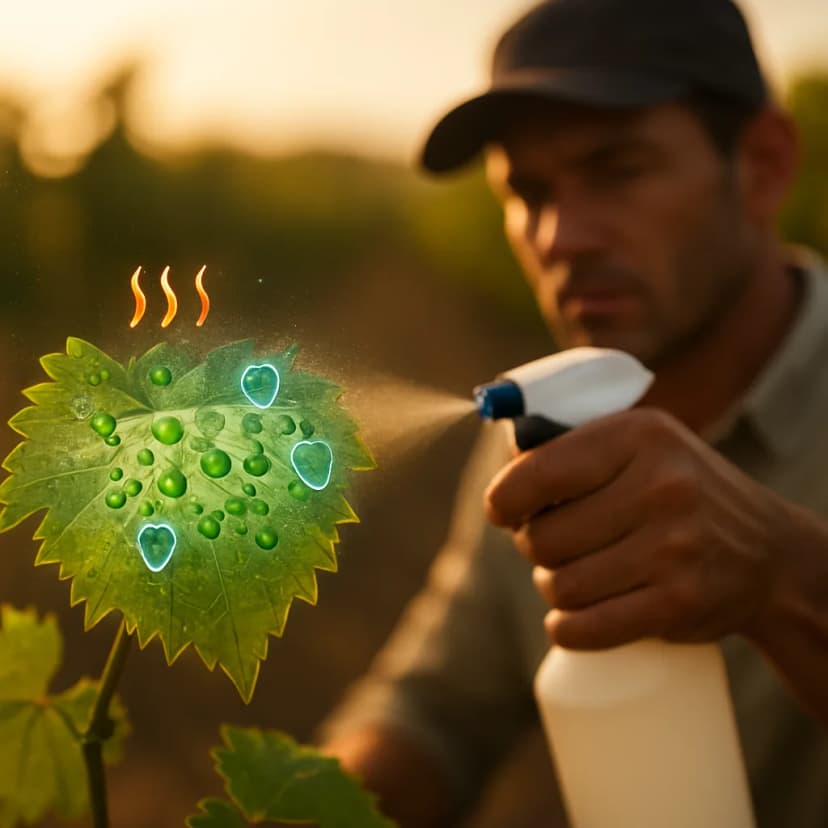
Chlorella vulgaris is a freshwater unicellular microalga cultivated under controlled conditions to guarantee a high concentration of bioactive compounds. Its cell wall contains β-glucans and peptidoglycans that stimulate the plant's immune response, while its interior accumulates free amino acids, B-group vitamins, fatty acids and phytohormones such as cytokinins and auxins. These compounds, applied exogenously, act as elicitors that activate specific metabolic pathways related to stress tolerance. Unlike conventional chemical fertilizers, microalgae biostimulants do not supply nutrients in large quantities, but rather modulate physiological processes so that the plant uses available resources more efficiently.
One of the most relevant mechanisms is the regulation of hormonal balance. During a heat episode, the vine increases ABA synthesis, which causes stomatal closure and reduced transpiration. Although this mechanism prevents excessive water loss, it also limits CO₂ entry and therefore photosynthesis. Chlorella biostimulants supply cytokinins that partially counteract the effect of ABA, allowing moderate stomatal opening and maintaining photosynthetic activity. In addition, the polysaccharides present in the microalga act as osmoprotectants, stabilising cell membranes and proteins against heat. The application of Chlorella extracts in vines favours the accumulation of proline and soluble sugars in the leaf, osmolytes that help maintain cellular water balance and whose response depends on the phenological stage, the level of stress and the application conditions.
The application of Chlorella biostimulants also favours microbial activity in the rhizosphere. Being an organic product, it stimulates the growth of beneficial bacteria and fungi that improve nutrient availability, especially of phosphorus and potassium, essential for osmotic regulation. This improvement in mineral nutrition is key for the plant to withstand heat stress without impairing fruit development. In comparative trials, the vines treated with Chlorella showed a lower incidence of heat damage, such as berry shrivelling or cluster desiccation, compared with untreated ones.
Physiological mechanisms of thermal protection
Thermal protection induced by Chlorella is based on several interconnected physiological mechanisms. Firstly, the synthesis of heat shock proteins (HSP) increases significantly after application. These proteins act as molecular chaperones, preventing the aggregation of proteins denatured by heat and facilitating their correct folding.
Secondly, Chlorella biostimulants improve the efficiency of photosystem II (PSII). During heat stress, the electron transport chain becomes saturated and reactive oxygen species (ROS) are generated that damage the thylakoids. The antioxidant compounds present in the microalga, such as carotenoids and polyphenols, neutralise these ROS and protect the photosynthetic machinery. Chlorophyll fluorescence measurements have shown that treated plants maintain a higher maximum quantum efficiency (Fv/Fm) after a heat episode, indicating less photoinhibitory damage. This protection translates into a higher net CO₂ assimilation rate and therefore into greater production of photoassimilates for berry filling.
Furthermore, the application of Chlorella stimulates the accumulation of compatible osmolytes such as proline, glycine betaine and sugar alcohols. These compounds act as osmotic regulators, maintaining cellular water potential and preventing dehydration. This improved water status allows the plant to continue its essential metabolic processes, such as sugar translocation and the synthesis of organic acids, which are fundamental to the final quality of the wine.
Application strategies in vineyards
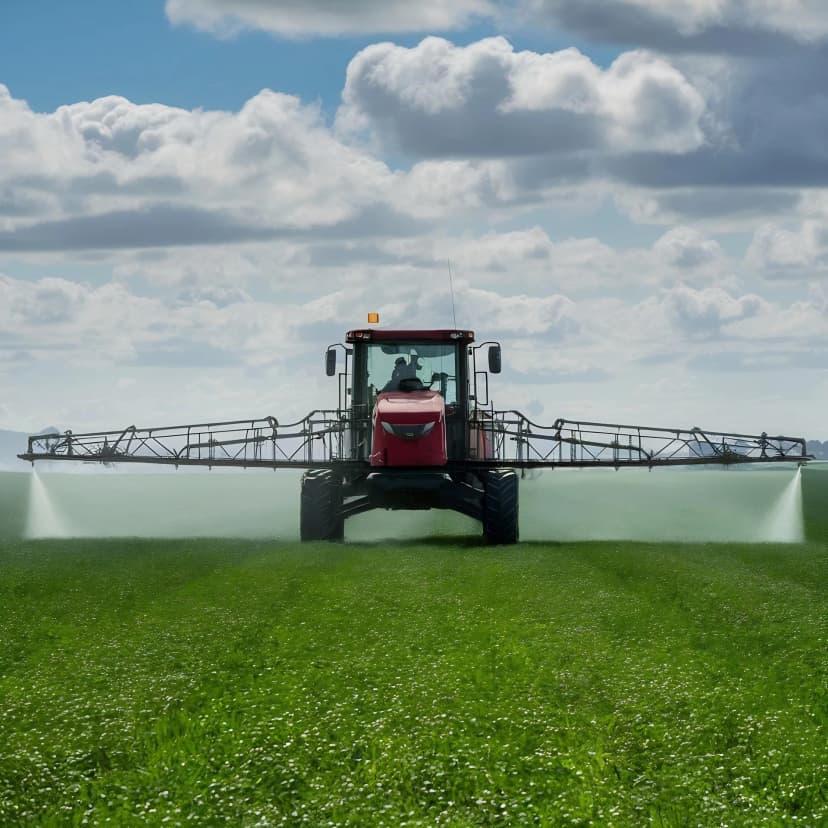
The efficacy of Chlorella biostimulants depends to a large extent on a correct application strategy. The foliar route is the most common, as it allows rapid absorption of the bioactive compounds through the stomata and the cuticle. It is recommended to carry out between 2 and 3 foliar applications during the vegetative cycle, the most critical being the one carried out in the pre-veraison period, when the plant is most vulnerable to heat stress. The typical dose is 2 to 3 litres per hectare, diluted in a spray volume of 400 to 600 litres, depending on leaf density. It is important to carry out the applications during the hours of lowest solar radiation (early morning or at dusk) to avoid rapid evaporation and maximise absorption.
The root route can also be used, especially in soils with limited organic matter. Soil application of Chlorella biostimulants stimulates microbial activity and improves soil structure, which favours deeper rooting and greater exploration of the profile. This practice is particularly useful in young vineyards or in those subjected to recurrent water stress. The recommended dose for root application is 5 to 10 litres per hectare, distributed through the drip irrigation system. In this case, it is essential to ensure good dissolution and to avoid prolonged exposure to sunlight, which could degrade the bioactive compounds.
The combination of both routes, foliar and root, can offer synergistic results.
Results observed in the field
These effects are attributed to the improvement in potassium nutrition, which favours the synthesis of organic acids and aromatic compounds.
It is important to highlight that results may vary depending on climatic conditions, phenological stage and variety. However, the general trend shows a consistent improvement in tolerance to heat stress when Chlorella biostimulants are used. Current agronomic research suggests that the combination of microalgae with other biostimulants, such as fulvic acids or seaweed extracts, can further enhance the protective effects. For this reason, it is recommended to design personalised programmes adapted to the specific needs of each vineyard, considering the history of heat stress and quality objectives.
Related articles
- Pulp firmness in bananas for European export
- Post-harvest anthracnose in bananas: integrated control 2026
- Microalgae for fruit set and heat stress in grapevines
Do you need professional help?
At Ecoganic in Spain, Europe, we offer biostimulants and organic fertilizers. Call us: +34 623 753 719.
Request your free quote
What exactly is heat stroke in grapevines and how does it manifest?
Heat stroke in grapevines is a physiological damage caused by extremely high temperatures that exceed the plant's capacity to adapt. It manifests with symptoms such as scorching on leaves and berries, wrinkling of the grape skin, drying of bunches and reduced photosynthetic activity. In severe cases, it can cause premature leaf and fruit drop, seriously affecting production and quality.
How do Chlorella biostimulants help prevent heat stroke?
Chlorella biostimulants act by strengthening the plant's natural defence mechanisms. They provide bioactive compounds such as amino acids, phytohormones and polysaccharides that stimulate the synthesis of heat shock proteins, improve photosynthetic efficiency and favour the accumulation of protective osmolytes. This allows the grapevine to maintain a better water status and greater metabolic activity during episodes of extreme heat.
What is the recommended dose of Chlorella biostimulant in grapevines?
The recommended dose for foliar application is 2 to 3 litres per hectare, diluted in 400-600 litres of water, carrying out 2-3 applications during the cycle, especially at pre-veraison. For root application, 5 to 10 litres per hectare through irrigation is recommended. It is important to adjust the doses according to the specific conditions of the vineyard and technical advice.
Is the use of Chlorella biostimulants compatible with organic farming?
Yes, Chlorella biostimulants are 100% natural products and are permitted in organic farming, as they comply with European Regulation EC 2018/848. They do not contain synthetic chemical products and their use contributes to the sustainability of the vineyard, improving soil health and reducing dependence on synthetic fertilizers.
Chlorella vulgaris in grapevines facing heat events: management keys
Foliar application of biostimulants based on Chlorella vulgaris is proposed as a tool to help grapevines cope with heat stress events. The starting idea is that the compounds present in the algal biomass, including molecules with hormone-like activity such as cytokinins and brassinosteroids, could modulate the plant's response to stress. Among the mechanisms under consideration are the activation of heat shock proteins, which contribute to stabilising the photosynthetic apparatus, and reduced photoinhibition during the hours of peak radiation. These are working hypotheses: the magnitude of the response depends on the product, the variety, the water status of the vine and the intensity of the stress, and it should be verified in the vineyard itself, with an untreated control area.
The possible osmoprotective effect is particularly relevant when heat is combined with water deficit. It is proposed that a preventive application, carried out before the stress event and not during it, could favour the accumulation in the leaf of compatible solutes, such as proline and glycine betaine, which could help maintain cell turgor and protect membrane integrity. In addition, certain polysaccharides from the Chlorella cell wall could form a thin film over the leaf cuticle and moderate excessive transpiration. None of these effects replaces the management of irrigation, fruit load or canopy, which remain the main levers against heat.
The result is most worth observing in grape quality at harvest. What a well-planned biostimulation programme aims to do is help limit heat stress damage in the berries (dehydration and partial necrosis), preserve acidity and varietal aromatic potential, and favour colour and phenolic compounds in red varieties. These objectives are not guaranteed and vary from one season to another. That is why the sensible way to assess them is to compare, plot by plot and season by season, damaged berries, acidity, colour and sugar level at harvest between treated and untreated control areas, and to decide with your own data whether the programme is worthwhile.
For effective practical implementation, it is advisable to integrate the Chlorella application within a broader heat stress management programme. The usual approach is to plan a preventive application before the forecast heat peak, following the dose, spray volume and intervals indicated on the product label, and, if another heat event is forecast, to assess with your agronomist a further preventive application before it arrives. It is important to achieve uniform coverage, including the underside of the leaf, with a nozzle and pressure suited to the available equipment, and to adjust the water volume when ambient humidity is low to favour absorption. Application should be avoided during the hours of maximum sunshine to reduce the risk of phytotoxicity, and it should not be tank mixed with other products without consulting the data sheet or first carrying out a compatibility test. Any combination with adjuvants, such as silicon-based products, should first be validated on a small area.