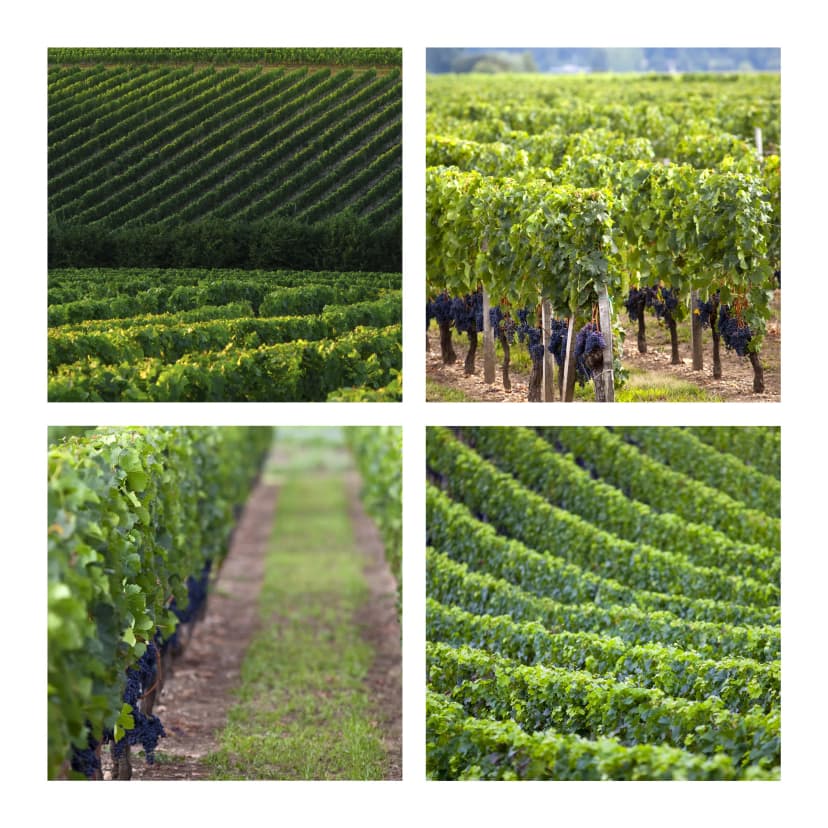
Microalgae protocol for fruit set in wine grapes: mechanisms, rates and application timings. Improve the fertility and quality of your vineyard. Request information.
Introduction: fruit set as a critical phase in the vineyard
Fruit set in the grapevine (Vitis vinifera L.) is one of the most decisive phenological stages for the final production of wine grapes. During this phase, which extends from flowering to the onset of berry development, the number of berries per bunch is defined and, therefore, the potential yield of the harvest. Poor fruit set results in loose bunches, lower berry weight and, consequently, a significant reduction in production volume and oenological quality.
In this context, microalgae biostimulants have become established as a technical tool of great interest for improving fruit set in wine grapes. Microalgae, especially Chlorella vulgaris and Scenedesmus, provide a combination of bioactive compounds — amino acids, polysaccharides, natural phytohormones, osmoprotectants and metabolic precursors — that favour fertilisation, berry retention and early fruit development. This article presents a detailed technical protocol for the application of microalgae in the vineyard, based on recent agronomic evidence and good practices of sustainable management.
The need to optimise fruit set is especially relevant in a climate change scenario, where heatwaves and water stress during flowering cause flower abortion and the drop of newly set fruits. Microalgae act as physiological modulators that help the plant maintain its photosynthetic activity, regulate hormonal balance and improve nutrient uptake, which results in more consistent, higher-quality fruit set.
Mechanisms of action of microalgae in fruit set
Biochemical composition and physiological effects
Microalgae are unicellular photosynthetic organisms that synthesise a wide range of metabolites with biostimulant activity. Among the compounds most relevant to fruit set are amino acids such as proline, which acts as an osmoprotectant and cell membrane stabiliser; polysaccharides, which stimulate soil microbiota and root uptake; and natural phytohormones such as auxins, cytokinins and gibberellins, which regulate cell division, pollen tube growth and ovary development.
These compounds act synergistically to improve photosynthetic efficiency, increase the activity of antioxidant enzymes and modulate the plant's hormonal balance. In the context of fruit set, greater photosynthetic activity ensures an adequate supply of carbohydrates for the development of fertilised ovules, while cytokinins promote cell division in the young fruit and gibberellins stimulate pedicel growth and berry retention.
Improved nutrient uptake
Microalgae also improve the uptake of essential nutrients such as calcium, boron and zinc, which are critical for pollen germination and pollen tube growth. Calcium, in particular, is essential for cell wall integrity and the stability of ovary tissues. Foliar application of microalgae, rich in these micronutrients and in compounds that facilitate their assimilation, can correct subclinical deficiencies that limit fruit set.
In addition, the polysaccharides present in microalgae stimulate soil microbial activity, which improves nutrient availability in the rhizosphere and favours an optimal nutritional status of the vine during flowering. This improvement in root uptake is particularly relevant in soils with low fertility or compaction problems, where root exploration is limited.
Mitigation of abiotic stress
One of the best-documented mechanisms is the ability of microalgae to mitigate the effects of water and heat stress. During flowering, high temperatures (>35 °C) and water deficit cause dehydration of floral tissues, reduced pollen viability and ovule abortion. Osmoprotectants such as proline and polysaccharides help maintain cell turgor and stabilise proteins, while antioxidant compounds neutralise the reactive oxygen species (ROS) generated by stress.
This effect is especially valuable in rainfed vineyards or in Mediterranean regions where heatwaves are increasingly frequent.
Optimal application window
The most critical phenological moment for the application of microalgae aimed at fruit set is pre-flowering and full bloom. At pre-flowering (phenological stage E-F according to the Eichhorn-Lorenz scale), the application aims to prepare the plant for the reproductive phase, improving its nutritional and hormonal status. At full bloom (stage H), the application focuses on favouring fertilisation and the initial development of the berries.
Some protocols include a third application at early fruit set (stage I-J), when the berries reach pea size, to reinforce retention and initial growth. This strategy is especially useful in varieties prone to shatter or millerandage, such as some clones of Tempranillo or Garnacha.
Recommended doses and application route
The most effective application route for microalgae biostimulants is foliar, as it allows rapid absorption of the bioactive compounds through the stomata and cuticle.
In the case of specific Ecoganic products such as NITROTECH or K-FLOW, it is essential to follow the indications on the data sheet, as concentrations may vary. Nevertheless, a general guideline could be: first application at pre-flowering (stage E-F) at a dose of 2-3 L/ha; second application at full bloom (stage H) at the same dose; and third application at fruit set (stage I-J) if stress conditions are severe.
Foliar application should be carried out in the early hours of the morning or at dusk, avoiding the hours of maximum solar radiation to prevent phytotoxicity and maximise uptake. It is advisable to add an adjuvant that improves the adhesion and penetration of the product, especially under conditions of low relative humidity.
Compatibility with other treatments
Microalgae biostimulants are compatible with most foliar fertilizers and plant protection products used in viticulture, but a compatibility test is advisable before tank mixing, especially with products containing copper or sulphur, as they can reduce the efficacy of the biostimulant. In organic farming, products certified for organic use must be used, such as those offered by Ecoganic, which comply with Regulation (EU) 2018/848.
Increase in fruit set rate
These increases are attributed to improved pollen viability, greater photosynthetic activity during flowering and reduced flower abortion under stress conditions. The response is more pronounced in years with adverse weather conditions, which suggests that microalgae act as a physiological insurance for fruit set.
Improvement of grape quality
In addition to the increase in fruit set, microalgae have shown positive effects on grape quality. This is because more uniform fruit set and better initial berry development allow a more efficient accumulation of sugars and phenolic compounds.
The improvement in quality is especially relevant for the production of premium wines, where sugar concentration and phenolic ripeness are decisive for the sensory profile. Growers seeking to differentiate their wines through sustainable practices can find in microalgae a valuable tool.
Reduction of mineral fertilizers
This reduction not only lowers production costs, but also helps to mitigate the environmental impact of viticulture, reducing nitrate leaching and greenhouse gas emissions associated with the manufacture of synthetic fertilizers.
The improvement in nutritional efficiency is due to the fact that microalgae stimulate soil microbial activity, increasing the availability of nutrients already present in the soil, and to the fact that they improve root and foliar uptake, making the plant use the applied nutrients better.
Synergy with fulvic acids
The combination of microalgae with fulvic acids can enhance the effects on fruit set. Fulvic acids act as natural chelating agents, improving the availability of micronutrients such as iron, zinc and manganese, and favour the uptake of the bioactive compounds of microalgae. In addition, fulvic acids stimulate root development and microbial activity, creating a favourable environment for vine growth.
In practice, it is recommended to apply a mixture of microalgae and fulvic acids at pre-flowering, to prepare the plant, and to repeat with microalgae alone at full flowering. This strategy has shown consistent results in rainfed vineyards, where water stress is a limiting factor.
Management of water and heat stress
Microalgae are especially useful in vineyards subjected to water or heat stress during flowering. Foliar application of microalgae at these critical moments helps the plant to maintain cell turgor, reduce excessive transpiration and protect the photosynthetic apparatus from oxidative damage. This translates into less flower drop and greater berry retention.
In areas with a high incidence of heat stress, such as southern Spain, it is recommended to apply microalgae at pre-flowering and repeat after 7-10 days if temperatures exceed 35 °C during flowering. The application should preferably be carried out during the coolest hours to maximise uptake.
Integrated fertilization plan
The use of microalgae should be integrated into a balanced fertilization plan, which includes adequate nutrition with potassium, calcium and micronutrients. Potassium is essential for the regulation of water balance and grape quality, while calcium is key for cell wall structure and berry firmness. Ecoganic products, such as K-FLOW 20 and CALCIUM 40, can complement the action of microalgae at critical moments.
An example programme could be: pre-flowering (stage E-F): application of microalgae + fulvic acids + boron; full flowering (stage H): application of microalgae + calcium; fruit set (stage I-J): application of microalgae + potassium. This comprehensive approach ensures that the plant has all the resources necessary for successful fruit set.
Related articles
- Microalgae for fruit set and heat stress in grapevines
- Algae amino acids for fruit set in grapevines
- Chlorella biostimulant for heat stress in grapevines
Do you need professional help?
At Ecoganic in Spain, Europe, we offer biostimulants and organic fertilizers. Call us: +34 623 753 719.
Request your free quote
Do microalgae replace fertilization?
Not completely. Microalgae improve fertilizer efficiency and can reduce the mineral NPK dose by 20%, but they do not replace the need for balanced fertilization. They are a complementary tool that optimizes nutrient uptake and stress tolerance.
What is the best time to apply microalgae?
The best time is pre-flowering and full bloom, as these are the critical phases for fruit set. A third application at early fruit set can be beneficial under severe stress conditions.
Do they work the same on all varieties?
Not necessarily. The response may vary depending on the variety, the climate, the nutritional status and the management of the vineyard.
Can they help with heat stress?
Yes, microalgae help mitigate heat stress by maintaining photosynthetic activity and reducing flower abortion. They are especially useful in regions with heatwaves during flowering.
Are they certified for organic farming?
Yes, Ecoganic products comply with Regulation (EU) 2018/848 and other certifications such as NOP USDA and JAS. It is important to check the data sheet of the specific product.