

Biostimulants for Grapevine and Grape: Technical Phenology Guide for Organic Viticulture
Organic viticulture in Europe faces significant challenges, from the reduced permitted use of copper under EU regulations to the effects of climate change that advance grapevine phenology. Additionally, the market demands high-quality wines. Biostimulants are emerging as a key solution, helping plants resist diseases and improve fruit quality. This not only maintains production within organic standards but also meets market expectations.
Why does the grapevine respond particularly well to biostimulants?
Grapevines have a deep root system but require adequate amounts of potassium, calcium, and magnesium, especially in the berries. Irregular fruit set can lead to significant yield losses, while summer water stress can advance ripening, affecting it positively or negatively depending on conditions and management. Furthermore, must quality, measured by parameters such as Brix, acidity, anthocyanins, and tannins, is highly influenced by nutrition and the use of biostimulants.
Ecoganic program for grapevine
| Phase | BBCH | Months (Spain) | Objective | Product | Dose L/ha | Application |
|---|---|---|---|---|---|---|
| Weeping / bud swell | 01-07 | February-March | Activation, rooting | TERRA HUMID | 4 | Fertigation |
| Budburst | 09-13 | March | Shoot vigor, frost anticipation | BOOST UNIVERSAL + NITROTECH 10 | 3+4 | Foliar |
| Shoot development | 14-19 | March-April | Vegetative growth | BALANCE 7-7-7 | 5 | Foliar |
| Inflorescences visible | 53-57 | May | Pre-flowering, boron | MICRO PLUS + PHACE | 2+3 | Foliar |
| Full flowering | 60-65 | May-June | Fruit set, reduce shatter | CALCIUM 40% + BOOST UNIVERSAL | 4+2 | Foliar |
| Fruit set / pea size | 71-73 | June | Berry fixation, calcium | CALCIUM 40% + PHOSMAX 20 | 4+3 | Foliar |
| Bunch closure | 77-79 | July | Compactness, quality | K-FLOW 20 + FULVEX 25L | 4+3 | Foliar |
| Veraison | 81-83 | July-August | Anthocyanins, Brix, acidity | UNIVERSAL POWER + K-FLOW 20 | 2+4 | Foliar |
| Pre-harvest | 85-89 | August-October | Final must quality | FULVEX 25L | 3 | Foliar |
Impact on wine quality
The use of biostimulants in grapevines has been shown to increase production by up to 14% in kg/vine. Additionally, it improves Brix content at veraison by 8%, increasing the potential alcohol level or reducing the need for chaptalization. Red varieties such as Tempranillo, Garnacha, or Syrah exhibit more intense anthocyanins and a more balanced total acidity, crucial in years with high temperatures. A reduction in shatter is also observed in problematic varieties.
Organic viticulture — the seal that pays the most
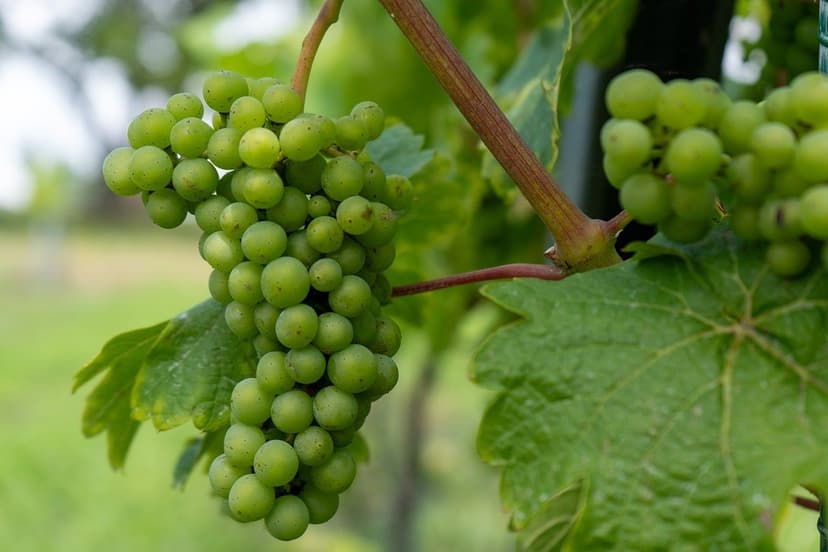
Organic certification is increasingly in demand by wineries and appellations of origin such as Rioja, Priorat, and Ribera del Duero. Certification bodies like CCPAE in Catalonia, CAAE in Andalusia, and CPAEN in Navarre ensure that methods are compatible with organic principles. Organic grapes can fetch a price between 30% and 50% higher than conventional grapes at the source, reflecting the added value of these cultivation methods.
Adaptation by Wine-Growing Region
In Rioja and Ribera del Duero, where continental conditions can bring late frosts, it is crucial to strengthen budding. In Penedès and Priorat, the Mediterranean climate and summer drought recommend a focus on pre-veraison. Rías Baixas, with its humid Atlantic climate, requires bioprotection strategies during flowering. In Languedoc, France, which shares similarities with Spanish Mediterranean areas, biostimulant programs can be equally effective.
Frequently Asked Questions (FAQ)
Do biostimulants reduce shatter in Garnacha and Tempranillo?
Yes, especially when products like CALCIUM 40% and BOOST UNIVERSAL are applied during the full flowering stage.
Can CALCIUM 40% be applied via drip fertigation?
It is not recommended, as its effectiveness is greater through foliar application.
When should biostimulants be applied to improve red grape color?
The best stage is during veraison, using products like UNIVERSAL POWER and K-FLOW 20.
Are they compatible with sulfur and copper phytosanitary programs?
Yes, biostimulants are designed to be compatible with these programs.
Do they work on table grapes as well as wine grapes?
Yes, biostimulants can be applied to both types of grapes to improve quality and resistance.
Complete program for vines: https://ecoganic.eu/bioestimulantes-vid-uva/