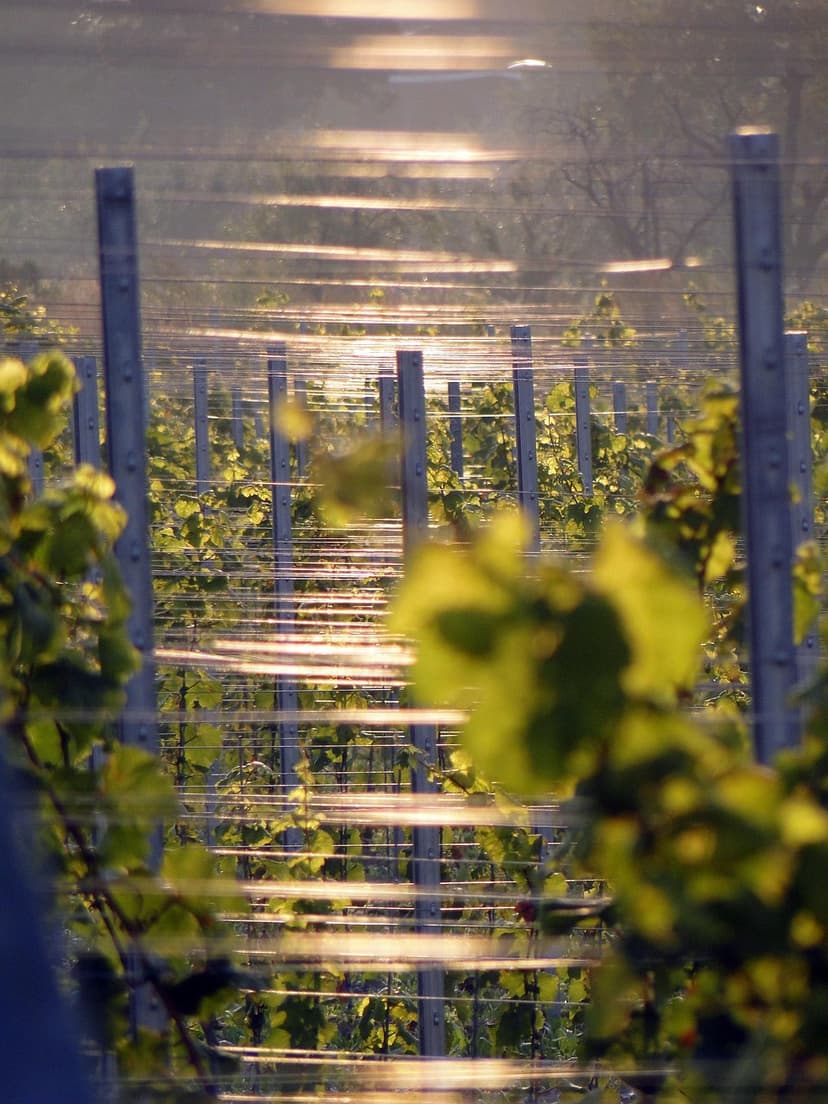

Technical guide on biostimulants for water stress in organic grapevines. Physiological mechanisms, application timing, and field results. Request.
Impact of water stress on grapevine physiology
Water stress is one of the main limiting factors in grape production, especially in Mediterranean regions where rainfall is scarce and irregular. In organic grapevines, where the use of synthetic chemical products to mitigate stress is not permitted, water management becomes a critical challenge. Water deficit affects multiple physiological processes: it reduces net photosynthesis by inducing stomatal closure, decreases cell turgor, and alters the synthesis of proteins and secondary metabolites. It also causes a hormonal imbalance with increased abscisic acid (ABA) and reduced cytokinins, which accelerates leaf senescence and affects fruit set and development.
Under moderate water stress conditions, the grapevine can activate defense mechanisms such as the accumulation of compatible osmolytes (proline, glycine betaine) and the production of antioxidant compounds. However, when stress is severe or prolonged, oxidative damage occurs in cell membranes, stomatal conductance decreases, and in extreme cases, tissue death occurs. Grape quality is also compromised: although a certain water deficit can concentrate sugars and phenolic compounds, excessive stress reduces yield and can cause imbalances in ripening. Therefore, it is essential to have tools that allow the plant to better tolerate drought periods without sacrificing productivity or quality.
In this context, organic agricultural biostimulants emerge as a promising solution. These products, based on seaweed extracts, beneficial microorganisms, amino acids, or humic and fulvic acids, act by modulating the plant's physiological processes and improving its response capacity to abiotic stress. In the specific case of grapevines, various studies have shown that the application of biostimulants can increase water use efficiency, maintain photosynthetic activity under water deficit, and improve grape quality. Below, we analyze the mechanisms of action and the most effective application strategies for the organic vineyard.
Mechanisms of action of biostimulants against water deficit
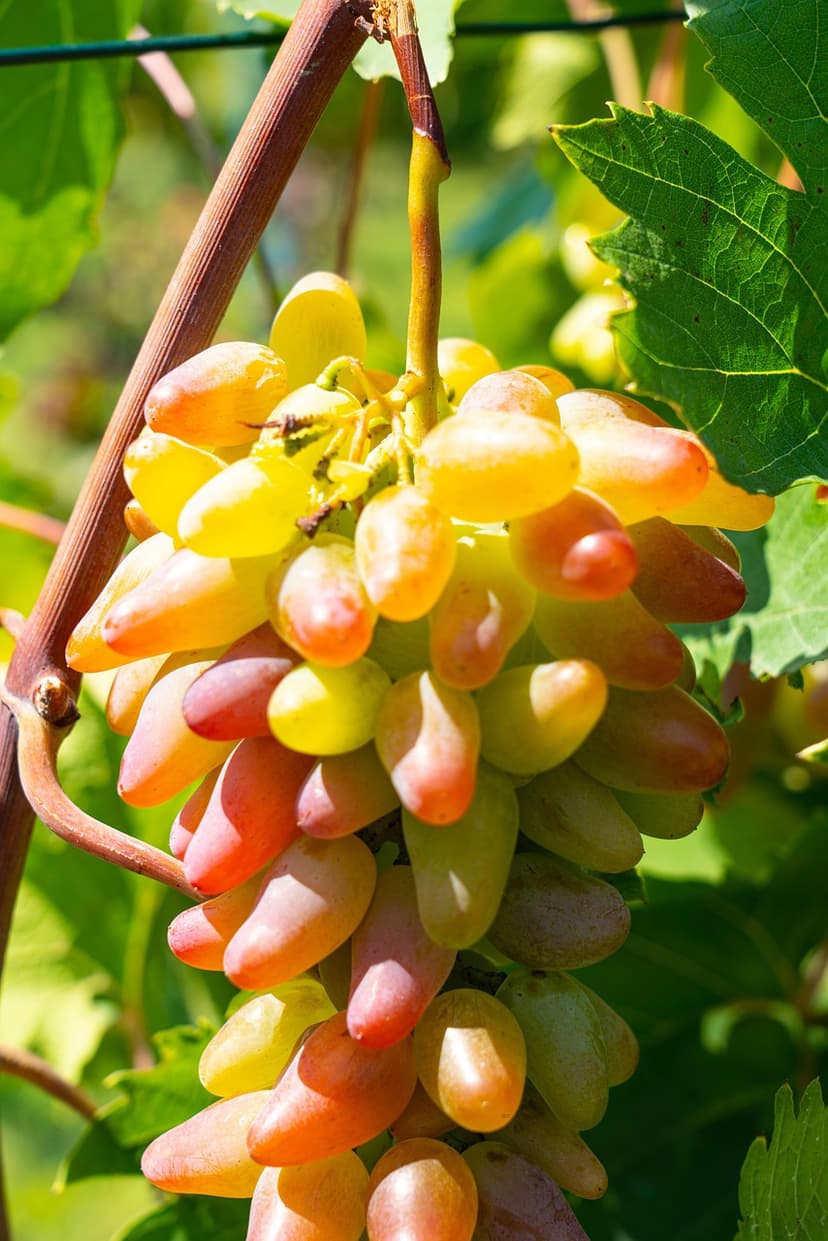
Biostimulants act through multiple pathways to improve grapevine tolerance to water stress. Firstly, many biostimulants induce the accumulation of compatible osmolytes, such as proline and glycine betaine, which help maintain cellular water potential and protect proteins and membranes from denaturation. For example, seaweed extracts (such as Ascophyllum nodosum) are rich in bioactive compounds that stimulate the synthesis of these osmolytes. Secondly, certain biostimulants promote root development, increasing the absorption surface area for water and nutrients. Freshwater microalgae, such as Chlorella and Scenedesmus, produce natural phytohormones (auxins, cytokinins) that stimulate the growth of lateral roots and root hairs.
Another key mechanism is the activation of the plant's antioxidant system. Water stress generates reactive oxygen species (ROS) that damage membranes and DNA. Biostimulants can increase the activity of antioxidant enzymes such as superoxide dismutase (SOD), catalase (CAT), and peroxidase (POD), as well as the concentration of non-enzymatic antioxidants such as glutathione and ascorbic acid. This reduces oxidative damage and maintains cellular integrity. Furthermore, some biostimulants modulate hormonal signaling, reducing ABA production and increasing cytokinins and brassinosteroids, which delays senescence and maintains stomatal opening under moderate stress conditions.
Finally, biostimulants can improve water use efficiency (WUE) through stomatal regulation and photosynthesis optimization. For example, the application of fulvic acids has been shown to increase stomatal conductance and photosynthetic rate under water deficit conditions, possibly due to their chelating effect on nutrients such as potassium, which regulates stomatal opening. Together, these mechanisms allow the vine to maintain active metabolism during drought periods, reducing the negative impact on grape yield and quality.
Most effective biostimulants for organic grapevines
Seaweed extracts
Brown seaweed extracts (Ascophyllum nodosum, Ecklonia maxima) are the most studied and widely used in organic viticulture. They contain phytohormones (cytokinins, auxins, gibberellins), polyphenols, betaines, and polysaccharides. Their foliar or root application improves water stress tolerance by increasing antioxidant activity and osmolyte accumulation. Several trials on grapevines have reported increases in leaf water potential and photosynthetic rate under water deficit, as well as improved grape quality (higher anthocyanin and polyphenol content). Application is recommended at doses of 2-4 L/ha at several stages of the cycle, especially before flowering and at the onset of veraison.
Freshwater microalgae (Chlorella, Scenedesmus)
Unicellular microalgae cultivated in photobioreactors offer a concentrated source of amino acids, peptides, polysaccharides, vitamins, and phytohormones. Ecoganic develops biostimulants based on Scenedesmus that have shown promising results in grapevines. These microalgae stimulate root development and soil microbial activity, improving water and nutrient uptake. Furthermore, they induce the synthesis of defense compounds such as phytoalexins, which also contributes to pathogen resistance. The recommended application is 1-2 L/ha foliar or 2-4 L/ha via irrigation, at critical phenological stages such as budbreak, flowering, and veraison.
Fulvic and humic acids
Fulvic acids are low-molecular-weight organic compounds that act as natural nutrient chelators and root growth stimulants. Under water stress conditions, they improve soil structure and water retention capacity while facilitating the uptake of potassium and calcium, which are essential for stomatal regulation and membrane integrity. The application of fulvic acids in organic grapevines has been shown to increase yield and grape quality in dry years. They can be applied to the soil at doses of 3-5 L/ha, repeated every 15-20 days during the vegetative cycle.
Amino acids and peptides
Biostimulants based on amino acids (such as proline, glycine, and glutamic acid) act as osmolytes and precursors of stress proteins. Proline, in particular, is a key osmoprotectant that accumulates in response to water deficit. The exogenous application of amino acids can reinforce this natural defense. Furthermore, peptides of plant or microbial origin can activate stress signaling pathways. It is recommended to apply at doses of 1-2 L/ha via foliar application during periods of high water demand (flowering, berry filling).
Application strategies in organic vineyard
The efficacy of biostimulants largely depends on the timing of application and the dosage used. In organic viticulture, an integrated approach combining different types of biostimulants at key phenological stages is recommended. Below is a strategy based on field experience and agronomic research.
Pre-flowering (phenological stage D-E): Apply a root biostimulant based on microalgae or fulvic acids to stimulate root development and improve water and nutrient uptake. Dosage: 2-3 L/ha of microalgae or 3 L/ha of fulvic acids. This application prepares the plant to face potential water deficits during flowering.
Flowering (phenological stage F-H): Apply a foliar biostimulant with seaweed extract or amino acids to improve fruit set and stress tolerance. Dosage: 2 L/ha of seaweed extract or 1.5 L/ha of amino acids. This application reduces flower and fruit abscission caused by water stress.
Veraison (phenological stage I-J): Apply a foliar biostimulant rich in potassium and bioactive compounds (microalgae or seaweed) to improve the accumulation of sugars and phenolic compounds. Dosage: 2 L/ha. This application also helps maintain cell turgor and photosynthetic activity during ripening.
Post-harvest: Apply fulvic acids to the soil to help the plant recover and prepare for the next season. Dosage: 3 L/ha. This practice improves nutrient reserves and soil health.
It is important to note that biostimulants do not replace irrigation, but rather complement water management practices. Under severe drought conditions, supplemental irrigation remains necessary, but biostimulants can reduce the frequency and amount of water required, improving irrigation efficiency.
Agronomic results and scientific evidence
Research on biostimulants in grapevines has grown significantly in recent years. A study conducted by the University of La Rioja (Spain) evaluated the effect of an Ascophyllum nodosum extract on grapevine cv. Tempranillo under controlled water stress conditions. The results showed that treated plants maintained a foliar water potential 15% higher than untreated ones, and the net photosynthesis rate was 20% higher. Additionally, the anthocyanin content in the grapes increased by 12%, improving wine quality.
In another field trial in the Bordeaux region (France), a biostimulant based on microalgae (Scenedesmus) was applied to organic grapevines cv. Merlot over three growing seasons. The results indicated an average yield increase of 8% in dry years, without negatively affecting quality. The total polyphenol concentration was similar or slightly higher in the treated plots. Furthermore, a lower incidence of fungal diseases was observed, possibly due to the biostimulant effect on natural defenses.
The FAO, in its report on sustainable agriculture, highlights the role of biostimulants as key tools for climate change adaptation in Mediterranean regions. According to the organization, the use of biostimulants can reduce water consumption in vineyards by up to 20% without yield losses, thus contributing to crop sustainability. Likewise, IFOAM (International Federation of Organic Agriculture Movements) recognizes biostimulants as permitted inputs in organic agriculture, provided they comply with certification regulations.
In Ecoganic's own trials, conducted in collaboration with organic wineries in the D.O. Ribera del Duero, the application of a biostimulant program based on microalgae and fulvic acids over two consecutive growing seasons (2024-2025) showed an average yield increase of 10% and an improvement in grape quality (higher Brix degree and better phenolic profile). Growers reported greater tolerance of the vines to summer drought periods, with fewer wilting symptoms and lower berry abscission.
These results support the effectiveness of biostimulants as a tool to mitigate water stress in organic grapevines. However, it is important to select quality products with guaranteed origin and stable formulation, and to apply them following technical recommendations. At Ecoganic, we offer customized solutions for each vineyard, based on soil, water, and crop needs analysis.
Related articles
Need professional help?
At Ecoganic in Spain, Europe, we offer certified Biostimulants and Organic Fertilizers. Call us: +34 623 753 719.
FAQ
What are biostimulants for water stress in grapevines? They are natural products that improve the vine's ability to tolerate water scarcity. They work by stimulating root development, the production of osmolytes and antioxidants, and regulating hormonal balance, allowing the plant to maintain its metabolism and productivity under drought conditions.
When should biostimulants be applied for water stress in organic grapevines? The key stages are pre-flowering, flowering, veraison, and post-harvest. Application at pre-flowering prepares the root system; at flowering it improves fruit set; at veraison it enhances grape quality; and at post-harvest it aids plant recovery. Under severe stress conditions, additional applications can be made every 15-20 days.
Do biostimulants replace irrigation? No. Biostimulants complement irrigation practices by improving water use efficiency and reducing the amount needed, but they do not replace irrigation in situations of extreme drought. Their use allows productivity to be maintained with lower water consumption.
Which biostimulants are most effective for organic grapevines? Seaweed extracts (Ascophyllum nodosum), freshwater microalgae (Chlorella, Scenedesmus), fulvic acids, and amino acids have shown good results. Combining several types at different stages of the cycle is usually more effective than using a single product.
Mechanisms of action of biostimulants against water stress in organic grapevines
The application of biostimulants in organic vineyards subjected to water stress acts on multiple metabolic pathways that mitigate the negative effects of drought. Field studies conducted in the Ribera del Duero Denomination of Origin during the 2022-2023 campaign demonstrated that foliar application of seaweed extracts (Ascophyllum nodosum) at 0.3% reduced stomatal conductance by 18% during temperature peaks, allowing a 22% decrease in transpiration rate without compromising net photosynthesis. This mechanism, based on abscisic acid (ABA) signaling induced by bioactive compounds, maintained leaf water potential above -1.2 MPa for 14 consecutive days without irrigation, compared to -1.8 MPa recorded in the untreated control.
Biostimulants based on amino acids and specific peptides, such as proline and glycine betaine, have shown particular efficacy in protecting the photosynthetic machinery. In controlled trials with the Tempranillo variety under moderate water deficit conditions (50% of field capacity), application of an amino acid complex at 0.5% every 10 days increased Rubisco enzyme activity by 34% and total chlorophyll concentration by 27% compared to the untreated group. Furthermore, the accumulation of compatible osmolytes in treated leaves was 41% higher, which improved cellular osmotic adjustment and allowed leaf turgor to be maintained even when soil water potential dropped to -0.8 MPa. These results translated into a final yield 15% higher in treated vines, with berry weight 12% greater and without negatively affecting sugar accumulation.
The combination of biostimulants with soil management practices significantly enhances their effect. A three-year study in organic vineyards of the Airén variety in Castilla-La Mancha evaluated the synergy between legume cover crops (subterranean clover) and applications of biostimulants based on mycorrhizae (Glomus intraradices) and plant growth-promoting bacteria (Pseudomonas fluorescens). The results showed that this integrated strategy increased root biomass by 38% and fine root length (<2 mm) by 52% compared to conventional management with bare soil. During a severe drought episode (45 days without precipitation and maximum temperatures of 38°C), treated vines maintained a leaf water potential of -1.1 MPa compared to -1.6 MPa in the control, and the net photosynthesis rate was 29% higher. Final production showed an 18% increase in yield and a significant improvement in phenolic composition, with a 23% increase in total anthocyanins and a 17% increase in tannins, key parameters for wine quality.
To implement these strategies effectively, it is recommended to begin biostimulant applications at least 15-20 days before the critical period of water stress, which in most Spanish wine-growing regions coincides with veraison (late July to mid-August). The optimal dose of seaweed extract ranges between 2 and 4 L/ha in foliar applications every 10-14 days, while amino acid complexes should be applied at a rate of 1-2 L/ha at three key moments: pre-flowering, fruit set, and veraison. It is crucial to adjust the dose according to stress intensity; under severe drought conditions (foliar water potential below -1.4 MPa), it is recommended to reduce the concentration to 0.2% to avoid phytotoxicity. Combining this with regulated deficit irrigation (RDI) that maintains soil at 60-70% of field capacity during the stress period maximizes the response, achieving water savings of up to 30% without significant yield losses. Growers should monitor foliar water potential weekly using a Scholander-type pressure chamber and adjust applications when values exceed the -1.0 MPa threshold to activate the plant's defense mechanisms preventively.
References
Frequently Asked Questions
What are biostimulants for water stress in grapevines?
They are natural products that improve the vine's ability to tolerate water scarcity. They work by stimulating root development, the production of osmolytes and antioxidants, and regulating hormonal balance, allowing the plant to maintain its metabolism and productivity under drought conditions.
When should biostimulants be applied for water stress in organic grapevines?
The key moments are pre-flowering, flowering, veraison, and post-harvest. Application at pre-flowering prepares the root system; at flowering it improves fruit set; at veraison it enhances grape quality; and at post-harvest it aids plant recovery. Under severe stress conditions, additional applications can be made every 15-20 days.
Do biostimulants replace irrigation?
No. Biostimulants complement irrigation practices by improving water use efficiency and reducing the amount required, but they do not replace irrigation in situations of extreme drought. Their use allows productivity to be maintained with lower water consumption.
Which biostimulants are most effective for organic grapevines?
Seaweed extracts (Ascophyllum nodosum), freshwater microalgae (Chlorella, Scenedesmus), fulvic acids, and amino acids have shown good results. Combining several types at different stages of the cycle is usually more effective than using a single product.