Algae biostimulants for fruit set in hedgerow olive: improves fruiting and reduces flower abortion. 2026 technical guide with doses and timings for.
Why does fruit set fail in hedgerow olive?
Hedgerow olive, also known as super-high-density olive grove, has become one of the most productive plantations in southern Europe. However, fruit set remains one of the main bottlenecks for achieving stable yields. In these plantations, the high tree density (between 1,500 and 2,000 trees per hectare) generates extreme competition for water and nutrients, especially during flowering and fruit set, when physiological demand peaks.
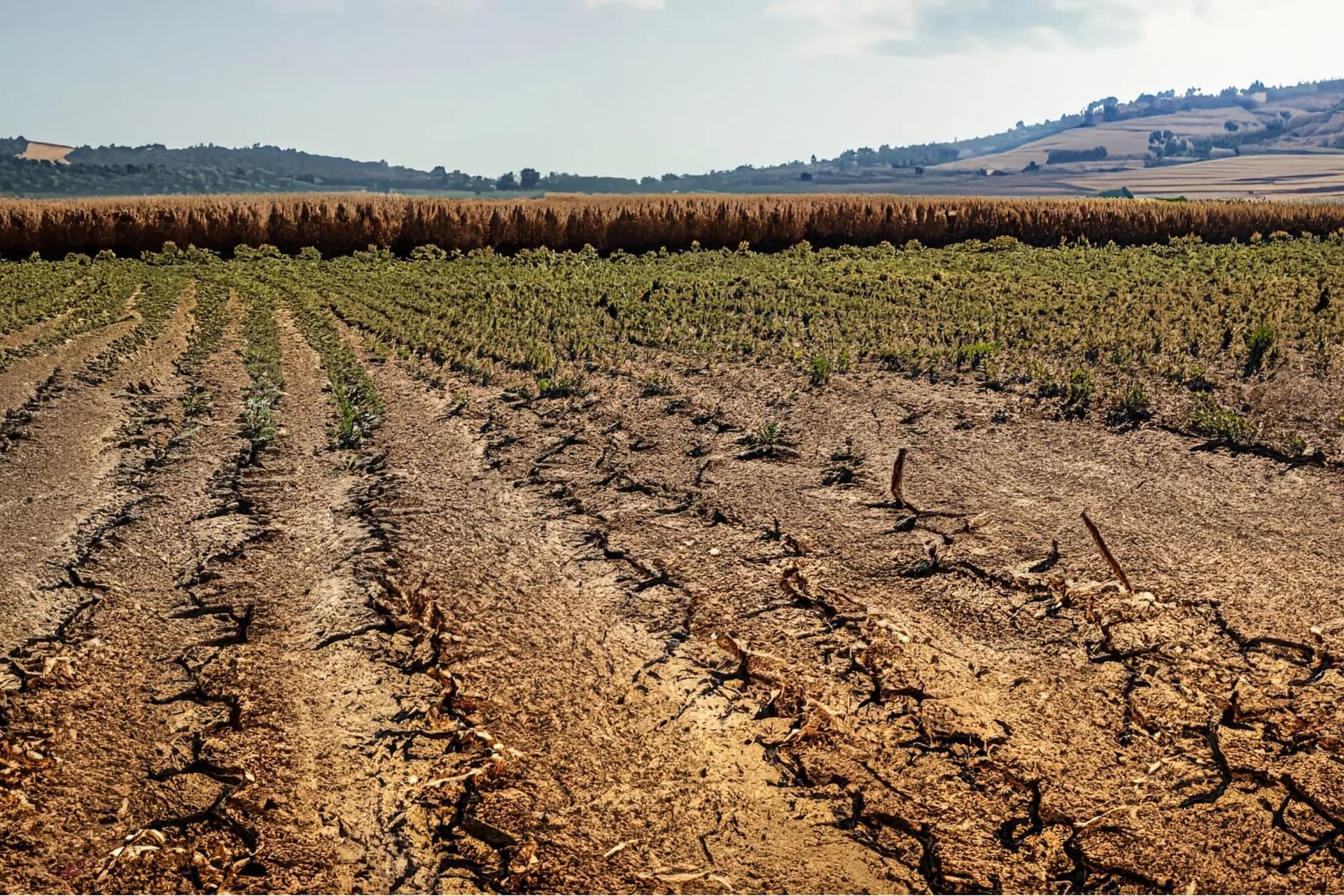
Fruit set in olive depends on a delicate hormonal balance. During flowering, the tree produces a large number of flowers, but only a small percentage go on to become fruit. Abiotic stress conditions — such as extreme temperatures, drought or heatwaves — can trigger flower abortion and drastically reduce the number of olives per tree. In hedgerow olive groves, water stress is particularly critical because the root system, confined to a limited soil volume, cannot compensate for the water demand of the canopy.
Algae biostimulants offer an effective solution to mitigate these problems. By applying seaweed or freshwater unicellular algae extracts, bioactive compounds such as phytohormones (cytokinins, auxins, gibberellins), betaines, polysaccharides and amino acids are supplied, which help the plant maintain hormonal balance, improve nutrient uptake and increase stress tolerance. In this article we will explore how these products can improve fruit set in hedgerow olive, based on crop physiology and practical field experience.
Mechanisms of action of algae biostimulants
Hormonal regulation and assimilate partitioning
One of the most important mechanisms is the modulation of the hormonal balance. The cytokinins present in algae extracts promote cell division and delay senescence, which favours the retention of young fruits. Gibberellins, for their part, stimulate ovary growth and improve initial fruit set. By applying these biostimulants at the right time, physiological fruit drop can be reduced and the final number of olives increased.
In addition, algae biostimulants improve the partitioning of assimilates towards developing fruits. This is achieved through the activation of the enzymes involved in carbon and nitrogen metabolism, which increases the availability of sugars and amino acids for the reproductive tissues. In hedgerow olive groves, where competition for assimilates is intense, this effect can make the difference between an average harvest and an excellent one.
Improved nutrient uptake
Algae extracts contain polysaccharides and chelating compounds that improve the availability and uptake of essential nutrients such as boron, zinc and calcium, all of which are critical for fruit set. Boron, for example, is essential for pollen germination and pollen tube growth; a boron deficiency causes poor fertilisation and therefore poor fruit set. Algae biostimulants facilitate the mobilisation of these micronutrients, both at foliar and root level.
Under soil conditions with high or low pH, typical of many olive-growing areas, micronutrient availability may be limited. Foliar application of algae biostimulants together with chelated micronutrients can overcome these limitations, ensuring that the plant has the necessary elements during the critical fruit set phase.
Induction of stress tolerance
Abiotic stress, especially water and heat stress, is one of the main causes of flower abortion in olive. Algae biostimulants contain betaines and proline, osmoprotective compounds that help cells maintain turgor and protect proteins from denaturation. They also stimulate the synthesis of heat shock proteins and antioxidant enzymes, reducing the oxidative damage caused by stress.
In field trials, it has been observed that the application of algae extracts before and during flowering significantly reduces flower and fruit drop under heat stress conditions. For example, in hedgerow olive groves of the Arbequina variety, trees treated with algae biostimulants showed 20% more fruit set than untreated ones, even in years with heatwaves.
Pre-flowering (stage D)
The first application should be made at phenological stage D, when the inflorescences are fully developed but the flowers have not yet opened. At this point, the application of algae biostimulants prepares the plant for flowering, improving pollen quality and stigma receptivity. A dose of 1.5-2 L/ha of commercial product is recommended, via foliar application.
This early application also helps to mobilise carbohydrate and nitrogen reserves towards the reproductive shoots, which is crucial in hedgerow olive groves where the previous year's crop load may have depleted reserves.
Full flowering (stage F)
The second application is made at full flowering (stage F), when approximately 50% of the flowers are open. At this point, algae biostimulants favour fertilisation and initial fruit set. Foliar application at this stage must be careful not to damage the flowers, but correctly formulated products are safe and highly effective.
A dose of 1-2 L/ha is recommended, preferably during the hours of lowest sunshine to avoid phytotoxicity. This application is especially important if weather conditions are adverse, such as high temperatures or low relative humidity.
Fruit set (stage I)
The third application is made when the newly set fruits are about 2-3 mm in diameter (stage I). At this point, algae biostimulants help to reduce the physiological drop of young fruits and to promote initial fruit growth. Application at this stage is key to ensuring a good final crop load.
The recommended dose is 1-2 L/ha, and it can be combined with micronutrients such as boron and zinc to maximise the effect. This application also contributes to improving olive quality, increasing oil content and improving ripening uniformity.
Dose and application method
For hedgerow olive groves, foliar application is the most common and effective method for algae biostimulants. Typical doses range between 1 and 3 L/ha per application, depending on the product concentration and the phenological stage. It is important to adjust the spray volume to ensure complete canopy coverage, which in hedgerow olive groves is usually 400-600 L/ha.
Root application is also possible, especially in poor soils or soils with compaction problems. In this case, doses of 3-5 L/ha can be applied through the drip irrigation system, which improves microbial activity and nutrient availability in the rhizosphere.
Compatibility with other products
Algae biostimulants are generally compatible with most foliar fertilizers and plant protection products, but a compatibility test should be carried out before mixing. Avoid mixing with alkaline-reaction products or with mineral oils, as they may reduce efficacy.
In organic fertilization programmes, algae biostimulants integrate perfectly, as they are natural products and permitted in organic farming. They can be combined with fulvic acids, amino acids and chelated micronutrients to enhance the effects.
Practical considerations
To maximise efficacy, it is crucial to apply the biostimulants during the hours of lowest solar radiation (first thing in the morning or last thing in the afternoon) and when no rain is forecast in the next 24 hours. The optimum temperature for foliar uptake is 15-25°C.
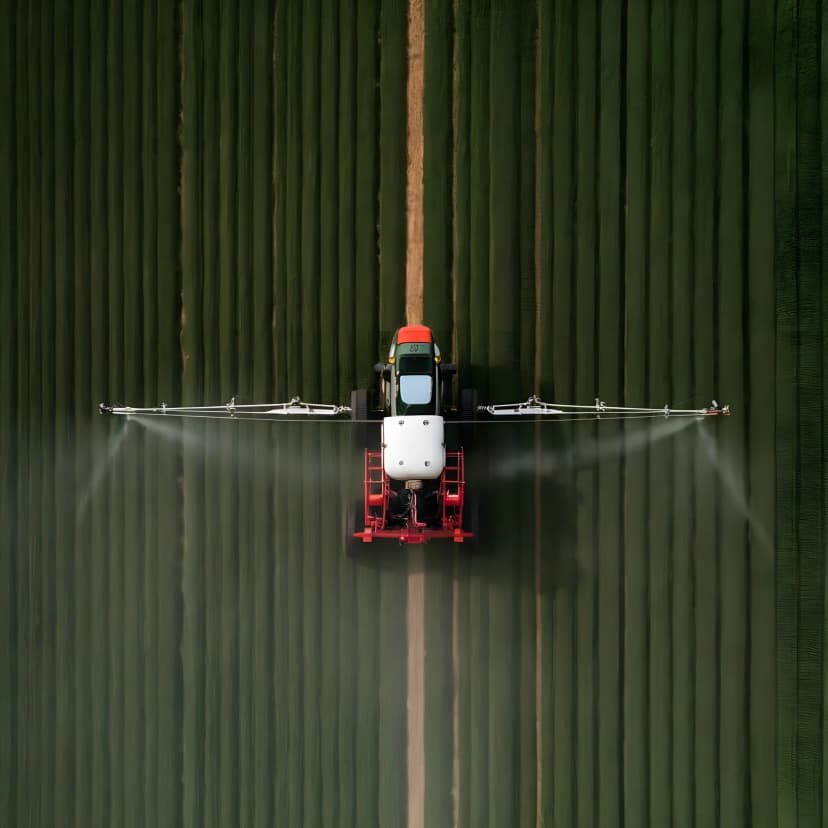
In hedgerow olive groves, where mechanisation is intensive, existing machinery can be used for the application, such as air-blast sprayers or precision spraying equipment. It is important to calibrate the equipment to ensure uniform distribution and avoid losses through drift.
Field results and agronomic evidence
The agronomic evidence supports the use of algae biostimulants as an effective tool for improving fruit set in hedgerow olive groves. However, it is important to note that results may vary depending on climatic conditions, crop management and product quality. For this reason, trials on each farm are recommended in order to adjust doses and application timings.
Compatibility with organic fertilization
Hedgerow olive groves can be managed under organic farming criteria, and algae biostimulants are a key tool in this system. These products are permitted in organic farming under Regulation (EU) 2018/848, provided they come from natural sources and do not contain prohibited substances. Algae and microalgae extracts meet these requirements, which makes them an ideal option for organic producers.
In addition, algae biostimulants help to reduce dependence on chemical fertilizers, as they improve the efficiency of nutrient uptake from those present in the soil. This is especially relevant in hedgerow olive groves, where the high planting density requires balanced nutrition to avoid deficiencies.
Integrating algae biostimulants with other organic practices, such as the use of compost, green manures and cover crops, can enhance soil health and olive grove productivity. In this regard, Ecoganic offers a range of certified organic products that can be combined to achieve optimal results.
For growers seeking to promote fruit set in hedgerow olive groves, Ecoganic recommends a programme that includes several treatments with algae biostimulants, complemented by balanced fertilization and proper irrigation management. This integrated approach is more effective the better it is adjusted to the tree's crop load, nutritional status and the abiotic stress conditions of each farm.
Related articles
- Organic amendments for water retention in palm
- Organic Matter for Clay Soil: Improving Aeration
- Flower fruit set in mango: how to avoid heat-related losses
Do you need professional help?
At Ecoganic in Spain, Europe, we offer certified organic biostimulants and fertilizers. Call us: +34 623 753 719.
Request your free quote
What are algae biostimulants and how do they act on olive trees?
Algae biostimulants are products made from seaweed or freshwater unicellular algae extracts that contain bioactive compounds such as phytohormones, amino acids and polysaccharides. In olive trees, they act by modulating the hormonal balance, improving nutrient uptake and increasing stress tolerance, which promotes fruit set and reduces flower abortion.
What is the best time to apply algae biostimulants to hedgerow olive groves?
The best time is during phenological stages D (pre-flowering), F (full flowering) and I (fruit set). These applications coincide with the critical phases in which the final number of fruits is determined. Three foliar applications are recommended at intervals of 10-14 days.
Can I use algae biostimulants on organic olive trees?
Yes, algae biostimulants are natural products and are permitted in organic farming under Regulation (EU) 2018/848. They can be used in organic olive groves provided that the recommended doses and application timings are respected.
What results can I expect in fruit set in hedgerow olive groves?
Under normal conditions, the application of algae biostimulants can promote fruit set, depending on climatic conditions and management. In years of stress, their effect may be more noticeable, as they help to mitigate the negative effects of heat and drought.
How should I combine algae biostimulants with fertilization?
Algae biostimulants can be combined with foliar fertilizers rich in boron, zinc and calcium, as well as with fulvic acids. A tank mix is recommended, always checking compatibility. For complete nutrition, it is important to maintain a balanced soil fertilization programme.
Related articles
- Organic agricultural biostimulants
- Certified organic fertilizers