What is osmotic biostimulation in potato?
Osmotic biostimulation in potato is an agronomic technique consisting of the application of biostimulants to induce osmotic adjustment mechanisms in the plant, enabling it to maintain cell turgor and continue its physiological processes under conditions of water deficit. In the Andean regions, where potato is an essential crop for food security, drought is one of the main factors limiting productivity. This strategy seeks to physiologically prepare the plant to face stress, improving its capacity to absorb water and nutrients from the soil.
Osmotic adjustment is a process by which the plant accumulates organic and inorganic compounds in its cells, reducing osmotic potential and facilitating water entry. Among these compounds are proline, soluble sugars and other osmolytes. Osmotic biostimulation promotes the synthesis of these compounds, which helps the potato maintain its growth and yield even when water is scarce. This technique is especially relevant in Andean agriculture, where smallholders depend largely on seasonal rainfall and have limited access to irrigation systems.
The application of osmoprotectant biostimulants can be carried out at different phenological stages of the crop, being most effective when applied before or during the onset of stress. However, it is important to note that biostimulation does not replace irrigation, but acts as a complement that helps the plant cope with periods of water scarcity.
In the Andean context, osmotic biostimulation represents an opportunity to increase crop resilience to climate change, which is intensifying the frequency and intensity of droughts. By improving the potato's capacity to maintain its water status, yield loss can be reduced and more stable production ensured. In addition, this technique aligns with the principles of sustainable agriculture, as it reduces dependence on chemical inputs and promotes the use of natural and organic products.
Physiological mechanisms of osmotic biostimulation
Osmotic biostimulation acts through several physiological mechanisms that enable the potato plant to cope with water stress. One of the main ones is the accumulation of proline, an amino acid that acts as an osmoprotectant, stabilising proteins and cell membranes, and regulating osmotic potential. The application of biostimulants can favour the accumulation of proline in potato leaves subjected to water deficit, which helps to maintain turgor and cell integrity, although the degree of response depends on the variety, the timing of application and the intensity of the stress.
Another mechanism is the synthesis of soluble sugars, such as sucrose and glucose, which also function as compatible osmolytes. These sugars help to reduce cell osmotic potential, facilitating water uptake and protecting cell structures. In addition, soluble sugars can act as molecular signals that activate stress-response pathways, improving the plant's overall tolerance.
Biostimulation can also influence the activity of antioxidant enzymes, such as superoxide dismutase and catalase, which neutralise the reactive oxygen species (ROS) generated during water stress. By reducing oxidative damage, these enzymes protect plant tissues and maintain chloroplast functionality, preserving photosynthetic capacity.
In addition, some biostimulants contain phytohormones such as cytokinins and abscisic acid, which regulate stomatal opening and the expression of genes related to drought tolerance. For example, abscisic acid induces stomatal closure, reducing water loss through transpiration, while cytokinins can delay senescence and maintain photosynthetic activity during periods of stress.
The role of proline as an osmoprotectant
Proline is one of the most studied osmolytes in plants subjected to water stress. It accumulates in the cytosol and in the chloroplasts, where it performs osmotic and antioxidant protection functions. In potato, it has been observed that proline content increases significantly under drought conditions, and biostimulants can enhance this response.
Proline accumulation not only helps to maintain osmotic potential, but also protects enzymes and cell membranes from denaturation. In addition, proline can act as a source of nitrogen and carbon when the stress ceases, contributing to plant recovery. Therefore, biostimulants that promote proline synthesis are especially valuable for improving potato resilience under Andean conditions.
Soluble sugars and osmotic potential
Soluble sugars, such as glucose, fructose and sucrose, are other key osmolytes in the response to water stress. Their accumulation in plant cells reduces osmotic potential, which favours water entry from the soil. In potato, it has been reported that soluble sugar content increases in response to water deficit, and biostimulants can modulate this response.
In addition, soluble sugars can act as signalling compounds that activate stress-response genes, improving the plant's overall tolerance.
Effects of water stress on the potato crop
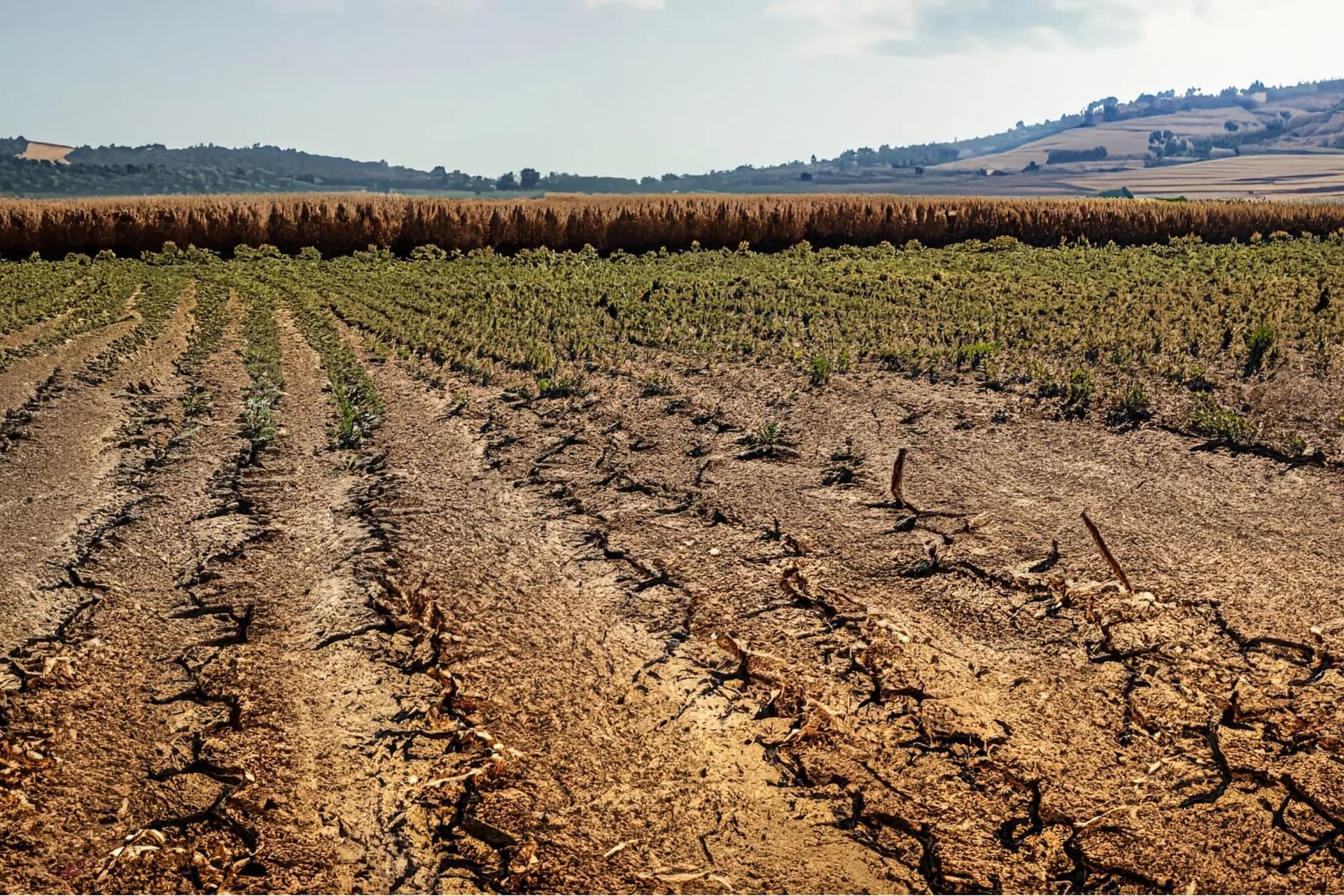
Water stress is one of the main factors limiting potato production in the Andes. Potato is particularly sensitive to drought during the tuberisation and tuber bulking stages, when water demand is highest. Lack of water reduces net photosynthesis due to stomatal closure, which decreases CO2 assimilation and, consequently, the production of carbohydrates needed for tuber growth.
In addition, water stress alters the plant's hormonal balance, increasing the synthesis of abscisic acid and reducing that of gibberellins and cytokinins. This can cause premature ripening and a reduction in tuber size. It has also been observed that drought increases the production of reactive oxygen species (ROS), which cause oxidative damage to membranes and DNA, affecting cell viability.
The effects of water stress on potato vary according to the variety, the timing of its occurrence and the duration of the deficit. A recent study evaluated the behaviour of several Andean potato cultivars under water stress for 14 days, finding significant differences in proline and soluble sugar accumulation among the cultivars. This suggests that the selection of tolerant varieties is a strategy complementary to biostimulation.
However, osmotic biostimulation can mitigate these losses, especially when the stress is moderate.
Biostimulants and osmoprotectants: scientific evidence
The results showed that the treated plants presented a greater accumulation of proline and soluble sugars, as well as better stomatal conductance and net photosynthesis, compared with the untreated control.
These extracts contain bioactive compounds such as betaines, polyphenols and phytohormones that stimulate the synthesis of osmoprotectants and antioxidants.
The efficacy of biostimulants depends on the dose, the timing of application and environmental conditions. It is therefore advisable to integrate them into coherent agronomic management that takes into account soil conservation, efficient water use and the choice of varieties adapted to the conditions of the plot. Osmotic biostimulation should be considered a complementary tool, not a substitute for irrigation.
Application strategies in the Andean context
In the Andes, where the potato is the main crop and water resources are limited, osmotic biostimulation can be a key strategy for securing production. Applications must be planned according to the phenological stages of the crop and to climatic conditions. It is recommended to apply biostimulants at pre-stress, that is, before water deficit occurs, in order to prepare the plant and activate its defence mechanisms.
The application route can be foliar or root. Foliar application is rapid and effective for the uptake of nutrients and bioactive compounds, while root application is more suitable for products that improve the root system, such as mycorrhizae and humic acids. In both cases, it is essential to ensure uniform coverage and to avoid applications during hours of high solar radiation to prevent scorching.
The recommended doses vary according to the product and the concentration. For example, for amino acid-based biostimulants, typical doses range between 2 and 4 L/ha, applied at 2-3 points in the crop cycle. For seaweed extracts, doses are usually 1-2 kg/ha. It is important to follow the manufacturer's recommendations and to carry out local trials to adjust the doses to the specific conditions.
In the Andean context, it is crucial to consider the diversity of potato varieties and the edaphoclimatic conditions. It is therefore recommended to combine biostimulation with the selection of tolerant varieties and proper soil management.
The integration of osmotic biostimulation with other sustainable agriculture practices, such as crop rotation, the use of green manures and soil conservation, can enhance its benefits. In addition, the adoption of drip or micro-sprinkler irrigation systems, where possible, can complement biostimulation, ensuring an adequate water supply during the critical stages.
Regulation and access to biostimulants in Europe and LATAM
The regulation of biostimulants varies between regions, which affects their availability and use. In the European Union, Regulation (EU) 2019/1009 sets out the requirements for fertilising products, including plant biostimulants. This regulation requires products to demonstrate their efficacy and to comply with safety and labelling criteria. Biostimulants must be registered and comply with the limits for contaminants and pathogens.
In Latin America, regulation is more fragmented. Countries such as Peru, Ecuador and Bolivia have their own regulatory frameworks for agricultural inputs. In general, biostimulants must be registered as fertilizers or amendments, and evidence of efficacy and safety is required. However, the lack of regional harmonisation can hinder trade in and adoption of these products.
For Andean growers, it is important to source biostimulants from reliable suppliers that comply with local and international regulations. Ecoganic offers a range of biostimulants and organic fertilizers that meet European standards and are available for the Latin American market. For more information on the products and their registration, see the organic certifications page.
Exporting potatoes and agricultural products to Europe requires that the inputs used comply with EU regulations. It is therefore advisable for growers aiming to export to use biostimulants registered under Regulation (EU) 2019/1009. Ecoganic offers products with a technical dossier and regulatory traceability, which facilitates their acceptance in international markets.
Related articles
- Floral biostimulation in avocado with microalgae
- Thermal biostimulation in avocado: how to mitigate the impact of
- Climate biostimulation: new LATAM standard 2026
Do you need professional help?
At Ecoganic in Spain, Europe, we offer certified biostimulants and organic fertilizers. Call us: +34 623 753 719.
Request your free quote
What is osmotic biostimulation in potato?
Osmotic biostimulation in potato is a technique that consists of applying biostimulants to induce the accumulation in the plant of osmoprotectants, such as proline and soluble sugars, which help to maintain water balance under drought conditions. This allows the plant to continue its physiological processes and reduces yield loss.
What are the main osmoprotectant biostimulants?
The main osmoprotectant biostimulants include amino acids, seaweed extracts, humic and fulvic acids, and beneficial microorganisms such as mycorrhizae. These products stimulate the synthesis of proline, soluble sugars and antioxidant enzymes, improving tolerance to water stress.
How is osmotic biostimulation applied?
Osmotic biostimulation can be applied by foliar application or to the roots. Foliar applications are quick and effective, while root applications improve water and nutrient uptake. Application is recommended before stress or during mild to moderate stress, following the doses recommended by the manufacturer.
Is osmotic biostimulation a substitute for irrigation?
No, osmotic biostimulation does not replace irrigation. It is a complementary tool that helps the plant to cope with periods of water scarcity, but it does not eliminate the need for water. Biostimulation is most effective when combined with proper irrigation management and other agronomic practices.
What scientific evidence supports osmotic biostimulation in potato?