BOROPLUS
NPK
Description
Liquid boron corrector, 100% soluble. According to our technical data sheet it is light blue, with a density of 1.21 ± 0.01 and a pH of 7.8 ± 1.0 (the central pH value is corroborated; the declared tolerance is twice as wide). The guaranteed analysis on that same data sheet declares a minimum of 6.00% (w/w) total boron (B), 20.93% (w/w) boron oxide (B2O3) and 25.00% (w/w) freshwater unicellular algae extract. The data sheet states that boron is supplied as boron-ethanolamine in aqueous solution: it is not an EDTA, DTPA or EDDHA chelate. It is applied foliarly.
Key benefits
- ✓5.97% total boron measured in the laboratory
- ✓Boron-ethanolamine in aqueous solution
- ✓Chloride < 0.05% measured in the laboratory
- ✓Foliar use on citrus, apple, pear and blueberry
Guaranteed composition
Physical properties
Chloride determined by ion chromatography UNE-EN 10304-1 at an ENAC-accredited laboratory.
Laboratory analysis
| Parameter | Datasheet declares | Test measures |
|---|---|---|
| Total boron (B) | ≥ 6,00 % p/p | 5,97 % p/pconfirms |
| Chloride (Cl)UNE-EN 10304-1 | — | < 0,05 % p/pnot declared |
Tested at an ENAC-accredited laboratory. Values relate to the batch analysed and are not a warranty of composition for every batch.
What NOT to tank-mix with this product
Must not share a tank (1)
ZINCFORCE 40
With caution (8)
PHOSMAX 20
CALCIUM 40
IRONPLUS
K-FLOW 20
MICRO PLUS 1-0-0
TERRA HUMID LIQUID
UNIVERSAL POWER
PHOSMAX 20 Suspensión Líquida
Verdicts derived from each product's composition and pH using applied chemistry. They do not come from a compatibility trial: always run the jar test with your own field water before loading the tank.
See the full compatibility table →Pack sizes
Stackable jerrican, the usual fertigation format
Stackable jerrican, the usual fertigation format
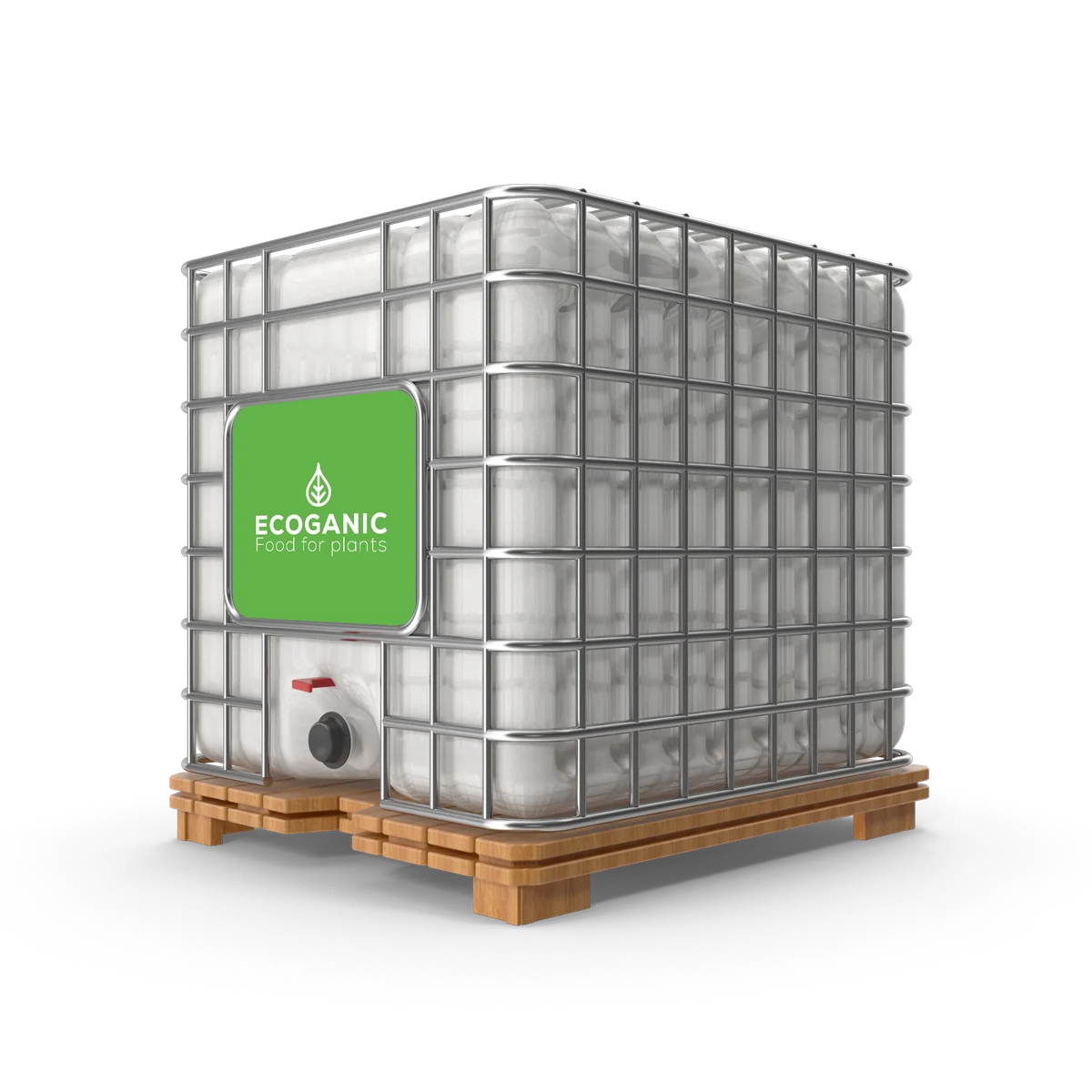
300 L
IBC tank on pallet, for fertigation of large areas
IBC tank on pallet, for fertigation of large areas
IBC tank on pallet, for fertigation of large areas
Documentation and safety
Safety data sheet available on request
The safety data sheet for this product is not published yet. We send it by email the same working day.
Request the sheetApplication method
Recommended dose: Foliar. The source records three schedules, with no crop assigned: (1) maintenance 3-6 L/ha or 300-600 cc/hl per application and, under severe deficiency, up to 4 applications at 600-800 cc/hl; (2) maintenance 3-4 L/ha or 300-400 cc/hl and, under severe deficiency, up to 4 applications at 1,000-1,200 cc/hl; (3) maintenance 2-3 L/ha or 200-300 cc/hl and, under severe deficiency, up to 4 applications at 1,000-1,200 cc/hl.
Recommended crops
- ▸Citrus
- ▸Apple
- ▸Pear
- ▸Blueberry
- ▸Almond
- ▸Cherry
- ▸Peach
- ▸Avocado
- ▸Mango
- ▸Banana
- ▸Tomato
- ▸Potato
- ▸Cucumber
- ▸Melon
- ▸
- ▸
- ▸
- ▸
- ▸
- ▸
- ▸
- ▸
- ▸
- ▸
- ▸
Frequently asked questions
What are the main benefits of BOROPLUS?
+
5.97% total boron measured in the laboratory. Boron-ethanolamine in aqueous solution. Chloride < 0.05% measured in the laboratory. Foliar use on citrus, apple, pear and blueberry
Which crops is BOROPLUS indicated for?
+
Citrus. Apple. Pear. Blueberry. Almond. Cherry. Peach. Avocado. Mango. Banana. Tomato. Potato. Cucumber. Melon. . . . . . . . . . .
How and when is BOROPLUS applied?
+
Foliar application on the crops listed on our technical data sheet: citrus, apple, pear, blueberry, almond, cherry, peach, avocado, mango, banana, tomato, potato, cucumber and melon., Foliar maintenance: the source records three schedules, none of them assigned to a specific crop — 3-6 L/ha (300-600 cc/hl), 3-4 L/ha (300-400 cc/hl) and 2-3 L/ha (200-300 cc/hl) per application., Severe boron deficiency: up to 4 foliar applications. The 3-6 L/ha schedule corrects at 600-800 cc/hl; the 3-4 L/ha and 2-3 L/ha schedules correct at 1,000-1,200 cc/hl. The source does not state which crop each schedule belongs to., Non-chelated boron supply: the declared chemical form is boron-ethanolamine in aqueous solution (a qualitative datum from our data sheet; no source publishes its percentage).. Recommended dose: Foliar. The source records three schedules, with no crop assigned: (1) maintenance 3-6 L/ha or 300-600 cc/hl per application and, under severe deficiency, up to 4 applications at 600-800 cc/hl; (2) maintenance 3-4 L/ha or 300-400 cc/hl and, under severe deficiency, up to 4 applications at 1,000-1,200 cc/hl; (3) maintenance 2-3 L/ha or 200-300 cc/hl and, under severe deficiency, up to 4 applications at 1,000-1,200 cc/hl.
Is BOROPLUS suitable for certified organic farming?
+
Yes. BOROPLUS is certified under CE 2018/848 (EU), NOP USDA (USA) and JAS (Japan). It is suitable for certified organic production in those markets.
How much chloride does BOROPLUS contain?
+
Below the limit of detection: under 0.05% w/w on the original sample. Measured by ion chromatography to UNE-EN 10304-1 at an ENAC-accredited laboratory. The value relates to the batch analysed and is a provisional result, single batch and single sample.
What must not be tank-mixed with BOROPLUS?
+
It must not share a tank with ZINCFORCE 40. That is 1 of the 9 combinations evaluated for this product, each with its chemical mechanism and what you will see in the tank. Verdicts are derived from composition and pH, not from a compatibility trial: run the jar test with your own field water before loading.

Recommended dose
Foliar. The source records three schedules, with no crop assigned: (1) maintenance 3-6 L/ha or 300-600 cc/hl per application and, under severe deficiency, up to 4 applications at 600-800 cc/hl; (2) maintenance 3-4 L/ha or 300-400 cc/hl and, under severe deficiency, up to 4 applications at 1,000-1,200 cc/hl; (3) maintenance 2-3 L/ha or 200-300 cc/hl and, under severe deficiency, up to 4 applications at 1,000-1,200 cc/hl.
Formats
Certifications
More in this category
Micronutrients →