Discover how to effectively and sustainably apply bioprotectors on olive trees. Improve the health of your crops and optimize their production. Contact us now!
Introduction
Sustainable agriculture is key to the future of agricultural production, and the use of bioprotectors on olive trees is an effective strategy to improve the health and productivity of these crops. In this article, we provide you with a step-by-step guide to applying bioprotectors on olive trees, ensuring that your agricultural practice is not only profitable but also environmentally friendly.
Benefits of Bioprotectors
Bioprotectors are products made from beneficial microorganisms or natural extracts that help control pests and diseases in crops. By using bioprotectors on olive trees, farmers can enjoy numerous benefits:
- Reduction in the use of chemical pesticides: By implementing bioprotectors, dependence on chemical products is decreased, contributing to more sustainable agriculture. For example, a study conducted in Italy showed that the use of bioprotectors reduced the application of chemical pesticides by 40% during a growing season.
- Improvement of soil health: Bioprotectors promote biological activity in the soil, favoring a healthier environment for the roots of olive trees. Research has shown that the use of certain bioprotectors can increase the population of beneficial microorganisms in the soil by up to 300%.
- Increased resistance to diseases: These products strengthen the natural defenses of plants, making them more resistant to common diseases. For example, the use of Trichoderma harzianum has shown a 60% reduction in the incidence of fungal diseases in olive trees.
- Improvement of fruit quality: Bioprotectors can positively influence the quality of olive oil, increasing the concentration of phenolic compounds and antioxidants. A study in Spain revealed that the use of bioprotectors improved oil quality by 15%, increasing its commercial value.
- Positive impact on biodiversity: By reducing the use of chemical products, bioprotectors help maintain biodiversity in the agroecosystem, favoring the presence of pollinators and other beneficial organisms that are crucial for ecosystem balance.
For more information on the benefits of biostimulants, you can consult the FAO report on agroecology.
Step by Step for Application
Next, we provide a detailed process for applying bioprotectors on olive trees:
1. Selection of the Bioprotector
The first step is to choose the appropriate bioprotector for your crop. It is essential to consider the type of pests or diseases you wish to control, as well as the specific conditions of your crop and the environment. For example, if you want to control the olive fruit fly, you can opt for a bioprotector based on plant extracts that act as repellents.
Additionally, it is crucial to check the product labels to ensure they are registered and approved for use on olive trees. Bioprotectors like Bacillus thuringiensis are effective for controlling lepidopteran larvae, while fungal-based products like Beauveria bassiana can be used for controlling insect pests.
1.1 Evaluation of Specific Needs
Before selecting a bioprotector, it is advisable to conduct a diagnosis of the phytosanitary situation of the crop. This includes identifying the present pests and diseases, as well as assessing factors such as humidity, temperature, and the nutritional status of the olive trees. Using soil and leaf tissue analysis methods can provide valuable information to determine the specific needs of the crop.
A study conducted by the University of Córdoba suggests that foliar analysis can reveal nutritional deficiencies that contribute to susceptibility to pests, thus allowing for a more precise selection of the bioprotector to be used.
2. Preparation of the Product
Once the bioprotector is selected, follow the manufacturer’s instructions for its preparation. This includes dosage, dilutions, and application methods. Make sure to use clean water and, if possible, rainwater to avoid contaminants. It is advisable to prepare the mixture in a clean container and use a stirrer to ensure a homogeneous dissolution.
In general, the doses of bioprotectors can vary; for example, some products require dilutions of 1:100, while others may need higher concentrations. It is essential to follow the specific recommendations to maximize the effectiveness of the treatment. A case study in an olive plantation in Greece found that applying a bioprotector at a concentration of 0.5% was more effective than at 1% in controlling specific pests.
2.1 Importance of Homogeneity in the Mixture
The homogeneity of the mixture is crucial to ensure that each part of the plant receives an adequate dose of the bioprotector. It is recommended to conduct application tests in small areas before proceeding with the general application. This allows for adjustments in concentration and application technique based on the initial response of the crop.
Moreover, homogeneity in the mixture ensures that the active microorganisms are evenly distributed, which can improve the effectiveness of the bioprotector. Research has shown that homogeneous applications can increase effectiveness by up to 30% compared to irregular applications.
3. Application in the Field
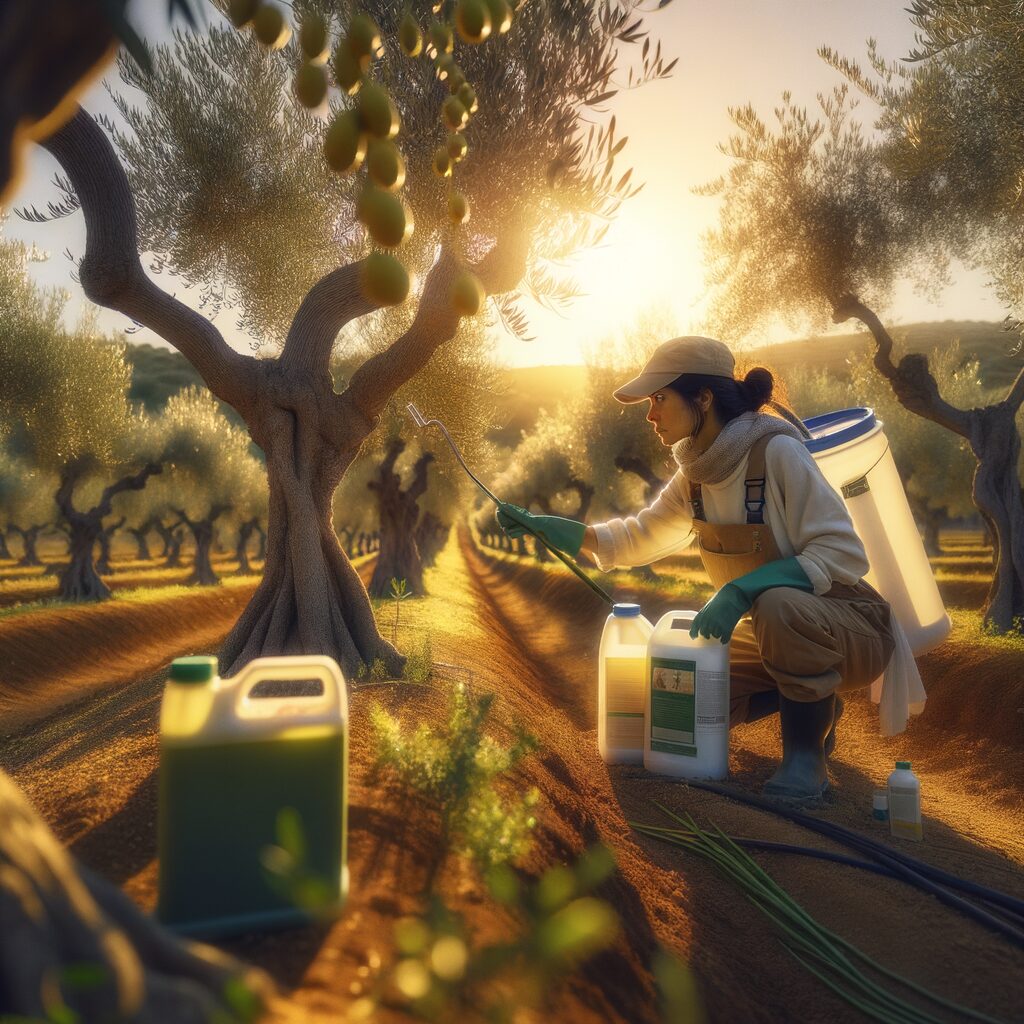
The application should be carried out under suitable environmental conditions, preferably during the early hours of the morning or late in the afternoon to avoid product degradation from direct sunlight. Use calibrated application equipment to ensure uniform distribution of the bioprotectors. Application techniques may include foliar spraying, drip irrigation, or soil application, depending on the type of bioprotector and the desired objective.
A case study in an olive plantation in Andalusia showed that the foliar application of a microorganism-based bioprotector in late spring led to a 50% reduction in the incidence of fungal diseases compared to the untreated control. It is recommended to apply the bioprotector under high humidity conditions, as this can increase penetration into the plant.
3.1 Climatic and Phenological Considerations
It is important to consider the phenology of the crop when applying bioprotectors. For example, during flowering, olive trees are more susceptible to certain pests, so the application of bioprotectors should be done with greater caution. Additionally, climatic conditions such as rain or wind can affect the effectiveness of the application, so it is essential to monitor the weather before and after application.
Research indicates that applying bioprotectors under high humidity and moderate temperatures can significantly increase the effectiveness of the treatment, as it favors the activity of microorganisms. A study in which bioprotectors were applied under humidity conditions above 75% showed a 40% increase in pest control effectiveness compared to applications under dry conditions.
4. Evaluation of Results
After applying the bioprotector, it is crucial to monitor the health of the olive trees and the effectiveness of the treatment. Conduct periodic inspections to assess the presence of pests and diseases and adjust applications as necessary. It is suggested to track pest populations before and after the application of the bioprotector, using traps or visual inspections.
An effective approach is to implement an integrated monitoring system, which combines visual observations with the use of technologies such as drones to detect changes in crop health. This process allows for real-time adjustments and maximizes the effectiveness of the bioprotector. A recent study demonstrated that using drones to monitor plant health can reduce evaluation time by 70% and improve accuracy in detecting phytosanitary problems.
4.1 Data Analysis and Decision Making
The evaluation of results should not be limited to visual observation but should also include an analysis of data collected during monitoring. Using specialized software for data analysis can help identify trends and patterns in the effectiveness of the bioprotector. This allows farmers to make informed decisions about future applications and adaptations in their management strategy.
For example, a data analysis over three seasons in an olive plantation in Sicily revealed that implementing a specific bioprotector reduced pest incidence by 70% compared to the use of conventional pesticides. This type of analysis is key for decision-making in sustainable crop management.
Practical Tips
When applying bioprotectors, consider the following practical tips:
- Training: Ensure that you and your team are trained in the use and handling of bioprotectors. Training on the characteristics of each bioprotector and its correct application can significantly increase the effectiveness of the treatment.
- Application Record: Keep a record of the applications made, including dates, doses, and climatic conditions. This not only helps evaluate the effectiveness of the bioprotectors but is also useful for future planning and compliance with agricultural regulations.
- Integration with Other Management Practices: Combine the use of bioprotectors with sustainable agricultural practices, such as crop rotation and the use of cover crops. The integration of bioprotectors with agroecological management can improve biodiversity and the resilience of the agricultural ecosystem.
Additionally, it is recommended to conduct periodic soil analyses to adjust management strategies and ensure that the environment is conducive to the activity of bioprotectors. Incorporating cover crops can also help improve soil health and reduce pest pressure.
Additional Tips for Bioprotector Management
Consider conducting compatibility tests between different bioprotectors if you decide to use more than one in your management strategy. Some combinations can enhance the effect of bioprotectors, while others may inhibit their effectiveness. Additionally, it is advisable to plan the rotation of bioprotectors to prevent pests from developing resistance to a single type of product.
A study in which combinations of bioprotectors were tested showed that the mixture of Trichoderma harzianum with Bacillus subtilis not only improved the control of fungal diseases but also increased fruit production by 20% compared to the individual use of each bioprotector.
Moreover, it has been observed that applying bioprotectors in combination with integrated pest management (IPM) practices can result in a beneficial synergy, reducing the incidence of pests and diseases by 50% in some cases. This highlights the importance of a holistic approach to crop management.
Customer Decision
The implementation of bioprotectors not only improves the health of your olive trees but also contributes to more sustainable and responsible agriculture. If you need professional advice on which bioprotectors are most suitable for your needs, contact us at Ecoganic for a no-obligation quote.
Remember that the choice of an appropriate bioprotector should align with production goals and market specifications. The demand for sustainable agricultural products is increasing, and the use of bioprotectors can open new market opportunities.
Future Perspectives on the Use of Bioprotectors
The future of using bioprotectors in agriculture looks promising. As research advances, new products and formulations are being developed that improve the effectiveness and applicability of bioprotectors. Additionally, the integration of technologies such as artificial intelligence and real-time data analysis is expected to allow farmers to optimize their use of bioprotectors, adapting applications to the specific conditions of each crop and microclimate.
With the growing awareness of sustainability and environmental health, the use of bioprotectors will become a standard practice in modern agriculture. This will not only benefit farmers but also contribute to environmental conservation and the production of healthier food.
Finally, collaboration between researchers, farmers, and biotechnology companies will be crucial to drive the development of new biological solutions that adapt to the changing needs of the agricultural sector. Education and awareness of the benefits of bioprotectors will also play a crucial role in their widespread adoption.
Related Articles
Need Professional Help?
At Ecoganic, we offer Biostimulants, Organic Fertilizers, Bioprotectors. Call us: +34 652 530 492.
Request your free quote
Research and Development in Bioprotectors
Research in the field of bioprotectors has advanced significantly in recent years. Studies are being conducted to identify and characterize new microorganisms that can be used as bioprotectors on olive trees. For example, strains of Pseudomonas fluorescens have been identified that not only control diseases but also promote plant growth by producing compounds that stimulate root activity.
Moreover, biotechnology is allowing for the genetic modification of microorganisms to increase their effectiveness. Recent research has shown that some bioprotectors can be enhanced through genetic engineering techniques, resulting in greater resistance to adverse conditions and a higher capacity to combat specific pathogens. For example, a study using modified strains of Bacillus subtilis achieved a 25% increase in disease control effectiveness compared to unmodified strains.
Application of Technology in the Use of Bioprotectors
Technology plays a crucial role in the application and monitoring of bioprotectors. The use of mobile applications and agricultural management software allows farmers to keep detailed records of applications, climatic conditions, and observed results. This facilitates not only informed decision-making but also the analysis of the effectiveness of bioprotectors over time.
Additionally, the use of sensors and drones to monitor crop status is gaining popularity. These technologies allow farmers to obtain real-time data on plant health and the presence of pests, helping them to adjust their management strategies more effectively. A study demonstrated that implementing drones for crop monitoring can reduce inspection costs by 40% and increase early detection of phytosanitary problems by 60%.
Sustainable Management Practices
The implementation of bioprotectors should be accompanied by sustainable management practices that promote ecosystem health. Crop rotation, species diversification, and the use of cover crops are practices that not only improve soil health but also reduce pest and disease pressure. For example, rotating crops with legumes can increase nutrient availability in the soil and improve olive yields by 15%.
Furthermore, implementing conservation practices, such as creating habitats for pollinators and natural predators, can contribute to an ecological balance that favors biological pest control. Research has shown that olive trees grown in biodiverse agroecosystems experience a pest reduction of up to 30% compared to those grown in monocultures.
Promoting Education and Awareness
Education and awareness about the use of bioprotectors are fundamental for their widespread adoption. It is crucial for farmers to understand not only the benefits of bioprotectors but also how to effectively integrate them into their agricultural practices. Workshops, seminars, and training programs can be effective tools for sharing knowledge and experiences among farmers.
Additionally, collaboration between universities, research centers, and agricultural organizations can facilitate technology transfer and the dissemination of best practices in the use of bioprotectors. A training program implemented in an olive-producing region in Italy resulted in a 50% increase in the adoption of bioprotectors among farmers, which in turn improved crop health and the quality of the olive oil produced.
Frequently Asked Questions
What are bioprotectors?
They are natural products that help control pests and diseases in crops.
Can I combine bioprotectors with fertilizers?
Yes, it is recommended, but make sure to follow the manufacturer’s instructions to avoid adverse reactions.
When is the best time to apply bioprotectors?
The best times are at the beginning of the growing season and during the early hours of the day or at sunset.
Are bioprotectors safe for the environment?
Yes, being natural products, their use contributes to more sustainable and less polluting agriculture.

👉 Discover our complete program: Biostimulants for Olive — technical application guide, phenological phases, and recommended products.