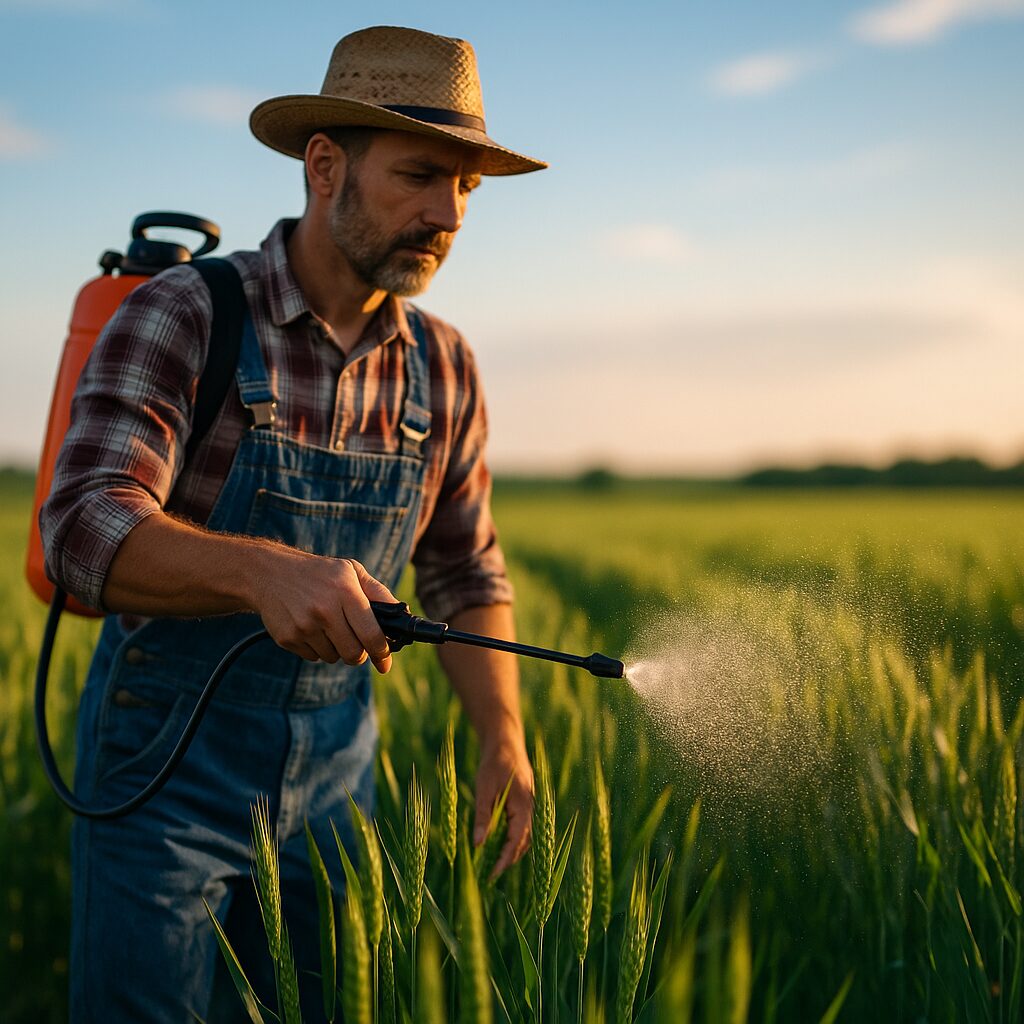
Learn how to use bioprotectors in wheat crops to improve the health of your plants and optimize your harvests. Request your free quote today!
Introduction
The use of bioprotectors in wheat crops has become an essential practice for farmers looking to improve sustainability and productivity of their harvests. These solutions, based on microorganisms and natural extracts, help strengthen plants against diseases and pests, reducing reliance on synthetic chemical products. In this guide, we will explore how to implement effective bioprotectors in your wheat crops in Spain and other regions of Europe.
Benefits of Bioprotectors
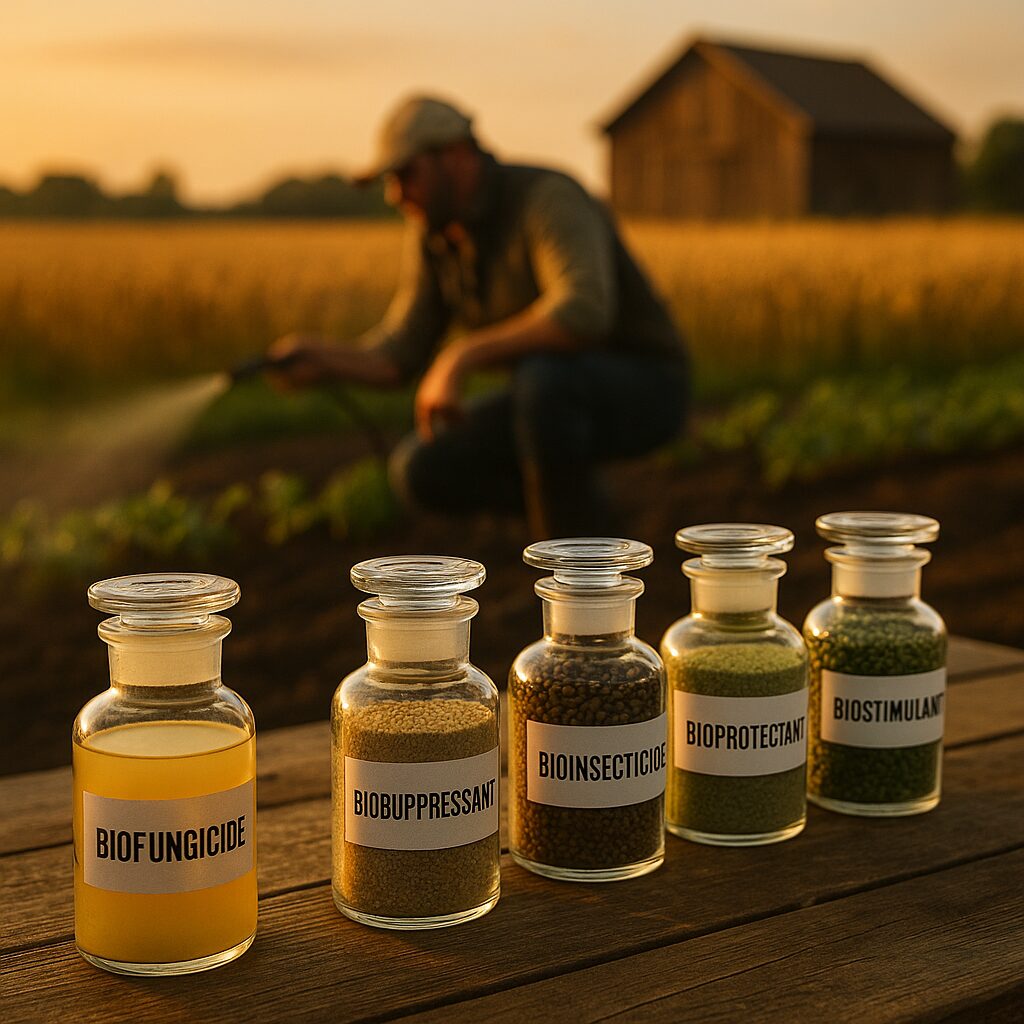
Bioprotectors offer a number of significant advantages for wheat crops:
- Reduction of diseases: They help control pathogens that affect plant health.
- Improvement of soil quality: Some bioprotectors favor soil microbial activity, promoting a healthier ecosystem.
- Sustainability: Being natural products, they contribute to more sustainable and environmentally friendly agricultural practices.
- Increased yield: Crops treated with bioprotectors often show better growth and yield compared to untreated ones.
Impact on soil health
Bioprotectors not only benefit plants directly but also have positive effects on soil health. For example, the use of Trichoderma spp. not only acts as a biocontrol agent but also improves soil structure and increases nutrient availability by promoting the activity of other soil microorganisms. A study conducted by the University of Córdoba demonstrated that inoculation with Trichoderma harzianum increased the population of beneficial bacteria in the soil by 40% compared to untreated soils.
Improvements in microbial biodiversity
The use of bioprotectors can also increase microbial biodiversity in the soil, which is essential for maintaining the health of the agricultural ecosystem. A study at the University of Granada showed that the application of a bioprotector based on Bacillus amyloliquefaciens increased the diversity of bacterial species by 30% in wheat cultivation soils. This microbial diversity is crucial, as a greater variety of microorganisms can lead to better ecosystem resilience against diseases and adverse environmental conditions.
Studies on soil improvement
In addition to the studies mentioned, further research has shown that bioprotectors can reduce soil compaction and improve its water retention capacity. An analysis conducted in northern Spain showed that the application of mycorrhizal fungus-based bioprotectors increased the soil’s water retention capacity by 15%, which is essential for wheat crops under drought conditions.
Interaction with soil nutrients
Bioprotectors also influence the availability of essential nutrients in the soil. A study from the University of Zaragoza revealed that the use of Azospirillum brasilense, a microorganism that promotes plant growth, increased nitrogen assimilation by 20%. This increase is crucial for wheat development, as nitrogen is a key component for protein synthesis in plants. Additionally, it was observed that the application of Trichoderma improved phosphorus solubilization in the soil, leading to a 30% increase in the availability of this nutrient for wheat roots.
Types of Bioprotectors
There are various types of bioprotectors that can be used in wheat crops, each with specific mechanisms of action:
1. Beneficial Microorganisms
These include bacteria and fungi that colonize plant roots, improving nutrient absorption and providing resistance to diseases. Examples include Bacillus subtilis and Trichoderma spp..
Mechanisms of action
Beneficial microorganisms act through various mechanisms such as the production of secondary metabolites, which have antibiotic and antifungal properties, as well as competition for resources and strengthening plant defenses. Bacillus subtilis, for example, produces lipopeptides that inhibit the growth of pathogens such as Fusarium spp. and Rhizoctonia solani. A field trial in Castilla-La Mancha showed that the application of Bacillus subtilis reduced the incidence of fungal diseases by 30%.
Example of field application
In a study conducted on a farm in Toledo, Trichoderma harzianum was applied in combination with Bacillus subtilis in wheat crops that had a high incidence of Fusarium. The results showed a 45% reduction in disease severity, leading to a 20% increase in crop yield.
2. Natural Extracts
Plant extracts, such as garlic and cinnamon, have antifungal and antibacterial properties that can protect wheat crops from various diseases.
Examples of use
Garlic extract, due to its allicin content, has been shown to be effective against pathogens such as Alternaria spp. and Botrytis cinerea. In a study from the University of León, it was observed that the application of concentrated garlic extract reduced the severity of Botrytis cinerea by 50% compared to the untreated control. On the other hand, cinnamon extract has shown significant antifungal activity against Fusarium spp., increasing the resistance of wheat to these infections.
Mechanisms of action of natural extracts
Natural extracts act through several mechanisms, including the generation of volatile compounds that can inhibit the growth of pathogens, as well as inducing defense responses in plants. Allicin, for example, not only acts as a fungicide but can also stimulate the production of phytoalexins, compounds that plants use to defend themselves against infections.
Practical applications of natural extracts
In a trial in Murcia, garlic extract was applied to wheat crops affected by Fusarium, where a 60% improvement in plant health was observed after three weekly applications. This type of treatment not only enhances disease resistance but can also be more acceptable to consumers seeking more natural and less chemical agricultural products.
3. Fermented Agricultural Residues
These products are made from fermented agricultural residues, rich in nutrients and bioactive compounds that promote soil and plant health.
Benefits of fermented products
Fermented agricultural residues, such as those produced from manure or crop residues, enrich the soil with beneficial microorganisms and essential nutrients. A study conducted at the Polytechnic University of Valencia revealed that the application of a fermented product based on corn residues increased soil enzymatic activity and improved nitrogen availability by 25%. Furthermore, these fermented products can help reduce the incidence of diseases in wheat crops by promoting a healthy microbial environment.
Practical example of fermented products
In a field experiment in the province of Albacete, a fermented product based on cow manure was applied to wheat crops. The results showed a 15% increase in yield and a 30% reduction in the incidence of foliar diseases compared to untreated control plots.
Additional studies on fermented products
Recent research has shown that fermented products not only improve plant health but can also increase resistance to water stress. In a trial in the Castilla y León region, it was observed that wheat crops treated with fermented products showed a 20% increase in biomass production under drought conditions, suggesting that these products can be a valuable tool in sustainable agriculture.
Studies on fermented products and their impact on crops
A case study conducted at the University of Murcia analyzed the impact of different types of fermented products on the growth of wheat crops. It was observed that treatments with fermented products based on legume residues not only increased biomass production but also improved grain quality, resulting in an 18% increase in protein content compared to untreated crops. This highlights the importance of fermented products not only in disease control but also in improving crop quality.
Related Articles
Need professional help?
At Ecoganic in Spain, Europe, we offer Biostimulants, Organic Fertilizers, Bioprotectors. Call us: +34 652 530 492.
Application of Bioprotectors
The correct application of bioprotectors is essential to maximize their effectiveness. Here we offer a step-by-step guide:
Step 1: Selection of the Bioprotector
Choose the appropriate bioprotector based on the type of disease or pest present in your crops.
Risk assessment
Before selecting a bioprotector, it is crucial to conduct a risk assessment that considers factors such as the history of diseases in the plot, climatic conditions, and soil type. This will allow you to select the most suitable product. For example, if a high incidence of Fusarium has been recorded in the area, a bioprotector based on Bacillus subtilis could be the optimal choice.
Economic considerations
In addition to agronomic factors, it is important to consider the cost of bioprotectors and their cost-benefit relationship. A cost analysis conducted in several agricultural farms in Castilla y León showed that the use of bioprotectors can result in a 20% savings in conventional chemical treatments, making their use not only beneficial for crop health but also economically viable.
Step 2: Preparation of the Product
Follow the manufacturer’s instructions to prepare the bioprotector solution, ensuring proper mixing.
Importance of correct dilution
An incorrect dilution can lead to product ineffectiveness or even phytotoxicity. To ensure effectiveness, it is advisable to conduct initial tests in small plots and observe the plants’ response before making large-scale applications. Additionally, some products require prior activation, such as agitation or resting, which must be strictly followed.
Storage of the bioprotector
Proper storage of bioprotectors is essential to maintain their viability. Most microorganisms are sensitive to factors such as temperature and humidity. Generally, it is recommended to store bioprotectors in a cool, dry place, away from direct sunlight. A study from the University of Jaén demonstrated that storage at temperatures below 10°C can increase the shelf life of Bacillus subtilis by 50%.
Effectiveness testing before application
It is advisable to conduct effectiveness tests under controlled conditions before field application. This can be done in greenhouses or experimental plots where parameters such as growth rate, disease incidence, and grain quality can be measured. A study at the University of Almería showed that pre-application effectiveness tests increased the effectiveness of bioprotectors by 25% compared to direct field applications.
Step 3: Application
Apply the bioprotector under favorable weather conditions, avoiding days of heavy rain that may wash away the product. Use appropriate application equipment to ensure uniform coverage.
Application techniques
Application techniques can vary from foliar spraying to soil application. Foliar application is effective for controlling pathogens that attack the aerial parts of the plant, while soil application is more suitable for root diseases. The use of spraying equipment that ensures proper micronization of the product is recommended, allowing for better absorption by the plants. In a field study in Aragón, it was observed that the foliar application of Trichoderma harzianum resulted in a 40% increase in disease resistance compared to the control.
Optimization of application
Timing the application of bioprotectors with the developmental cycles of the crops is crucial. For example, applying Trichoderma spp. during the early root development stage can enhance root colonization, which in turn increases disease resistance. A study in Navarra demonstrated that the application of Bacillus subtilis during the tillering phase increased biomass production by 25% compared to applications at other crop stages.
Environmental factors affecting application
It is important to consider environmental factors such as temperature and humidity during application. Extremely high or low temperatures can affect the viability of microorganisms in bioprotectors. A study at the University of Extremadura showed that temperatures above 30°C reduced the effectiveness of Trichoderma harzianum by 20% compared to applications made at more moderate temperatures.
Step 4: Monitoring
After application, monitor your wheat crops to evaluate the effectiveness of the bioprotector and make adjustments if necessary.
Parameters to evaluate
It is essential to establish a monitoring protocol that includes assessing plant health, disease incidence, and soil analysis. Pheromone traps can be used to monitor pest populations and determine if additional applications are necessary. An integrated approach that combines monitoring and biological control has been shown to improve the effectiveness of bioprotectors, thus increasing crop profitability.
Case study of monitoring
In an experiment in the province of Soria, a monitoring system was implemented that combined visual assessment of plant health with weekly soil analysis. The results showed that crops treated with Trichoderma harzianum and Bacillus subtilis had a 35% decrease in the incidence of fungal diseases, allowing for better planning of subsequent applications and optimizing overall crop yield.
Use of technology in monitoring
The incorporation of advanced technologies such as moisture sensors and drones for crop assessment has proven to be a valuable resource in monitoring plant health. A study at the Polytechnic University of Valencia showed that using drones to assess the status of wheat crops treated with bioprotectors allowed for the identification of areas with water stress and diseases 50% faster than traditional methods, facilitating timely intervention.
Long-term monitoring of effectiveness
It is essential to track the long-term effectiveness of bioprotectors to assess their impact on soil health and crop yields. A longitudinal study in the Murcia Region demonstrated that the continued use of bioprotectors such as Bacillus subtilis and Trichoderma harzianum over three consecutive seasons resulted in a sustained 25% increase in wheat yield and a 40% reduction in disease incidence, underscoring the importance of the continuous application of these practices in sustainable agriculture.
Evaluation of grain quality
In addition to assessing plant health, it is essential to analyze the quality of the produced grain. Bioprotectors can not only influence yield but also the nutritional quality of wheat. A study conducted at the University of Almería found that wheat crops treated with Trichoderma spp. showed a 12% increase in grain protein quality compared to untreated crops. This is especially relevant in a market where grain quality is increasingly valued by consumers and producers.
Impact on resistance to adverse conditions
Bioprotectors not only improve the health and yield of crops but also increase the plants’ resistance to adverse conditions, such as droughts and extreme temperatures. A study conducted at the University of Navarra showed that the use of Trichoderma viride in wheat crops increased drought tolerance by 30%, allowing plants to maintain their normal physiology even under water stress conditions. This increase in resilience is key to sustainability in the context of climate change.
Research on plant-microorganism interaction
Recent research has begun to delve into the interaction between plants and bioprotector microorganisms. A study at the University of Almería demonstrated that the application of Bacillus amyloliquefaciens not only improved the growth of wheat plants but also altered the expression of defense-related genes, activating metabolic pathways that increase resistance to pathogens. This type of research is fundamental to understanding how bioprotectors can be used more effectively in agriculture.
Related Articles
- Ecoganic
- Effect of Biostimulants on Olive Yield
- Synergistic Effects of Biostimulants and Fertilizers
Frequently Asked Questions
What are bioprotectors?
Bioprotectors are biological products that use microorganisms or natural extracts to protect plants from diseases and pests.
Are bioprotectors effective in wheat crops?
Yes, bioprotectors have been shown to be effective in improving the health of wheat crops and increasing yield by controlling diseases.
How are bioprotectors applied?
They are applied through spraying, following the manufacturer’s recommendations to ensure adequate and effective coverage.
Can I combine bioprotectors with other fertilizers?
Yes, many farmers combine bioprotectors with organic fertilizers to improve results, always checking the compatibility of the products.
Where can I purchase bioprotectors?
You can purchase bioprotectors through agricultural distributors or directly from specialized companies like Ecoganic.