
Learn how to correct nitrogen deficiency in citrus using biostimulants and effective agricultural techniques to optimize the health of your crops.
Introduction
Nitrogen deficiency in citrus is a problem that can compromise the health and yield of crops. Nitrogen is an essential nutrient for plant growth, as it is a fundamental component of chlorophyll and participates in protein synthesis. In this article, you will learn how to identify the symptoms of nitrogen deficiency in citrus and how to correct it using biostimulants and sustainable agricultural practices.
Identification of Nitrogen Deficiency
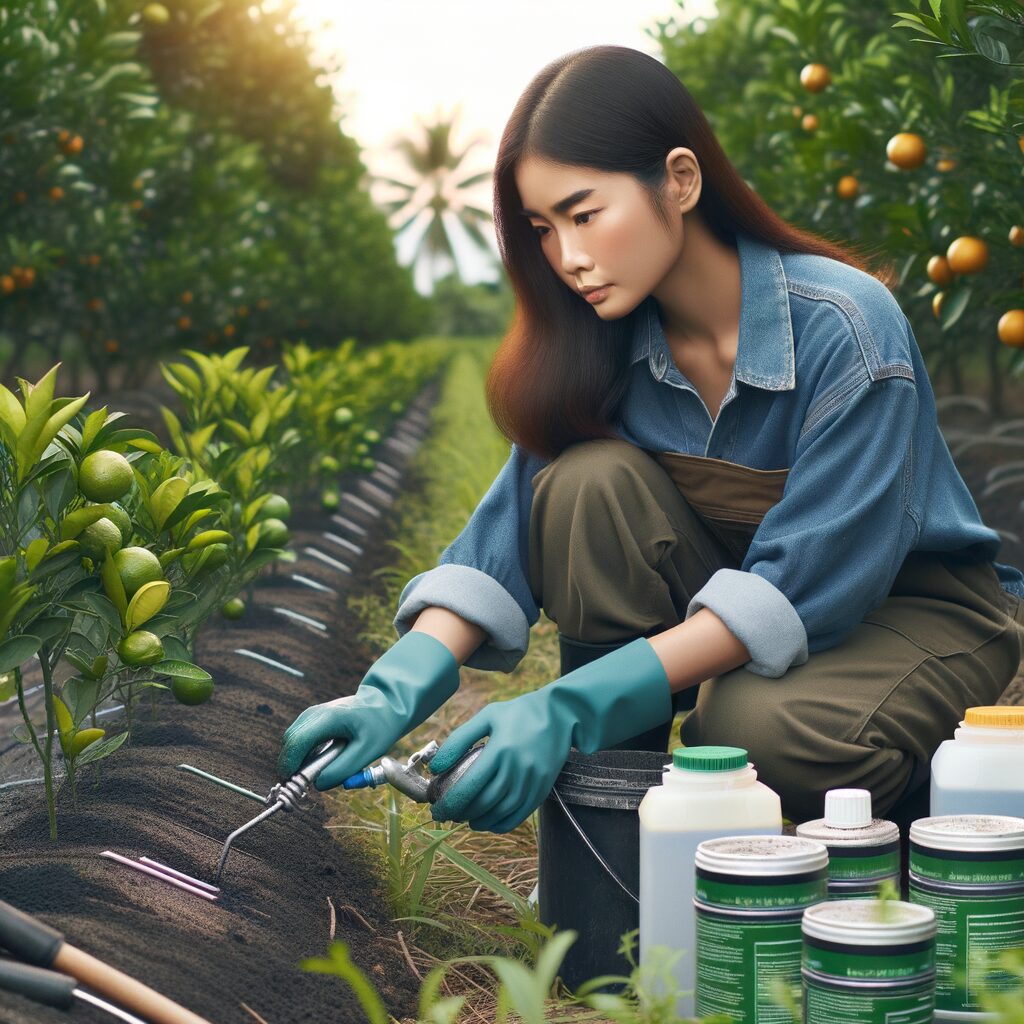
The symptoms of nitrogen deficiency in citrus can manifest in various ways:
- Yellowing: Older leaves often turn yellow, starting from the tip and progressing towards the stem.
- Reduced growth: Affected plants may show slower growth and lower fruit production.
- Premature leaf drop: Leaves may fall prematurely, affecting photosynthesis and the overall health of the plant.
It is crucial to regularly monitor your crops for these signs and act quickly.
Factors Contributing to Nitrogen Deficiency
Nitrogen deficiency in citrus can be caused by several factors, including:
- Soil conditions: Acidic or compacted soils can limit nitrogen availability. An optimal pH for citrus is between 6 and 6.5. In soils with a pH below 5.5, nutrient solubility tends to decrease, which can affect nitrogen absorption.
- Management practices: Inadequate irrigation management can lead to nitrate leaching, especially in sandy soils. Leaching can cause a loss of up to 50% of applied nitrogen, highlighting the importance of efficient irrigation.
- Weed competition: Weeds can compete for nitrogen, reducing the amount available for citrus. A study showed that weed control can increase nitrogen availability by 15% in cultivated soil.
Detection of Deficiency through Soil Analysis
Conducting a soil analysis is essential to detect nitrogen deficiency. Agronomic laboratories can measure nitrogen levels in the soil and provide specific recommendations. It is recommended to conduct analyses at least once a year, especially before planting. A typical analysis may include the evaluation of total nitrogen, ammoniacal nitrogen, and nitrates, allowing for a comprehensive understanding of nitrogen availability.
Additionally, it is advisable to perform foliar analyses to complement the soil analysis. These analyses can help determine the concentration of nitrogen in the leaves, providing additional information about the nutritional status of the plant. A nitrogen level in citrus leaves below 2.5% may indicate deficiency.
Solutions for Nitrogen Deficiency
One of the most effective solutions to correct nitrogen deficiency is the use of biostimulants. These products are designed to enhance nutrient absorption and boost soil health.
Use of Biostimulants
Biostimulants, such as those offered by Ecoganic, can help improve nitrogen absorption efficiency. They are formulated with natural extracts and microorganisms that promote root development and enhance soil microbiology. A study conducted in 2021 demonstrated that the application of biostimulants increased nitrogen assimilation by 30% in citrus, resulting in more robust growth and higher fruit production. These biostimulants stimulate the activity of soil microorganisms, such as nitrogen-fixing bacteria, which contribute to the nitrogen cycle.
A practical example of biostimulant application occurred in a lemon plantation in Murcia, where a seaweed-based biostimulant was applied. This resulted in a 40% increase in growth rate, as well as improved fruit quality, reflected in a higher concentration of essential oils and aromatic compounds.
Organic Fertilizers
The application of specific organic fertilizers for citrus can also be useful. These fertilizers release nitrogen in a controlled manner, avoiding over-fertilization and minimizing environmental impact. For example, the incorporation of organic compost can increase nitrogen levels in the soil and improve its structure, facilitating nutrient absorption. A study using compost from agricultural waste showed a 20% increase in nitrogen availability throughout the growing season.
Additionally, the use of guano-based fertilizers, which contain organic nitrogen, can be an excellent option. This type of fertilizer not only provides nitrogen but also other essential micronutrients such as phosphorus and potassium, which are equally important for citrus development.
Integrated Management Practices
Combining the use of biostimulants and organic fertilizers with sustainable agricultural practices is essential. For example, crop rotation and the use of cover crops can improve nitrogen availability. A study in California showed that rotating citrus with legumes increased nitrogen levels in the soil by 20% compared to monocultures. Legumes, such as clover or alfalfa, have the ability to fix atmospheric nitrogen, enriching the soil naturally.
Implementing soil conservation practices, such as mulching, can also help maintain moisture and organic matter in the soil, which in turn favors microbial activity and nitrogen availability. A study demonstrated that using mulching in citrus crops reduced water evaporation by 30% and improved nutrient retention.
Benefits of Biostimulants
Biostimulants not only correct nitrogen deficiency but also offer other benefits:
- Improvement of soil health: They promote microbial activity that is essential for healthy soil. Microbial activity can increase nutrient availability by 25%.
- Increased stress resistance: They help plants cope with adverse conditions, such as droughts or diseases. A recent study indicated that citrus treated with biostimulants showed 15% more resistance to foliar diseases.
- Better fruit quality: Citrus treated with biostimulants are often of better quality, both in taste and appearance. Laboratory analyses have shown that sugar content in fruits can increase by up to 10% after treatment with biostimulants.
- Increased water use efficiency: By improving root development, biostimulants allow for better water absorption, which is crucial in water stress conditions. This can result in savings of up to 20% in irrigation under certain conditions.
Examples of Biostimulant Application in the Field
A success case in the use of biostimulants was observed in an orange plantation in Valencia, where a seaweed-based biostimulant was applied. The results showed a 25% increase in fruit production compared to untreated plots. Additionally, fruit quality improved, increasing the classification of the fruit into premium categories. In another experience in a grapefruit plantation, the use of a humus-based biostimulant resulted in a 30% increase in yield, along with a notable improvement in pest resistance.
Comparison with Conventional Methods
Correcting nitrogen deficiency through conventional methods, such as applying chemical fertilizers, can be effective in the short term, but often comes with risks, such as water pollution and soil degradation. For example, excessive use of nitrogen fertilizers can result in nitrate leaching into groundwater, contributing to the eutrophication of nearby water bodies. Biostimulants, on the other hand, offer a more sustainable and environmentally friendly solution.
Comparative Study between Biostimulants and Chemical Fertilizers
A study conducted in 2022 compared the effectiveness of biostimulants with that of chemical fertilizers in citrus plantations. The results showed that biostimulants not only increased nitrogen absorption but also improved soil structure and increased microbial activity by 40% compared to chemical fertilizers. This highlights the importance of adopting more sustainable approaches in modern agriculture. Biostimulants proved to be more effective under environmental stress conditions, where chemical fertilizers often fail to provide the expected results.
Recommendations for the Implementation of Biostimulants
To maximize the benefits of biostimulants, it is recommended to follow certain guidelines:
- Timely application: Apply biostimulants during critical growth phases, such as flowering and fruit development. Studies have shown that application at these times can increase production by 20%.
- Combination with irrigation: Apply biostimulants through drip irrigation systems for uniform and effective distribution. This not only improves absorption but also reduces product waste.
- Constant monitoring: Monitor nitrogen levels and other nutrients in the soil to adjust applications as needed. Implementing a monitoring program can help optimize applications and maximize yield.
- Education and training: It is essential to train farmers on the use of biostimulants and their integration into sustainable management systems. Providing workshops and informational materials can facilitate the adoption of these technologies.
Interaction with Other Nutrients
Nitrogen does not act in isolation in plant metabolism; its interaction with other nutrients is crucial for optimal growth. For example, the relationship between nitrogen and potassium is especially relevant in citrus. An excess of nitrogen can cause a potassium deficiency, which in turn can affect fruit quality. A study demonstrated that an adequate balance between nitrogen and potassium can increase citrus production by 18%.
Furthermore, phosphorus also plays an important role in nitrogen absorption. The application of phosphorus can improve nitrogen use efficiency, promoting better root development and, therefore, greater nutrient absorption. It has been observed that citrus plants with adequate phosphorus levels have a 25% greater capacity to assimilate nitrogen compared to those with a deficiency of this micronutrient.
Impact of Foliar Fertilization
Foliar fertilization is a practice that can complement the application of soil fertilizers, especially in cases of nitrogen deficiency. This technique allows for rapid nutrient absorption through the leaves, providing an immediate solution to the deficiency. A study conducted in 2020 showed that the application of foliar nitrogen in citrus during the flowering period increased fruit production by 22% compared to plots that only received soil fertilization.
Foliar application is especially effective in situations where the soil has limitations in nitrogen availability, such as in compacted soils or with inadequate pH. However, it is important not to abuse this technique, as excessive applications can cause phytotoxicity and affect plant health.
Economic Considerations
The implementation of biostimulants and sustainable management practices may require an initial investment, but in the long term, the economic benefits are significant. A cost-benefit analysis conducted in 2021 showed that the investment in biostimulants is quickly recovered due to the increase in production and fruit quality. Farmers who adopted these practices reported an income increase of up to 30% compared to those who only used chemical fertilizers.
Moreover, the reduction in the use of chemical inputs not only improves profitability but also contributes to the sustainability of the agricultural ecosystem. The decrease in soil and water pollution can result in a healthier environment for future generations of farmers.
Related Articles
- Nitrogen Fertilization in Vine: Doses and Application
- Nitrogen Fertilization in Wheat: Doses and Key Timing
- Nitrogen Fertilization in Corn: Doses and Application
Need professional help?
At Ecoganic in Spain, Europe, we offer Biostimulants, Organic Fertilizers, Bioprotectors. Call us: +34 652 530 492.
Conclusions
Nitrogen deficiency in citrus can be a significant challenge, but with proper identification of symptoms and the implementation of effective solutions such as biostimulants and organic fertilizers, it is possible to correct this problem. Additionally, adopting sustainable agricultural practices not only improves crop health but also contributes to environmental sustainability. By adopting a comprehensive approach that combines technology and traditional practices, farmers can ensure healthy and sustainable citrus production. The integration of new technologies and sustainable management practices is key to addressing the challenges of climate change and the growing demand for food in the future.
Biochemical Mechanisms of Nitrogen in Plants
Nitrogen plays a crucial role in several biochemical processes within plants. It is an essential component of amino acids, which are the building blocks of proteins. Proteins, in turn, are necessary for the formation of enzymes that facilitate metabolic reactions. The synthesis of chlorophyll, which directly depends on nitrogen availability, is fundamental for photosynthesis, the process by which plants convert sunlight into chemical energy. A study revealed that a 1% increase in nitrogen content in leaves can increase the photosynthetic rate by 10%.
Additionally, nitrogen is also involved in the production of nucleic acids (DNA and RNA), which are essential for cell division and plant growth. Therefore, nitrogen deficiency can have a cascading effect on the growth and development of citrus, affecting not only fruit production but also the overall health of the plant.
Field Studies on the Application of Biostimulants
Several field studies have demonstrated the effectiveness of biostimulants in correcting nutritional deficiencies in citrus. For example, in a trial conducted in an orange plantation in Andalusia, a seaweed-based biostimulant was applied during the growth cycle. The results showed a 35% increase in fruit yield and a 20% reduction in pest incidence, thanks to a better defense system activated by the biostimulant.
Another study conducted in a lemon plantation in Mexico found that the application of an amino acid-based biostimulant improved fruit quality, increasing ascorbic acid (vitamin C) content by 15%. This type of improvement not only benefits the farmer in terms of sales but also adds nutritional value to the final product.
Integration of Technology in Fertilization
The incorporation of technology in fertilization, such as soil moisture sensors and drones for aerial monitoring, can optimize the application of nitrogen and other nutrients. These devices allow farmers to identify specific areas that require attention, avoiding over-fertilization and maximizing resource use efficiency. A study demonstrated that the use of precision technology in fertilizing citrus can reduce input use by 30% and increase yield by 20% by directing resources where they are most needed.
Optimization of Fertilization with Machine Learning Algorithms
The implementation of machine learning algorithms in precision agriculture is revolutionizing the way citrus crops are managed. These algorithms can analyze large volumes of data, such as soil nutrient content, weather conditions, and plant growth patterns, to predict the nitrogen needs of crops. A recent study in Florida demonstrated that optimizing fertilization through predictive models increased nitrogen use efficiency by 25%, resulting in less waste and an increase in citrus yield.
Furthermore, the use of mobile applications that integrate sensor data and analysis algorithms can facilitate informed decision-making for farmers regarding fertilization, thus improving crop health and reducing operational costs.
Frequently Asked Questions
What are the most common symptoms of nitrogen deficiency in citrus?
Symptoms include yellow leaves, reduced growth, and premature leaf drop.
How can biostimulants help correct nitrogen deficiency?
Biostimulants improve nutrient absorption and soil health, helping plants use nitrogen more efficiently.
Is it enough to use only biostimulants to correct nitrogen deficiency?
It is advisable to combine the use of biostimulants with organic fertilizers to ensure adequate nutrition.
Where can I purchase biostimulants for citrus?
You can obtain biostimulants from Ecoganic, which offers specific solutions for crop nutrition in Spain and Europe.